Scalp Microbiome Balance: The Science of Healthy Scalp Flora
9 min read ·
Understand how Scalp Microbiome Balance works, why dysbiosis triggers flaking and itching, and how to maintain a healthy scalp barrier through evidence-based care.
Quick answer: Scalp Microbiome Balance refers to the healthy equilibrium between beneficial and opportunistic bacteria and fungi residing on the human scalp. When this microbial ecosystem is stable, it preserves the skin barrier and keeps inflammation low. However, disruption known as dysbiosis allows species like Malassezia or Staphylococcus to proliferate, driving dandruff, seborrhoeic dermatitis, itching, and irritation. While cosmetic hair care can help maintain this surface ecosystem, severe scalp conditions require clinical antifungal or dermatological treatments.
Key takeaways
- Scalp Microbiome Balance relies on a symbiotic relationship between host sebum, natural skin acidity (pH 4.5 to 5.5), and microbial colonies.
- The dominant microbes include Cutibacterium acnes, Staphylococcus epidermidis, and lipophilic fungi from the Malassezia genus.
- Microbial disruption leads to inflammation, flaking, barrier breakdown, and can temporarily alter the hair growth cycle.
- Harsh alkaline cleansers, infrequent washing, and excessive occlusive oils disrupt microbial equilibrium.
- True medical conditions like scalp psoriasis or severe seborrhoeic dermatitis require pharmaceutical care, not just cosmetic products.
Scalp Microbiome Balance: what the evidence shows
Scalp Microbiome Balance is the state where diverse bacterial and fungal species coexist harmoniously with the human skin barrier. Genomic sequencing over the past decade has revealed that the scalp is one of the most densely colonised regions of the body. Sebaceous glands produce lipid-rich sebum that acts as food for resident microorganisms.
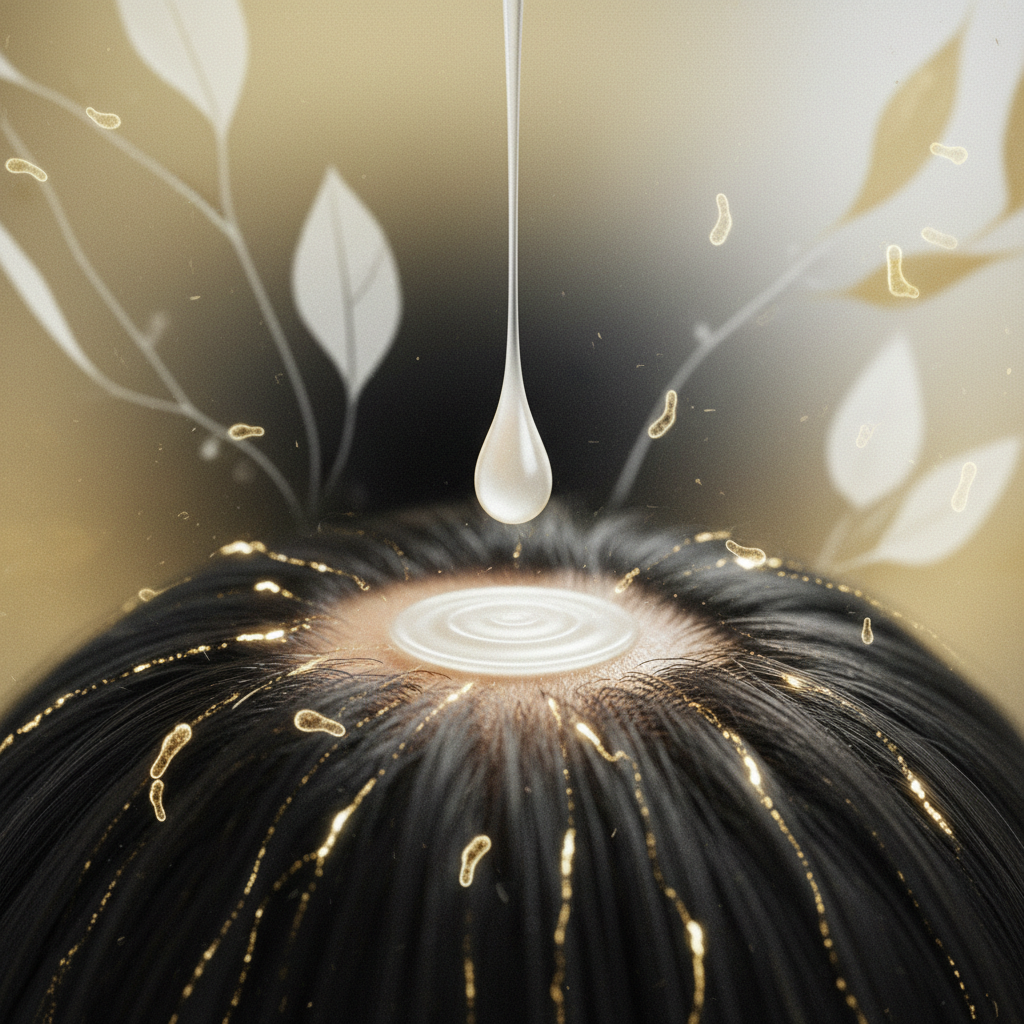
Under balanced conditions, bacteria such as Cutibacterium acnes and Staphylococcus epidermidis occupy follicle openings and the stratum corneum. These organisms digest sebum into free fatty acids. This enzymatic process helps sustain the skin's acid mantle, keeping surface pH naturally acidic between 4.5 and 5.5. This low pH suppresses pathogenic bacteria while allowing commensal flora to thrive.
The fungi present on the scalp belong almost entirely to the genus Malassezia, specifically M. Globosa and M. Restricta. Unlike skin bacteria, Malassezia cannot produce their own fatty acids. They rely on host sebum, breaking down triglycerides using extracellular lipases. In a balanced microbiome, their population remains controlled and causes no clinical symptoms.
When Scalp Microbiome Balance breaks down, dysbiosis occurs. Research demonstrates that an overabundance of Malassezia relative to Cutibacterium and Staphylococcus correlates directly with dandruff and seborrhoeic dermatitis. When these fungi digest sebum, they release oleic acid as a byproduct. In susceptible individuals, oleic acid penetrates a compromised skin barrier, triggering inflammation, rapid epidermal turnover, visible flakes, and persistent itching.
How the biological mechanism works
The scalp environment is shaped by three interconnected components: sebum production, the skin barrier, and microbial metabolism.
Sebum is rich in squalene, wax esters, and triglycerides. Cutibacterium acnes prefers the low-oxygen, lipid-dense environment inside the hair follicle. It metabolises triglycerides into propionic acid and short-chain fatty acids, which possess antimicrobial properties against environmental pathogens.
On the surface, Staphylococcus epidermidis produces antimicrobial peptides that regulate pathogenic strains like Staphylococcus aureus. When the sebum secretion rate increases, or when sweat and product residues sit unwashed, the ratio shifts. Malassezia populations expand rapidly on lipid-heavy scalps.
As Malassezia consumes specific saturated fatty acids, it discards unsaturated fatty acids (such as oleic acid). These free fatty acids induce an inflammatory cascade in keratinocytes. The body responds with hyperproliferation of the epidermal layer, shedding immature cells in large, oily clumps (dandruff). This inflammation can extend into the follicular infundibulum. While dysbiosis does not cause permanent follicular scarring or true genetic hair loss, sustained local inflammation can disrupt the hair cycle, contributing to excessive shedding (telogen effluvium).
| Metric / Characteristic | Balanced Scalp Microbiome | Dysbiotic Scalp Microbiome |
|---|---|---|
| Surface pH | 4.5 to 5.5 (Acidic mantle intact) | 5.8 to 7.0 (Alkaline shift) |
| Dominant Bacterial Ratio | Healthy balance of C. Acnes and S. Epidermidis | Overgrowth of S. Aureus or depleted C. Acnes |
| Fungal Activity (Malassezia) | Controlled, asymptomatic | Overactive, releasing inflammatory oleic acid |
| Skin Barrier Function | Intact, low transepidermal water loss | Compromised, high transepidermal water loss |
| Visible Symptoms | Clear skin, no itch, comfortable scalp | Flaking, erythema, greasy scaling, pruritus |
| Hair Fibre Impact | Unimpaired hair growth cycle | Potential telogen effluvium from follicular stress |
What the evidence does not show
Marketing claims often exaggerate what microbiome care can achieve. The scientific consensus separates clear facts from unproven ideas:
- Cleansers do not "sterilise" the scalp: Standard washing temporarily reduces surface counts, but the microbiome resides deep within follicles and repopulates within hours.
- Microbial imbalance does not cause pattern baldness: Androgenetic alopecia is driven by genetic sensitivity to dihydrotestosterone (DHT) within hair follicles, not by microbial species.
- Topical live probiotics lack robust clinical validation on hair: While prebiotic and postbiotic formulations show promise for barrier comfort, applying live bacterial cultures to the scalp lacks high-quality, long-term human trial data.
- Natural oils are not a universal cure: Applying heavy plant oils (like coconut, olive, or argan oil) directly to a flaky scalp often worsens dysbiosis, because Malassezia feeds directly on specific plant lipids.
Signs of an imbalanced scalp microbiome
An altered scalp environment manifests through several physical signs. Because scalp skin is obscured by hair, early microbial shifts often go unnoticed until physical symptoms emerge.
- Persistent itching and tightness: A tingling or burning sensation indicates inflammatory mediators acting on cutaneous nerve endings.
- Fine white flakes or greasy yellow scales: Fine, dry flaking often reflects barrier dehydration and mild imbalance, whereas yellow, sticky scales indicate active Malassezia proliferation.
- Tenderness at the roots: Inflammation in the upper follicular canal can cause the scalp to feel tender when hair is moved or tied back.
- Rapid oiliness paired with surface dryness: A disrupted barrier struggles to retain moisture, leading to dehydration while the skin overcompensates with sebum production.
- Noticeable scalp odour: Certain bacterial byproducts emit a sour or stale scent when volatile fatty acids oxidise on the surface.
Practical steps to support your scalp ecosystem
Maintaining Scalp Microbiome Balance requires supporting the acid mantle and keeping sebum levels regulated without stripping the skin.
- Wash with balanced frequency: Washing your hair 2 to 4 times a week prevents sebum accumulation. Leaving sebum to sit for over a week creates an uncontrolled food supply for fungi.
- Respect the acid mantle: Choose shampoos formulated around pH 4.5 to 5.5. Alkaline cleansing agents, including traditional bar soaps (pH 8.0 to 10.0), disrupt the stratum corneum and encourage opportunistic bacteria.
- Clarify judiciously: If you use dry shampoos, silicones, or heavy styling waxes, use a clarifying wash every two weeks to remove buildup that traps sebum against the skin.
- Avoid feeding the fungus: If you suffer from dandruff or seborrhoeic dermatitis, pause the use of heavy raw oils on your scalp. These feed lipid-dependent microbes.
- Dry your roots thoroughly: Fungi thrive in warm, dark, humid environments. Never go to sleep with damp roots. Gently dry your scalp on a low or medium heat setting.
When the cause may be something else
Not all scalp irritation stems from microbial dysbiosis. Several systemic and dermatological conditions produce identical symptoms:
- Scalp psoriasis: An autoimmune condition causing thick, silvery-white plaques with well-defined borders. It is driven by systemic immune dysregulation rather than microbial overgrowth.
- Contact dermatitis: An allergic reaction or chemical irritation from hair dyes, fragrances, or preservatives (such as methylisothiazolinone).
- Cicatricial (scarring) alopecias: Conditions like lichen planopilaris or frontal fibrosing alopecia involve severe follicular inflammation leading to permanent hair loss. These require urgent medical intervention.
- Nutritional or hormonal shifts: Iron deficiency, thyroid disorders, and acute stress alter sebum composition and shedding patterns independently of the surface microbiome.
When to seek medical advice
Consult a GP, dermatologist, or qualified trichologist if you notice:
- Severe redness, swelling, or crusted lesions on the scalp.
- Yellowish fluid weeping from flaky areas, which suggests a secondary bacterial infection.
- Circular patches of patchy hair loss accompanied by scaling, which may indicate tinea capitis (scalp ringworm).
- Symptoms that do not improve after three weeks of targeted, over-the-counter anti-dandruff shampoos containing ketoconazole, piroctone olamine, or zinc pyrithione.
A balanced approach to daily hair wellness
A well-maintained scalp offers the ideal environment for hair fibres to grow strong and resilient. Gentle cosmetic formulations can support everyday scalp comfort by combining clarifying cleansers with conditioning agents that do not clog the follicular opening.
Watermans products are formulated to support the appearance of fuller, thicker hair while maintaining a clean, revitalised scalp environment. For individuals managing routine residue and seeking a refreshing routine, Watermans Grow Me Shampoo provides a balanced cleanse that rinses away excess surface sebum without drying the hair shaft, supporting a revitalised and balanced-feeling scalp.
Frequently asked questions about Scalp Microbiome Balance
What is Scalp Microbiome Balance?
Scalp Microbiome Balance is the harmonious state where beneficial bacteria (such as Cutibacterium acnes) and fungi (such as Malassezia) coexist with the scalp barrier. This balance maintains an acidic pH, prevents inflammation, and protects the skin from pathogenic organisms.
Can an imbalanced scalp microbiome cause hair loss?
Microbial imbalance does not cause genetic pattern hair loss (androgenetic alopecia). However, severe dysbiosis causes scalp inflammation and intense itching. Chronic scratching and perifollicular inflammation can trigger temporary hair shedding known as telogen effluvium or cause mechanical fibre breakage.
How often should I wash my hair to maintain Scalp Microbiome Balance?
Most people benefit from washing every 2 to 3 days. Washing too infrequently allows sebum to accumulate, feeding Malassezia fungi. Conversely, washing multiple times a day with harsh, high-pH surfactants can strip lipids and disrupt the protective acid mantle.
Do natural oils help balance the scalp microbiome?
Not always. While oils like jojoba mimic human sebum, applying heavy oils like coconut or olive oil directly to an irritated scalp can feed Malassezia fungi, worsening flaking and irritation. Oils are best used sparingly on the hair lengths rather than the skin.
Can diet affect the scalp's microbial health?
Yes. Diets high in refined sugars and saturated fats can influence systemic inflammation and alter sebum production rates. A balanced diet rich in omega-3 fatty acids, zinc, and antioxidants supports healthy skin barrier function and steady sebum composition.
Everyday care for a balanced scalp
Maintaining your Scalp Microbiome Balance is essential for a comfortable, flake-free scalp and healthy-looking hair. By understanding how sebum, skin pH, and resident microorganisms interact, you can make informed decisions about your cleansing frequency and styling products. Protecting your skin barrier through gentle, pH-balanced hair care keeps opportunistic microbes under control and ensures your follicles have the ideal foundation to thrive.
Sources and references
- British Association of Dermatologists. Seborrhoeic Dermatitis Guidelines and Patient Information. 2020.
- Grice, E. A., & Segre, J. A. "The skin microbiome." Nature Reviews Microbiology, 2011. DOI: 10.1038/nrmicro2537.
- Saxena, R., et al. "Comparison of Healthy and Dandruff Scalp Microbiomes Reveals Key Differences in Bacterial and Fungal Communities." PLOS ONE, 2018. DOI: 10.1371/journal.pone.0208579.
- Dawson, T. L. "Malassezia globosa and restricta: Breakthrough Understanding of the Etiology and Treatment of Dandruff and Seborrhoeic Dermatitis." Journal of Investigative Dermatology Symposium Proceedings, 2007. DOI: 10.1038/sj.jidsymp.5650049.
- National Institute for Health and Care Excellence (NICE). "Seborrhoeic dermatitis: Management." CKS Guidelines, 2022.
Find these ingredients in Watermans products
- Zinc: you will find this ingredient in our Hair Vitamins.
- Oleic Acid: you will find this ingredient in our Camellia & Black Castor Hair & Body Oil.