Scalp Sebum Production: Biological Mechanisms and Barrier Health
9 min read ·
Understand the biological mechanisms of scalp sebum production, how lipid balance affects hair health, and evidence-based methods to regulate an oily or dry scalp.

Quick answer: Scalp sebum production is the natural biological synthesis and secretion of lipids by the sebaceous glands connected to hair follicles. This process creates an essential protective barrier, lubricates the hair shaft, and maintains the scalp microbiome at an optimal pH between 4.5 and 5.5. However, while essential for scalp barrier function, unmanaged scalp sebum production can oxidise, feed opportunistic yeasts like Malassezia, and contribute to conditions such as seborrhoeic dermatitis or cosmetic greasiness.
Key takeaways
- Sebaceous glands produce an intricate lipid mixture consisting primarily of triglycerides, wax esters, squalene, and free fatty acids.
- Androgens, specifically dihydrotestosterone (DHT), serve as the primary hormonal driver of lipid output in the follicular unit.
- Excess sebum oxidises on the scalp surface, generating lipid peroxides that irritate the stratum corneum and compromise skin barrier integrity.
- Underproduction leads to barrier disruption, trans-epidermal water loss, pruritus, and increased hair fibre friction.
- Cleansing balances surface lipids without stripping the acid mantle, supporting a balanced microbial environment.
Scalp Sebum Production: what the evidence shows
The physiology of scalp sebum production centres on the pilosebaceous unit. Every mature hair follicle on the human scalp, with the exception of rare non-sebaceous variants, connects to one or more multilobular sebaceous glands. These glands operate via holocrine secretion: specialised cells known as sebocytes accumulate lipids until they rupture, discharging their entire cellular content into the follicular infundibulum and out onto the skin surface.
The human scalp possesses one of the highest densities of sebaceous glands on the body, averaging between 400 and 900 glands per square centimetre. This dense distribution means that the scalp produces significantly more surface lipids than the limbs or trunk. The secretion itself is unique to humans in its biochemical makeup, containing roughly 57% triglycerides and fatty acids, 26% wax esters, 12% squalene, and small amounts of cholesterol and cholesterol esters.
Sebum serves three primary biological functions:
- Barrier lubrication: Sebum coats emerging hair fibres, reducing friction during movement and preventing cuticle abrasion.
- Acid mantle maintenance: Free fatty acids within sebum, produced partly through enzymatic cleavage by resident microflora, preserve a physiological scalp surface pH of 4.5 to 5.5, which deters pathogenic colonisation.
- Antioxidant delivery: Sebum acts as a transport medium for fat-soluble antioxidants, specifically alpha-tocopherol (vitamin E), moving them from deeper layers to the skin surface to neutralise free radicals from ultraviolet radiation.
Hormones govern the baseline rate of secretion. Sebocytes express androgen receptors along with the enzymes 5-alpha reductase type 1 and type 2. These enzymes convert circulating testosterone into dihydrotestosterone (DHT), which directly stimulates sebocyte proliferation and intracellular lipid accumulation. Consequently, changes during puberty, pregnancy, menstrual cycles, and endocrine shifts strongly influence individual lipid output.
What the evidence does not show
Popular haircare culture often misrepresents how sebaceous glands function. Research has disproven several common myths regarding surface oils:
- Shampooing does not cause "rebound" sebum production: A widespread belief suggests that frequent washing strips oils and causes sebaceous glands to rapidly overproduce sebum in retaliation. Dermatological measurements using sebumenters indicate that while aggressive washing temporarily removes surface lipids, it does not alter internal cellular synthesis rates inside the gland. The perceived rush of oil is merely the gland continuing its baseline hormonal secretion while the barrier's surface buffering capacity is temporarily depleted.
- Sebum alone does not cause follicular hair loss: Sebum does not physically choke or clog hair roots to cause permanent thinning. While severe seborrhoeic dermatitis causes secondary shedding due to inflammation, the oil itself is not the agent that miniaturises follicles in androgenetic alopecia. DHT drives both sebum production and follicular miniaturisation, meaning greasy hair and thinning often co-occur, but one does not trigger the other.
- Topical oils do not train your scalp to produce less oil: Applying plant oils to an oily scalp does not signal the sebaceous gland to stop producing endogenous lipids. Sebaceous glands do not possess external sensors that detect surface oil levels; their activity is mediated systemically by hormones, genetics, and local cellular signalling pathways.
The biological mechanism of lipid secretion
Understanding how sebocytes generate lipid fractions explains why scalp balance can rapidly fluctuate. The journey from sebocyte creation to surface oil takes roughly two to three weeks.
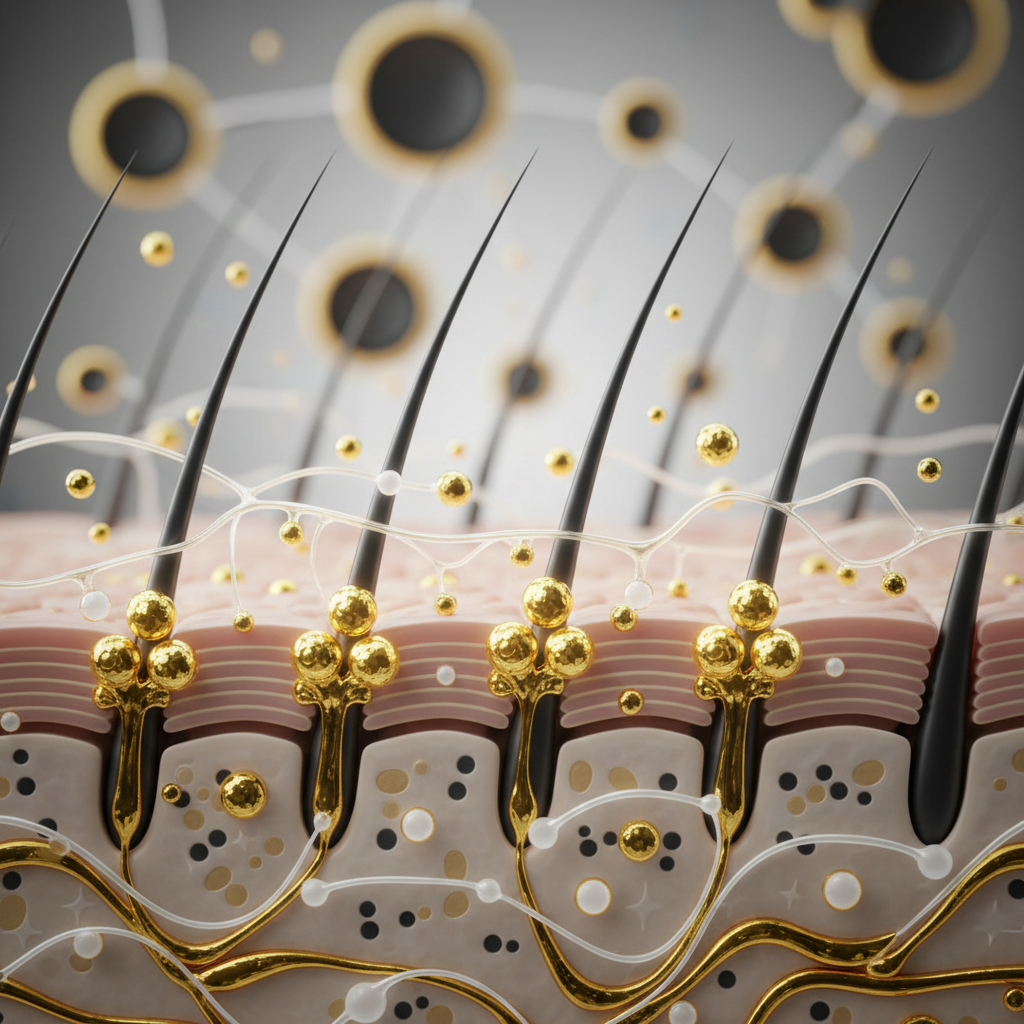
Basal sebocytes sit at the periphery of the sebaceous gland. As these cells divide, daughter cells migrate inward toward the central duct. During this migration, they undergo terminal differentiation: their cytoplasm fills with lipid droplets containing squalene, wax esters, and triglycerides. Once fully loaded, the sebocytes initiate programmed necrosis. The cell membrane dissolves, releasing the accumulated lipid pool into the follicular canal.
Basal Sebocytes (Cell division at gland margin)
 │
 ▼
Differentiation & Lipid Synthesis (Hormonal stimulation via DHT)
 │
 ▼
Holocrine Rupture (Cell dissolves, releasing lipid cocktail)
 │
 ▼
Infundibular Flow (Lipids migrate up hair canal to scalp surface)
 │
 ▼
Surface Interaction (Microbiome hydrolyses triglycerides into irritant FFAs)
At the skin surface, the lipid composition changes rapidly. Resident yeasts, predominantly Malassezia restricta and Malassezia globosa, lack the genes required to synthesise their own fatty acids. They produce lipase enzymes that split sebum triglycerides, consuming the saturated fatty acids and discarding unsaturated free fatty acids (such as oleic acid). These leftover unsaturated fatty acids can penetrate a weakened stratum corneum, causing cell turnover disruption, flaking, and inflammation.
Signs of sebum imbalance
A balanced scalp produces enough sebum to maintain softness and suppleness without accumulating heavy residues. Deviations from this equilibrium present distinct clinical signs.
| Scalp State | Physiological Signs | Fibre Characteristics | Typical Microbiome Impact |
|---|---|---|---|
| Hypo-seborrhoea (Underproduction) | Tightness, dry powdery flakes, pruritus, redness, stinging from water | Dull appearance, high static, rough cuticle, increased breakage from friction | Low Malassezia activity, depleted acid mantle, opportunistic bacterial risk |
| Normo-seborrhoea (Balanced) | Calm, supple, comfortable, pale pink or flesh-toned, no visible flaking | Natural sheen, manageable, flexible, moves freely at roots | Balanced commensal flora (Cutibacterium acnes and Malassezia) |
| Hyper-seborrhoea (Overproduction) | Greasy film within 24 hours, clumped yellow flakes, persistent itching, follicular redness | Limp roots, stringy clustering, heavy coating, dull build-up | Elevated Malassezia proliferation, lipid peroxidation, potential odour |
How to manage scalp sebum levels
Managing excess or deficient surface oil requires addressing skin hygiene, microbial balance, and barrier support.
1. Calibrate cleansing frequency
Those with hyper-seborrhoea benefit from daily or alternate-day cleansing using balanced surfactants. Leaving sebum on the scalp for extended periods allows squalene and unsaturated fatty acids to oxidise under ambient air and UV light, forming squalene monohydroperoxide, a known skin irritant. Conversely, those with low lipid output should wash less frequently (every three to five days) to preserve their delicate lipid layer.
2. Maintain physiological pH
Cleansing formulations should ideally sit within a pH range of 4.5 to 5.5. Alkaline cleansers (such as traditional soaps with a pH above 7.0) disrupt the stratum corneum barrier, lift hair cuticles, and swell the keratin fibres, worsening both barrier dehydration and strand fragility.
3. Incorporate targeted topical actives
For an oily scalp, specific cosmetic and dermatological ingredients help regulate the surface environment:
- Salicylic acid (0.5% to 2.0%): A lipid-soluble beta-hydroxy acid that penetrates the follicular infundibulum to clear accumulated sebum and dead keratinocytes.
- Niacinamide (2% to 4%): Shown in dermatological research to help modulate surface sebum levels and calm secondary redness.
- Zinc compounds (such as Zinc PCA): Help manage microbial balance and support normal sebum regulation.
4. Support follicular vitality with Watermans
When managing scalp hygiene, supporting the physical condition of hair follicles is essential. Formulations like Watermans Grow Me Shampoo deliver gentle, sulphate-free cleansing that effectively lifts oxidised lipids without stripping the acid mantle. Blended with rosemary extract, caffeine, biotin, and argan oil, it fosters a clean, nutrient-rich scalp environment that promotes stronger-feeling hair, fuller-looking volume, and improved resistance to mechanical breakage.
When sebum changes indicate another condition
Not all oily or flaky presentations stem purely from lifestyle or standard skin types. Underlying issues can present with similar symptoms:
- Seborrhoeic dermatitis: If the scalp shows thick, adherent, greasy yellow scales with underlying erythema (redness) that extends past the hairline into the eyebrows or retroauricular (behind the ear) folds, simple cosmetic washing will rarely suffice. This is a chronic inflammatory disorder requiring medical intervention.
- Polycystic ovary syndrome (PCOS): Sudden, extreme hyper-seborrhoea paired with hirsutism, irregular periods, and diffuse scalp hair shedding often points to systemic hyperandrogenism rather than an isolated scalp issue.
- Scalp psoriasis: Psoriatic plaques are frequently confused with seborrhoeic scaling. However, psoriasis typically presents with sharply demarcated, silvery-white, dry, thick scales that bleed in tiny pinpoints if detached (Auspitz's sign).
When to seek professional advice
Consult a GP, dermatologist, or registered trichologist if:
- The scalp burns, stings, or shows open fissures and weeping lesions.
- Redness spreads noticeably beyond the scalp perimeter.
- Flaking is accompanied by abrupt, diffuse hair shedding or patchy focal bald patches.
- Over-the-counter anti-dandruff and balancing formulations fail to alleviate itching or inflammation after four weeks of consistent use.
Frequently asked questions about Scalp Sebum Production
How long does it take for scalp sebum production to rebalance?
When you introduce a suitable cleansing regimen, the surface oiliness and skin barrier typically adjust within two to four weeks. However, the internal cellular cycle of sebocytes takes roughly 14 to 21 days. True physiological changes in sebum synthesis driven by hormonal fluctuations or topical interventions require at least a month of consistent care to show noticeable differences.
Does cold water reduce scalp sebum production?
No. Sebaceous glands lack muscular mechanisms that expand or contract in response to water temperature. Cold water will not close pores or stop glands from secreting lipids. In fact, washing with lukewarm water is far more effective, as it gently liquefies and washes away high-melting-point waxes and sebum without scalding or drying the surrounding scalp skin.
Can your diet alter your scalp sebum production?
Diet has a measurable, indirect impact on sebum synthesis. Diets high on the glycaemic index cause rapid spikes in serum insulin and insulin-like growth factor 1 (IGF-1). Elevated IGF-1 amplifies androgen receptor sensitivity and directly triggers sebocyte proliferation, increasing sebum output. Adopting a balanced diet with lower glycaemic loads can help moderate excess sebum in prone individuals.
Why does an oily scalp sometimes feel intensely itchy?
Itchiness on an oily scalp usually results from sebum oxidisation and microbial activity rather than dry skin. When the yeast Malassezia consumes sebum triglycerides, it releases free fatty acids that irritate the scalp barrier. Combined with oxidised squalene, these lipids trigger low-grade inflammatory cascades in the skin, resulting in itching and rapid epidermal turnover.
Summary
Maintaining balanced scalp sebum production is essential for a resilient skin barrier, a stable microbiome, and healthy-looking hair. While genetics and hormonal baselines dictate how much lipid your glands synthesise, intelligent hygiene, non-stripping cleansers, and targeted actives keep surface oils in check. Respecting the scalp's natural pH and avoiding harsh stripping agents ensures that your natural oils protect the hair rather than causing irritation or flaking.
Sources and references
- British Association of Dermatologists. Seborrhoeic Dermatitis Guidelines, 2019.
- Zouboulis, C. C., et al. "The human sebaceous gland: a dynamic endocrine organ." Experimental Dermatology, 2008.
- Ro, B. I., & Dawson, T. L. "The role of sebaceous metabolism in the pathogenesis of dandruff and seborrheic dermatitis." Journal of Investigative Dermatology Symposium Proceedings, 2005.
- Picardo, M., et al. "Sebaceous gland lipids." Dermato-Endocrinology, 2009.
- National Institute for Health and Care Excellence (NICE). Dandruff and seborrhoeic dermatitis - Clinical Knowledge Summary, 2022.
Find these ingredients in Watermans products
- Zinc: you will find this ingredient in our Hair Vitamins.
- Oleic Acid: you will find this ingredient in our Camellia & Black Castor Hair & Body Oil.
- Niacinamide: you will find this ingredient in our Hair Mask.