Hair Follicle Anatomy: Understanding the Foundation of Hair Growth
11 min read ·
Hair Follicle Anatomy describes the complex, miniature organ responsible for producing each strand of hair, underpinning hair growth and scalp health; however, its intricate nature means many factors can influence its function.
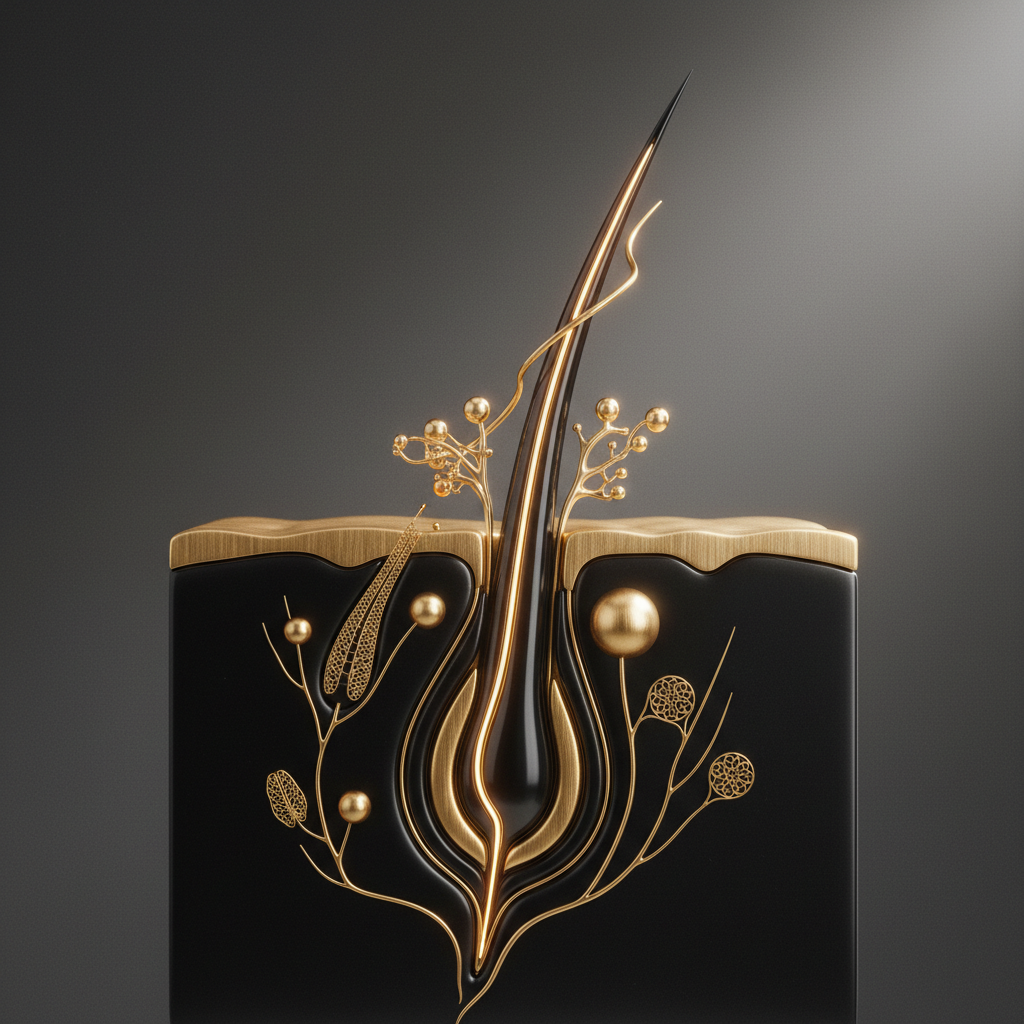
Quick answer: Hair Follicle Anatomy refers to the detailed structure of the hair follicle, a tiny organ embedded in the skin that produces each individual hair fibre. It comprises various interconnected parts, including the hair bulb, dermal papilla, and sebaceous gland, all working together in a cyclical process of growth, regression, and rest. Understanding Hair Follicle Anatomy is crucial for comprehending how hair grows and why issues like hair loss occur, though its complexity means external and internal factors heavily influence its function.
Key takeaways
- Each hair follicle is a dynamic, miniature organ responsible for producing a single hair fibre.
- Key components like the dermal papilla supply nutrients, while the hair matrix creates the hair shaft.
- Sebaceous glands associated with follicles produce sebum, essential for lubricating hair and scalp.
- Hair follicles undergo a continuous cycle of growth (anagen), transition (catagen), and rest (telogen).
- The health and proper function of Hair Follicle Anatomy are fundamental for robust hair growth and overall scalp health.
Hair Follicle Anatomy: what the evidence shows
Hair is much more than just a visible fibre; each strand grows from a highly organised structure called the hair follicle. This intricate mini-organ, found within the dermis layer of the skin, acts as the primary factory for hair production. Understanding Hair Follicle Anatomy means looking at its various interconnected parts, each with a specific role in ensuring healthy hair growth and maintaining the hair's condition.
The follicle is not a static structure; it continuously cycles through phases of growth, regression, and rest throughout a person's life. This cyclical nature is fundamental to why we constantly shed and regrow hair. The proper functioning of these cycles, driven by cellular activity within the follicle, is key to maintaining hair density and vitality. Disturbances to this delicate balance can lead to various hair-related concerns.
The Hair Bulb: The Powerhouse of Growth
At the very base of the hair follicle is the hair bulb, often considered the most crucial part because it's where active hair growth begins. This bulb-shaped structure encases the dermal papilla, which is critical for nourishing the growing hair. Here, cells divide rapidly in a process called proliferation, pushing upwards to form the hair shaft.
The Dermal Papilla: The Follicle's Control Centre
The dermal papilla is a small, cone-shaped structure nestled within the hair bulb. It's rich in blood vessels (vascularised) and nerve endings (innervated), acting as the signalling and nutrient supply centre for the hair follicle. This papilla delivers essential oxygen and nutrients to the actively growing hair cells and plays a vital role in regulating the entire hair growth cycle. It communicates with the surrounding cells through various growth factors and signalling molecules, dictating when hair grows, stops growing, and rests. Research consistently highlights the dermal papilla's central role in initiating and sustaining hair growth, with its size often correlating with the thickness of the hair fibre produced.
The Hair Matrix: Building the Hair Fibre
Surrounding the dermal papilla within the hair bulb are the cells of the hair matrix. These are highly proliferative cells that divide rapidly, differentiating into the various cell types that will form the layers of the hair shaft. As new cells are produced, they push older cells upwards, which then keratinise (harden with keratin protein) and die, forming the visible hair fibre. The speed of cell division in the matrix directly influences the rate of hair growth.
Sebaceous Gland: Natural Lubrication
Every hair follicle, except those on the palms and soles, has an associated sebaceous gland. This gland produces sebum, a natural, oily substance made up of lipids, waxes, and squalene. Sebum is secreted into the upper part of the hair follicle and then coats the hair shaft and the surrounding skin. Its primary functions are to lubricate the hair, keeping it flexible and preventing dryness, and to form a protective barrier on the scalp. This barrier helps to maintain the scalp's pH, protect against environmental damage, and inhibit the growth of certain microorganisms. For more on this, see "Sebum Regulation: Understanding and Managing Scalp Oiliness" and "Oily Scalp Care: Understanding and Managing Excess Sebum".
Arrector Pili Muscle: The "Goosebumps" Trigger
Attached to the hair follicle and the skin's outer layer (dermis) is a tiny, involuntary smooth muscle called the arrector pili. When this muscle contracts, typically in response to cold or fear, it pulls the hair follicle upright, causing the hair to stand on end. This action creates small bumps on the skin, commonly known as "goosebumps". From an evolutionary perspective, this mechanism helped animals to trap a layer of insulating air close to the skin or to appear larger to predators.
Root Sheaths: Guiding and Protecting the Hair
Two main sheaths surround and protect the developing hair fibre as it grows upwards: the inner root sheath (IRS) and the outer root sheath (ORS).
- Inner Root Sheath (IRS): This sheath directly encases the hair shaft within the follicle. It's a transient structure, meaning it disintegrates before the hair emerges from the skin. The IRS helps to mould and guide the growing hair fibre, ensuring its shape and integrity. It consists of three distinct layers: Henle's layer, Huxley's layer, and the cuticle of the inner root sheath, which interlocks with the cuticle of the hair shaft.
- Outer Root Sheath (ORS): This outer layer extends from the epidermis down to the hair bulb. It acts as a protective barrier and is crucial for hair follicle regeneration. The ORS contains stem cells that are vital for repairing the follicle and initiating new hair growth during the anagen phase after the previous hair has shed.
The Hair Shaft: The Visible Part
The hair shaft is the part of the hair that we see and touch, extending beyond the surface of the skin. It's considered non-living because the cells that form it are fully keratinised and no longer metabolically active. The hair shaft is primarily made of a tough protein called keratin and consists of three main layers:
- Cuticle: The outermost layer, made up of overlapping, scale-like cells. A healthy cuticle lies flat, providing a smooth surface that reflects light, contributing to the hair's shine, and protecting the inner layers. Damage to the cuticle can make hair feel rough, appear dull, and lead to issues like frizz. You can learn more in "Hair Damage: Causes, Signs, and Solutions".
- Cortex: The thickest layer, making up the bulk of the hair shaft. It contains tightly packed keratin bundles that give hair its strength, elasticity, and texture. The cortex also houses melanin granules, which are responsible for the hair's natural colour.
- Medulla: The innermost core, present in some hair types but not all (e.g., fine hair often lacks a medulla). Its exact function isn't fully understood, but it's thought to play a role in insulation and structural integrity.
The Hair Growth Cycle: A Continuous Process
Understanding Hair Follicle Anatomy is incomplete without recognising its cyclical nature. Each hair follicle operates independently, undergoing a continuous cycle of growth, regression, and rest. This cycle ensures that hair is constantly renewed.
- Anagen (Growth Phase): This is the active growing period where cells in the hair matrix rapidly divide, producing new hair. This phase is the longest, typically lasting from 2 to 7 years, though its duration is genetically determined and varies between individuals and body sites. The longer the anagen phase, the longer the hair can grow.
- Catagen (Transition Phase): A short transitional phase, lasting about 2 to 3 weeks. During this time, hair growth stops, and the hair follicle shrinks, detaching from the dermal papilla. The lower part of the follicle regresses.
- Telogen (Resting Phase): The follicle enters a resting period, which usually lasts around 3 months. The old hair remains in the follicle but is no longer growing. At the end of this phase, the old hair is shed, making way for a new anagen hair to begin its growth cycle. This normal shedding averages 50 to 100 hairs per day. Excessive shedding can be indicative of telogen effluvium.
| Part of Hair Follicle Anatomy | Primary Function |
|---|---|
| Hair Bulb | Site of active cell division; generates new hair cells |
| Dermal Papilla | Supplies nutrients and signalling molecules; regulates hair growth cycle |
| Hair Matrix | Actively dividing cells that form the hair shaft |
| Sebaceous Gland | Produces sebum for hair and scalp lubrication and protection |
| Arrector Pili Muscle | Contracts to make hair stand upright (goosebumps) |
| Inner Root Sheath | Molds and guides the developing hair fibre |
| Outer Root Sheath | Protects the follicle; contains stem cells for regeneration |
| Hair Shaft | Visible hair fibre; provides structure, colour, and texture |
What you can do to support healthy Hair Follicle Anatomy
While the internal workings of the hair follicle are complex and largely involuntary, there are external practices that can support its overall health and function, leading to stronger, healthier-looking hair. Focus on maintaining a healthy scalp environment, as this directly impacts the follicles embedded within it.
- Gentle Cleansing: Regular, gentle cleansing helps to remove product build-up, excess sebum, and environmental pollutants that can accumulate around the follicle openings. Using a mild shampoo, like a sulfate-free option, helps to clean without stripping the scalp's natural moisture barrier, which is important for follicular health. See "Sulfate-Free Shampoo Benefits" and "Choosing the Right Shampoo for Your Hair Type".
- Scalp Hydration and Nutrition: A well-hydrated scalp supports the optimal function of the dermal papilla and other follicular structures. Using conditioners and treatments that provide moisture and nutrients can create a healthier environment for growth. Ingredients like humectants can draw moisture to the scalp. Consult "Hair Hydration: The Science Behind Keeping Hair Moist" and "The Science of Conditioners: How Hair Care Formulations Work".
- Minimising Physical Stress: Harsh brushing, tight hairstyles, and excessive heat styling can cause traction on the hair shaft, which can stress the follicle over time. Reducing these stressors helps to prevent damage to the follicle and reduce hair breakage. "Heat Styling Safety Best Practices" offers guidance.
- Protecting from Environmental Damage: Exposure to harsh UV rays and pollutants can negatively impact scalp health and, by extension, hair follicles. Wearing hats or using hair products with UV filters can offer some protection.
- Diet and Lifestyle: A balanced diet rich in vitamins, minerals, and proteins provides the building blocks for healthy hair growth, directly supporting the metabolic needs of the hair follicle. Essential nutrients like iron, zinc, biotin, and vitamins A, C, and D are vital for follicular function. Stress management is also important, as chronic stress can disrupt the hair growth cycle.
When to get professional advice
If you notice sudden or excessive hair shedding, patches of hair loss, or persistent scalp irritation, it's advisable to consult a healthcare professional, such as a dermatologist. While Hair Follicle Anatomy is robust, these signs can indicate underlying medical conditions, nutritional deficiencies, or hormonal imbalances that require professional diagnosis and treatment. They can also rule out conditions like alopecia, which affects the hair follicles directly.
Frequently asked questions about Hair Follicle Anatomy
What is the most important part of the hair follicle?
The dermal papilla is often considered the most important part of the hair follicle. It acts as the signalling centre, supplying essential nutrients and growth factors to the hair matrix cells. Its health and activity directly determine the strength, thickness, and growth cycle of the hair fibre, making it crucial for continuous hair production.
How many hair follicles are on the average human head?
The average human head has approximately 100,000 to 150,000 hair follicles. This number can vary significantly between individuals and ethnic groups. Each follicle operates independently, cycling through its growth phases at different times, which is why we don't lose all our hair simultaneously.
Can hair follicles die or become inactive?
Yes, hair follicles can become inactive or "die". In conditions like androgenetic alopecia (pattern baldness), follicles progressively miniaturise, producing finer, shorter hairs until they become dormant and cease producing hair. Severe trauma, scarring, or certain autoimmune diseases can also permanently damage follicles, leading to irreversible hair loss in those areas.
How does Hair Follicle Anatomy relate to hair loss?
Disruptions to Hair Follicle Anatomy are central to most forms of hair loss. For instance, in androgenetic alopecia, hormonal changes lead to miniaturisation of the follicles. In telogen effluvium, a stressor causes a large number of follicles to prematurely enter the resting phase, leading to increased shedding. Understanding the specific follicular changes helps in diagnosing and addressing different types of hair loss.
Do hair follicles regenerate?
Hair follicles do not regenerate in the sense of forming new follicles from scratch after they are destroyed. However, during the normal hair growth cycle, the lower part of the follicle undergoes a process of regression and then regeneration from stem cells located in the outer root sheath. This allows for continuous hair production from existing follicles.
Conclusion
Unpacking Hair Follicle Anatomy reveals a complex and dynamic system, where each component plays a critical role in producing, maintaining, and regulating hair growth. From the nutrient-rich dermal papilla to the protective sebaceous glands and the visible hair shaft, these structures work in concert through a continuous growth cycle. Nurturing this intricate system through good scalp care and a healthy lifestyle is key to supporting robust hair growth and vibrant hair appearance. Watermans offers products designed to support a healthy scalp environment and strong-feeling hair.
Watermans Grow Me Shampoo and Conditioner are formulated with ingredients selected to nourish the scalp and support the appearance of healthier, thicker-looking hair. Used together, they provide a gentle cleansing and conditioning routine that aims to create an optimal environment for hair follicles, promoting stronger-feeling hair and helping to reduce breakage.
Sources and references
- American Academy of Dermatology Association, Hair Loss: Diagnosis and Treatment. Available at aad.org
- National Institutes of Health (NIH), National Institute of Arthritis and Musculoskeletal and Skin Diseases (NIAMS), Healthy Hair. Available at niams.nih.gov
- Journal of Investigative Dermatology, "The biology of hair follicles." 2004.
- British Association of Dermatologists, Hair and Scalp Conditions. Available at bad.org.uk
- PubMed Central, "Anatomy and physiology of hair." 2017.
Find these ingredients in Watermans products
- Zinc: you will find this ingredient in our Hair Vitamins.