Scalp Barrier Function: The Dermatological Guide to Scalp Health
9 min read ·
Discover how the Scalp Barrier Function defends against irritation, flakes, and dryness, and learn the evidence-based steps to restore and protect your scalp.
Quick answer: The Scalp Barrier Function refers to the protective physical and biochemical shield formed by the stratum corneum, intercellular lipids, and the acid mantle on your head. When working properly, it locks in essential moisture and prevents pathogens, irritants, and allergens from penetrating the hair follicles. However, a compromised barrier cannot heal overnight; restoring physiological lipid balance and normal desquamation requires consistent care, gentle cleansing, and often several weeks of targeted barrier support.
Key takeaways
- The scalp barrier relies on a delicate matrix of ceramides, cholesterol, free fatty acids, and an acidic surface pH between 4.5 and 5.5.
- Transepidermal water loss (TEWL) rises sharply when the barrier is disrupted, causing dehydration, tightness, flaking, and inflammation.
- Barrier dysfunction is distinct from simple dry skin; it is frequently linked to conditions like seborrhoeic dermatitis, contact dermatitis, and scalp eczema.
- Harsh surfactants, over-washing, high-heat styling, and alkaline water degrade the intercellular lipid bilayer.
- Topical support requires physiological lipids, humectants, and anti-inflammatory botanicals alongside gentle, pH-balanced cleansing.
Scalp Barrier Function: what the evidence shows
Research shows that the scalp is structurally distinct from facial and body skin, making its barrier both resilient and vulnerable. Dermatological studies confirm that the scalp possesses a higher follicular density, a richer blood supply, and an abundance of sebaceous glands. Despite this high sebum output, the scalp frequently exhibits higher baseline transepidermal water loss (TEWL) than the forearm or cheek.
The stratum corneum on the scalp consists of flattened, keratin-packed cells called corneocytes. These cells sit embedded within an intercellular lipid matrix arranged in crystalline lamellar sheets. This "bricks and mortar" configuration acts as your primary defence. Studies published in the Journal of Investigative Dermatology demonstrate that when the balance of ceramides, cholesterol, and free fatty acids is disturbed, the lamellar organisation fails. Water rapidly evaporates from the viable epidermis beneath, allowing external micro-organisms and environmental pollutants direct access to the perifollicular tissue.
Furthermore, the scalp hosts a complex microbiome dominated by Cutibacterium acnes and Malassezia species. When the skin barrier functions properly, antimicrobial peptides (AMPs) like human beta-defensins keep these microbial communities in balance. If the lipid matrix degrades, Malassezia yeasts penetrate deeper, metabolising triglycerides into irritating free fatty acids such as oleic acid. This process triggers micro-inflammation around the follicle, driving itch, erythema, and abnormal cellular turnover.
The biological mechanisms behind barrier breakdown
Understanding how your scalp defends itself clarifies why common hair routines cause unexpected irritation. The barrier relies on three interdependent systems:
1. The lipid bilayer and desquamation
Healthy corneocytes are glued together by an equimolar ratio of ceramides (roughly 50%), cholesterol (25%), and free fatty acids (15%). As new skin cells migrate from the basal layer to the surface over a 28-day cycle, enzymes called kallikreins gently dissolve the cellular bridges (corneodesmosomes) to shed dead cells invisibly. When lipids are stripped away, these enzymes malfunction. The cells shed in irregular clumps rather than microscopic units, resulting in visible flaking.
2. The acid mantle
The surface of a healthy scalp maintains an acidic pH between 4.5 and 5.5. This acidity is created by sebum breakdown, lactic acid in sweat, and the sodium-hydrogen antiporter system in skin cells. This acidic environment inhibits pathogenic bacteria while activating beta-glucocerebrosidase, an enzyme required to synthesise barrier-repairing ceramides. Washing with alkaline soaps or hard water disrupts this pH, stalling lipid production for hours.
3. Neuro-sensory inflammation
When the physical barrier thins, sensory nerve fibres (unmyelinated C-fibres) extend higher into the epidermis. Environmental changes, chemical residues, and temperature shifts trigger these exposed nerve endings directly. This mechanism explains the burning, stinging, and unprompted itching associated with a reactive, sensitive scalp.
Signs of a compromised scalp barrier
A damaged barrier manifests through sensory, visual, and tactile symptoms. Identifying these signs early prevents secondary follicular distress:
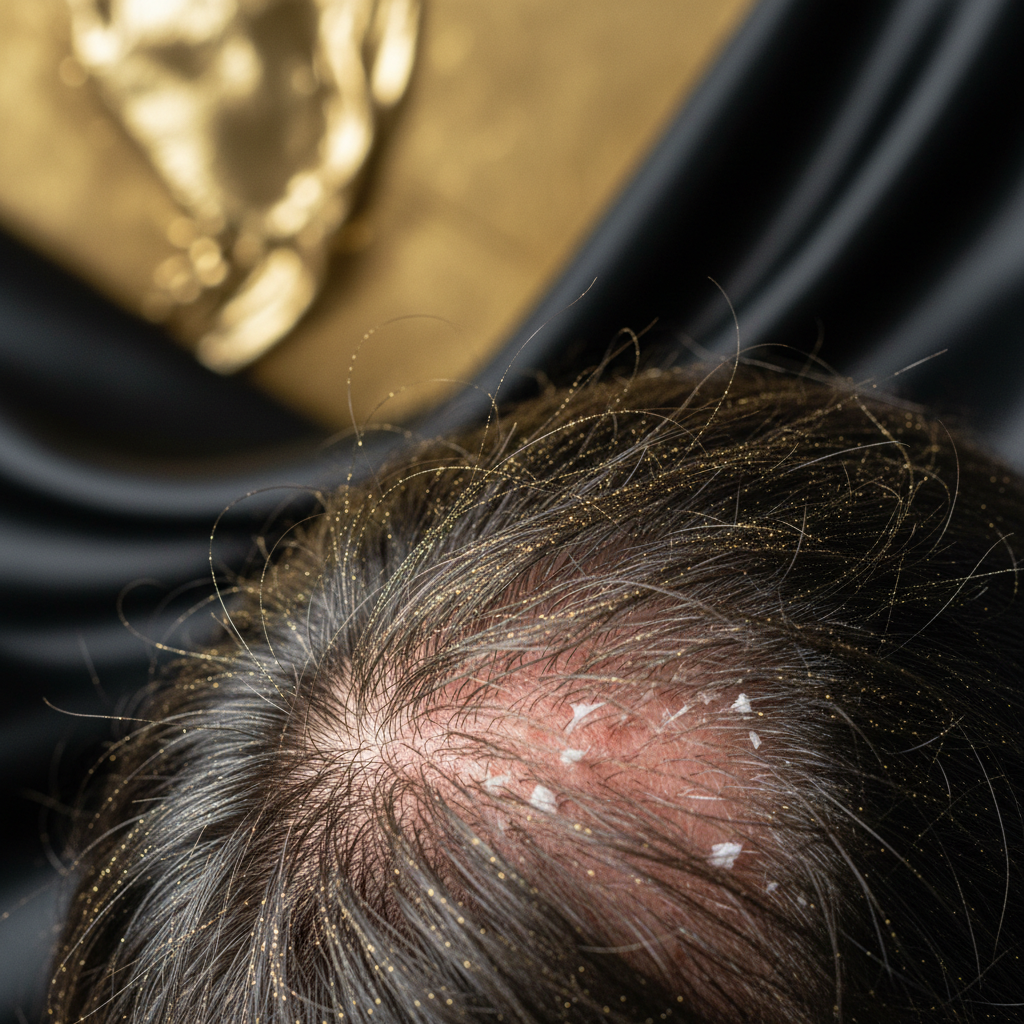
- Persistent tightness and pulling: The scalp feels uncomfortably taut, especially immediately after washing or when tying hair back.
- Pruritus (itching) and burning: A continuous urge to scratch, often accompanied by a prickling heat when applying everyday products.
- Fine, powdery flaking: Unlike thick, greasy flakes, barrier-damaged flaking often looks like tiny, dry specks scattered along the hair parting.
- Surface redness and erythema: Diffuse pink or red patches around the hair entry points.
- Product reactivity: Stinging or tingling from shampoos, styling foams, or scalp tonics that previously caused no discomfort.
Scalp Barrier Function compared to standard skin conditions
| Feature | Compromised Scalp Barrier | Classical Seborrhoeic Dermatitis | Scalp Psoriasis |
|---|---|---|---|
| Primary Driver | Stripped lipids and elevated TEWL | Malassezia overgrowth and sebum rancidity | Autoimmune-driven hyperkeratosis |
| Typical Appearance | Diffuse redness, fine dry flakes, tight skin | Yellowish, greasy flakes adhering to red patches | Well-demarcated silvery scales on thick plaques |
| Common Sensation | Stinging, burning, dry tightness | Moderate to intense itch | Soreness, itching, cracking, potential bleeding |
| Skin pH Status | Elevated above 5.5 | Typically neutral to slightly alkaline | Altered local enzymatic activity |
| Transepidermal Water Loss | Significantly increased | Moderately increased | Extremely elevated within active lesions |
| Initial Management | Physiological lipid replenishment, pH 4.5 to 5.5 wash | Antifungal actives (ketoconazole, zinc pyrithione) | Keratolytics, topical corticosteroids, medical review |
What the evidence does not show
It is critical to separate established dermatological mechanisms from popular wellness claims:
- Cosmetics cannot cure autoimmune scalp disorders: A damaged barrier can exacerbate psoriasis or lichen planopilaris, but repairing the lipid matrix will not cure systemic or autoimmune skin diseases.
- Natural oils are not an automatic fix: Applying raw kitchen oils like pure olive or coconut oil does not replicate the precise physiological lipid matrix. Olive oil, for example, is rich in oleic acid, which controlled studies show can disrupt stratum corneum lipids and worsen barrier integrity.
- Barrier damage does not directly cause follicular alopecia: While chronic perifollicular inflammation from barrier failure can increase temporary hair shedding (telogen effluvium) or weaken hair anchoring, it does not cause androgenetic alopecia (pattern baldness) or scarring alopecias.
Practical steps to restore the scalp barrier
Rebuilding your barrier requires eliminating chemical and mechanical insults while providing topical building blocks:
Lower wash temperature
Hot water strips intercellular lipids much like dish soap cuts grease on a frying pan. Wash and rinse hair in lukewarm water (around 36°C to 38°C) to protect the crystalline lipid lamellae.
Choose mild, pH-balanced cleansing
Avoid harsh cleansers with high concentrations of alkaline detergents. Look for syndet (synthetic detergent) cleansers with an acidic pH balance (4.5 to 5.5). These cleanse debris without denaturing epidermal proteins or washing out lipid reserves.
Introduce biomimetic hydrators
Look for leave-on serums and scalp washes containing niacinamide, panthenol (vitamin B5), hyaluronic acid, and amino acids. Niacinamide has been shown in clinical trials to upregulate endogenous ceramide synthesis in human skin, actively encouraging the scalp to repair itself.
Protect from environmental weathering
UV radiation and atmospheric particulate matter oxidise scalp surface lipids. Wear hats during peak sun hours and rinse the scalp thoroughly after swimming in chlorinated or salt water.
Supporting the scalp ecosystem with Watermans
When managing hair hygiene, supporting the surrounding skin is essential. Watermans designed the Grow Me collection with scalp vitality in mind. By combining gentle cleansing agents with targeted botanical extracts, allantoin, and conditioning vitamins, the formula cleanses the hair fibre while respecting the sensitive ecosystem of the scalp. Maintaining clean, balanced skin helps support fuller-looking hair and ensures your hair care routine does not come at the expense of comfort.
When the cause may be something else
If your scalp remains painful, raw, or flaky despite gentle care, the issue may extend beyond simple barrier disruption:
- Allergic Contact Dermatitis: An acquired allergy to ingredients such as methylisothiazolinone (a preservative), fragrance mixes, or paraphenylenediamine (PPD in hair dyes). This requires patch testing by a dermatologist.
- Folliculitis: Bacterial infection (often Staphylococcus aureus) causing tiny pustules around the base of the hair shafts.
- Cicatricial (Scarring) Alopecia: Inflammatory conditions such as frontal fibrosing alopecia or lichen planopilaris that cause permanent follicular loss. Signs include loss of follicular openings, severe burning, and smooth bald patches.
Always seek guidance from an NHS GP, a consultant dermatologist, or an accredited trichologist if you notice weeping lesions, sudden patchy hair loss, bleeding, or scalp pain that interrupts your sleep.
Frequently asked questions about Scalp Barrier Function
Can washing your hair every day harm the Scalp Barrier Function?
Yes, frequent washing can compromise the Scalp Barrier Function if you use harsh, high-pH shampoos or very hot water. Stripping away lipids faster than the stratum corneum can replenish them leads to elevated water loss and barrier irritation. If daily washing is necessary due to heavy sweating, choose an ultra-mild, pH-balanced formula.
How long does it take for a damaged scalp barrier to heal?
A compromised scalp barrier generally requires between two to four weeks to recover. This timeframe aligns with the natural turnover cycle of epidermal corneocytes (roughly 28 days). During this period, avoid chemical treatments, bleaching, aggressive physical exfoliation, and heavily fragranced leave-on styling products.
Does a damaged scalp barrier cause hair shedding?
While a compromised barrier does not cause pattern baldness, chronic barrier breakdown causes low-grade perifollicular micro-inflammation. This inflammation can shift sensitive follicles prematurely into the telogen (resting) phase, leading to diffuse hair shedding. Once barrier integrity and skin comfort are restored, normal shedding cycles generally resume.
Are physical scalp scrubs bad for the barrier?
Physical scrubs containing large, jagged particles (such as crushed nut shells or coarse sea salts) can cause micro-fissures in an already weakened stratum corneum. If you suspect your barrier is compromised, avoid mechanical scrubs entirely. Opt instead for gentle chemical hydrators or mild enzymatic balancing products.
Summary
The health of your hair depends heavily on the condition of the skin it grows from. Maintaining a robust Scalp Barrier Function ensures that moisture remains locked inside the epidermis while pollutants, microbes, and irritants are kept at bay. By treating your scalp with the same dermatological care given to facial skin, using lukewarm water, and avoiding harsh surfactants, you build an ideal foundation for healthy, resilient hair.
Sources and references
- British Association of Dermatologists. Scalp Conditions and Barrier Integrity. Bad.org.uk
- Rawlings, A. V., & Harding, C. R. (2004). Moisturization and skin barrier function. Dermatologic Therapy, 17(s1), 4-19.
- Trüeb, R. M. (2018). Scalp Condition Impacts Hair Growth and Retention via Oxidative Stress. International Journal of Trichology, 10(6), 262-270.
- Cork, M. J., et al. (2009). Epidermal barrier dysfunction in atopic dermatitis. Journal of Investigative Dermatology, 129(8), 1892-1908.
- Saint-Léger, D., et al. (1989). The role of the epidermal barrier in scalp health and dandruff. British Journal of Dermatology, 121(3), 333-342.
Find these ingredients in Watermans products
- Allantoin: you will find this ingredient in our Hair Growth Shampoo.
- Zinc: you will find this ingredient in our Hair Vitamins.
- Oleic Acid: you will find this ingredient in our Camellia & Black Castor Hair & Body Oil.
- Niacinamide: you will find this ingredient in our Hair Mask.
- Panthenol (Provitamin B5): you will find this ingredient in our Heat Protection Spray.