Strengthening Damaged Hair: A Science-Backed Guide to Fibre Resilience
7 min read ·
Learn the science of Strengthening Damaged Hair. Discover how hydrolysed proteins, balanced pH, and lipid replenishment prevent breakage and rebuild fibre resilience.

Quick answer: Strengthening Damaged Hair requires reinforcing the structural protein matrix of the hair shaft and repairing the protective outer cuticle. Because hair fibre is non-living tissue, you cannot biological regenerate broken bonds permanently. However, you can significantly reduce breakage by using targeted hydrolysed proteins, bond-building formulations, lipid-replenishing conditioning agents, and pH-balanced products. True structural improvement relies on continuous protection against mechanical, thermal, and chemical stressors while patching vulnerable fibre defects until healthy new growth emerges.
Key takeaways
- Hair is non-living keratinised tissue, meaning damaged hair cannot technically heal itself biologically.
- Strengthening Damaged Hair relies on temporary structural reinforcement using hydrolysed proteins, film formers, and lipid replenishment.
- Chemical processing like bleaching strips the protective F-layer (18-methyleicosanoic acid), leaving hair porous, dry, and prone to snapping.
- Hair breakage along the shaft is completely distinct from follicular shedding or medical hair loss.
- Maintaining an acidic product pH between 3.5 and 5.5 helps keep the cuticle scales compact, preventing moisture loss and friction.
Strengthening Damaged Hair: what the evidence shows
Scientific research confirms that Strengthening Damaged Hair is a physical and cosmetic process rather than a biological cure. Human hair fibres consist of roughly 85% to 90% keratin protein, 3% to 5% lipids, trace minerals, and water. When chemical services (such as bleaching, perming, or relaxers) or thermal tools compromise this architecture, the internal disulphide bonds break and the protective outer cuticle lifts or chips away.
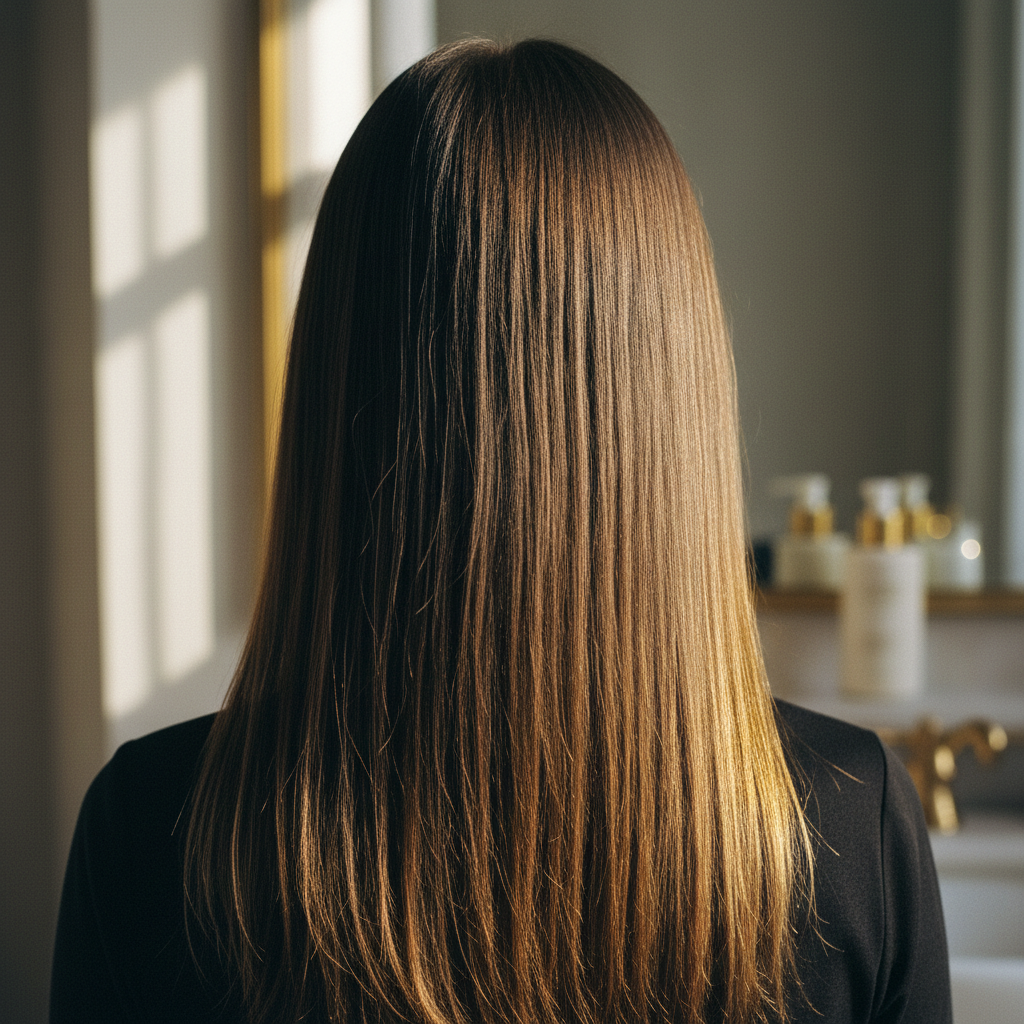
Dermatological and cosmetic literature shows that topical interventions can measurably increase the tensile strength of compromised fibres. Hydrolysed proteins (such as wheat, soy, or keratin peptides) with molecular weights under 1,500 Daltons can penetrate partially into the hair cortex. Once inside, they temporarily occupy structural voids and form hydrogen bonds, reducing elasticity loss when wet. Larger proteins remain on the surface, forming a flexible film that smooths ragged cuticle edges, lowering inter-fibre friction and mechanical snagging during brushing.
Furthermore, conditioning agents like cationic surfactants (for example, behentrimonium chloride) deposit onto negatively charged damaged sites. This neutralises static electricity, reduces wet combing force by up to 80%, and prevents the friction-induced breakage that thins out mid-lengths and ends.
What the evidence does not show
Cosmetic science does not support claims of permanent, irreversible hair fibre repair. While marketing often promises to completely undo severe damage, no topical treatment can fully reconstruct the original virgin disulphide matrix or restore the lost natural 18-MEA lipid layer permanently.
Similarly, treatments aimed at Strengthening Damaged Hair will not stop follicular hair shedding. Conditions such as telogen effluvium or androgenetic alopecia originate inside the dermal papilla beneath the scalp, completely independent of the hair shaft's physical condition. Products formulated to repair snapping lengths do not alter your genetic shedding cycle or stimulate new follicles.
Mechanisms of hair fibre damage
Understanding how hair loses its structural integrity helps you select the correct corrective steps. Fibre damage occurs across three distinct zones:
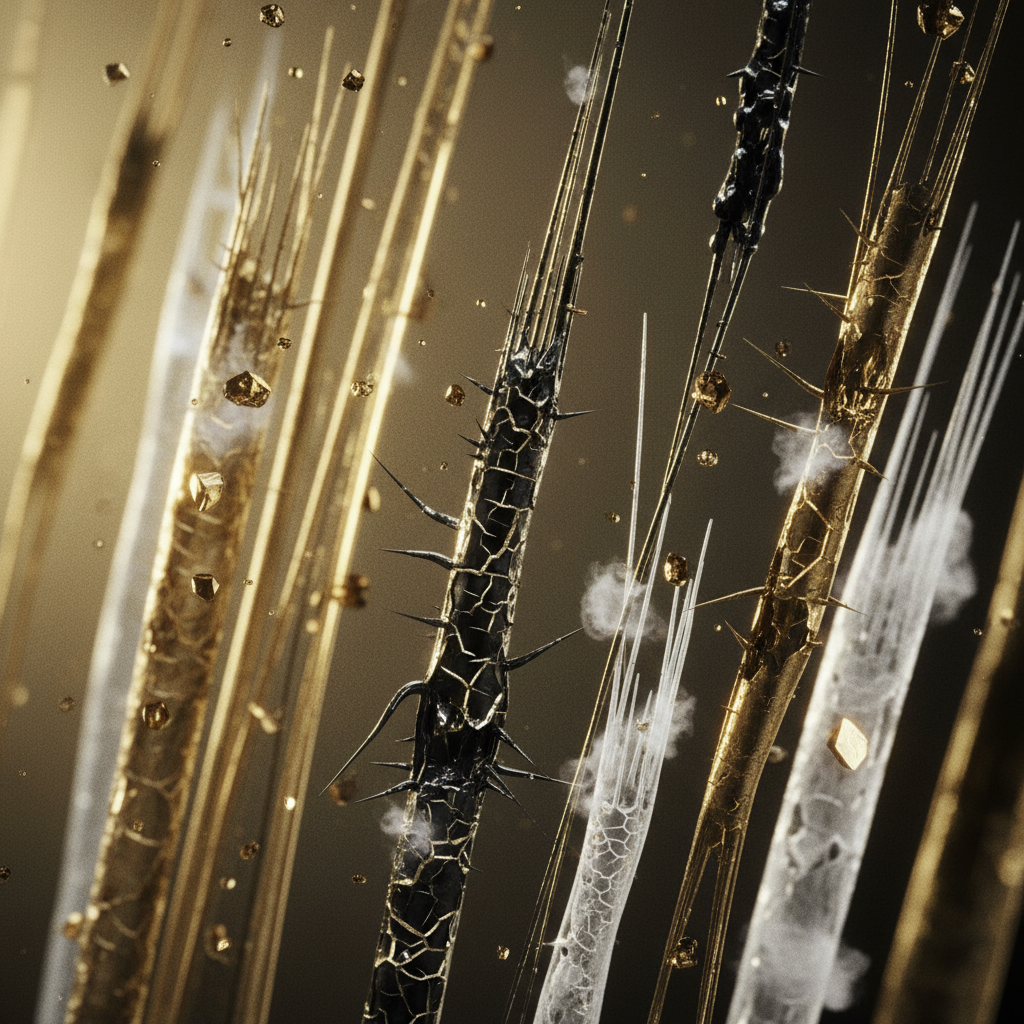
1. Cuticle erosion and lipid stripping
The cuticle consists of overlapping shingle-like scales coated with 18-methyleicosanoic acid (18-MEA), a fatty acid layer that renders virgin hair naturally hydrophobic (water-repelling). Bleaching, alkaline dyes, and harsh surfactants oxidise and remove this lipid layer. Without it, the hair turns hydrophilic, absorbing excess water, swelling rapidly, and drying out into a rough, snag-prone state.
2. Cortical disulphide breakdown
The cortex contains organised bundles of keratin chains cross-linked by cystine disulphide bonds. High heat (above 185°C) and alkaline chemical processing break these covalent bonds, turning cystine into cysteic acid. This drops the tensile strength of the fibre, causing it to snap under routine styling tension.
3. Moisture and protein imbalance
Healthy hair needs a dynamic balance between moisture and structural proteins. If hair absorbs too much water without adequate structural elasticity (hygral fatigue), repeated swelling and contracting weakens the internal cell membrane complex. Conversely, overloading brittle hair with heavy protein without adequate emollient conditioning makes the fibre stiff and fragile.
| Type of Hair Damage | Primary Cause | Physical Symptoms | Evidence-Based Intervention |
|---|---|---|---|
| Cuticle Weathering | Friction, UV light, harsh brushing | Dullness, tangling, rough texture | Cationic conditioning agents, silicones, low pH rinses |
| Chemical Porosity | Bleaching, permanent hair dye, relaxers | High water absorption, gummy texture when wet | Hydrolysed micro-proteins, bond-building complexes |
| Thermal Degradation | Flat irons, curling wands over 185°C | Split ends, brittle snapping, bubble hair | Thermal protectants (copolymer films), heat reduction |
| Hygral Fatigue | Frequent prolonged soaking, no lipid seal | Limpness, loss of elasticity, mid-shaft breakage | Penetrating oils (like coconut oil), regular protein balancing |
What you can do to strengthen vulnerable hair
You can restore manageable strength and prevent ongoing breakage through consistent, science-backed habits:
- Lower product pH: Use cleansing and conditioning products formulated within an acidic pH range of 3.5 to 5.5. Acidic solutions compact the cuticle layer, preserve structural proteins, and increase natural shine.
- Incorporate hydrolysed proteins: Rotate in deep-conditioning treatments with low molecular weight proteins. These fill micro-fissures in the cortex to provide temporary reinforcement.
- Minimise mechanical friction: Avoid aggressive towel drying. Wrap wet hair in a soft microfibre towel or cotton cloth, and always detangle from ends upward using a wide-tooth comb or flexible wet brush.
- Control thermal exposure: Keep heated styling tools below 185°C, and never skip a silicone- or polymer-based heat protectant, which buffers against rapid water boiling inside the hair cortex.
- Trim split ends regularly: Once a split develops at the tip, it will continue to fissure upward along the shaft. A small trim removes the point of mechanical failure before it ruins healthier hair higher up.
When the issue is shedding, not breakage
It is critical to distinguish between broken hair strands and shed hairs. If you notice shorter pieces of hair without a tiny white bulb on the end snapping off on your clothing or sink, you are dealing with hair breakage along the shaft. This calls for the strengthening measures detailed above.
If hairs come out with the bulb intact at full length, this is follicular shedding. Sudden, diffuse shedding often stems from telogen effluvium triggered by systemic events like acute illness, hormonal fluctuations, nutritional deficiencies (such as iron or zinc), or significant psychological stress. Protein masks and bonding treatments cannot treat follicular shedding, as the root of the problem lies beneath the scalp.
Supporting hair vitality from root to tip: Watermans
External hair strengthening repairs the existing fibre, but long-term resilience also depends on supporting hair as it emerges from the scalp. Watermans provides targeted, cosmetic scalp and hair formulas designed to cultivate a healthy foundation.
Watermans Grow Me Shampoo and Conditioner deliver premium blends of biotin, caffeine, rosemary extract, hydrolysed lupin protein, and argan oil. These ingredients help wash away environmental buildup, condition dry hair fibres, and reduce everyday breakage during styling. Integrating a nourishing, nutrient-rich topical regimen ensures that new growth starts out resilient, supple, and better protected against daily mechanical wear.
Frequently asked questions about Strengthening Damaged Hair
Can you permanently repair split ends?
No, you cannot permanently reconnect a split end once the hair fibre has cracked. While certain conditioning polymers, hydrolysed proteins, and salon serums can temporarily seal split ends together until the next wash, trimming the damaged tip remains the only permanent fix to prevent the tear from spreading upward.
How often should you use protein treatments when Strengthening Damaged Hair?
Most chemically treated or brittle hair benefits from protein treatments once every one to two weeks. Using concentrated protein products with every wash without alternating them with rich moisturising conditioners can cause protein buildup, leaving hair uncomfortably stiff, brittle, and more prone to breakage.
What is the ideal water temperature for washing fragile hair?
Tepid or lukewarm water is best for fragile hair. Excessively hot water swells the hair shaft and can strip protective natural sebum, leaving cuticles vulnerable to friction. Finishing your wash with a cool rinse can help flatten the outer cuticle layer, improving light reflection and smoothness.
Does hard water weaken damaged hair further?
Yes, hard water containing high concentrations of calcium and magnesium minerals can leave deposits on the hair shaft. These mineral films prevent conditioning agents from adhering properly, increase surface roughness, and leave hair stiff and brittle, exacerbating mechanical breakage during everyday detangling.
Supporting lasting hair resilience
Strengthening Damaged Hair is an ongoing commitment to protecting non-living protein fibres from excessive friction, moisture loss, and high heat. While damaged hair cannot regenerate like living skin tissue, sensible care with low-pH products, hydrolysed proteins, and lipid-replenishing conditioners will preserve fibre integrity and control breakage. By handling fragile hair gently and maintaining a healthy scalp environment for emerging growth, you can maintain strong, resilient lengths over time.
Sources and references
- Robbins, C. R. (2012). Chemical and Physical Behavior of Human Hair (5th ed.). Springer Science & Business Media.
- Gavazzoni Dias, M. F. (2015). Hair cosmetics: An overview. International Journal of Trichology, 7(1), 2-15.
- Dawber, R. (1996). Hair: Its structure and response to cosmetic preparations. Clinics in Dermatology, 14(1), 105-112.
- Sinclair, R. D. (2007). Healthy hair: What is it? Journal of Investigative Dermatology Symposium Proceedings, 12(2), 2-5.
- British Association of Dermatologists. (2020). Hair breakage and hair loss: Clinical diagnostic guidance.
Find these ingredients in Watermans products
- Zinc: you will find this ingredient in our Hair Vitamins.