Repairing Bleached Hair: Causes, Science, and Proven Solutions
9 min read ·
Repairing bleached hair requires targeted protein conditioning and lipid restoration to reinforce weakened fibres and prevent breakage. Learn the science of hair recovery.
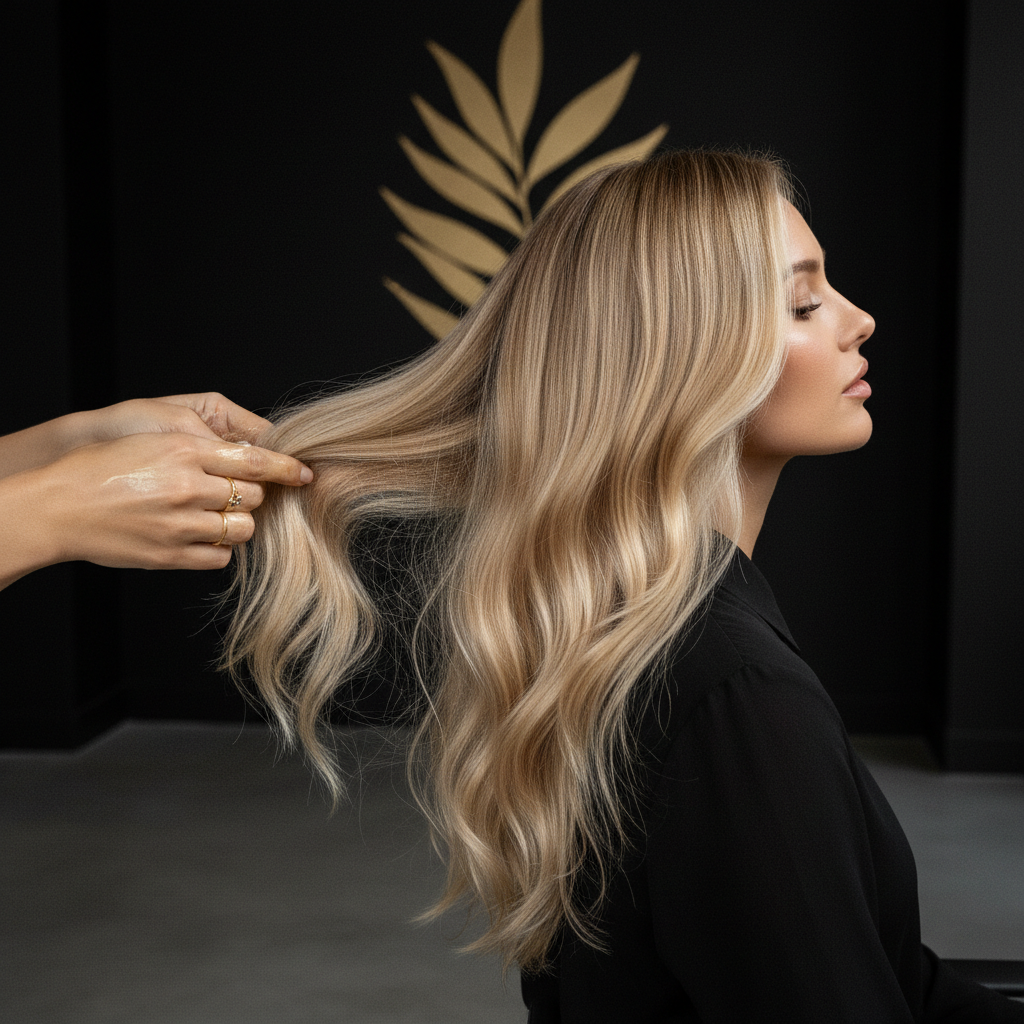
Quick answer: Repairing bleached hair requires managing mechanical damage and replenishing lost lipid barriers, because hair fibres are non-living biological structures that cannot biologically regenerate. Lightening processes break internal disulphide bonds and strip the protective 18-methyl eicosanoic acid (18-MEA) lipid layer from the cuticle. While permanent biological restoration is impossible once structural proteins dissolve, you can significantly reinforce fibre integrity, restore tensile strength, reduce surface friction, and prevent breakage using targeted protein treatments, acid-balanced conditioners, and film-forming emollients.
Key takeaways
- Lightening oxidises both melanin and the structural keratin network, permanently removing the cuticle's hydrophobic 18-MEA lipid layer.
- Bleach cannot be biologically undone; true recovery means halting further breakage, chemically bridging severed keratin sites, and artificially mimicking the lost protective lipid barrier.
- Hair fibres become highly porous, hydrophillic, and prone to rapid moisture loss, swelling up to 20 percent more than virgin hair when exposed to water.
- Effective restoration routines balance high-affinity hydrolysed proteins to reinforce internal tensile strength with film-forming conditioning agents to lower surface friction.
- Mechanical gentleness, such as detangling exclusively on conditioned damp hair and eliminating high heat styling, prevents the snap-off characteristic of chemical overprocessing.
Repairing Bleached Hair: what the evidence shows
Repairing bleached hair is a process of cosmetic rehabilitation and physical preservation rather than biological healing. The visible hair shaft is composed of non-living, cornified keratinocytes. When alkaline bleaching agents penetrate the hair shaft, they cause irreversible chemical modifications to the cortex and cuticle.
The primary chemical consequence of bleaching is the cleavage of cystine disulphide bonds. These covalent linkages provide human hair with its mechanical elasticity and tensile strength. Persulphate salts and hydrogen peroxide oxidise these bonds into cystic acid residues. Research published in the Journal of Cosmetic Science shows that severe bleaching can convert over 45 percent of cystine into cystic acid, drastically lowering the fibre's breaking load and dry elasticity.
Simultaneously, the oxidation process strips the f-layer, a microscopic monomolecular sheath of 18-MEA chemically bound to the cuticle surface. Virgin hair is naturally hydrophobic; it repels water and glides smoothly against adjacent fibres. Once 18-MEA is lost, the cuticle becomes hydrophilic. Water enters the cortex unrestricted, causing repeated swelling and contraction (hygral fatigue) that weakens structural proteins further. Cosmetic interventions cannot regrow this lipid layer, but conditioning polymers and lipid analogues can temporarily replicate its hydrophobic shield to prevent moisture loss.
The mechanism: what bleaching does to fibre structure
Understanding how bleach alters the hair fibre clarifies why specific treatments work while others fail. Bleaching involves a high pH environment, typically between pH 9.0 and 11.0, achieved using ammonium hydroxide or monoethanolamine.
- Cuticle lifting and erosion: The alkaline formulation forces the protective imbricate scales of the cuticle to swell and flare open. This mechanical disruption exposes the delicate cortex underneath and breaks the edges of individual scales.
- Lipid stripping: Free radicals generated during the oxidation reaction break the covalent thioester bonds binding 18-MEA to the hair surface. The hair shifts from a smooth, water-repelling state to an absorbent, friction-heavy state.
- Melanin degradation and keratin oxidation: Persulphates enter the cortex to solubilise and disperse dark eumelanin and reddish-yellow pheomelanin granules. Collaterally, the oxidation breaks structural disulphide bonds within the fibrous intermediate filaments and the high-sulphur matrix proteins.
- Void formation: As proteins and pigments dissolve and leach out during rinsing, microscopic voids form inside the cortex. This hollowed architecture makes the fibre collapse easily under tensile stress, resulting in snapping during brushing.
Recognising the signs of chemical damage
Hair damage occurs on a spectrum. Identifying the exact degree of structural depletion helps you select the correct remedial protocol.
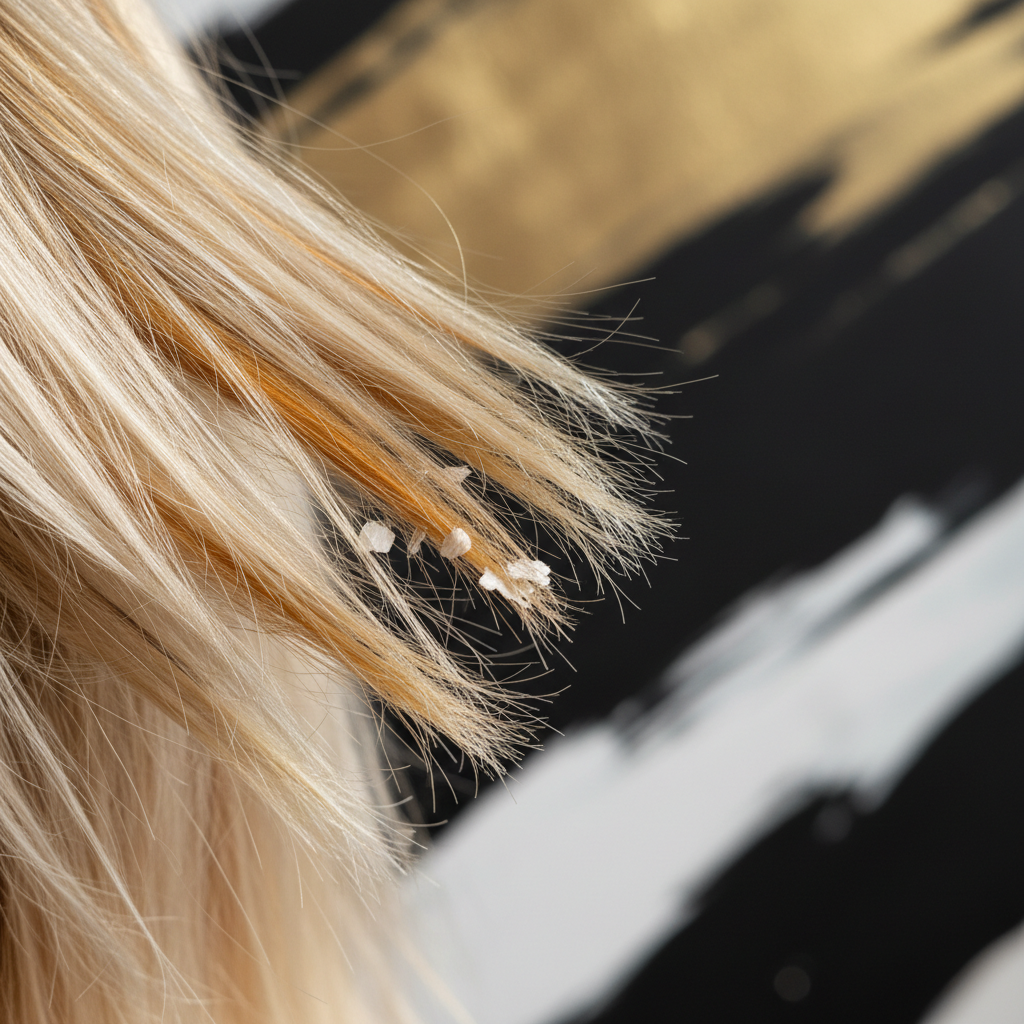
- High wet elasticity with poor recovery: The hair stretches out like an elastic band when wet but fails to return to its original length, remaining crinkled or snapping immediately. This indicates profound loss of cortex disulphide cross-links.
- Extreme friction and tangling: Cuticle scales remain permanently raised and jagged. Neighbouring strands snag against one another, forming dense "bird's nest" knots during washing.
- Rapid water absorption and prolonged drying times: Severely bleached hair absorbs water almost instantaneously because it lacks an outer lipid barrier. However, because the inner cortex holds that moisture inside porous voids, drying the hair takes twice as long.
- Fibre snapping (mechanical breakage): Short, jagged pieces of hair break off midway down the shaft during styling or sleep. This must not be confused with hair shedding, where hairs shed naturally from the root with a white bulb attached.
Evidence-based steps for repairing bleached hair
Because the hair fibre cannot self-repair, long-term stability depends on reducing external stress and applying topical reinforcing agents.
Rebalance the pH
Healthy hair and scalp sit at an acidic baseline between pH 4.5 and 5.5. Bleaching drives hair into alkaline territory, leaving cuticles raised. Using acidic cleansers and conditioning rinses (pH 3.5 to 5.0) encourages cuticle scales to contract and flatten against the shaft, immediately reducing light scatter (restoring shine) and decreasing inter-fibre friction.
Introduce targeted hydrolysed proteins
Molecules like hydrolysed keratin, wheat protein, and silk peptides have low molecular weights (typically 500 to 2,000 Daltons) that allow them to penetrate through raised cuticles into the cortex. Once inside, they adsorb to damaged keratin sites via hydrogen and ionic bonding, temporarily filling structural voids and improving dry tensile strength.
Layer synthetic and natural lipids
Because 18-MEA is gone, you must deposit protective films manually. Cetyl alcohol, stearyl alcohol, behentrimonium chloride, and plant-derived triglycerides coat the fibre. This artificial lipid barrier decreases wet friction, repels atmospheric humidity that causes frizz, and prevents hygral fatigue.
Minimise mechanical and thermal stress
Damaged keratin softens and degrades at lower temperatures than intact keratin. Keep hot styling tools below 150 degrees Celsius, and always use a heat protectant containing silicones or film-forming copolymers. Detangle exclusively with wide-tooth combs on hair thoroughly lubricated with conditioner.
| Characteristic | Virgin, Healthy Hair | Lightened / Bleached Hair | Restorative Strategy |
|---|---|---|---|
| Cuticle Condition | Flat, smooth imbricate scales | Swollen, lifted, fractured edges | Acidic rinses (pH 3.5 to 4.5) |
| Surface Hydrophobicity | High (repels water via 18-MEA) | Low (absorbent, hydrophilic) | Fatty alcohols, silicones, lipids |
| Disulphide Bond State | Fully intact cross-links | Oxidised to cystic acid | Bond-builders, hydrolysed proteins |
| Friction Coefficient | Very low (strands glide easily) | High (snags and tangles easily) | Cationic conditioning agents |
| Tensile Resistance | High strength wet and dry | Stretches, deforms, snaps wet | Gentle handling, low heat |
What the evidence does not show
Marketing surrounding hair restoration often blurs the line between cosmetic improvement and true biological regeneration. It is critical to separate verified chemistry from commercial myths.
- Split ends cannot be permanently mended: Products claiming to seal split ends use cross-linking polymers that glue frayed cuticle cells together. This bond is temporary and washes out with standard surfactants. The only definitive cure for trichoptilosis (split ends) is mechanical trimming.
- Oils do not "feed" or rebuild keratin: Pure oils such as coconut, argan, or olive oil provide lubrication, and some with low molecular weight (like lauric acid in coconut oil) can reduce protein loss during washing. However, oils contain no amino acids or cross-linking agents and cannot rebuild broken internal disulphide bonds.
- Vitamins do not repair bleached fibre: Oral hair supplements targeting keratin production affect only the hair matrix cells inside active living follicles. They have zero physiological influence on hair that has already emerged and been bleached.
When breakage indicates a different issue
Sometimes extensive thinning or breakage coincides with a salon visit but stems from an underlying systemic or dermatological condition. If hair strands are falling out intact from the root with the white keratin bulb present, this is hair shedding (such as telogen effluvium or androgenetic alopecia), not chemical breakage. Telogen effluvium can be triggered by high physiological stress, severe dietary restrictions, thyroid imbalances, or post-febrile illness.
Furthermore, if the scalp shows signs of erythema, burning, scaling, or open weeping sores, the bleach application may have caused an acute chemical burn or contact dermatitis. In these instances, cosmetic bond treatments should be suspended, and a doctor or trichologist should assess the scalp tissue directly.
Supporting hair density with Watermans
When managing hair that has suffered chemical damage, retaining structural density and protecting the scalp environment is paramount. While damaged hair fibres require external conditioning, supporting the follicular base ensures that new hair growth emerges under optimal conditions.
Watermans Grow Me Shampoo provides an evidence-led cosmetic formulation designed to clean gently without stripping essential surface moisture. Formulated with biotin, rosemary extract, caffeine, and hydrolysed lupin protein, it revitalises the appearance of fine, thinning, or stressed hair. Pairing this with a rich acidic conditioner ensures that while you support the living scalp environment, the vulnerable bleached lengths receive the superficial reinforcement they need to resist daily mechanical breakage.
Frequently asked questions about Repairing Bleached Hair
Can you ever fully repair bleached hair back to virgin condition?
No. The chemical bonds broken and the 18-MEA lipid layer lost during the bleaching process cannot be biologically regenerated by the non-living hair shaft. While modern bond builders, hydrolysed proteins, and conditioning agents significantly restore tensile strength, elasticity, and smoothness, the internal architecture remains permanently altered until new, untreated hair grows from the follicle.
How often should I apply protein treatments when repairing bleached hair?
Apply hydrolysed protein treatments once every one to two weeks, depending on the severity of the damage. Overusing concentrated protein without adequate conditioning emollients can cause structural brittleness, making the hair feel stiff and prone to snapping. Always balance a protein application with a rich, moisture-retaining conditioning mask.
Is hair breakage from bleaching considered hair loss?
No. Hair breakage involves the snapping of the hair fibre along the shaft due to chemical compromise, rough handling, or loss of structural elasticity. Hair loss (alopecia) occurs at the follicular level under the scalp, where hair ceases to grow, miniaturises, or sheds directly from the root with the follicular bulb intact.
Why does bleached hair feel gummy or stretchy when wet?
Bleached hair feels gummy when a substantial percentage of its internal cystine disulphide bonds have oxidised into cystic acid. This loss of structural cross-linking compromises the cortex's natural resistance to deformation, allowing the fibre to stretch well past its normal limits and collapse under minimal tension.
How long does it take to see results when repairing bleached hair?
Cosmetic improvements, such as improved slip, reduced frizz, and easier detangling, occur immediately following the application of acidic conditioning agents and lipid coatings. However, true fibre stabilisation and a noticeable reduction in everyday snapping typically take four to six weeks of consistent, heat-minimised haircare.
Overcoming chemical damage and protecting your lengths
Repairing bleached hair requires an ongoing commitment to physical protection, acidic pH restoration, and targeted cosmetic chemistry. Because lightened fibres lack their native disulphide density and hydrophobic lipid coat, they cannot withstand the mechanical friction or thermal stress tolerated by virgin hair. By identifying damage early, using protein-fortified conditioning agents, handling damp strands with patience, and maintaining a healthy follicular scalp environment, you can preserve your lengths, minimise breakage, and keep chemically treated hair looking vibrant and full.
Sources and references
- Robbins, C. R. (2012). Chemical and Physical Behavior of Human Hair. 5th ed. Springer-Verlag.
- Cruz, C. F., et al. (2016). Human hair characteristics and methods to evaluate hair physical and chemical properties. International Journal of Trichology, 8(4), 164 to 170.
- Swift, J. A. (1999). The mechanics of fracture of human hair. International Journal of Cosmetic Science, 21(4), 227 to 239.
- Tate, M. L., et al. (1993). Quantification and prevention of hair damage. Journal of the Society of Cosmetic Chemists, 44(6), 347 to 371.
- Dawber, R. (1996). Hair: Its structure and response to cosmetic preparations. Clinics in Dermatology, 14(1), 105 to 112.