Signs of Damaged Hair Follicles: A Dermatological Guide
8 min read ·
Learn the true signs of damaged hair follicles, how to distinguish root trauma from breakage, biological mechanisms of follicle injury, and when to see a specialist.
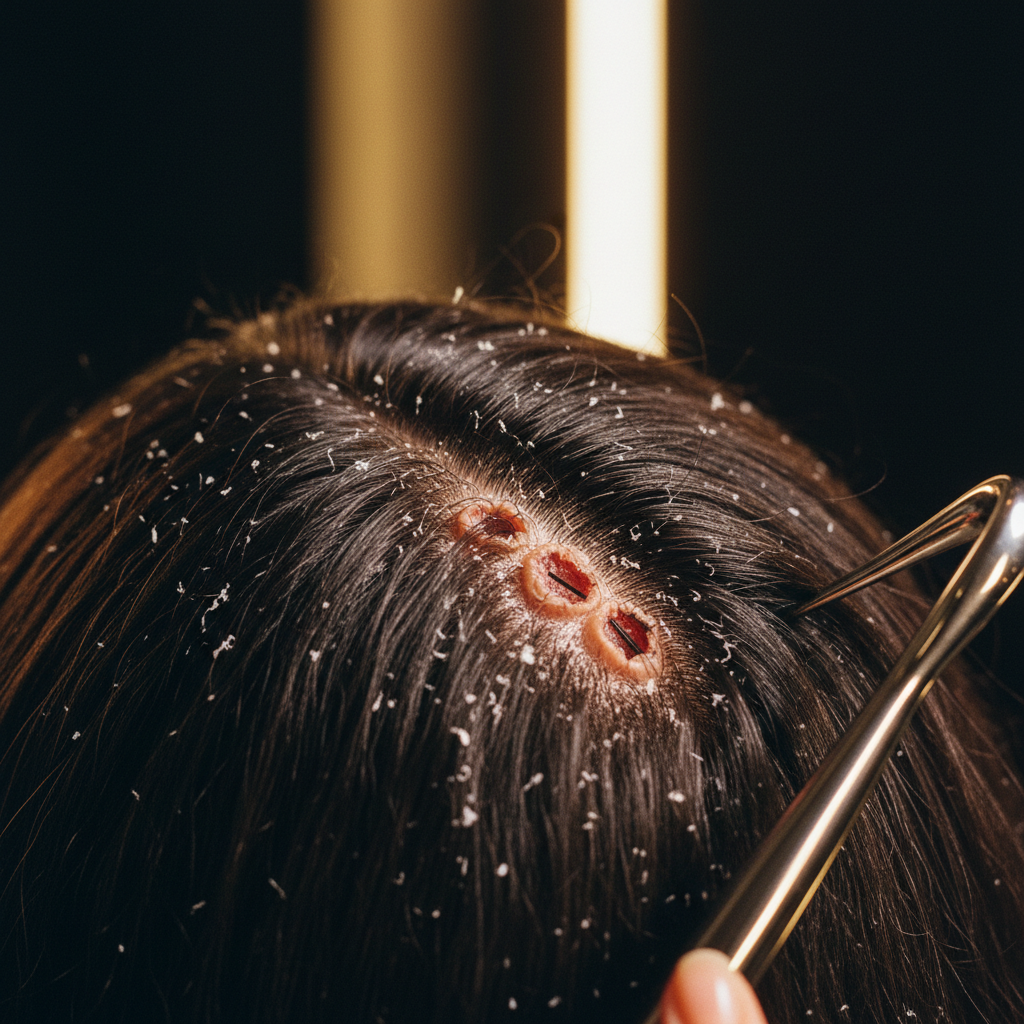
Quick answer: Identifying the true Signs of Damaged Hair Follicles requires separating scalp-level trauma from simple shaft breakage. Clinical signs include tenderness, persistent redness (perifollicular erythema), pustules, progressive thinning where individual strands grow back finer, and smooth patches showing an absence of follicular openings. The primary limitation is that early follicular distress often mirrors routine shedding; once scarring occurs, damage can become permanent, making early distinction between reversible stress and true follicular destruction vital for preserving your hair.
Key takeaways
- True follicular damage happens beneath the scalp surface, unlike hair breakage which affects the dead keratin fibre.
- Key early indicators include persistent scalp discomfort, redness surrounding hair pores, scaling, and noticeable miniaturisation of emerging strands.
- Mechanical tension, chemical burns, chronic fungal or bacterial infections, and autoimmune responses are leading causes of follicle trauma.
- Cicatricial (scarring) alopecia permanently destroys follicles, replacing them with fibrotic tissue, whereas non-scarring inflammation often allows full recovery.
- Scalp hygiene, gentle handling, and topical support can maintain follicular health, but sudden patchiness or pain warrants prompt trichological evaluation.
Signs of Damaged Hair Follicles: what the evidence shows
Dermatological research shows that hair follicles are complex, metabolically active mini-organs embedded in the dermis. When injured, they exhibit distinct clinical indicators that contrast sharply with routine shedding or cosmetic weathering. Recognising the genuine Signs of Damaged Hair Follicles depends on assessing both scalp sensations and structural growth patterns.
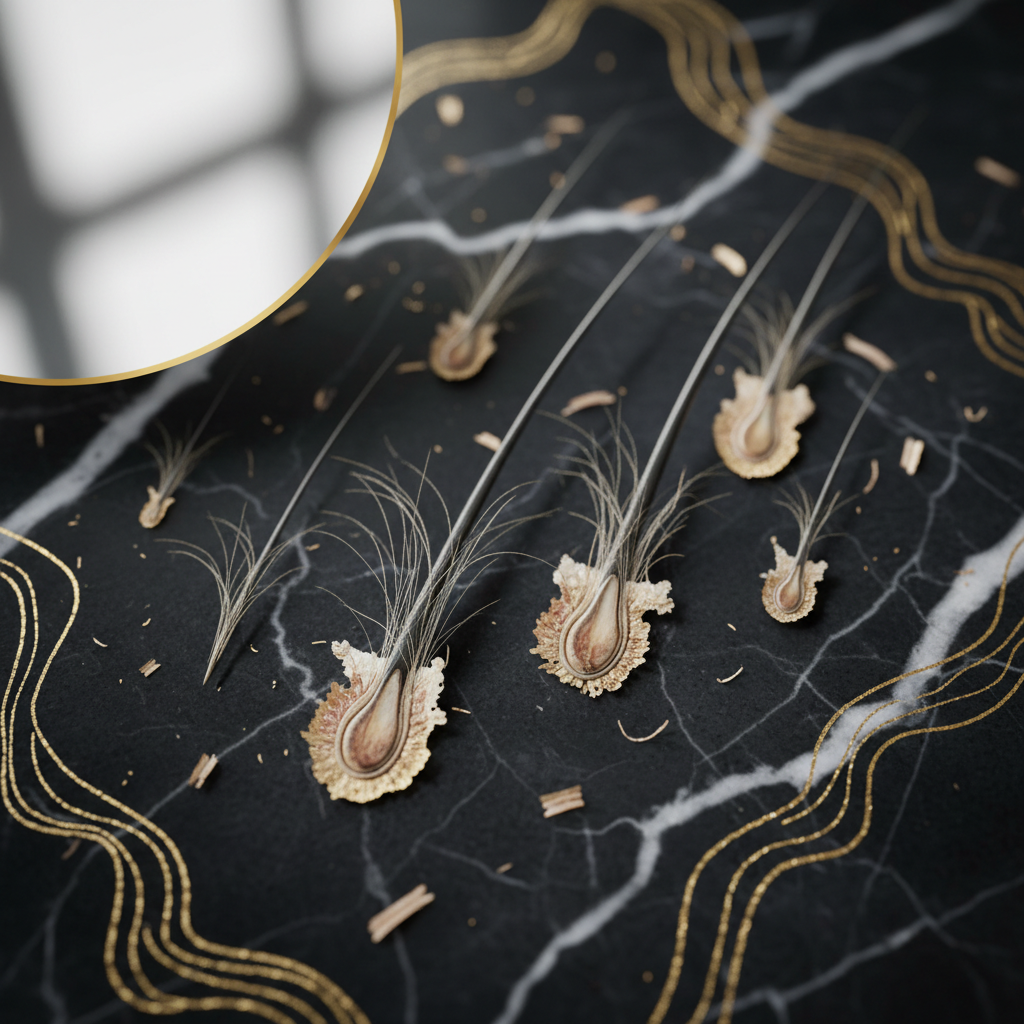
The first physical marker is often perifollicular erythema, which presents as tiny rings of inflammation or redness circling individual hairs. Alongside this, people frequently report trichodynia, a burning, stinging, or tender sensation across the scalp skin. This discomfort reflects cytokine activity and neurogenic inflammation around the follicle bulb.
As follicular damage progresses, hair production falters. Instead of generating robust terminal fibres, injured follicles undergo premature miniaturisation. The newly produced strands emerge noticeably thinner, lack pigment, and snap easily. In severe inflammatory conditions such as folliculitis decalvans or lichen planopilaris, the body attacks the follicular stem cell niche located in the bulge region. Once these stem cells are destroyed, the follicle cannot re-enter the anagen (growth) phase, resulting in visible loss of follicular ostia (the tiny natural openings on the scalp surface).
What the evidence does not show
There are common misconceptions regarding how hair follicles behave under stress:
- Shedding does not automatically mean follicular damage: Daily loss of 50 to 100 telogen hairs is normal physiological turnover. Telogen effluvium involves hairs leaving the follicle prematurely, but the follicle itself remains healthy and fully functional.
- Split ends do not indicate root damage: Split ends, rough texture, and mid-shaft snapping reflect cuticle wear on the hair fibre. They do not impair the living follicle beneath your skin.
- Topical oils cannot revive scarred follicles: Once fibrous scar tissue replaces a destroyed follicle, no cosmetic oil, herbal extract, or shampoo can regenerate the lost organ.
- Dandruff does not always lead to follicle destruction: Mild pityriasis capitis (dandruff) affects surface epidermal shedding. While severe, untreated seborrhoeic dermatitis with secondary infection can stress follicles, common flaking rarely causes lasting harm.
Biological mechanisms of follicle injury
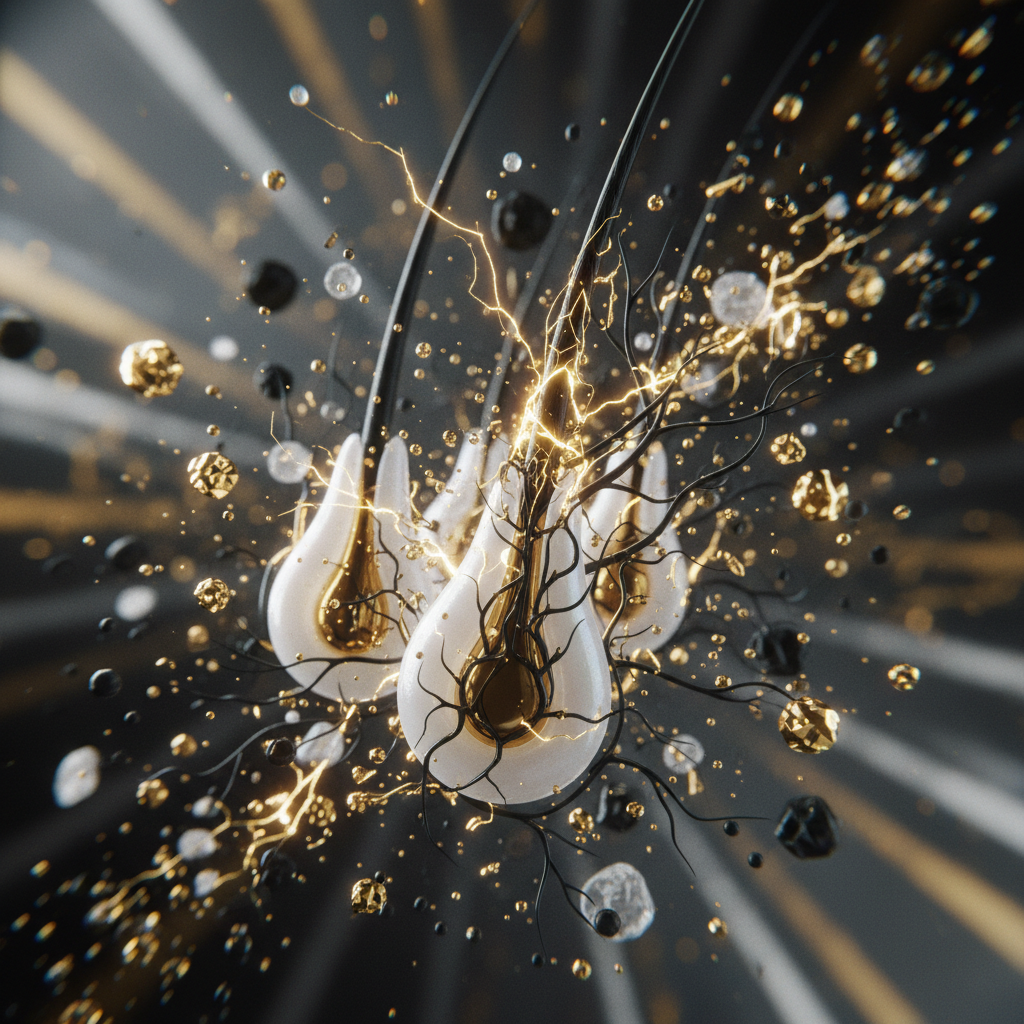
Follicles sustain damage through four primary pathways: mechanical, chemical, microbial, and autoimmune.
Mechanical trauma (Traction)
Sustained tension from tight braids, heavy extensions, or tight ponytails places continuous pulling force on the dermal papilla. Over months or years, this physical strain creates mechanical micro-tears in the follicular sheath, leading to traction alopecia. The follicle responds with chronic inflammation, gradually shrinks, and can eventually undergo fibrotic scarring.
Chemical burns and thermal stress
Caustic chemical relaxers, high-volume peroxide bleaches, or scalding heat tools applied directly to the scalp can cause coagulative necrosis of cutaneous tissue. When chemical or thermal injury reaches deep into the reticular dermis where the bulb sits (typically 3 to 4 mm below the surface), the follicular matrix suffers acute damage.
Microbial infiltration
Folliculitis arises when bacteria (chiefly Staphylococcus aureus) or fungi (such as Malassezia species) invade the upper follicle canal. The resulting pustules and neutrophil accumulation compromise the follicular wall. If deep-seated infection (perifolliculitis) develops, it can permanently destroy the hair-producing machinery.
Autoimmune and scarring conditions
In primary cicatricial alopecias, the immune system mistakenly targets the follicular bulge. Because the bulge harbours epithelial stem cells responsible for cycling new hair, its destruction prevents the follicle from ever regenerating.
How to distinguish follicular damage from shaft breakage
Telling the difference between surface-level fibre breakage and deep follicular distress is essential for choosing the right care plan.
| Feature | Hair Shaft Breakage | Damaged Hair Follicle |
|---|---|---|
| Primary Location | Mid-lengths and ends | Scalp skin and follicular ostia |
| Scalp Sensation | Completely painless | Often tender, burning, itchy, or tight |
| Appearance of Lost Hair | Short, fractured pieces without a root bulb | Full-length strand with anagen/telogen bulb, or absence of growth |
| Visible Scalp Signs | Scalp looks healthy and normal | Redness, pustules, crusts, or shiny smooth skin |
| Diameter of New Growth | New root growth emerges at normal thickness | New strands emerge progressively finer (miniaturised) |
| Reversibility | Readily managed with conditioning and haircuts | Reversible if caught early; permanent if scarring occurs |
Recognising the early signs: what to look for
Catching follicular distress early provides the best window to halt irreversible loss. Monitor your scalp for these specific indicators:
- Localised perifollicular scaling and crusting: Small, dry flakes or yellowish crusts clinging tightly to the base of individual hair shafts where they exit the skin.
- Persistent tenderness or pain: Soreness that lingers even when your hair is worn down and free from physical tension.
- Pustules and papules: Tiny red bumps or white-topped pimples concentrated around hair openings across the crown, nape, or hairline.
- Loss of follicular pore pattern: In healthy skin, dermatoscopy reveals distinct pores, often with multiple hairs emerging from each follicular unit. When follicles suffer scarring damage, the skin appears uniformly flat, smooth, and shiny.
- Sudden changes in hair calibre: If hair growing around your hairline or crown looks significantly wispy compared to the rest of your head, the underlying follicles may be experiencing progressive restriction or miniaturisation.
Daily practices to protect and support follicular health
While medical conditions require clinical oversight, everyday habits dramatically influence the health of the follicular environment.
- Relieve mechanical tension: Avoid hairstyles that pull on the scalp. Alternate styling methods and give follicles regular recovery breaks between braids, weaves, or tight updos.
- Maintain a balanced scalp microbiome: Cleanse regularly with a pH-balanced shampoo (around pH 4.5 to 5.5). Infrequent washing can allow sebum and environmental debris to accumulate, encouraging microbial overgrowth inside the follicular canal.
- Cool down styling routines: Never direct high-heat hairdryer nozzles straight onto your scalp skin. Keep styling irons at least 2 to 3 cm away from the roots.
- Perform gentle scalp massages: Light fingertip massage encourages local microcirculation without irritating the delicate dermal papilla. Avoid aggressive scratching with fingernails.
When to consult a medical professional
You should seek advice from a doctor, dermatologist, or registered trichologist if you notice any of the following symptoms:
- Scalp pain, intense burning, or severe itching that persists for more than a few days.
- Visible pustules spreading across your scalp.
- Sudden, patchy hair shedding that leaves completely smooth, bare skin behind.
- Excessive shedding accompanied by systemic signs such as unexplained fatigue, weight changes, or joint pain.
A clinician can perform a dermoscopic scalp examination (trichoscopy) or a 4 mm punch biopsy to inspect the follicular architecture under a microscope, diagnosing the condition before irreversible scarring occurs.
Supporting scalp condition with Watermans
For individuals wanting to maintain an optimal scalp environment for healthy-feeling hair, topical care plays a constructive cosmetic role. The Watermans Grow Me range is formulated with revitalising ingredients such as biotin, rosemary, caffeine, and niacinamide. While cosmetic products do not treat clinical alopecias or repair scarred follicles, a regular, gentle cleansing routine helps remove sebum build-up, freshens the scalp surface, and promotes stronger-feeling hair from the root.
Frequently asked questions about Signs of Damaged Hair Follicles
Can damaged hair follicles grow back?
Whether follicles recover depends on whether the stem cell niche in the bulge remains intact. If damage stems from temporary inflammation, mild traction, or stress, removing the trigger can allow the follicle to produce healthy hair again over 3 to 6 months. However, if scarring replaces the follicle with fibrotic tissue, that loss is permanent.
What are the earliest physical Signs of Damaged Hair Follicles?
The earliest physical Signs of Damaged Hair Follicles typically include persistent scalp tenderness, small red rings around hair pores (perifollicular erythema), and the emergence of significantly thinner, weaker strands. You might also notice pinpoint pustules or light burning sensations after routine styling or washing.
Does pulling hair out damage the follicle permanently?
Pulling a hair out occasionally plucks the bulb from the dermal papilla, but the follicle usually re-enters anagen and grows a replacement. However, repetitive, chronic pulling over months or years, such as from tight hairstyles or trichotillomania, causes ongoing micro-trauma that can eventually destroy the follicle completely.
How does a dermatologist test for follicular damage?
A specialist primarily uses trichoscopy, examining your scalp with a high-magnification dermatoscope to inspect pore openings, vascular patterns, and hair diameter diversity. If they suspect a scarring condition, they may take a small 4 mm punch biopsy under local anaesthetic to examine the tissue under a microscope.
Follicular health overview
Understanding the genuine Signs of Damaged Hair Follicles allows you to take decisive action before temporary scalp irritation turns into long-term hair thinning. By distinguishing between surface hair breakage and true root-level distress, you can adjust your styling habits, adopt supportive cleansing rituals, and consult a medical specialist when warning signs like redness, tenderness, or bare patches emerge. Protecting the delicate follicles beneath your scalp today is the most reliable way to maintain full, resilient hair tomorrow.
Sources and references
- British Association of Dermatologists. Guidelines for the management of alopecia areata and cicatricial alopecias.
- National Health Service (NHS). Hair loss: causes, symptoms and treatments.
- Olsen, E. A., et al. (2003). Evaluation and treatment of male and female pattern hair loss. Journal of the American Academy of Dermatology.
- Harries, M. J., et al. (2008). Cicatricial alopecia: clinicopathologic findings and management. The Lancet.
- Billero, V., & Miteva, M. (2018). Traction alopecia: the root of the problem. Clinical, Cosmetic and Investigational Dermatology.
Find these ingredients in Watermans products
- Niacinamide: you will find this ingredient in our Hair Mask.