Shampoo Ingredients To Avoid: The Evidence-Based Guide
9 min read ·
Learn which shampoo ingredients to avoid to prevent breakage, dryness, and scalp irritation. A comprehensive, science-backed guide to hair health.
Quick answer: Identifying shampoo ingredients to avoid depends entirely on your specific scalp physiology, hair fibre porosity, and known allergic sensitivities. While harsh cleansers like sodium lauryl sulphate (SLS) can excessively strip natural lipids and certain sensitising preservatives can trigger contact dermatitis, cosmetic regulators deem approved concentrations safe for the general public. There is no universal blacklist; avoiding specific ingredients is primarily about preventing preventable fibre breakage, cuticle erosion, and scalp barrier disruption rather than dodging toxic hazards.
Key takeaways
- Sulphates strip protective lipids: Strong anionic surfactants, particularly sodium lauryl sulphate (SLS), strip sebum and structural lipids from the cuticle, increasing friction and breakage.
- Sensitising preservatives trigger dermatitis: Ingredients like methylisothiazolinone (MI) and formaldehyde releasers remain leading causes of allergic contact dermatitis on the scalp.
- Silicones do not inherently damage hair: Non-water-soluble silicones can build up over time if not cleansed thoroughly, leading to dullness, but they do not cause follicular hair loss.
- Context dictates safety: An ingredient that causes irritation on an inflamed, eczema-prone scalp may perform perfectly well on an oily, resilient scalp.
- Cosmetic damage differs from hair loss: Harsh shampoo formulations can snap brittle strands along the shaft, but true follicular shedding stems from internal systemic or genetic triggers.
Shampoo Ingredients To Avoid: what the evidence shows
When evaluating shampoo ingredients to avoid, cosmetic chemists and dermatologists look at two distinct biological targets: the living scalp tissue and the non-living hair fibre.

Surfactants sit at the top of the list for potential physical disruption. Sodium lauryl sulphate (SLS) possesses a high critical micelle concentration and an aggressive charge density. Peer-reviewed dermatology studies show SLS penetrates the stratum corneum rapidly, disrupting the intercellular lipid bilayer. This induces transepidermal water loss (TEWL), causing erythema, scaling, and pruritus. On the hair shaft, repeated wash cycles with unbuffered SLS wash away the protective 18-methyleicosanoic acid (18-MEA) lipid layer, raising cuticle scales and leaving strands prone to tangling and mechanical snapping.
Preservatives present a completely different challenge: immunological sensitisation. Regulatory assessments by the European Commission Scientific Committee on Consumer Safety (SCCS) identified methylisothiazolinone (MI) and methylchloroisothiazolinone (MCI) as potent contact allergens. While banned in leave-on cosmetics in the UK and EU, they are still permitted in rinse-off products at restricted concentrations (up to 15 ppm for MCI/MI mixtures). For individuals with a compromised epidermal barrier, even these rinse-off thresholds can incite severe allergic contact dermatitis.
Formaldehyde releasers, including DMDM hydantoin, imidazolidinyl urea, and quaternium-15, preserve water-based shampoos by releasing trace amounts of antimicrobial formaldehyde over time. While the released quantities fall below official toxicological thresholds, they remain a well-documented cause of persistent scalp irritation and allergic patch-test reactions.
| Ingredient Category | Common Examples | Primary Concern | Who Should Avoid |
|---|---|---|---|
| Harsh Anionic Surfactants | Sodium Lauryl Sulphate (SLS), Ammonium Lauryl Sulphate (ALS) | Strips 18-MEA cuticle lipids, elevates TEWL, irritates skin | Dry, bleached, chemically treated hair; sensitive scalps |
| Sensitising Preservatives | Methylisothiazolinone (MI), DMDM Hydantoin, Quaternium-15 | Allergic contact dermatitis, eczema flares, burning sensation | Anyone with reactive skin, eczema, or diagnosed patch allergies |
| Drying Alcohols | Isopropyl Alcohol, Alcohol Denat, Propanol | Dissolves moisture barriers, dries cuticle cells rapidly | Coarse, curly, high-porosity hair; chronically dry scalps |
| Heavy Non-Soluble Silicones | Dimethicone, Amodimethicone, Cetearyl Methicone | Builds up over time, weighs down fine hair, blocks moisture penetration | Fine, low-density hair types; co-washers using mild cleansers |
| Synthetic Fragrances / Phthalates | Fragrance/Parfum, Diethyl Phthalate (DEP) | Contact allergy, volatile organic compound irritation | Atopic scalps, individuals with respiratory or chemical sensitivities |
What the evidence does not show
Popular beauty media often claims that sulphates, silicones, and parabens cause baldness, organ toxicity, or systemic illness. The current scientific consensus does not support these claims.
First, regulatory bodies like the UK Medicines and Healthcare products Regulatory Agency (MHRA), the European SCCS, and the US Cosmetic Ingredient Review (CIR) have repeatedly evaluated parabens (such as methylparaben and propylparaben). Controlled toxicological studies confirm that at permitted cosmetic concentrations (typically 0.4% for single esters), parabens are rapidly metabolised in the skin into para-hydroxybenzoic acid and excreted, showing no causal link to endocrine disruption in humans.
Second, shampoos do not cause male or female pattern hair loss (androgenetic alopecia) or telogen effluvium. True hair loss originates within the hair follicle beneath the skin, driven by genetics, hormones, nutritional deficiencies, or systemic physiological stress. When people observe increased hair in the shower after using a harsh shampoo, they are almost always witnessing the physical snapping of dry, brittle fibres (breakage) or the normal mechanical dislodgement of resting hairs that had already entered the telogen phase weeks earlier.
The biological mechanism: how harsh cleansers alter the hair shaft
Every hair fibre is shielded by a shingle-like outer layer of cuticle cells glued together by a cell membrane complex. Covalently bonded to the very exterior is 18-MEA, a fatty acid layer that repels water (hydrophobic) and allows adjacent strands to glide past each other without catching.
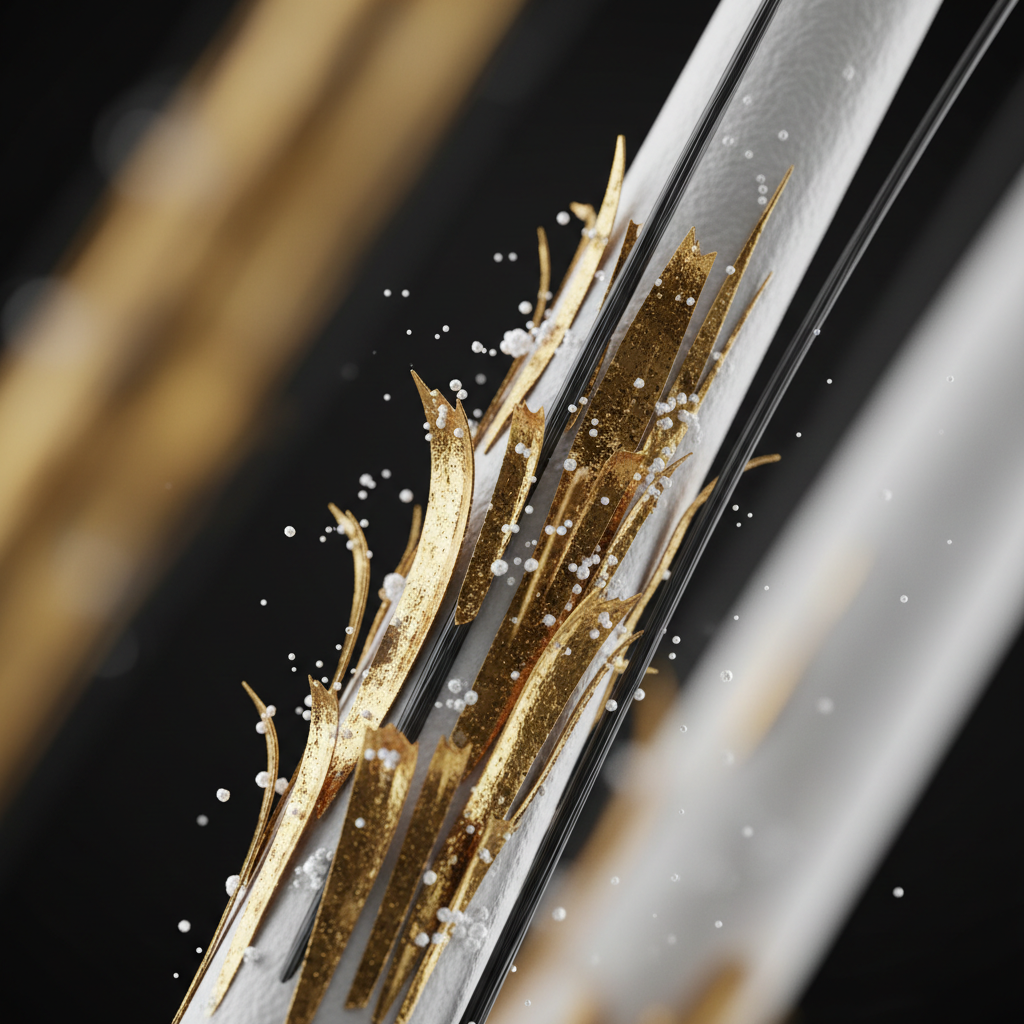
When you apply a shampoo with aggressive detergency, alkaline pH, or high ionic charge:
- The formulation strips away the 18-MEA lipid layer, turning the fibre hydrophilic (water-absorbing).
- Water rushes into the hair cortex, causing the shaft to swell unevenly.
- Cuticle scales flare outward rather than lying flat.
- Friction between adjacent hairs multiplies by up to 300 percent.
- Daily brushing across raised cuticles chips away the keratin structure, exposing the inner cortex and causing transverse fractures (breakage).
Concurrently, on the scalp, the harsh detergent dissolves ceramides, cholesterol, and free fatty acids from the stratum corneum. The skin loses its ability to retain moisture, moisture evaporates outward, and foreign irritants penetrate inward. This manifests as chronic itching, tightness, and inflammation.
Signs your shampoo contains the wrong ingredients for you
You do not need a laboratory to discover whether your current bottle contains problematic ingredients. Pay attention to how your hair and scalp behave within 24 to 48 hours of washing:
- Tension and tightness: Your scalp feels pulled, tight, or prickles within an hour of drying.
- Flaking without oiliness: You notice tiny, powdery white flakes drifting off the scalp, which indicates severe barrier dehydration rather than oily seborrhoeic dermatitis.
- Immediate wet tangling: Wet hair feels like rough wool or matting felt in the shower before you apply conditioner.
- Mid-shaft snapping: You notice short, blunt-ended pieces of hair in the sink after brushing, lacking the tiny white root bulb characteristic of natural shedding.
- Dullness and weight: Strands feel perpetually coated, stringy, or refuse to hold volume even when freshly dried, signalling heavy silicone or polymer accumulation.
What you can do: switching to hair-friendly alternatives
Transforming your routine does not require buying unregulated homemade products. It simply means choosing balanced, scientifically stable alternatives tailored to your hair anatomy.
Look for secondary or amphoteric surfactants. Instead of sodium lauryl sulphate, check labels for sodium cocoyl isethionate, cocamidopropyl betaine, sodium lauroyl sarcosinate, or decyl glucoside. These cleansers lift dirt and excess sebum effectively while leaving structural lipids intact.
Ensure your shampoo sits at a physiological pH. The healthy scalp has a pH of approximately 5.5, while the hair shaft thrives between 4.5 and 5.5. Shampoos formulated within this acidic window keep cuticle scales tightly sealed, preserving moisture and preventing frizz.
If you enjoy the slip and heat protection of silicones, look for water-soluble options like dimethicone copolyol, PEG-modified silicones, or lightweight botanical oils like argan, jojoba, or hydrolysed wheat proteins that rinse away without aggressive detergents.
When the cause is something else
If you swap your products and your scalp continues to shed flakes, burn, or thin noticeably, the issue likely sits outside your shower bottle.
- Seborrhoeic dermatitis: A fungal overgrowth involving Malassezia yeast that feeds on scalp sebum, producing oily, yellowish flakes and red patches. This requires antifungal actives (like ketoconazole or piroctone olamine), not just sulphate-free moisture.
- Psoriasis: An autoimmune acceleration of skin cell turnover producing thick, silvery plaques that cannot be fixed by changing shampoo brands.
- Telogen effluvium: Sudden, diffuse hair shedding across the entire scalp, typically triggered two to four months after high fever, childbirth, extreme stress, severe calorie restriction, or iron deficiency.
- Androgenetic alopecia: Gradual miniaturisation of hair follicles around the crown and temples driven by dihydrotestosterone (DHT) sensitivity.
When to get professional advice
Consult a registered trichologist or a consultant dermatologist if you experience:
- Intense burning, weeping lesions, or pustules on the scalp.
- Persistent erythema that does not subside within 72 hours of stopping a product.
- Patchy, distinct bald spots (alopecia areata) or widening part lines.
- Shedding that exceeds normal baseline rates (roughly 50 to 100 hairs daily) for more than eight consecutive weeks.
A dermatologist can perform standard patch testing (such as the British Society for Cutaneous Allergy series) to pinpoint the exact preservative, surfactant, or fragrance compound causing your symptoms.
Supporting hair density and scalp health with Watermans
When formulating daily hair care, the goal is to provide a clean, invigorating scalp environment without the aggressive agents that degrade the hair fibre. Watermans prioritises scalp vitality and fibre resilience by bypassing harsh strip-cleansers.
Watermans Grow Me Shampoo is formulated without harsh sulphates, relying instead on gentler cleansing agents balanced with active natural compounds. Enriched with biotin, rosemary extract, caffeine, niacinamide, and hydrolysed lupin protein, it gently cleanses the follicular openings, revitalises the scalp surface, and reinforces the hair strand against everyday breakage. Rather than relying on heavy non-soluble silicones that smother fine strands over time, it delivers body, moisture, and vitality to thinning, fragile hair.
Frequently asked questions about Shampoo Ingredients To Avoid
What are the main shampoo ingredients to avoid for sensitive scalps?
The primary shampoo ingredients to avoid if you have an irritated or sensitive scalp are sodium lauryl sulphate (SLS), fragrance blends (parfum), and sensitising preservatives like methylisothiazolinone (MI) and formaldehyde releasers (such as DMDM hydantoin). These compounds are the most common culprits behind contact dermatitis, barrier breakdown, and persistent cutaneous inflammation.
Are all sulphates equally damaging to hair fibres?
No. Sodium lauryl sulphate (SLS) is far more aggressive and stripping than milder derivatives like sodium laureth sulphate (SLES) or ammonium laureth sulphate (ALES). SLES undergoes an ethoxylation process that softens its cleansing action, reducing cuticle swelling and skin irritation while still generating a rich lather.
Do silicones in shampoo prevent hair from growing?
Silicones do not inhibit the hair follicle or stop natural hair growth. However, non-water-soluble silicones (like standard dimethicone) can accumulate on the hair shaft if you only use very mild, sulphate-free cleansers. This accumulation weighs hair down, makes it feel coated, and prevents water-based conditioning agents from penetrating effectively.
Can using the wrong shampoo ingredients cause permanent hair loss?
No shampoo ingredients cause permanent, scarring baldness or genetic pattern hair loss under normal cosmetic usage. Harsh ingredients can, however, dehydrate the hair shaft until it snaps easily, mimicking hair loss through excessive mechanical breakage. Once you eliminate the damaging formula, newly growing hair emerges completely healthy.
Choosing safer formulations for long-term hair health
Navigating the landscape of shampoo ingredients to avoid does not require fearing modern chemistry. Shampoos are sophisticated, highly regulated formulations designed to keep your scalp clean and clear of micro-organisms. By understanding your unique hair biology, steering clear of aggressively stripping surfactants like SLS, and avoiding known preservative allergens that disrupt your scalp barrier, you can protect your hair from preventable breakage and maintain an ideal foundation for healthy, resilient hair.
Sources and references
- Cosmetic Ingredient Review (CIR). "Safety Assessment of Alkyl Sulfates as Used in Cosmetics." International Journal of Toxicology, 2010.
- European Commission Scientific Committee on Consumer Safety (SCCS). "Opinion on Methylisothiazolinone (MI) (P94) Submission III (Sensitisation only)." SCCS/1521/13, 2013.
- British Association of Dermatologists. "Preservative Allergy and Allergic Contact Dermatitis Guidelines." 2017.
- Gavazzoni Dias, M. F. "Hair Cosmetics: An Overview." International Journal of Trichology, 2015.
- Robbins, C. R. Chemical and Physical Behavior of Human Hair. 5th ed., Springer, 2012.
Find these ingredients in Watermans products
- Niacinamide: you will find this ingredient in our Hair Mask.