Seborrhoeic Dermatitis vs Dry Scalp: Symptoms, Causes, and Care
9 min read ·
Discover the differences in Seborrhoeic Dermatitis vs Dry Scalp, from underlying causes and flake types to effective routines for restoring your scalp.
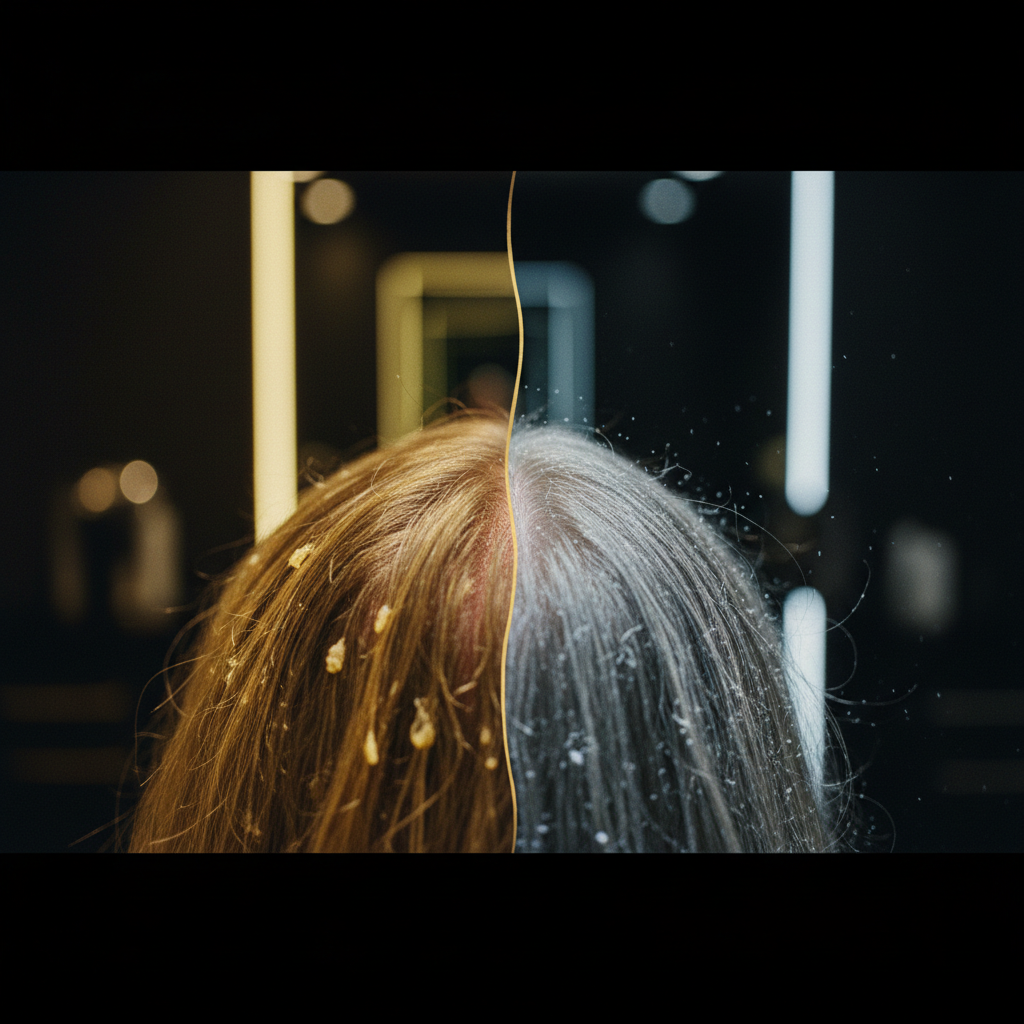
Quick answer: When comparing Seborrhoeic Dermatitis vs Dry Scalp, the root causes and appearances differ fundamentally. A dry scalp stems from inadequate moisture, dehydration, or harsh washing, producing small, white, powdery flakes that shed easily. Seborrhoeic dermatitis is a chronic inflammatory skin condition driven by an overgrowth of Malassezia yeast interacting with scalp oils, causing thick, oily, yellowish scales alongside redness, itchiness, and inflammation. The main limitation is that visual symptoms sometimes overlap, making professional dermatological assessment essential for severe or non-responsive cases.
Key takeaways
- Dry scalp involves a moisture deficit in the skin barrier, whereas seborrhoeic dermatitis is an oily, inflammatory reaction involving skin microflora.
- Flake characteristics differ visibly: dry scalp flakes are tiny, white, and loose; seborrhoeic dermatitis flakes are larger, waxy, yellow, and adhere to the skin.
- Applying plant oils or heavy moisturisers relieves a dry scalp but can worsen seborrhoeic dermatitis by feeding yeast colonies.
- Seborrhoeic dermatitis typically requires antifungal and keratolitic agents, whereas dry scalp improves with gentler cleansing and humectants.
- Neither condition causes permanent scarring alopecia directly, though intense scratching can cause temporary mechanical shedding and hair breakage.
Seborrhoeic Dermatitis vs Dry Scalp: what the evidence shows
Understanding Seborrhoeic Dermatitis vs Dry Scalp begins with recognising their distinct biological origins. Peer-reviewed dermatological literature distinguishes between simple xerosis (dry skin) of the scalp and seborrhoeic eczema. Dry scalp occurs when the stratum corneum, the outermost layer of the epidermis, loses essential water content. This typically falls below 10 percent moisture level, disrupting normal skin barrier function and causing microscopic skin cells to clump and shed prematurely as dry dust.
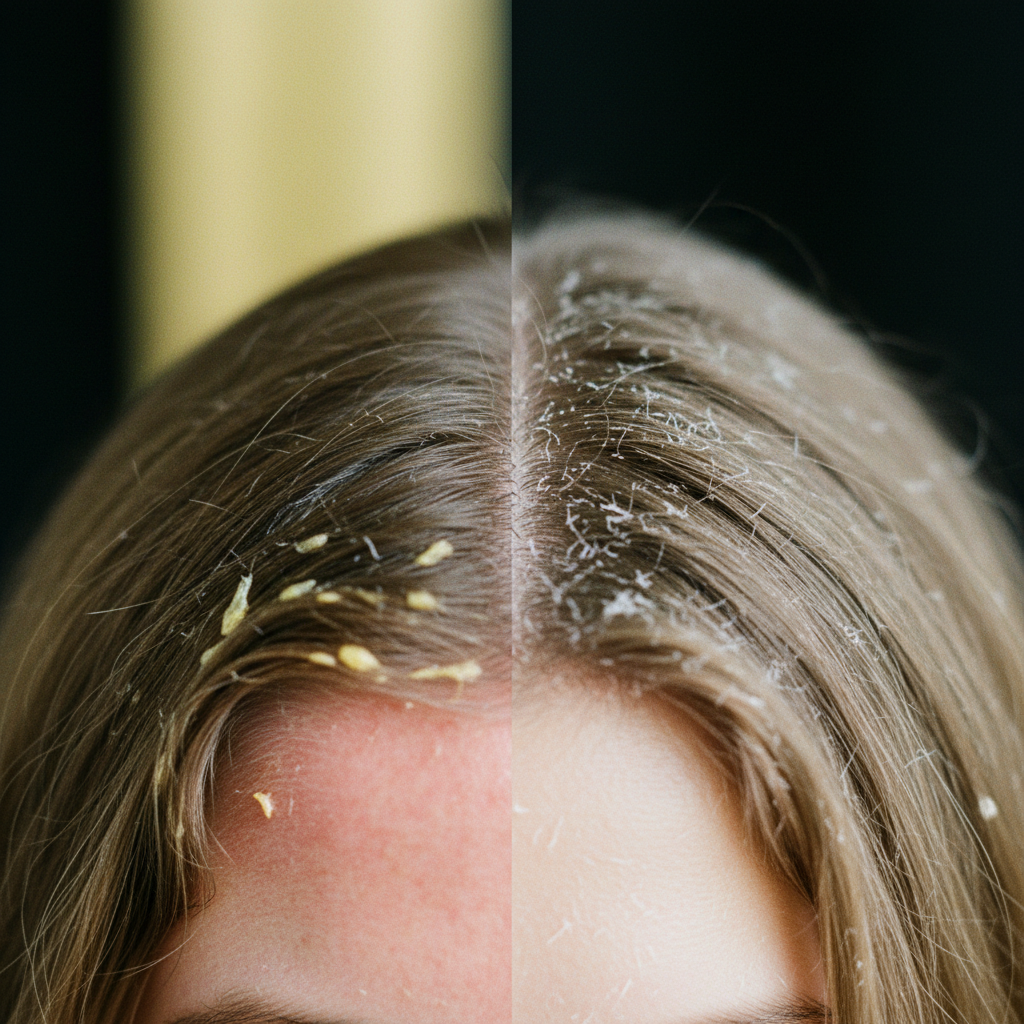
In contrast, seborrhoeic dermatitis is classified as an inflammatory dermatosis. It targets sebaceous-rich areas, including the scalp, hairline, eyebrows, and the sides of the nose. Rather than a lack of oil, seborrhoeic dermatitis usually develops in an environment of abundant sebum production. The commensal lipid-dependent yeast Malassezia restricta and Malassezia globosa feed on these natural triglycerides. They metabolise the oils and release unsaturated fatty acids, primarily oleic and arachidonic acid. In susceptible individuals, these metabolic by-products penetrate the epidermal barrier, triggering an immune cascade, hyperproliferation of keratinocytes, and noticeable inflammation.
Clinical research shows that while dandruff (pityriasis capitis) is considered the mild, non-inflammatory form of the same spectrum as seborrhoeic dermatitis, a dry scalp sits in a completely different category. Misdiagnosing one for the other often leads people to apply heavy plant oils to an inflamed scalp, which actively fuels the yeast and intensifies irritation.
| Clinical Feature | Dry Scalp | Seborrhoeic Dermatitis |
|---|---|---|
| Primary Cause | Dehydration, low humidity, harsh detergents | Malassezia yeast, excess sebum, immune reaction |
| Flake Texture | Small, light, powdery, dry | Large, clumped, greasy, waxy |
| Flake Colour | White or translucent | Yellowish, off-white, or brownish |
| Scalp Skin Condition | Tight, dull, dry, rarely inflamed | Erythematous (red or pink), irritated, greasy |
| Sensation | Mild itching, skin tightness | Moderate to intense itch, burning, tenderness |
| Other Affected Areas | Dry skin on arms, legs, or hands | Eyebrows, nasolabial folds, behind ears, chest |
| Initial Treatment | Gentle washing, humectants, hydration | Antifungal agents, anti-inflammatory washes |
What the evidence does not show
Research does not show that seborrhoeic dermatitis is an infectious disease or a consequence of poor hygiene. You cannot catch seborrhoeic dermatitis from someone else, nor does it stem from neglecting to wash your hair. In fact, washing too aggressively with stripping detergents can irritate an inflamed scalp further without resolving the underlying fungal balance.
Furthermore, evidence does not show that either dry scalp or seborrhoeic dermatitis damages the hair follicle itself to cause permanent baldness. While intense scratching can tear the hair fibre (breakage) or trigger telogen effluvium (temporary reactive shedding), the hair follicles remain intact. Once the scalp barrier recovers and inflammation subsides, normal hair growth cycles typically resume.
Biological mechanisms and signs to look for
Identifying which condition you have requires close inspection of the scalp skin and the flakes themselves.
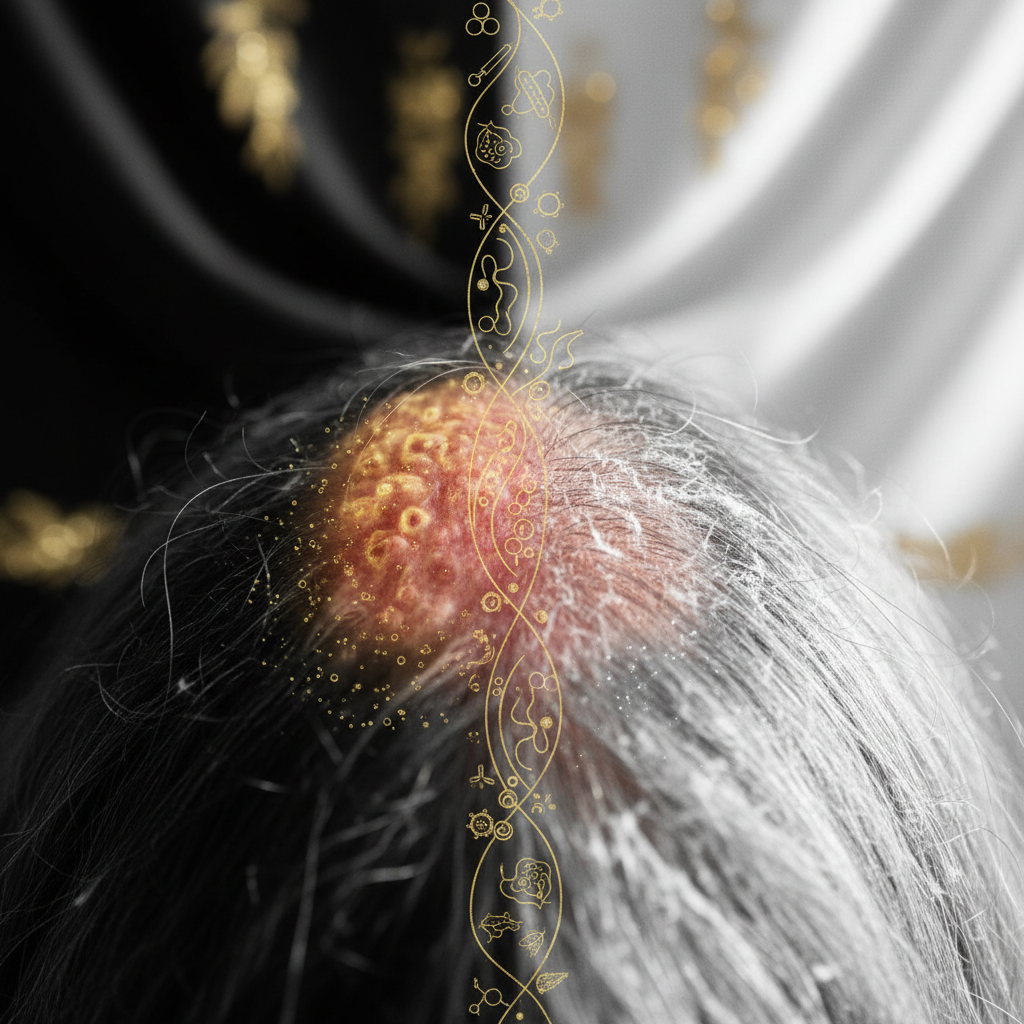
With a dry scalp, symptoms often worsen during winter when indoor heating lowers ambient humidity, or after using high-pH shampoos that strip natural surface lipids. The scalp feels physically tight, much like dry skin on the hands or face. When you brush your hair or shake your head, tiny white specks scatter readily onto your shoulders. The skin underneath remains pale or skin-toned, without widespread redness or swelling.
Seborrhoeic dermatitis exhibits a very different profile:
- Adherent plaques: The scales often cling stubbornly to the scalp and hair shafts, feeling waxy or oily when rubbed between the fingers.
- Redness and erythema: The scalp beneath and around the scales displays visible pink, red, or darker patches depending on skin tone.
- Persistent itching: The inflammatory response provokes a frequent, sometimes relentless urge to scratch, which can lead to open sores or crusting.
- Secondary sites: Symptoms frequently appear alongside flaky patches in the eyebrows, around the nostrils, or behind the ears.
Scalp care strategies: what you can do
The correct strategy depends entirely on addressing the specific root cause rather than guessing.
For a dry scalp
To restore barrier integrity, shift your routine towards hydration and mild cleansing:
- Lower water temperature: Wash your hair with lukewarm water instead of hot water, which dissolves protective surface lipids.
- Switch to gentle surfactants: Avoid aggressive, clarifying cleansers that leave the scalp feeling squeaky clean and taut.
- Use humectants: Scalp tonics containing glycerin, panthenol (provitamin B5), or hyaluronic acid attract and hold water in the upper layers of the skin without feeding yeast.
- Increase spacing between clarifying washes: If you wash your hair daily, try alternating with a gentler moisturising cleanse.
For seborrhoeic dermatitis
Managing seborrhoeic dermatitis centres on controlling Malassezia populations and calming inflammation:
- Targeted active washes: Use formulated shampoos containing proven antifungal and keratolitic actives such as ketoconazole (1 to 2 percent), piroctone olamine, zinc pyrithione, or selenium sulphide.
- Leave time for actives: Allow therapeutic shampoos to sit on the scalp for 3 to 5 minutes before rinsing, giving the active ingredients time to act against fungal cell membranes.
- Avoid heavy culinary oils: Steer clear of applying pure coconut, olive, or argan oil directly to the scalp. Oleic and other fatty acids in these oils provide a direct food source for Malassezia species.
- Exfoliate gently: Shampoos containing mild salicylic acid can help loosen and wash away adherent waxy crusts without physical scraping.
Supporting overall scalp balance with Watermans
When managing daily scalp health, using formulations that support the skin barrier without weighing down the roots is critical. Watermans Grow Me Shampoo is designed with a balanced approach to cleansing, incorporating natural actives, rosemary, biotin, and allantoin to refresh the scalp environment.
For targeted nourishment, Watermans Grow More Elixir provides a leave-in topical option packed with lupin protein, niacinamide, and silica. Because it is water-based rather than an oily grease, it hydrates and invigorates the scalp surface without creating an occlusive lipid film that could complicate an oil-prone or flaking scalp environment.
When the cause may be something else
If your flakes do not fit either profile, consider other dermatological conditions:
- Scalp psoriasis: Produces well-demarcated, thick, silvery-white plaques that sit over sharply defined red patches. Psoriasis is an autoimmune disorder driven by rapid cell turnover, not yeast metabolism.
- Contact dermatitis: An allergic reaction or chemical sensitivity to hair dyes, fragrances, or preservatives like methylisothiazolinone. It triggers acute redness, blistering, or intense burning within hours or days of exposure.
- Tinea capitis: A contagious fungal ringworm infection more common in children, which presents with circular scaling patches, broken stubbly hair, and occasional swollen lymph nodes.
When to get professional advice
Consult a GP or consultant dermatologist if over-the-counter interventions bring no improvement within two to four weeks. You should also seek medical evaluation if you notice yellow fluid weeping from the scalp, thick scabs forming, widespread swelling, severe pain, or unexplained, patchy hair thinning. A clinician can perform a dermoscopy or take a skin scraping to confirm the diagnosis and prescribe topical corticosteroids, calcineurin inhibitors, or prescription-strength antifungals if required.
Frequently asked questions about Seborrhoeic Dermatitis vs Dry Scalp
How can I tell the difference between Seborrhoeic Dermatitis vs Dry Scalp at home?
Examine the flakes and the skin beneath them. Dry scalp produces tiny, dry, white flecks that brush off easily, and the skin feels tight without redness. Seborrhoeic dermatitis produces larger, waxy, yellow-tinted flakes that stick to hair and scalp, accompanied by noticeable redness, inflammation, and persistent itching.
Can putting oil on my scalp fix seborrhoeic dermatitis?
No. Applying vegetable or carrier oils to seborrhoeic dermatitis usually makes it worse. Malassezia yeast relies on external lipids to thrive. Supplying extra triglycerides from olive or coconut oil fuels yeast proliferation, worsening inflammation and scaling.
Does a dry scalp cause hair loss?
A dry scalp does not damage hair follicles or cause true hair loss. However, constant scratching of an irritated, tight scalp can break hair fibres along the shaft, leading to ragged ends and noticeable hair breakage.
How often should you wash your hair with seborrhoeic dermatitis?
Most dermatologists recommend washing every 1 to 2 days during an active flare-up. Regular washing removes excess sebum that feeds yeast and clears away dead skin buildup. Once controlled, you can reduce frequency to 2 or 3 times weekly.
Can you have both a dry scalp and seborrhoeic dermatitis at the same time?
While uncommon in the exact same spot, you can have combination conditions. For example, you may experience a compromised moisture barrier alongside localised patches of seborrhoeic dermatitis, especially if harsh products have stripped the skin while underlying yeast colonies remain active.
Summary
Distinguishing between Seborrhoeic Dermatitis vs Dry Scalp is the single most important step in finding lasting relief from flaking and irritation. Treating an oily fungal flare with heavy moisture traps debris and feeds the issue, just as attacking a dehydrated, fragile scalp with harsh clarifying agents strips its natural barrier further. By observing whether your flakes are dry and white or oily and yellow, you can tailor your routine with the right balance of gentle hydration or targeted antifungal cleansing to restore a calm, healthy scalp foundation.
Sources and references
- British Association of Dermatologists. Seborrhoeic Dermatitis Patient Information Leaflet. 2022.
- NHS. Dandruff and Seborrhoeic Dermatitis. 2023.
- Borda, L. J., & Wikramanayake, T. C. Seborrheic Dermatitis and Dandruff: A Comprehensive Review. Journal of Clinical and Investigative Dermatology, 2015.
- Dawson, T. L. Malassezia globosa and restricta: Breakthrough Understanding of the Etiology and Treatment of Dandruff and Seborrheic Dermatitis through Whole-Genome Analysis. Journal of Investigative Dermatology Symposium Proceedings, 2007.
- National Institute for Health and Care Excellence (NICE). Seborrhoeic dermatitis: Scenario: Management in adults. Clinical Knowledge Summaries, 2023.
Find these ingredients in Watermans products
- Zinc: you will find this ingredient in our Hair Vitamins.
- Niacinamide: you will find this ingredient in our Hair Mask.
- Panthenol (Provitamin B5): you will find this ingredient in our Heat Protection Spray.