The Science of the Hair Cuticle: Structure, Function, and Care
9 min read ·
The Science of the Hair Cuticle reveals how the fibre's protective outer layers shield against breakage, maintain moisture balance, and dictate overall hair shine.
Quick answer: The Science of the Hair Cuticle reveals that the outermost layer of your hair fibre consists of 5 to 10 overlapping, keratinised cell scales that protect the delicate inner cortex. Understanding the science of the hair cuticle helps explain how chemical processing, heat, and friction lift or strip these protective scales, leading to moisture loss and fibre breakage. However, while topical treatments can smooth and temporarily seal cuticles, they cannot biologically regenerate dead, weathered cells once the layers completely break away.
Key takeaways
- The cuticle consists of 5 to 10 overlapping shingle-like layers of dead, flattened cells anchored by the cell membrane complex.
- A natural lipid coating called 18-methyleicosanoic acid (18-MEA) makes an intact cuticle hydrophobic, repelling excess water and preventing fibre swelling.
- Cuticle damage directly causes hair breakage along the shaft; it does not cause follicular hair shedding or genetic hair loss.
- High pH chemical treatments (such as bleaching or relaxers) force the cuticle scales open, stripping lipids and creating permanent structural gaps.
- Cosmetic conditioners and leave-in products can temporarily coat, lubricate, and flatten lifted scales, but they cannot biologically regrow missing layers.
The Science of the Hair Cuticle: what the evidence shows
Understanding the science of the hair cuticle begins with its physical architecture. Human hair fibres consist of three concentric layers: the innermost medulla (sometimes absent in fine hair), the structural cortex, and the outer protective barrier known as the cuticle. The cuticle contributes roughly 10 to 15 percent of the total fibre volume, yet it governs almost all tactile and visual properties of your hair, including shine, smoothness, friction, and resistance to environmental damage.
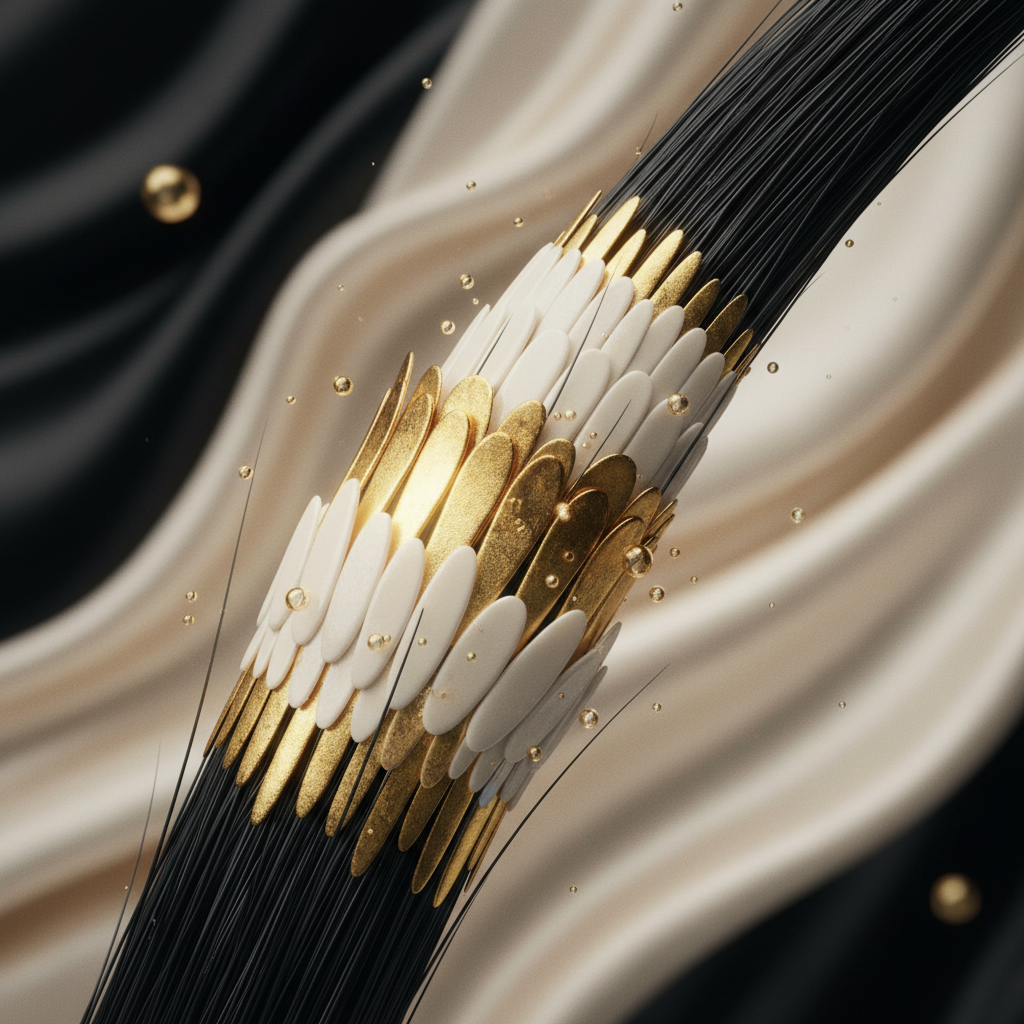
Under high-resolution electron microscopy, the hair cuticle resembles roof tiles or fish scales pointing downwards from the scalp toward the fibre tip. Each scale is approximately 0.3 to 0.5 micrometres thick and spans around 35 to 45 micrometres in length. Individual scales consist of sub-layers that vary in cross-link density:
- The Epicuticle: The outermost semi-permeable membrane, roughly 5 to 7 nanometres thick, covered by a covalently bound lipid monolayer called 18-methyleicosanoic acid (18-MEA).
- The A-Layer: A dense, highly cross-linked protein layer rich in cystine (around 30 percent), offering strong physical and chemical resistance.
- The Exocuticle: A cystine-rich layer (around 15 percent) that provides structural rigidity.
- The Endocuticle: A low-sulphur, soft protein layer containing only about 3 percent cystine, which swells easily in water.
- The Cell Membrane Complex (CMC): An intercellular cement composed of lipids and non-keratinous proteins that binds adjacent cuticle scales together.
Research published in cosmetic and dermatological literature demonstrates that the lipid layer (18-MEA) is essential for maintaining hair hydrophobicity. Healthy, untreated hair naturally repels water. When the cuticle is stripped of 18-MEA through alkaline bleaching or permanent hair dyes, the fibre becomes hydrophilic, absorbing ambient water rapidly, which causes the shaft to swell, tangle, and break.
The mechanical and chemical mechanisms of cuticle degradation
The hair cuticle does not possess living cells or metabolic activity, meaning it cannot heal or repair itself through biological cellular turnover. Once the fibre emerges past the scalp surface, it is subject to cumulative weathering.
Intact Cuticle (Hydrophobic, Smooth)
 │
 ▼ [Alkaline pH, Heat >180°C, UV, Bleach]
Loss of 18-MEA Lipid Layer
 │
 ▼ [Mechanical Friction, Brushing, Combing]
Cuticle Edges Lift, Chip, and Crack
 │
 ▼ [Severe Weathering]
Complete Cuticle Stripping -> Exposed Cortex -> Split Ends & Breakage
Chemical disruption: pH and oxidative damage
The natural pH of the hair fibre is slightly acidic, resting around 3.67, while the scalp skin sits around pH 5.5. Alkaline solutions (pH greater than 7.0) neutralise the surface charge, causing the cuticle scales to lift and separate. Permanent colouring and chemical lightening operate at high pH (typically 9.0 to 11.0) with alkaline agents like ammonia or ethanolamine. This forces the cuticle scales wide open so oxidative agents can penetrate the cortex to dissolve natural melanin. In doing so, these processes permanently destroy the 18-MEA lipid layer and oxidise cystine bonds into cysteic acid, leaving the scales permanently raised and brittle.
Thermal and mechanical trauma
Heat styling tools running above 180°C can melt and degrade the cuticle layers, creating micro-bubbles inside the fibre (bubble hair deformity) when internal moisture rapidly vaporises. Mechanical trauma, including rough towel drying, vigorous backcombing, or detangling dry, porous hair with stiff bristles, physically snaps the brittle edges of lifted cuticle scales. Over time, the scale margins chip away, eventually exposing the cortex underneath.
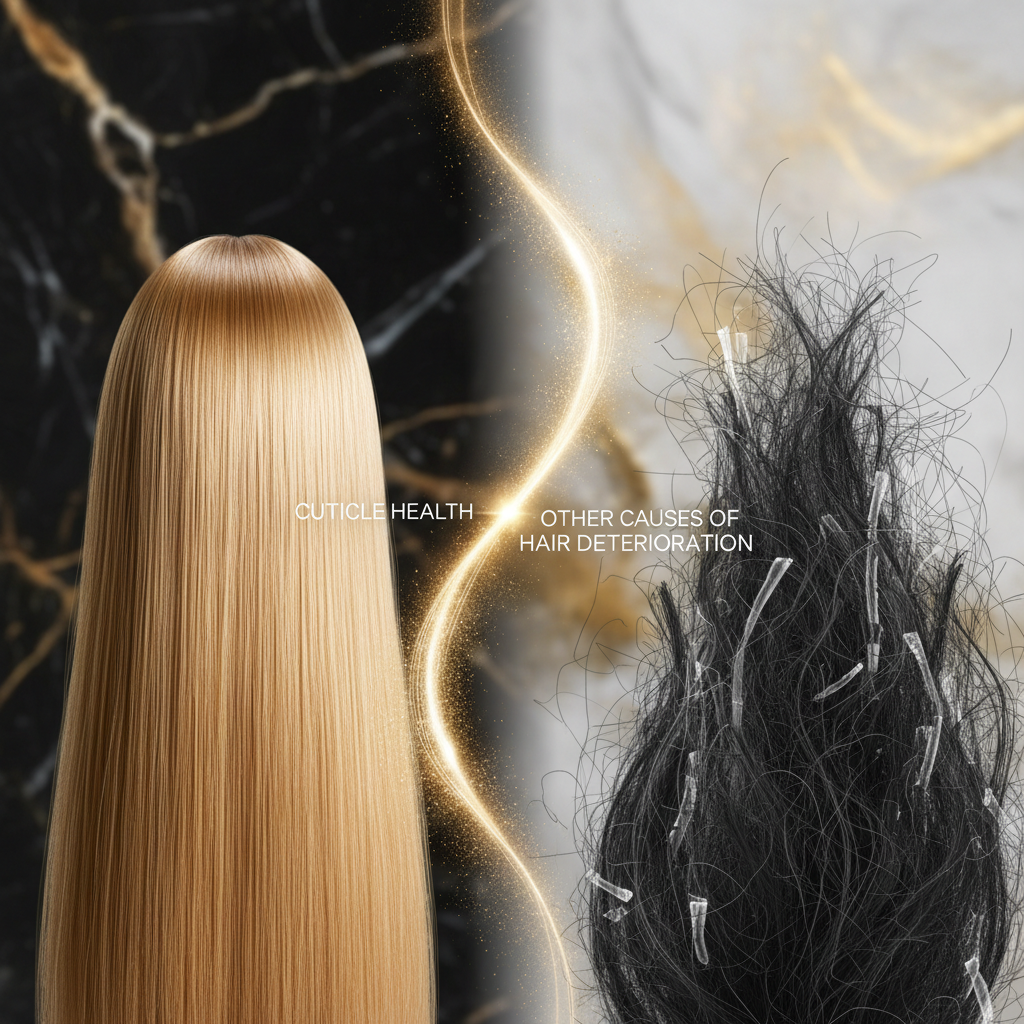
Cuticle health versus other causes of hair deterioration
It is essential to separate hair breakage caused by cuticle breakdown from true hair shedding or follicular hair loss. When clients or individuals notice short pieces of hair in the basin or on their shoulders without a white root bulb attached, they are observing hair breakage. This stems directly from cuticle failure. Conversely, if long hairs with an intact bulb are shedding in excessive volumes, the cause lies in follicular cycles (such as telogen effluvium or androgenetic alopecia), which operate independently of cuticle integrity.
| Cuticle State | Surface Properties | Water Absorption | Tensile Resistance | Typical Causes |
|---|---|---|---|---|
| Virgin / Intact | Hydrophobic, smooth, high specular light reflection (gloss) | Low to moderate; swells slowly and evenly | High; cortex is protected from mechanical stress | Gentle cleansing, low heat, no chemical treatments |
| Lifted / Weathered | Moderately rough, reduced shine, increased friction | High; absorbs water quickly from humidity, causing frizz | Moderate; prone to mid-shaft snags during combing | Sun exposure, daily blow-drying, mild shampoo washing |
| Eroded / Chemically Stripped | Hydrophilic, matte, high friction, rough and snagging | Extremely high; swells rapidly, weak when wet | Very low; splits, frays, and snaps under low force | Bleaching, relaxers, repeated heat styling above 200°C |
Signs of cuticle erosion to watch for
You can spot cuticle erosion through both visual checks and simple tactile tests:
- Lack of specular shine: Healthy, flat cuticle scales reflect light in a uniform, parallel direction, creating noticeable shine. Damaged, jagged cuticles scatter light diffusely, making hair look dull and chalky.
- Persistent tangling and friction: When cuticle scales lift, opposing hair fibres hook onto one another like microscopic Velcro, creating chronic knots.
- Rapid water uptake and slow air-drying: High-porosity hair that absorbs water the second it hits the shower but stays damp and limp for hours usually has severe cuticle erosion.
- Split ends (trichoptilosis): Once the cuticle completely strips away at the tip of the hair shaft, the unprotected cortical fibres unravel into split ends.
- White flecks along the shaft (trichorrhexis nodosa): Severe, localised cuticle loss leaves the cortex exposed, bulging outward in small, fragile nodes that snap easily during handling.
Evidence-based steps to protect and manage the hair cuticle
Because the cuticle cannot biologically regrow, practical haircare relies on preserving existing scales and applying cosmetic films to minimise further wear.
Use pH-balanced cleansing
Standard bar soaps and highly alkaline cleansers strip the lipid layer and force cuticle scales to flare. Choose shampoos formulated in an acidic-to-neutral range (pH 4.5 to 5.5). Mild anionic or amphoteric surfactants minimise the swelling of the endocuticle during washing.
Replenish surface lubrication
Conditioners containing cationic surfactants (such as cetrimonium chloride or behentrimonium methosulfate), fatty alcohols, and silicones deposit a microscopic hydrophobic film over lifted scales. Because damaged cuticles carry an overall negative electrical charge, positively charged cationic conditioning agents bind strongly to those areas. This temporarily smooths the surface, lowers friction by up to 50 percent, and prevents breakage during combing.
Control water exposure and heat
Do not leave hair soaking wet for prolonged periods. The hair cuticle swells significantly when water penetrates the endocuticle, putting internal strain on the cell membrane complex (hygral fatigue). Gently squeeze excess water using a smooth microfibre towel instead of rubbing with rough terrycloth. Always apply heat protectants containing thermal-stable polymers before using heat tools, and keep appliances below 185°C.
The role of targeted haircare: Watermans support
When protecting hair from breakage caused by environmental wear and friction, supporting the health of the scalp and using well-formulated, conditioning products makes a tangible difference. Watermans incorporates gentle cleansers, natural botanical oils, and surface-smoothing ingredients designed to cleanse without stripping the hair's natural barrier. While no cosmetic formula can permanently re-fuse missing cuticle cells, products designed to balance the scalp environment and reduce mechanical friction provide the slip necessary to minimise everyday breakage.
When to seek professional advice
If your hair breaks off rapidly despite gentle handling and the avoidance of chemical processing, speak with a qualified trichologist or dermatologist. Certain genetic keratin disorders, such as monilethrix or trichothiodystrophy, present with structurally fragile cuticles that snap under minimal tension.
Likewise, if you are experiencing wide-scale shedding from the roots rather than mid-shaft breakage, you should consult an NHS GP or a dermatologist to rule out nutritional deficiencies, thyroid imbalances, or follicular alopecias.
Frequently asked questions about The Science of the Hair Cuticle
Can you permanently repair damaged cuticles?
No. Because hair fibres are non-living biological structures, lifted or chipped cuticle cells cannot regenerate. Bond-building treatments and deep conditioners can form temporary chemical bridges or protective surface coatings that strengthen the fibre and smooth down lifted scales, but they do not biologically re-grow or permanently weld missing cuticle layers. Trimming split ends remains the only permanent fix for severe degradation.
How does The Science of the Hair Cuticle explain frizz?
Frizz occurs when damaged, lifted cuticle scales allow ambient moisture to pass unchecked into the cortex. As water enters, the cortex swells irregularly, causing individual hair strands to buckle and deviate from their neat pattern. A sealed, hydrophobic cuticle layer prevents excess atmospheric moisture from entering the fibre, keeping frizz under control.
Does cold water really close the hair cuticle?
There is little scientific evidence that a cold water rinse physically forces cuticle scales to close. The cuticle responds primarily to chemical pH and moisture swelling, not minor drops in water temperature. Acidic rinses or conditioning agents that alter surface charges are what actually encourage scales to lie flat, regardless of the rinse water temperature.
How many cuticle layers does human hair typically have?
Human hair typically has between 5 and 10 overlapping cuticle layers. Fine hair often sits on the lower end of that range (around 4 to 6 layers), while coarse or thick hair can feature up to 10 or 12 layers. Ethnic variations also play a role; Asian hair typically has thicker, more numerous cuticle layers than Caucasian or Afro-textured hair.
Summary of the hair cuticle
The Science of the Hair Cuticle demonstrates that hair strength, shine, and manageability depend heavily on an intact outer barrier. Protecting these 5 to 10 overlapping scales from aggressive alkaline chemicals, excessive thermal tools, and rough physical friction is essential for avoiding mid-shaft breakage. While high-quality conditioning products and gentle handling cannot biologically regenerate dead tissue, they coat and protect existing scales, keeping hair resilient and healthy-looking throughout its lifecycle.
Sources and references
- Robbins, C. R. (2012). Chemical and Physical Behavior of Human Hair. 5th ed. Springer-Verlag New York.
- Dawber, R. (1996). Hair: Its structure and response to cosmetic preparations. Clinics in Dermatology, 14(1), 105-112.
- Gavazzoni Dias, M. F. (2015). Hair cosmetics: An overview. International Journal of Trichology, 7(1), 2-15.
- Swift, J. A. (1999). The mechanics of the hair cuticle. International Journal of Cosmetic Science, 21(4), 227-239.
- British Association of Dermatologists (BAD). Hair Structure and Disorders Reference Guide. Bad.org.uk.