Scalp Microbiome Science: The Evidence-Based Guide to Scalp Health
8 min read ·
Explore Scalp Microbiome Science to understand how bacteria, fungi, and barrier health shape hair vitality, reduce irritation, and maintain scalp comfort.
Quick answer: Scalp Microbiome Science is the study of the complex ecosystem of bacteria, fungi, and viruses living on your scalp and their impact on skin barrier integrity and hair health. Research reveals that balanced microbial diversity supports a calm scalp, while disruptions contribute to flaking, irritation, and seborrhoeic dermatitis. However, Scalp Microbiome Science is still an emerging field, and maintaining balance relies more on gentle hygiene than on aggressively sterilising the skin.
Key takeaways
- The scalp hosts billions of micro-organisms, dominated by Cutibacterium acnes, Staphylococcus epidermidis, and lipophilic yeasts from the Malassezia genus.
- A healthy scalp microbiome lives in dynamic equilibrium; overgrowth or depletion of key species correlates with conditions like dandruff and inflammation.
- Harsh cleansing agents with high alkaline pH values strip protective sebum and disrupt the acid mantle, destabilising microbial communities.
- Cosmetic haircare cannot cure medical skin conditions, but supporting the scalp's natural barrier encourages optimal microbial balance.
- Ongoing research investigates links between microbiome disruption, follicular inflammation, and certain forms of hair shedding.
Scalp Microbiome Science: what the evidence shows
Scalp Microbiome Science examines how microscopic communities inhabit the follicular openings, epidermal surface, and sebaceous glands of your scalp. In recent genomic sequencing studies, researchers identified that the human scalp is uniquely oily, warm, and humid compared to the rest of the body. This creates an environment favoured by lipid-dependent organisms.
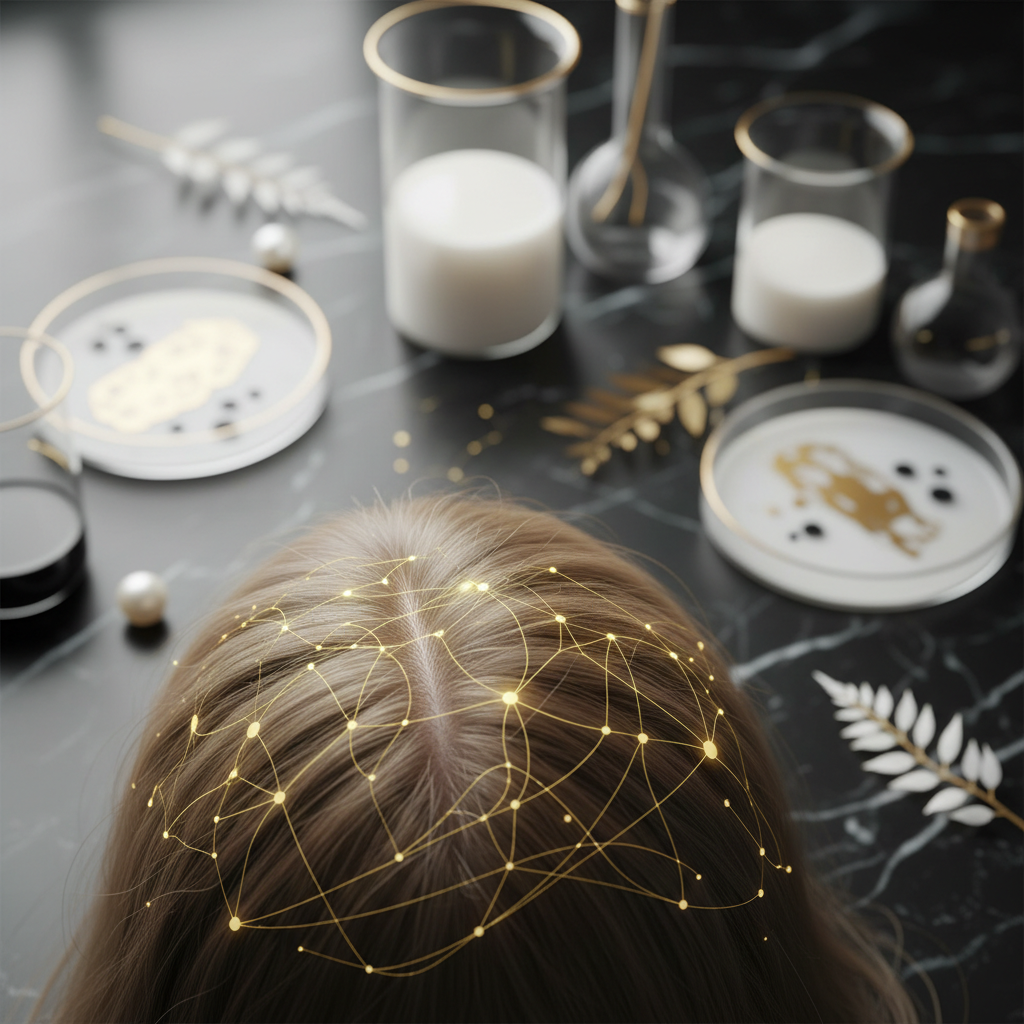
The primary bacterial residents are Cutibacterium acnes (formerly Propionibacterium acnes) and Staphylococcus epidermidis. On the fungal side, Malassezia restricta and Malassezia globosa make up the vast majority of the fungal community. Under normal conditions, these organisms exist symbiotically. They consume sebum components and release free fatty acids that help maintain an acidic scalp pH between 4.5 and 5.5. This natural acidity inhibits pathogenic invaders.
When this ecosystem falls out of balance, a state known as dysbiosis occurs. Peer-reviewed dermatological studies consistently show that individuals with dandruff and seborrhoeic dermatitis display a shifted bacterial ratio. Specifically, the proportion of Staphylococcus species increases relative to Cutibacterium, alongside an elevated response to oleic acid produced by Malassezia breakdown of sebum.
The following table summarises the predominant microbial groups and their physiological roles on the scalp:
| Micro-organism Type | Dominant Species | Primary Carbon Source | Role in Scalp Homeostasis | Associated Imbalance |
|---|---|---|---|---|
| Bacterium (Actinomycetota) | Cutibacterium acnes | Sebum triglycerides | Produces short-chain fatty acids; supports acidic pH | Depletion linked to higher Staphylococcus colonization |
| Bacterium (Bacillota) | Staphylococcus epidermidis | Cellular debris and lipids | Outcompetes pathogens; secretes antimicrobial peptides | Excessive ratios found in active flaking conditions |
| Fungus (Basidiomycota) | Malassezia restricta | Saturated/unsaturated fats | Degrades sebum into protective surface lipids | Oleic acid metabolite triggers barrier inflammation |
| Fungus (Basidiomycota) | Malassezia globosa | Saturated/unsaturated fats | Co-regulates follicular fungal community | Implicated in scalp pruritus and flaking |
What the evidence does not show
While Scalp Microbiome Science has advanced rapidly, there are clear limits to current knowledge.
First, science has not proved that a single "perfect" microbial profile exists. What represents a healthy microbiome for one individual may look entirely different in someone else depending on genetics, age, geographic climate, and washing frequency.
Second, cosmetic products labelled as "probiotic" rarely contain live, colony-forming bacteria due to preservation regulations and shelf-life constraints. Most contain postbiotics (metabolic byproducts) or prebiotics (nourishing substrates like sugars).
Finally, the evidence does not show that microbial imbalances directly cause genetic pattern hair loss (androgenetic alopecia). While follicular micro-inflammation can exacerbate overall shedding rates, it is not the root genetic or hormonal driver of follicular miniaturisation. Breakage along the hair shaft is entirely mechanical or chemical and has no link to microbial populations.
The biological mechanism of scalp dysbiosis
The mechanism linking your microbiome to scalp comfort centres on the epidermal barrier. Sebaceous glands secrete sebum, a mixture of triglycerides, squalene, and wax esters. Malassezia fungi produce lipase enzymes that split these triglycerides into free fatty acids. They consume the saturated fats they need for survival and leave behind unsaturated fatty acids, primarily oleic acid.
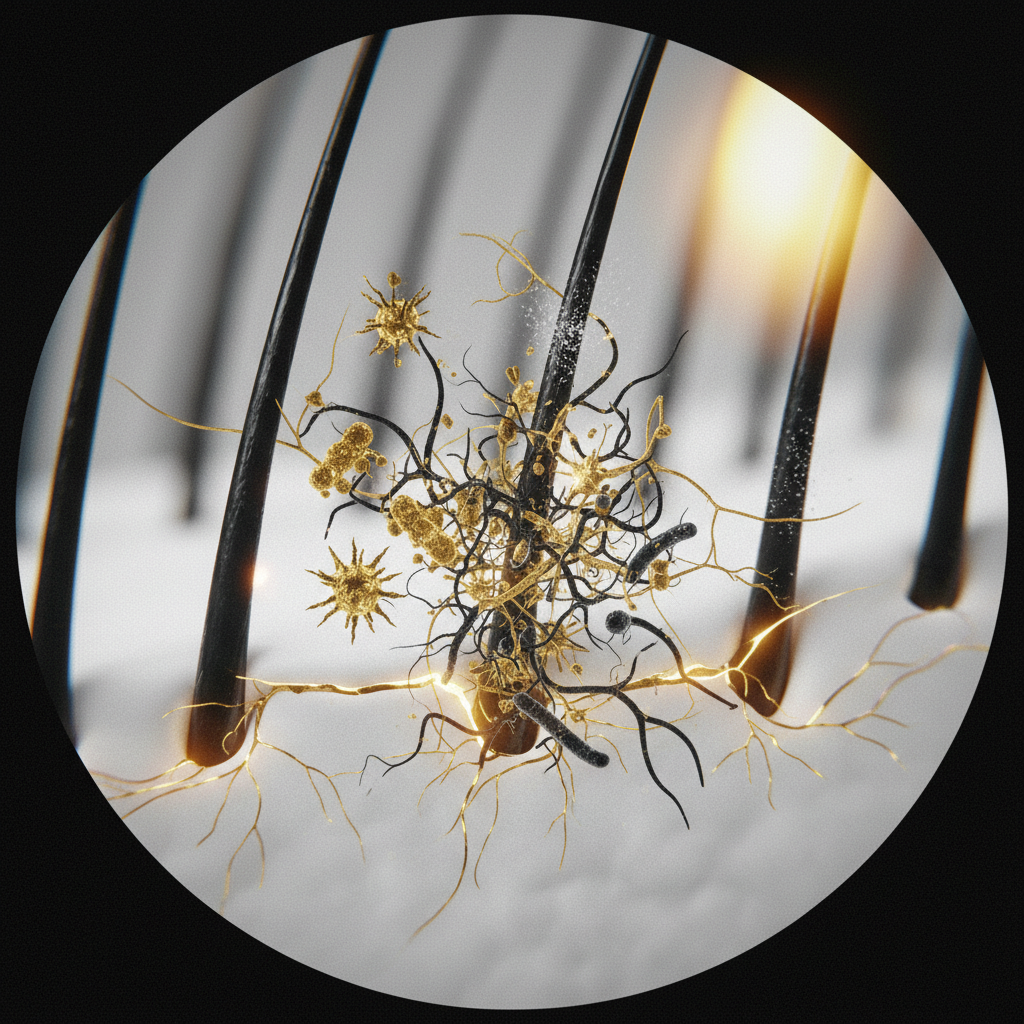
In susceptible individuals, oleic acid breaches a weakened stratum corneum. This triggers an inflammatory cascade in the epidermal cells below. In response, skin cells accelerate their renewal cycle, rushing immature keratinocytes to the surface where they clump together as visible flakes.
Simultaneously, when the protective bacterial buffer provided by Cutibacterium acnes declines, Staphylococcus species proliferate. This shifts the local inflammatory profile, creating persistent erythema (redness) and pruritus (itching). If you scratch the scalp, you physically damage the epidermal barrier further, creating entry points for secondary irritation and cyclic inflammation.
Signs of an unbalanced scalp microbiome
An unsettled microbiome usually manifests through noticeable changes in your scalp comfort and hair environment. Common signs include:
- Persistent flaking, ranging from fine white powder to greasy, yellowish clusters.
- Localised or widespread scalp itching that returns shortly after washing.
- Unexplained tenderness or tight sensations across the crown and hairline.
- An unusually rapid transition from clean hair to greasy roots within 12 to 24 hours.
- Mild redness or irritation surrounding individual hair follicle openings.
Practical steps to support your scalp ecosystem
Maintaining microbial equilibrium does not require harsh antimicrobial measures. In fact, over-cleansing often causes more harm than good. You can support your scalp through balanced daily habits:
- Cleanse with pH-balanced formulas: Choose shampoos formulated close to the scalp's natural pH (5.0 to 5.5). High alkaline soaps strip protective fatty acids and encourage the growth of opportunistic bacteria.
- Wash at regular intervals: Allowing excess sebum to sit on the scalp for days creates an uncontrolled feeding ground for Malassezia. Most people benefit from washing every one to three days, adjusted for sebum production and exercise.
- Avoid scalding water: Hot water strips natural lipids and causes thermal irritation to the skin barrier. Rinse with lukewarm water instead.
- Minimise physical trauma: Avoid vigorous scrubbing with sharp fingernails or stiff scalp brushes. Use the pads of your fingertips to lift debris without creating micro-abrasions.
- Dry the scalp thoroughly: Fungi thrive in warm, damp environments. Leaving wet hair tied up creates a humid microclimate that can encourage fungal overgrowth.
The role of cosmetic formulations: the Watermans approach
Supporting the physical environment of the scalp allows its natural flora to stabilise. In cosmetic hair routines, the focus should remain on creating a clean, nourished, and calm foundation.
Watermans products are formulated with scalp health in mind, focusing on non-stripping cleansing and functional botanical extracts. By delivering balanced cleansing alongside ingredients like rosemary, biotin, and allantoin, these formulas help remove surface impurities without violently disrupting the delicate moisture barrier. A calm, well-hydrated scalp creates the ideal baseline environment for hair to grow and feel strong.
When the cause may be something else
Not every scalp issue stems from a simple microbial disruption. Similar symptoms can arise from:
- Contact dermatitis: An allergic reaction to fragrances, hair dyes, or preservatives.
- Psoriasis: An autoimmune condition causing thick, silvery plaques that extend beyond the hairline.
- Folliculitis: A distinct bacterial or fungal infection deep inside the hair follicle, often presenting as small, tender pustules.
- Telogen effluvium: Widespread hair shedding triggered by stress, illness, or nutritional deficits rather than surface microbial changes.
When to get professional advice
If over-the-counter adjustments and gentle scalp care do not improve your symptoms within three to four weeks, consult a GP, dermatologist, or registered trichologist.
Seek medical review immediately if you experience severe pain, weeping or crusting lesions, rapid patchy hair loss, or inflammation that spreads to your neck and face. Medical conditions like severe seborrhoeic dermatitis or scalp psoriasis often require prescription topical corticosteroids, targeted medicated antifungals, or clinical treatment plans.
Frequently asked questions about Scalp Microbiome Science
What is the primary focus of Scalp Microbiome Science?
Scalp Microbiome Science investigates the complex communities of bacteria and fungi living on the scalp. It explores how these organisms interact with sebum, the skin barrier, and the immune system. Understanding these microscopic balances helps scientists develop better methods for managing flaking, irritation, and overall scalp wellness.
Can an unbalanced scalp microbiome cause hair loss?
Microbial dysbiosis does not directly cause genetic hair loss (alopecia). However, severe flaking and untreated inflammation can irritate the follicular opening. Chronic scratching can also cause mechanical hair breakage and temporary shedding. Restoring scalp balance ensures optimal conditions for natural hair growth cycles.
Does washing your hair every day harm the microbiome?
Daily washing does not inherently damage the microbiome if you use a gentle, pH-balanced cleanser. For individuals with naturally oily scalps, regular cleansing removes excess sebum that would otherwise feed opportunistic fungi. The key is avoiding harsh, alkaline formulations that strip essential barrier lipids.
How do prebiotics differ from probiotics in scalp care?
Probiotics are live beneficial micro-organisms, which are difficult to keep stable in water-based cosmetic bottles. Prebiotics are plant sugars and nutrient compounds that serve as food for the beneficial bacteria already living on your scalp, encouraging a diverse, resilient micro-ecosystem.
Conclusion
Scalp Microbiome Science has transformed how stylists and individuals view scalp hygiene, moving the focus away from harsh sterilisation toward thoughtful ecosystem support. By respecting the natural skin barrier, maintaining an acidic pH, and avoiding extreme cleansing habits, you create the conditions needed for your resident flora to thrive. A balanced microbiome supports a calm, comfortable scalp, providing the ultimate foundation for vibrant, resilient hair.
Sources and references
- British Association of Dermatologists. Seborrhoeic Dermatitis Guidelines.
- Clinical, Cosmetic and Investigational Dermatology. "The Scalp Microbiome: Composition, Function, and Therapeutic Implications." (2020).
- Journal of Investigative Dermatology. "Microbial Dysbiosis and Barrier Disruption in Dandruff and Seborrhoeic Dermatitis." (2018).
- International Journal of Molecular Sciences. "Characterization of the Human Scalp Microbiome and Its Role in Skin Health." (2021).
Find these ingredients in Watermans products
- Biotin: you will find this ingredient in our Hair Growth Shampoo.
- Oleic Acid: you will find this ingredient in our Camellia & Black Castor Hair & Body Oil.