Seborrhoeic Dermatitis Basics: A Guide to Scalp Health
9 min read ·
Learn Seborrhoeic Dermatitis Basics: explore the biological causes, clinical signs, scalp management options, and evidence-based ways to maintain healthy skin.
Quick answer: Understanding Seborrhoeic Dermatitis Basics begins with recognising that this common, chronic inflammatory condition targets oil-rich skin, especially the scalp. Triggered by an overgrowth of harmless Malassezia yeasts feeding on sebum, it produces greasy scales, redness, and persistent itching. The condition is entirely non-contagious and does not directly attack hair follicles, but severe scratching can cause hair breakage or temporary shedding. Because it is a relapsing condition without a permanent cure, long-term management focuses on regulating sebum and keeping yeast populations controlled.
Key takeaways
- Seborrhoeic dermatitis is a chronic, relapsing inflammatory skin disease driven by an interaction between sebum production and skin-dwelling Malassezia yeasts.
- It primarily affects sebum-dense areas such as the scalp, eyebrows, nasolabial folds, ears, and upper chest.
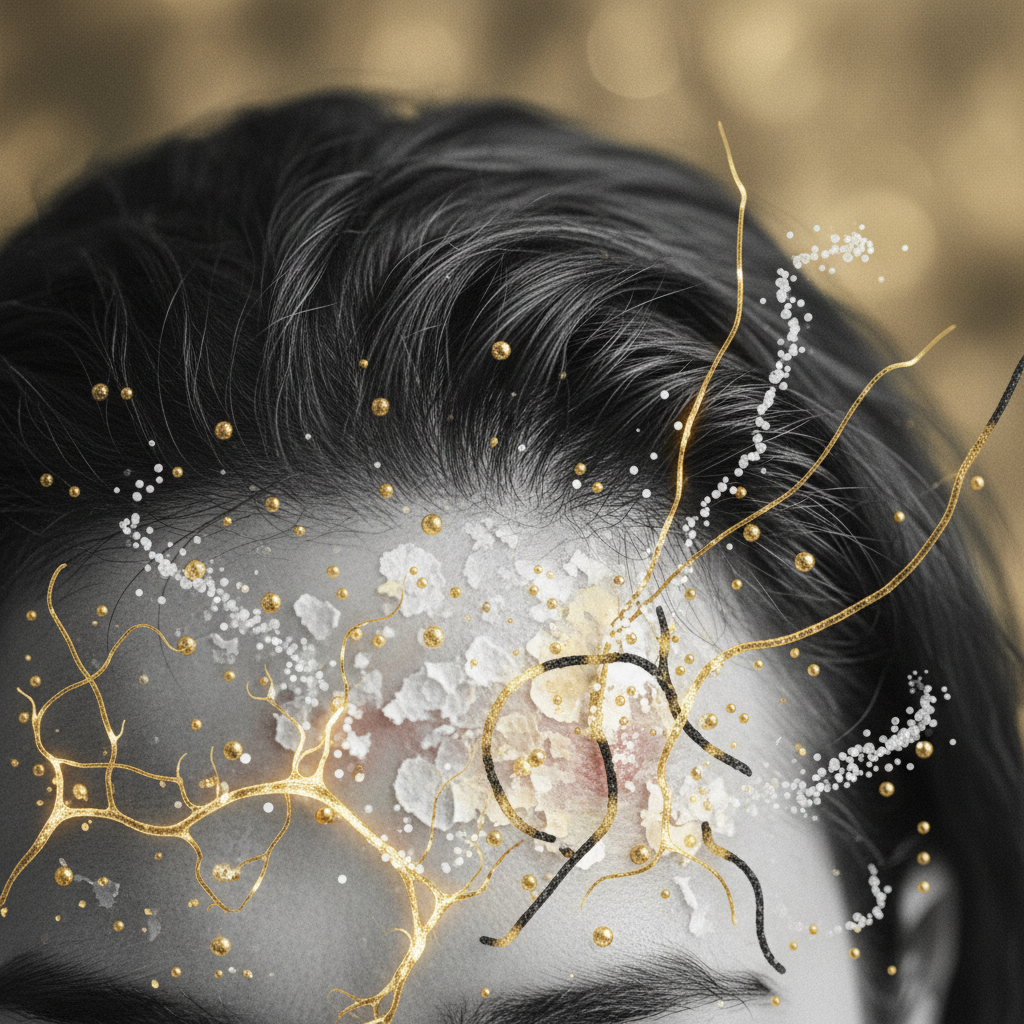
- Symptoms range from mild, powdery dandruff (pityriasis capitis) to thick, greasy, yellowish plaques with underlying erythema (redness).
- It does not directly cause follicular hair loss or scarring alopecia, though secondary inflammation and vigorous scratching can trigger telogen effluvium or mechanical breakage.
- Management relies on antifungal active agents, keratolytic exfoliants, and gentle scalp hygiene to maintain remission rather than offering a permanent cure.
Seborrhoeic Dermatitis Basics: what the evidence shows
Seborrhoeic dermatitis affects approximately 1 to 3 percent of the general population worldwide, with mild forms such as simple dandruff affecting up to 50 percent of adults. Dermatological research shows that the condition follows a bimodal or trimodal distribution, peaking during three life stages: infancy (commonly presenting as cradle cap), post-puberty, and late adulthood (typically between 30 and 60 years old).
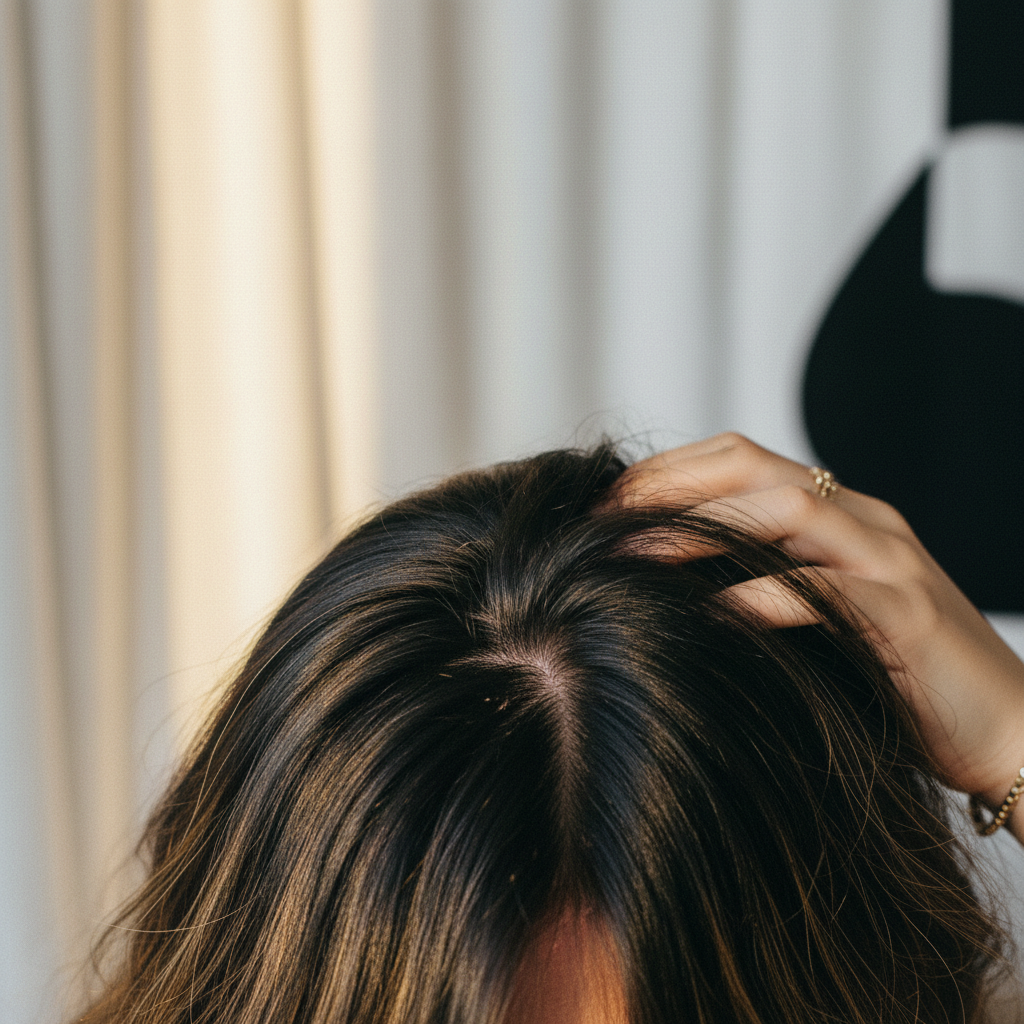
The condition is not an allergy, nor does it stem from poor personal hygiene. Instead, it represents a complex interplay between three core components:
- Sebaceous gland activity: The condition only appears in skin zones rich in active oil glands. High sebum secretion rates provide the fuel that drives microbial metabolism.
- Microbial colonisation: Commensal yeasts belonging to the Malassezia genus (predominantly Malassezia globosa and Malassezia restricta) naturally inhabit human skin. In individuals prone to the condition, these organisms thrive on lipid secretions.
- Individual immune susceptibility: The presence of yeast alone does not trigger dermatitis. Rather, the individual's skin barrier integrity and cell-mediated immune response determine whether an inflammatory cascade begins.
Controlled studies indicate that when Malassezia feeds on sebum, it consumes saturated fatty acids and leaves behind irritating unsaturated free fatty acids, particularly oleic acid. In susceptible individuals, oleic acid breaches the stratum corneum barrier, prompting keratinocytes to release inflammatory cytokines. This shortens the skin cell renewal cycle from the standard 28 days down to roughly 7 to 14 days, leading to premature, clumped shedding of uncornified cells visible as flakes.
| Clinical Feature | Mild Dandruff (Pityriasis Capitis) | Seborrhoeic Dermatitis | Scalp Psoriasis |
|---|---|---|---|
| Primary Appearance | Fine, dry, white or translucent flakes | Greasy, yellowish, adherent scales | Thick, silvery-white, well-demarcated plaques |
| Underlying Erythema | Absent or negligible | Present; pink, red, or violaceous | Pronounced red or salmon-pink base |
| Common Distribution | Diffuse across the scalp | Scalp, eyebrows, nasolabial folds, ears | Scalp margins, elbows, knees, lower back |
| Auscultation / Signs | Flakes detach freely | Flakes stick to hair and skin | Auspitz sign (pinpoint bleeding when scraped) |
| Skin Sensation | Mild or intermittent itch | Moderate to severe burning or pruritus | Soreness, tightness, intense burning itch |
What the evidence does not show
Dermatological literature is clear on several critical misconceptions:
- Dietary causes: Evidence does not demonstrate that specific foods, dairy, or refined sugars directly cause seborrhoeic dermatitis. While systemic metabolic health supports overall skin barrier function, no high-quality randomised controlled trial shows that eliminating particular dietary items resolves the condition.
- Follicular destruction: Seborrhoeic dermatitis does not destroy hair follicles. It does not cause permanent hair loss, androgenetic alopecia, or scarring (cicatricial) alopecia. Any thinning experienced during a flare is almost always telogen effluvium (premature shedding prompted by severe epidermal inflammation) or fibre breakage from frantic scratching.
- Contagion: You cannot catch the condition from pillows, salon brushes, or physical contact. Malassezia already lives naturally on almost all human adults.
- Permanent eradication: No cosmetic treatment, prescription medication, or lifestyle intervention permanently eradicates seborrhoeic dermatitis. Because the yeast forms part of normal human microflora, therapy focuses on symptom suppression and maintenance.
Biological mechanism of flare-ups
The pathway leading to an active flare-up involves a well-documented cascade of biochemical reactions:
[Sebum Secretion]
 │
 ▼
[Malassezia Lipase Cleavage] ──▶ Produces Free Fatty Acids (Oleic Acid)
 │
 ▼
[Epidermal Barrier Disruption]
 │
 ▼
[Cytokine Release (IL-1α, IL-8, TNF-α)]
 │
 ▼
[Accelerated Epidermal Turnover] ──▶ Formation of Thick, Greasy Flakes & Redness
When sebaceous glands produce sebum, Malassezia yeasts secrete extracellular lipases to break down the triglycerides within that oil. The yeasts assimilate the saturated fatty acids they require for survival, leaving unsaturated fatty acids on the skin surface. These unsaturated acids alter the lipid balance of the stratum corneum, creating structural irregularities.
Water evaporates out of the disrupted barrier (elevating transepidermal water loss), while microscopic irritants enter. In response, keratinocytes release pro-inflammatory cytokines such as interleukin-1 alpha (IL-1α), interleukin-8 (IL-8), and tumour necrosis factor-alpha (TNF-α). This immune activity stimulates microvascular dilation (erythema) and accelerates epidermal turnover, trapping nucleated, immature cells in sticky clumps at the scalp surface.
Signs and symptoms to identify
Recognising seborrhoeic dermatitis requires assessing both the type of scaling and the areas affected:
- Scale texture and colour: Unlike the dry, fine, flyaway flakes of simple dry scalp, seborrhoeic flakes are typically greasy, waxy, and yellowish or off-white. They often stick stubbornly to the hair shaft and scalp surface.
- Erythematous plaques: The underlying skin appears inflamed. On lighter skin tones, patches look pink or red; on darker skin tones, they may appear hypopigmented (lighter), hyperpigmented, or purplish.
- Characteristic distribution: Beyond the scalp, lesions commonly appear along the hairline, behind and inside the concha of the ears, in the folds of the eyebrows, across the bridge of the nose, and over the sternum.
- Sensory discomfort: Patients frequently report pruritus (itching) that worsens with sweating, alongside burning, stinging, or skin tenderness.
Practical scalp management strategies
Effective management targets three fronts: lowering yeast populations, clearing adherent scale, and soothing inflammation.
Active cleansing ingredients
Over-the-counter and prescription topical cleansers contain proven active compounds:
- Antifungals: Ingredients such as ketoconazole (1 to 2 percent), ciclopirox olamine (1 percent), and zinc pyrithione help reduce Malassezia colonisation levels.
- Keratolytics: Salicylic acid (2 to 3 percent) and urea soften and dissolve the intercellular cement binding thick scales together, allowing them to wash away without abrasive scrubbing.
- Sebum regulators and soothers: Piroctone olamine, selenium sulfide (1 to 2.5 percent), and niacinamide help calm redness and rebalance the scalp environment.
Application technique
When using medicated shampoos, leave the lather directly in contact with the scalp for 3 to 5 minutes before rinsing. This contact time allows active ingredients to penetrate the stratum corneum and sebaceous gland openings. Alternate active washes with gentle, hydrating shampoos on non-treatment days to avoid drying out the lengths of the hair.
The Watermans approach to scalp vitality
For regular maintenance alongside medical care, supporting the scalp microbiome with balanced, nourishing ingredients is essential. Watermans GrowMe Shampoo integrates gentle cleansing agents with targeted botanical extracts, rosemary, biotin, and allantoin. While formulated primarily to promote a healthy-looking, fuller appearance and support hair vitality, its gentle formula clarifies the scalp surface of excess sebum and environmental debris without stripping essential moisture. It serves as an ideal non-medicated partner for daily care between targeted therapeutic washes.
When the cause may be something else
Several scalp conditions mimic seborrhoeic dermatitis. Accurate differentiation prevents improper treatment:
- Scalp psoriasis: Psoriasis typically features thicker, demarcated plaques with a distinct silvery-white scale that extends beyond the hairline onto the forehead or neck. Removing a psoriasis plaque often produces tiny droplets of blood (the Auspitz sign).
- Contact dermatitis: An allergic reaction to hair dyes, fragrances, or preservatives causes acute redness, intense itching, and swelling, but without the persistent greasy, yellowish scaling of seborrhoeic dermatitis.
- Tinea capitis: A fungal dermatophyte infection common in children. It leads to circular patches of scaling accompanied by hair breakage right at the skin surface (black-dot ringworm), which does not happen in uncomplicated seborrhoeic dermatitis.
- Dry scalp (asteatosis): Occurs when the scalp lacks moisture rather than producing excess oil. The flakes are tiny, dry, and white, with zero underlying erythema or oiliness.
When to seek medical advice
Consult a GP, dermatologist, or qualified trichologist if:
- Over-the-counter anti-dandruff and clarifying shampoos show no improvement after four consecutive weeks of consistent use.
- The scalp develops severe, oozing, crusting, or painful yellow fluid, which indicates a secondary bacterial infection (typically Staphylococcus aureus).
- Redness spreads significantly across the face, neck, or body.
- You experience sudden, pronounced hair shedding alongside severe scalp tenderness.
Frequently asked questions about Seborrhoeic Dermatitis Basics
Does having seborrhoeic dermatitis mean my hair will fall out?
No. Seborrhoeic dermatitis affects the superficial layers of the skin, not the hair bulbs situated deep in the dermis. While the condition itself does not trigger pattern baldness or scarring alopecia, severe inflammation or vigorous, frequent scratching can snap hair fibres or trigger a temporary bout of telogen effluvium. Once the scalp barrier settles, normal hair growth cycles resume.
How often should I wash my hair if I have seborrhoeic dermatitis?
Most dermatologists recommend washing your hair at least every other day, or daily if your scalp is naturally very oily. Frequent washing removes excess sebum, clears shed keratin, and prevents Malassezia from accumulating the lipids it requires to multiply. Leaving long intervals between washes usually worsens the condition.
Can natural oils like coconut or olive oil help clear the flakes?
No, and in many cases they make the problem worse. Malassezia yeasts feed on specific fatty acids found in natural oils, particularly olive and coconut oil. Applying pure botanical oils supplies the yeast with a direct food source, which can accelerate microbial growth and worsen inflammatory flare-ups.
What are the core Seborrhoeic Dermatitis Basics every stylist should know?
Stylists should know that the condition is completely non-contagious, driven by a natural skin yeast, and flares under physical or emotional stress. Avoid vigorous mechanical scraping during treatments, which breaks hair fibres and damages inflamed skin. Instead, suggest gentle chemical exfoliation, suggest an active wash, and refer persistent plaques to a GP.
Understanding long-term scalp wellness
Mastering Seborrhoeic Dermatitis Basics transforms how you manage your scalp health. Recognising that this condition is a chronic, manageable biological pattern, rather than a failure of cleanliness, removes unnecessary worry. By maintaining a clean scalp environment, adopting evidence-backed active washes during flare-ups, and handling hair fibres gently to prevent mechanical breakage, you can successfully control symptoms and enjoy healthy hair growth over the long term.
Sources and references
- British Association of Dermatologists. Seborrhoeic Dermatitis Guidelines and Patient Information, 2020.
- Dawson, T. L. "Malassezia globosa and restricta: Breakthrough Understanding of the Etiology and Treatment of Dandruff and Seborrheic Dermatitis through Whole-Genome Analysis." Journal of Investigative Dermatology Symposium Proceedings, 2007.
- National Institute for Health and Care Excellence (NICE). Seborrhoeic Dermatitis: Clinical Knowledge Summaries, 2022.
- Borda, L. J., & Wikramanayake, T. C. "Seborrheic Dermatitis and Dandruff: A Comprehensive Review." Journal of Clinical and Investigative Dermatology, 2015.
- Gupta, A. K., & Bluhm, R. "Seborrheic Dermatitis." Journal of the European Academy of Dermatology and Venereology, 2004.
Find these ingredients in Watermans products
- Zinc: you will find this ingredient in our Hair Vitamins.
- Oleic Acid: you will find this ingredient in our Camellia & Black Castor Hair & Body Oil.
- Niacinamide: you will find this ingredient in our Hair Mask.