The Role of DHT in Scalp Health: Mechanisms, Genetics, and Care
9 min read ·
Explore the role of DHT in scalp health, follicular miniaturisation, and how genetics shape androgen response in hair thinning.
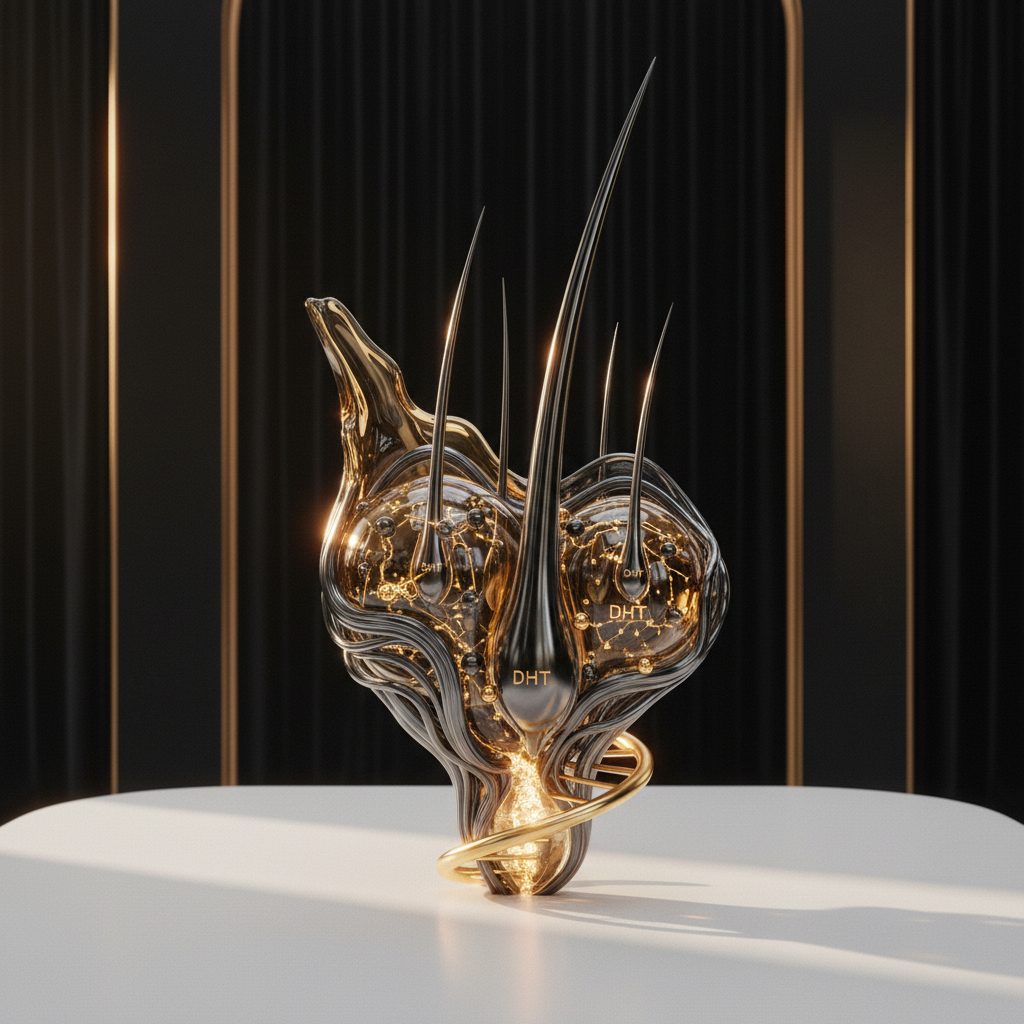
Quick answer: The Role of DHT in Scalp Health centres on how dihydrotestosterone, a potent androgen converted from testosterone by the 5-alpha reductase enzyme, binds to androgen receptors in genetically susceptible hair follicles. In sensitive individuals, this binding triggers follicular miniaturisation, shortens the anagen (growth) phase, and fosters micro-inflammation around the follicle. However, DHT is not a universal poison; it is an essential androgen throughout the body, and its negative impact on scalp hair depends entirely on inherited follicular receptor sensitivity rather than systemic hormone levels alone.
Key takeaways
- Dihydrotestosterone (DHT) is an androgen synthesised locally in hair follicles and sebaceous glands by the enzyme 5-alpha reductase.
- The role of DHT in scalp health depends on genetic predisposition. DHT only causes follicular miniaturisation in follicles with sensitive androgen receptors.
- Miniaturisation gradually shrinks terminal hair follicles into fine, vellus-like hairs, shortening the active growth phase from years to months.
- Elevated DHT activity also interacts with sebaceous glands, often altering sebum output and contributing to perifollicular micro-inflammation.
- DHT-driven pattern hair loss differs fundamentally from temporary hair shedding (telogen effluvium) and structural hair breakage.
- Topical cosmetic support can help maintain an optimal scalp environment, but clinical androgenetic alopecia requires dermatological evaluation.
The Role of DHT in Scalp Health: what the evidence shows
Research published in dermatology journals confirms that dihydrotestosterone is roughly five times more potent than testosterone at binding to the androgen receptor. Within the scalp tissue, the enzyme 5-alpha reductase (specifically the Type II isoform found predominantly in hair follicles) converts circulating testosterone into DHT.
When DHT binds to receptors within the dermal papilla of genetically vulnerable follicles, it alters gene expression. Specifically, it downregulates local growth factors such as vascular endothelial growth factor (VEGF) and upregulates inhibitory signalling proteins like transforming growth factor-beta (TGF-beta). This cascade forces the follicle to shorten its anagen (growth) phase while prolonging the telogen (resting) phase. Over successive cycles, the hair shaft emerges thinner, shorter, and less pigmented.
Crucially, the role of DHT in scalp health is regionally specific. Follicles located across the crown, temples, and frontal hairline typically carry higher densities of androgen receptors and 5-alpha reductase enzymes. In contrast, follicles along the occipital scalp (the back of the head) generally lack these sensitive receptors, which is why donor hair from the occipital region remains resilient when transplanted to the crown.
The biological mechanism: miniaturisation and the follicular environment
Follicular miniaturisation is the hallmark physical consequence of DHT binding. A healthy terminal follicle sits roughly 4 to 5 mm deep within the dermis and produces a thick, pigmented strand of hair with an active growing cycle lasting between two and seven years.
Testosterone + 5-Alpha Reductase (Type II)
 │
 ▼
 Dihydrotestosterone (DHT)
 │
 ▼
 Binds to Dermal Papilla Receptors
 │
 ▼
 Altered Signalling (↑ TGF-β, ↓ VEGF)
 │
 ▼
 Progressive Follicular Miniaturisation
When DHT attaches to susceptible receptors, several physiological shifts occur:
- Phase compression: The anagen phase diminishes down to a matter of months or weeks, preventing the hair fibre from reaching its full potential diameter or length.
- Follicular regression: The dermal papilla volume decreases, producing a shallow, smaller follicle that sits higher in the dermis (often only 1 to 2 mm deep).
- Perifollicular micro-inflammation: Studies show that chronic androgenic binding frequently coincides with mild lymphocytic infiltration around the follicular infundibulum, leading to local connective tissue sheath changes and subtle perifollicular fibrosis.
- Sebaceous stimulation: DHT also acts on the sebaceous glands connected to each follicle, influencing sebum viscosity and production, which can alter the scalp microbiome if left unbalanced.
What the evidence does not show
Misconceptions regarding DHT are widespread across online haircare forums. Clear boundaries are vital when evaluating hair concerns:
- DHT does not cause hair breakage: Hair breakage occurs along the shaft due to mechanical trauma, heat, or chemical over-processing. DHT operates exclusively at the follicular level under the scalp.
- DHT is not an inherently "toxic" compound: DHT is a critical male and female sex steroid essential for secondary sexual characteristics, prostate function, and muscle regulation. It only disrupts hair growth in follicles genetically programmed to respond poorly to it.
- High DHT does not automatically cause hair loss: Many individuals with high circulating serum DHT maintain dense, full heads of hair into old age because their follicles possess low androgen receptor density or lower intrinsic sensitivity.
- Shampoo cannot single-handedly "cure" genetic hair loss: While cosmetic formulations can cleanse sebum, support scalp microcirculation, and provide nourishing botanical extracts, topical over-the-counter wash-off products do not permanently alter endocrine genetics.
Differentiating DHT miniaturisation from other scalp and hair conditions
Because thinning hair can stem from nutritional, mechanical, or hormonal shifts, recognising the difference between follicle loss, shedding, and breakage is critical.
| Condition | Primary Mechanism | Characteristic Pattern | Reversibility |
|---|---|---|---|
| Androgenetic Alopecia (DHT-mediated) | Genetic sensitivity to DHT causing progressive follicular miniaturisation | Frontal hairline recession, thinning at the crown or vertex, widening central part | Progressive; requires ongoing management to preserve existing density |
| Telogen Effluvium | Systemic shock, fever, or nutritional deficit pushing follicles prematurely into rest | Diffuse, rapid shedding across the entire scalp without hairline recession | High; usually resolves spontaneously 3 to 6 months after the trigger clears |
| Hair Shaft Breakage | Mechanical stress, bleach, heat tools, or extreme dryness snapping the fibre | Inconsistent lengths, frayed ends, rough texture; follicle remains healthy | High; prevented by conditioning, trimming, and reducing physical stress |
| Seborrhoeic Dermatitis | Malassezia yeast overgrowth feeding on scalp lipids, causing inflammation | Flaking, visible erythema, itchiness, greasy scale; may exacerbate shedding | High; responds well to targeted scalp cleansing and antifungal agents |
Signs of DHT-related changes on the scalp
Identifying the role of DHT in scalp health early provides the best window for cosmetic and medical support. Key indicators include:
- Progressive change in hair texture: Hairs at the temples, frontal fringe, or crown begin to feel softer, wispy, and noticeably finer than the resilient hair at the nape of the neck.
- Excessive miniaturised shedding: Noticing hairs that are shorter than 3 cm with a tapered end rather than a blunt cut edge, indicating the hair fell before completing a normal growth cycle.
- Visible widening of the parting: In women, DHT-associated thinning often manifests as a diffuse thinning across the mid-frontal scalp while retaining the anterior hairline.
- Scalp visibility under light: The scalp becomes easily discernible through the hair in bright indoor or direct sunlight, even if large clumps of hair are not falling out in the shower.
What you can do: scalp care and management strategies
Managing the scalp environment when DHT is a factor involves a multi-pronged approach that combines lifestyle habits, topicals, and clinical guidance.
Optimising the scalp ecosystem
A congested, inflamed scalp exacerbates androgen-related follicular distress. Washing the scalp regularly with a balanced cleanser (pH 5.0 to 5.5) removes oxidised squalene, environmental pollutants, and sebum crusts that house microbial irritants. Massaging the scalp gently during washing helps stimulate cutaneous microcirculation, ensuring proper capillary blood flow reaches the dermal papilla.
Botanical and topical support
Certain topical ingredients show promise in laboratory studies for supporting a healthy follicular environment. Caffeine, for instance, has been observed in vitro to help counteract testosterone-induced growth suppression by stimulating cellular metabolism. Essential oils like rosemary and peppermint, along with botanical extracts like saw palmetto, are frequently studied for their soothing properties and potential to inhibit surface 5-alpha reductase activity, though clinical results vary.
Watermans scalp support
For those seeking to maintain a healthy scalp environment while addressing thin, lifeless strands, Watermans offers targeted cosmetic solutions. Watermans Grow Me Shampoo and Condition Me Conditioner blend ingredients such as caffeine, biotin, rosemary extract, and argan oil. While cosmetic hair products do not alter your internal genetics or serve as medical treatments for androgenetic alopecia, they support hair density by cleansing DHT-laden sebum from the surface, strengthening the hair fibre against breakage, and promoting ideal conditions for natural growth.
When to seek professional advice
If you observe rapid shedding exceeding 100 to 150 hairs daily, sudden patchy bald spots, scalp pain, or intense scaling, consult a doctor or a qualified trichologist immediately. DHT-driven thinning develops gradually over years; sudden or patchy loss often points to conditions such as alopecia areata, thyroid dysfunction, iron deficiency anaemia, or acute telogen effluvium, all of which require dedicated clinical diagnostics and blood tests.
Frequently asked questions about The Role of DHT in Scalp Health
What is the role of DHT in scalp health compared to body hair?
The Role of DHT in Scalp Health differs entirely from its role on the body. While DHT causes genetically vulnerable scalp follicles to miniaturise and shorten their growth cycles, it stimulates growth and thickens hair follicles on the face, chest, and arms. Follicular response depends on the specific receptor signalling pathways present in each anatomical region.
Can lowering scalp DHT reverse thinning hair completely?
Lowering DHT activity can halt or significantly slow follicular miniaturisation, but it rarely produces a 100% reversal in long-dormant follicles. Once a follicle has miniaturised beyond a certain point and undergone fibrous transformation, it can no longer produce a terminal hair shaft. Early intervention yields the most successful retention of density.
Does high sebum production mean I have high scalp DHT?
Not necessarily. While DHT does stimulate sebaceous gland receptors, sebum volume is also governed by genetics, temperature, diet, stress hormones (such as cortisol), and washing frequency. An oily scalp alone does not confirm high local DHT levels or mean you will automatically experience hair loss.
Can women experience scalp health changes from DHT?
Yes. Women produce circulating androgens, including testosterone, in the ovaries and adrenal glands. If there is a genetic predisposition, a drop in protective oestrogen levels (such as during perimenopause or menopause), or elevated androgen states like polycystic ovary syndrome (PCOS), DHT can cause mid-scalp follicular miniaturisation.
How does hair breakage differ from DHT-induced thinning?
Breakage occurs when the external protein structure of the hair fibre snaps due to mechanical, thermal, or chemical damage, leaving the follicle intact. DHT-induced thinning happens beneath the skin at the follicular root, where the follicle gradually shrinks and produces progressively finer, weaker strands over time.
A holistic perspective on scalp vitality
Understanding the role of DHT in scalp health helps separate biological realities from commercial myths. DHT is not an environmental toxin or a hygiene failing; it is a natural, potent androgen that drives pattern miniaturisation strictly in follicles programmed to receive it. By distinguishing between follicular thinning, temporary telogen shedding, and fibre breakage, you can take informed steps. Pairing good scalp hygiene, barrier-friendly formulations, and prompt trichological guidance ensures your hair follicles have the best possible environment to thrive throughout every growth cycle.
Sources and references
- British Association of Dermatologists: Guidelines for the management of alopecia areata and androgenetic alopecia, 2021.
- National Institute for Health and Care Excellence (NICE): Alopecia, androgenetic: scenario and clinical assessment, 2022.
- Journal of Investigative Dermatology: The Role of Androgens in Hair Biology, 2018.
- Dermatologic Clinics: Androgenetic Alopecia: Pathophysiology and Clinical Features, 2021.
- International Journal of Molecular Sciences: Mechanisms of Androgen-Mediated Hair Growth and miniaturization, 2020.