Protein Treatments and Keratin Care: A Complete Evidence-Based Guide
8 min read ·
Understand the science of Protein Treatments and Keratin Care. Discover how hydrolysed proteins reinforce hair fibres, how to avoid overload, and when your hair needs moisture.
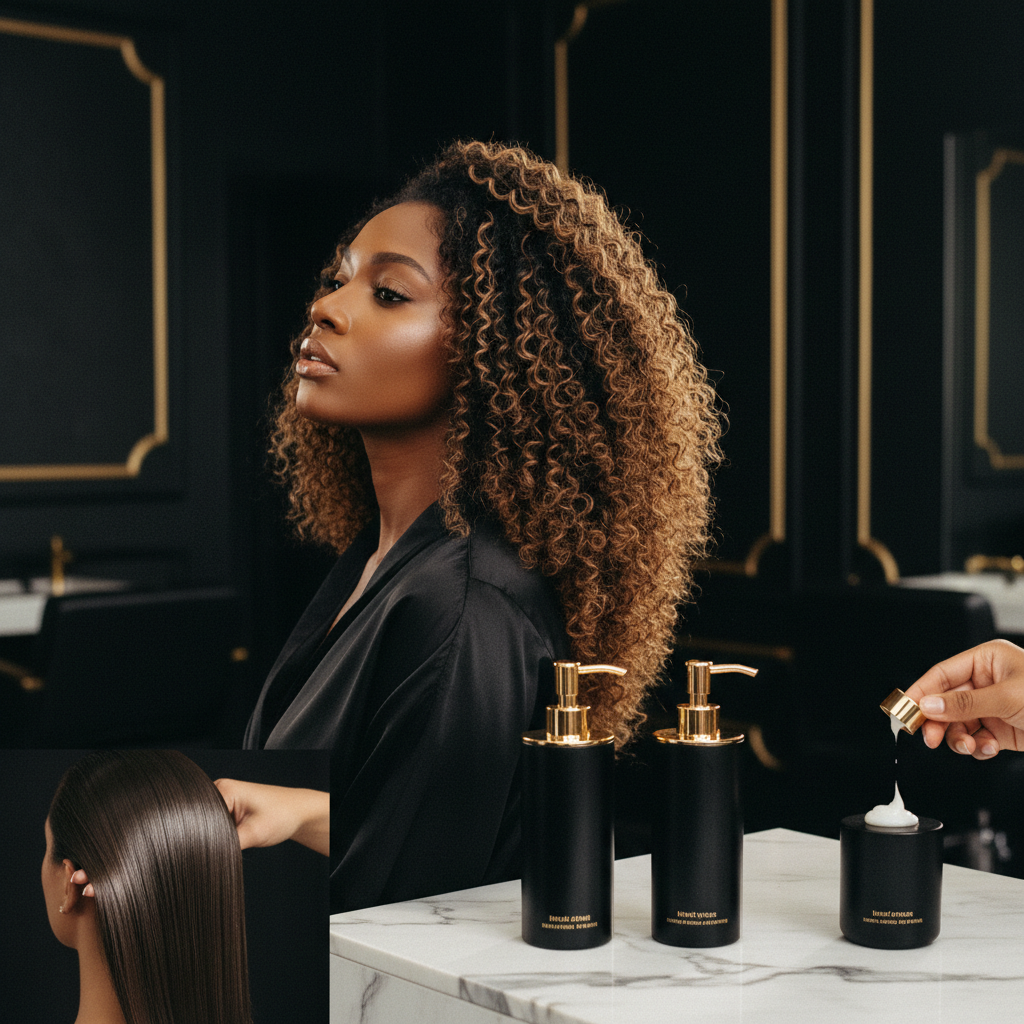
Quick answer: Protein Treatments and Keratin Care refer to topical formulations designed to reinforce the hair shaft by patching damaged cuticle gaps with hydrolysed proteins or cross-linking agents. When applied correctly, they reduce mechanical breakage, smooth the surface, and temporarily restore tensile strength to chemically processed or heat-compromised hair. However, their primary limitation is that they cannot permanently heal living tissue or reverse internal cortex degradation. Overuse can also lead to brittle, stiff strands through protein overload.
Key takeaways
- Hair is roughly 85 to 90 percent keratin protein by dry weight, bound by disulphide, hydrogen, and salt bonds.
- Hydrolysed proteins deposit along chipped cuticle scales to temporarily slow breakage, but they do not regenerate the cortex.
- In-salon keratin smoothing services alter fibre structure using cross-linking chemistry or high heat, whereas home protein masks deposit surface-level conditioning agents.
- Excessive protein application without adequate moisture causes hair fibre stiffness, leading to snapping rather than flexibility.
- Breakage along the hair shaft is structural damage, distinctly different from follicular hair loss or shedding at the root.
Protein Treatments and Keratin Care: what the evidence shows
Understanding Protein Treatments and Keratin Care starts with the fundamental biology of the human hair fibre. The hair shaft consists of an outer protective cuticle, an inner cortex providing mechanical strength and pigment, and, in coarser fibres, a central medulla. Alpha-keratin chains make up the vast majority of the cortex, held together by high concentrations of the amino acid cysteine, which forms rigid covalent disulphide bonds.
Cosmetic science demonstrates that daily grooming, bleaching, oxidative hair colour, and thermal tools lift and strip the protective 18-methyleicosanoic acid (18-MEA) lipid layer from the cuticle. Once this hydrophobic barrier disappears, the underlying keratin proteins lose their structural cohesion. Free cysteic acid groups form, cuticle scales chip away, and the cortex becomes porous.
Protein treatments use hydrolysed proteins derived from wheat, silk, soy, collagen, or wool keratin. Intact keratin molecules are far too large (often over 30,000 Daltons) to penetrate the hair shaft. Through enzymatic or acid hydrolysis, cosmetic chemists break these proteins down into low-molecular-weight peptides and free amino acids, typically between 500 and 2,000 Daltons. Studies published in cosmetic science literature show that peptides under 1,000 Daltons can penetrate partially into the cortex of porous hair, while larger fragments remain on the surface, forming a temporary film that fills microscopic cracks along the cuticle layer.
The functional benefit is measurable:
- Increased tensile strength: The temporary film reduces friction between adjacent fibres, meaning less force is required to comb the hair when wet.
- Moisture retention: Hydrolysed proteins possess humectant properties that bind ambient water to the fibre surface.
- Reduced porosity: By smoothing down jagged cuticle edges, these treatments slow down the rapid loss of internal moisture.
What the evidence does not show
Topical proteins do not repair hair permanently. Hair is biologically dead tissue once it emerges past the follicular infundibulum. It possesses no metabolic cellular machinery, meaning it cannot heal, regenerate, or permanently splice foreign keratin back into its natural polypeptide chains.
Furthermore, evidence does not show that protein treatments stimulate hair growth or resolve follicular shedding. Shedding happens at the dermal papilla level beneath the scalp surface, driven by hormones, nutrition, genetics, or systemic inflammation. Applying hydrolysed keratin to the length of your hair will not alter the biological hair cycle.
Another common misconception is that salon smoothing treatments represent "pure keratin nourishment." In reality, the long-lasting straightening effect of professional keratin blowout services is caused by chemical cross-linking agents (such as glyoxylic acid or aldehyde derivatives) paired with high heat (often 200 to 230 degrees Celsius) to physically reshape the hair fibre, not by the protein itself.
The mechanism: how hair absorbs and reacts to protein
The uptake of protein depends heavily on the isoelectric point of hair, which sits at roughly pH 3.67. At standard water and shampoo pH levels (pH 5.5 to 7.0), the hair fibre carries a negative net electrical charge. Hydrolysed keratin and conditioning peptides are formulated to carry a positive (cationic) charge.
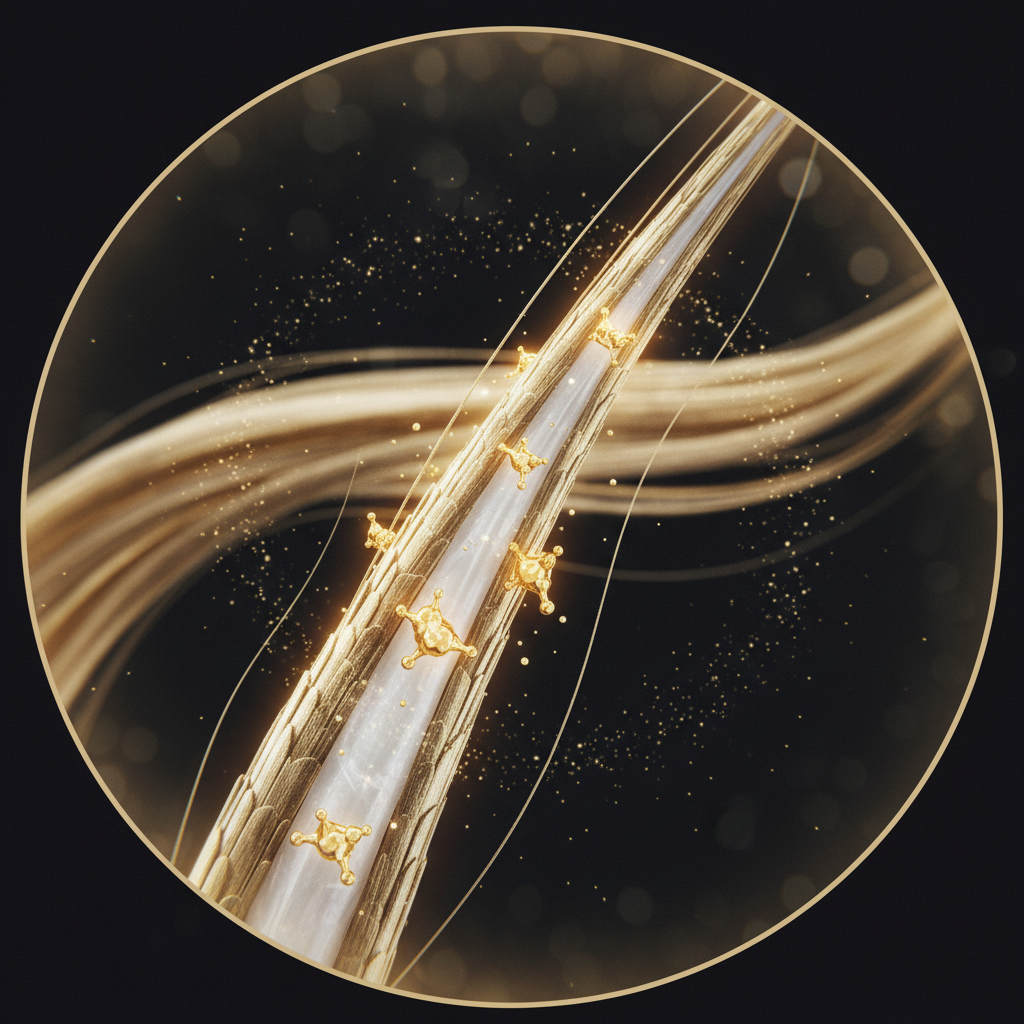
Through simple electrostatic attraction, these positively charged peptides adhere directly to the negatively charged, damaged sites along the fibre. The more damaged the cuticle, the higher the negative charge, and the more protein the site attracts.
Damaged Fibre (Anionic / Negative Charge)
 ▲
 │ [Electrostatic Attraction]
 ▼
Hydrolysed Peptides (Cationic / Positive Charge)
 │
 Forms Protective Film & Fills Cuticle Gaps
When protein is balanced with water-binding emollients like fatty alcohols (cetyl or stearyl alcohol), the hair retains both elasticity and tensile strength. However, if hair receives concentrated protein without sufficient plasticising moisture, the cuticle scales become heavily coated, rigid, and unyielding. When bent, the fibre snaps instead of stretching.
Comparing common protein and conditioning treatments
| Treatment Type | Primary Active Ingredients | Typical Molecular Size | Primary Function | Duration of Effect |
|---|---|---|---|---|
| Light Protein Conditioner | Hydrolysed wheat protein, amino acids | 150 to 1,000 Daltons | Everyday maintenance, light cuticle patching | 1 to 2 washes |
| Deep Reconstructing Mask | Hydrolysed keratin, collagen, panthenol | 1,000 to 3,000 Daltons | Reinforces tensile strength in bleached hair | 3 to 6 washes |
| Salon Keratin Smoothing | Glyoxylic acid, keratin hydrolysates | Varies; chemical cross-linkers | Fibre realignment, long-term frizz reduction | 8 to 12 weeks |
| Pure Moisture Mask (No Protein) | Fatty alcohols, plant lipids, glycerin | Non-protein lipids | Lubrication, flexibility, lipid restoration | 1 to 3 washes |
Signs your hair needs protein vs moisture
Determining whether your hair requires protein or moisture is straightforward once you observe how the fibre behaves under tension. Stylists frequently perform a simple wet elasticity test on a single shed strand.
Signs of protein deficiency (high elasticity, weak strength)
- The hair feels unusually mushy, gummy, or limp when wet.
- A wet strand stretches far beyond its normal length without bouncing back, then breaks.
- Hair appears flat, lacking structural body and curl definition.
- High porosity from recent bleaching, perming, or high-lift colouring.
Signs of protein overload (low elasticity, high rigidity)
- Hair feels dry, rough, stiff, and straw-like even after deep conditioning.
- A wet strand snaps almost instantly with zero stretch when pulled gently.
- Severe tangling and dullness without any visible split ends.
- Excessive breakage across mid-lengths during standard detangling.
What you can do: a balanced care routine
To prevent structural snapping while preserving hair suppleness, use a structured approach:
- Assess your chemical history: If you do not bleach, relax, or heavily heat-style your hair, your need for intensive reconstructors is minimal. A basic conditioner with light amino acids is sufficient.
- Clarify periodically: Cationic proteins can build up over time. Use a gentle clarifying shampoo every 3 to 4 weeks to clear excess surface residue before reapplying treatments.
- Always follow protein with moisture: After using a dedicated reconstructing mask containing hydrolysed keratin, follow up with an emollient-rich rinse-out conditioner to reintroduce flexibility.
- Mind the heat: When blow-drying, keep tools below 185 degrees Celsius. Extreme heat degrades the internal keratin matrix, accelerating the very breakdown you are trying to mitigate.
When the cause may be something else
If your hair is thinning across the scalp, coming out in clumps in the shower, or shedding with white bulbs attached to the root, your issue is not a structural keratin deficiency. These symptoms indicate physiological shedding, such as telogen effluvium or androgenetic alopecia.
Similarly, an itchy, flaky, or inflamed scalp is a dermatological concern, not a hair shaft problem. Applying heavy protein masks directly to the scalp can exacerbate follicular clogging or seborrhoeic dermatitis. Keep protein treatments focused on the mid-lengths and ends where structural wear occurs.
When to get professional advice
Consult a qualified trichologist or dermatologist if you observe sudden patchy hair loss, scalp redness, or widening of your natural parting. These signs require diagnostic evaluation rather than cosmetic treatment. If you are dealing with severe chemical breakage from an in-salon service, consult an experienced professional colourist who can assess fibre integrity and design a controlled bonding and protein regimen without causing further mechanical stress.
Supportive care from Watermans
While topical reconstructors address the physical shaft of the hair, healthy-looking hair begins with consistent scalp care. Products like Watermans Grow Me Shampoo provide an energising cleanse for the scalp while delivering hydrolysed lupin protein to support the feel of hair density and body. Paired with condition-enhancing topicals, it complements your overall hair routine by keeping the scalp clean, refreshed, and primed for optimal fibre appearance.
Summary of Protein Treatments and Keratin Care
Navigating Protein Treatments and Keratin Care requires balancing structural strength with fibre suppleness. Hydrolysed proteins serve as temporary, microscopic patches for damaged cuticle layers, significantly reducing breakage on bleached, coloured, and mechanically stressed hair. They do not repair hair at a cellular level, nor do they cure hair loss originating at the follicle. By diagnosing whether your strands lack tensile strength or moisture, you can deploy protein treatments intentionally, keeping your hair resilient, flexible, and healthy-looking over the long term.
Frequently asked questions about Protein Treatments and Keratin Care
How often should I use Protein Treatments and Keratin Care products?
For bleached, relaxed, or heat-damaged hair, using an intensive protein treatment once every 2 to 4 weeks is usually ideal. For untreated or fine hair, once every 6 to 8 weeks, or relying solely on lightweight daily conditioners containing amino acids, prevents protein overload and fibre stiffness.
Can a protein treatment stop hair loss?
No. Protein treatments work exclusively on the external hair fibre to minimise snapping and mechanical breakage. They cannot treat hair loss or shedding, which take place inside the hair follicle beneath the scalp surface. Follicular shedding requires medical or nutritional investigation.
How can I fix protein overload in my hair?
To reverse protein overload, immediately pause all products containing hydrolysed proteins, keratin, or amino acids. Wash your hair with a clarifying shampoo to strip surface deposits, then apply a rich, protein-free moisturising mask with fatty alcohols and oils under a warm shower cap for 20 minutes.
What is the difference between hydrolysed keratin and regular keratin?
Natural keratin is a large, dense protein molecule that cannot penetrate the hair shaft due to its size. Hydrolysed keratin has undergone a chemical or enzymatic breakdown into smaller peptides and amino acids, allowing them to bind electrostatically to damaged, porous cuticle sites.
Sources and references
- International Journal of Cosmetic Science, "Hair protein removal and cuticle damage during chemical treatments", 2018.
- Journal of Cosmetic Dermatology, "Effects of hydrolysed proteins on the physical properties of human hair fibres", 2020.
- Robbins, C. R., "Chemical and Physical Behavior of Human Hair", 5th Edition, Springer, 2012.
- Society of Cosmetic Scientists (SCS), "The Structure and Properties of Hair", Educational Monographs, 2019.
Find these ingredients in Watermans products
- Panthenol (Provitamin B5): you will find this ingredient in our Heat Protection Spray.