Protein Overload: Scientific Causes, Signs, and How to Restore Balance
8 min read ·
Learn what causes Protein Overload, how it leads to hair breakage, and the exact clarifying and moisturising steps needed to restore natural elasticity.
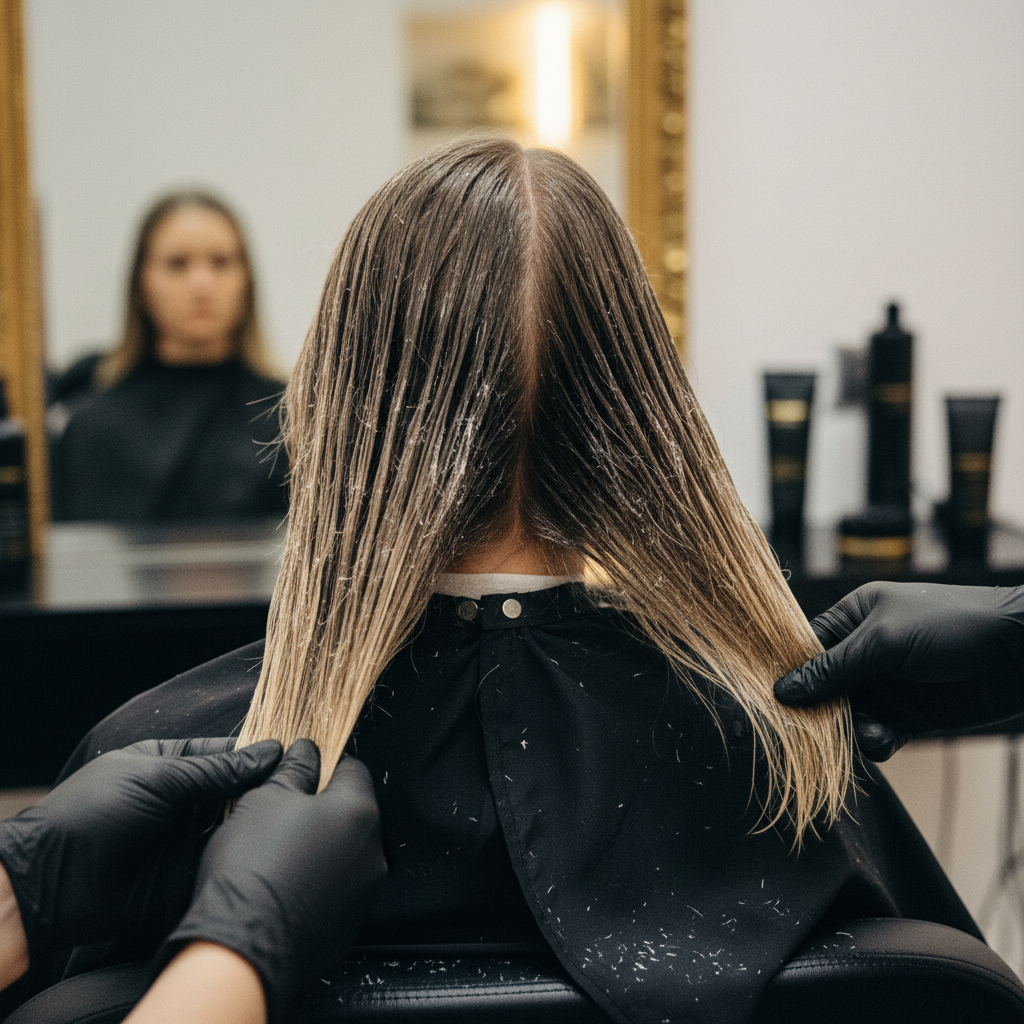
Quick answer: Protein Overload describes a state where an excessive accumulation of topical proteins, such as hydrolysed wheat, keratin, or silk, stiffens the hair shaft and prevents moisture uptake. This imbalance leaves the hair feeling straw-like, brittle, and prone to snapping when stretched. While the cosmetic disruption to the hair cuticle is real and causes fibre breakage, Protein Overload does not damage the hair follicle or cause true hair loss from the root.
Key takeaways
- Protein Overload occurs when protein molecules coat the hair cuticle and cortex excessively, reducing the fibre's natural elasticity.
- It causes hair breakage along the shaft due to rigidity, not follicular hair loss or shedding from the scalp.
- Low-porosity hair is especially susceptible because its tightly sealed cuticle layers trap surface deposits quickly.
- Clarifying the hair to strip away surface film, followed by intense emollient conditioning, reliably resets the fibre balance.
- Recovery usually takes 2 to 4 weeks once protein-heavy cosmetics are replaced with water-based humectants and conditioning lipids.
Protein Overload: what the evidence shows
In cosmetic science, hair fibres consist of roughly 85% to 90% keratin protein, 8% to 10% water, and small fractions of lipids, melanin, and trace minerals. Cosmetic protein treatments introduce hydrolysed proteins (fragments broken down into molecular weights between 500 and 10,000 Daltons) to patch fissures along damaged cuticles and bolster weakened tensile strength.
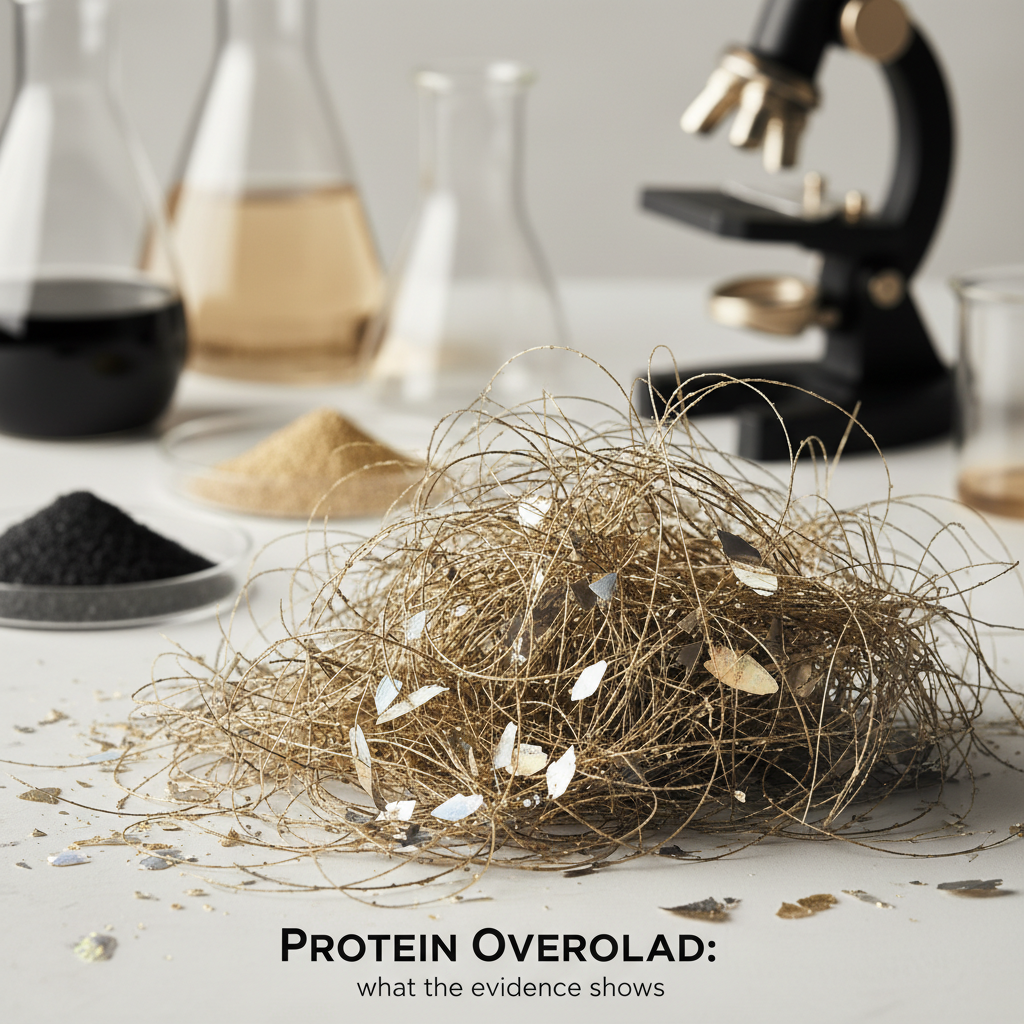
However, cosmetic chemistry demonstrates that excessive surface deposition of these positively charged (cationic) hydrolysed peptides creates a rigid shell around the hair strand. Rather than preserving tensile strength, repeated and unwashed deposits make the fibre inflexible. When hair loses its natural compliance, mechanical stress from brushing, detangling, or styling leads to brittle failure. The strand snaps cleanly under minimal elongation rather than stretching and returning to form.
Studies examining hair mechanical properties confirm that healthy hair can stretch up to 30% of its dry length before breaking. When the fibre is overwhelmed by conditioning proteins without adequate plasticising moisture, its elongation capacity drops dramatically. The result is cosmetic brittleness, dullness, and mechanical snapping.
What the evidence does not show
It is critical to distinguish hair breakage from root-level hair loss. Protein Overload is strictly a shaft-level cosmetic issue. The evidence does not show:
- Follicular shedding: Excess protein in conditioners, masks, or serums cannot alter the biological hair cycle. It does not trigger telogen effluvium or cause hairs to shed prematurely from the follicle.
- Alopecia: It does not cause androgenetic alopecia, alopecia areata, or scarring alopecias.
- Permanent damage: The hair shaft is non-living tissue. The rigid protein layer can be chemically washed away and balanced with moisturising agents; it does not permanently ruin newly emerging hair.
If you notice hairs falling out with the small white bulb intact at the root, you are experiencing shedding, not breakage from protein buildup.
The mechanism: why hair becomes stiff and brittle
Hair flexibility relies on a delicate balance between keratin structure and internal water content. Water acts as a natural plasticiser inside the hair cortex, slipping between keratin polypeptide chains and allowing them to glide past one another when pulled.
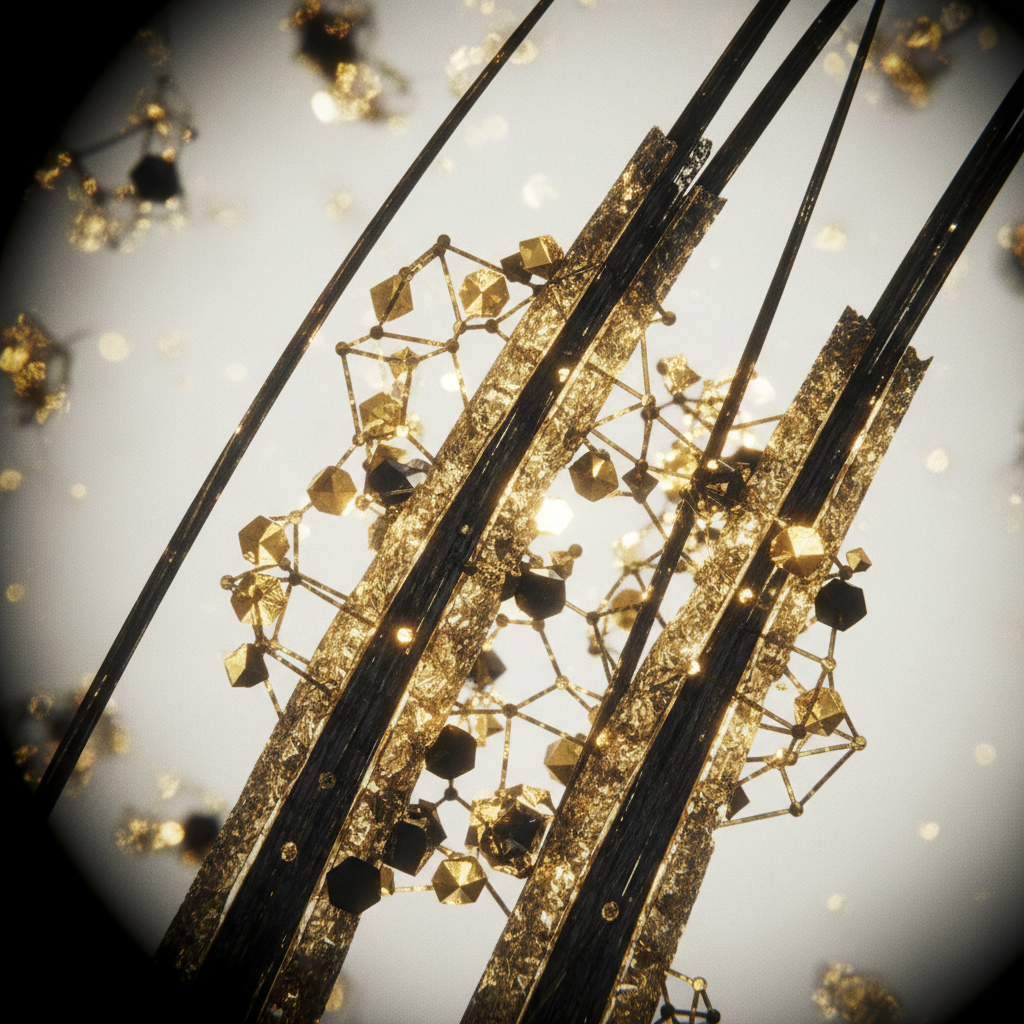
Hydrolysed proteins possess amphoteric properties and carry a charge that binds them to damaged, negatively charged sites along the cuticle. In moderate amounts, this reduces friction and temporarily restores integrity.
When you apply these ingredients repeatedly, several distinct mechanical shifts occur:
- Cuticle occlusion: Large molecular weight proteins dry into an inelastic film over the exterior cuticle scales.
- Moisture displacement: By occupying the spaces where atmospheric moisture and water-binding humectants usually penetrate, the protein film effectively blocks hydration from reaching the cortex.
- Loss of plasticisation: Deprived of moisture, the internal keratin chains lock tightly together via hydrogen bonds, robbing the hair of its natural elasticity.
- Mechanical fracture: When combed, the stiffened strand cannot deform elastically. Instead of flexing, the cortex fractures transversely across the shaft.
Signs to look for: Protein Overload vs moisture overload
Diagnosing whether your hair needs protein or moisture comes down to a simple manual assessment of elasticity and texture.
| Diagnostic feature | Protein Overload | Moisture overload (hygral fatigue) | Balanced hair |
|---|---|---|---|
| Feel when dry | Rough, straw-like, stiff, coarse | Limp, mushy, excessively soft | Smooth, pliable, pliable to touch |
| Wet elasticity | Snaps immediately with zero stretch | Stretches excessively without bouncing back | Stretches slightly (20% to 30%) and returns |
| Comb resistance | Snags, tangles easily, snaps on detangling | Clumps, feels gummy, lacks structure | Slides through easily with minimal friction |
| Appearance | Dull, frizzy, dull sheen, wire-like | Lifeless, flat, undefined curls or waves | Natural lustre, defined pattern, natural body |
| Breakage type | Short, clean snaps along the mid-lengths | Stretched, frayed breaks | Minimal shedding only from root |
To test your hair, take a single clean, wet strand shed during washing. Hold it firmly between your fingers and gently pull both ends. If it snaps instantly without yielding, it is showing classic signs of excessive protein.
What you can do to resolve Protein Overload
Resolving this state requires removing the excess protein residue and reintroducing water-attracting humectants and softening lipids.
- Clarify the hair shaft: Use a chelating or clarifying shampoo containing anionic surfactants (such as sodium laureth sulfate or sodium C14-16 olefin sulfonate) at a pH between 5.5 and 6.5. This removes the bonded protein film from the cuticle surface. Wash thoroughly, focusing on mid-lengths and ends.
- Audit your ingredient labels: Set aside all products featuring hydrolysed keratin, hydrolysed collagen, hydrolysed wheat protein, silk amino acids, or soy protein for at least 3 to 4 weeks.
- Deep condition with pure emollients: Apply a protein-free [deep conditioner](https://watermanshair.com/products/masque-me-luxurious-hair-mask) rich in humectants like glycerin, panthenol, and aloe vera, combined with fatty alcohols (cetyl and cetearyl alcohol) and plant oils (such as jojoba or argan oil).
- Apply gentle heat: When applying your moisturising mask, wear a shower cap and apply warm, indirect heat for 15 to 20 minutes. Heat gently lifts the cuticle scales, allowing moisture to penetrate the cortex past any remaining protein residue.
- Minimise mechanical friction: Avoid aggressive brushing while the hair remains brittle. Use a wide-toothed comb on damp, conditioned strands.
When the cause may be something else
Before assuming protein is the culprit, eliminate other common triggers of brittle hair:
- Hard water minerals: High concentrations of calcium and magnesium in domestic water supplies (often exceeding 200 mg/L) form an insoluble curd on the hair shaft that creates an identical stiff, rough feel. A chelating wash addresses this.
- Chemical processing: Bleaching and permanent waving break disulfide bonds inside the cortex. If hair snaps after a lightening session, the issue is structural chemical damage rather than protein saturation.
- Heat damage: Regular use of hot tools above 185°C denatures natural hair proteins and oxidises surface lipids, causing irreversible brittleness.
When to seek professional advice
If your hair continues to snap despite several clarifying washes and moisture treatments, consult a certified trichologist or an experienced salon professional. They can examine the hair shaft under a digital microscope to inspect the cuticle integrity, check for conditions like trichorrhexis nodosa (node-like weak spots along the fibre), and confirm whether your shedding rate is normal.
Maintaining balanced hair health with Watermans
Once your hair recovers its natural suppleness, maintaining an equilibrium between fibre strength and moisture is essential. Products formulated for balanced daily care, such as Watermans Grow Me Shampoo and Condition Me Conditioner, are engineered to support a revitalised scalp environment and deliver gentle, balanced conditioning without creating heavy structural buildup. By incorporating hydrolysed lupin protein alongside balancing emollients, these formulations help strengthen the cosmetic feel of thin or fragile hair while preserving natural flexibility and bounce.
Frequently asked questions about Protein Overload
What ingredients cause Protein Overload?
Cosmetic products rich in hydrolysed proteins commonly trigger this condition when overused. Watch out for ingredients such as hydrolysed keratin, hydrolysed silk, hydrolysed wheat or soy protein, amino acids, and collagen on your product labels. Using several leave-in products, styling creams, and deep masks that all list these peptides can quickly saturate the cuticle.
How long does it take to fix Protein Overload?
For most people, correcting Protein Overload takes between 2 to 4 weeks. After one or two clarifying washes combined with heat-assisted moisture treatments, hair begins to soften. Full recovery of normal stretch and elasticity typically requires three to six moisture-focused wash cycles.
Can low-porosity hair experience Protein Overload faster?
Yes. Low-porosity hair features tightly bound, overlapping cuticle scales that resist product penetration. Proteins applied to low-porosity hair tend to sit on the exterior surface rather than penetrating the cortex. This rapidly produces an external film that blocks moisture and leads to swift cosmetic brittleness.
Is Protein Overload permanent?
No, it is not permanent. Because hair strands are dead keratin structures, the surface coating does not alter future growth from the scalp. The accumulated protein can be dissolved and stripped away using clarifying surfactants, restoring the fibre's pliability.
Conclusion
Overcoming Protein Overload comes down to understanding the structural needs of your hair fibre. While hydrolysed proteins serve an important cosmetic role in patching damaged cuticles, too much of a good thing leaves strands stiff, dry, and vulnerable to snapping. By recognising the signs of Protein Overload early, clarifying away excess surface deposits, and restoring vital moisture, you can quickly return your hair to a soft, resilient, and elastic state.
Sources and references
- Robbins, C. R. (2012). Chemical and Physical Behavior of Human Hair. 5th ed. Springer-Verlag New York.
- Dawber, R. (1996). Hair: Its structure and response to cosmetic preparations. Clinics in Dermatology, 14(1), 105-112.
- Cruz, C. F., et al. (2016). Human hair characteristics and methods to investigate hair properties. International Journal of Trichology, 8(3), 110-120.
- International Journal of Cosmetic Science. (2008). Investigation of the penetration of peptides into human hair by mass spectrometry. Int J Cosmet Sci, 30(4), 299-307.
- Society of Cosmetic Scientists (SCS). Principles of cosmetic hair care formulations and cuticle adhesion. SCS Educational Resource Guides.
Find these ingredients in Watermans products
- Panthenol (Provitamin B5): you will find this ingredient in our Heat Protection Spray.
- Aloe Vera: you will find this ingredient in our Curly Hair Conditioner.