Protein Loss in Damaged Hair: Causes, Science, and Solutions
9 min read ·
Learn how protein loss in damaged hair degrades the cortex, reduces tensile strength, and causes breakage, plus effective ways to reinforce your hair fibres.
Quick answer: Protein loss in damaged hair occurs when chemical processing, heat styling, or ultraviolet radiation degrades the structural keratin matrix and cleaves internal disulphide bonds. This structural degradation creates porosity, reduces tensile elasticity, and makes the hair fibre prone to snapping. While topical treatments cannot livingly regenerate lost cortex tissue, cosmetic hydrolysed proteins and bond builders can temporarily reinforce the cuticle and cortex to significantly reduce mechanical breakage.
Key takeaways
- Hair fibres consist of roughly 85% to 90% keratin protein, arranged in crystalline microfibrils surrounded by an amorphous protein matrix.
- Chemical bleaching, permanent dyeing, and extreme heat alter cystine bonds, solubilising cortical proteins and leaching them from the fibre.
- Protein loss fundamentally reduces tensile strength and moisture retention, manifesting as breakage, excessive stretch, and limpness.
- Cosmetic products cannot permanently regenerate dead keratin structures, but hydrolysed proteins can deposit into gaps to temporarily restore tensile resistance.
- Distinguishing between mechanical breakage from protein deficiency and follicular hair shedding is critical for proper intervention.
Protein Loss in Damaged Hair: what the evidence shows
Research published in cosmetic science journals demonstrates that intact human hair consists of approximately 85% to 90% proteins, primarily hard alpha-keratins, 1% to 9% lipids, and trace minerals. The stability and resilience of this biological composite rely on cross-linking amino acids, predominantly cystine, which forms covalent disulphide bonds.
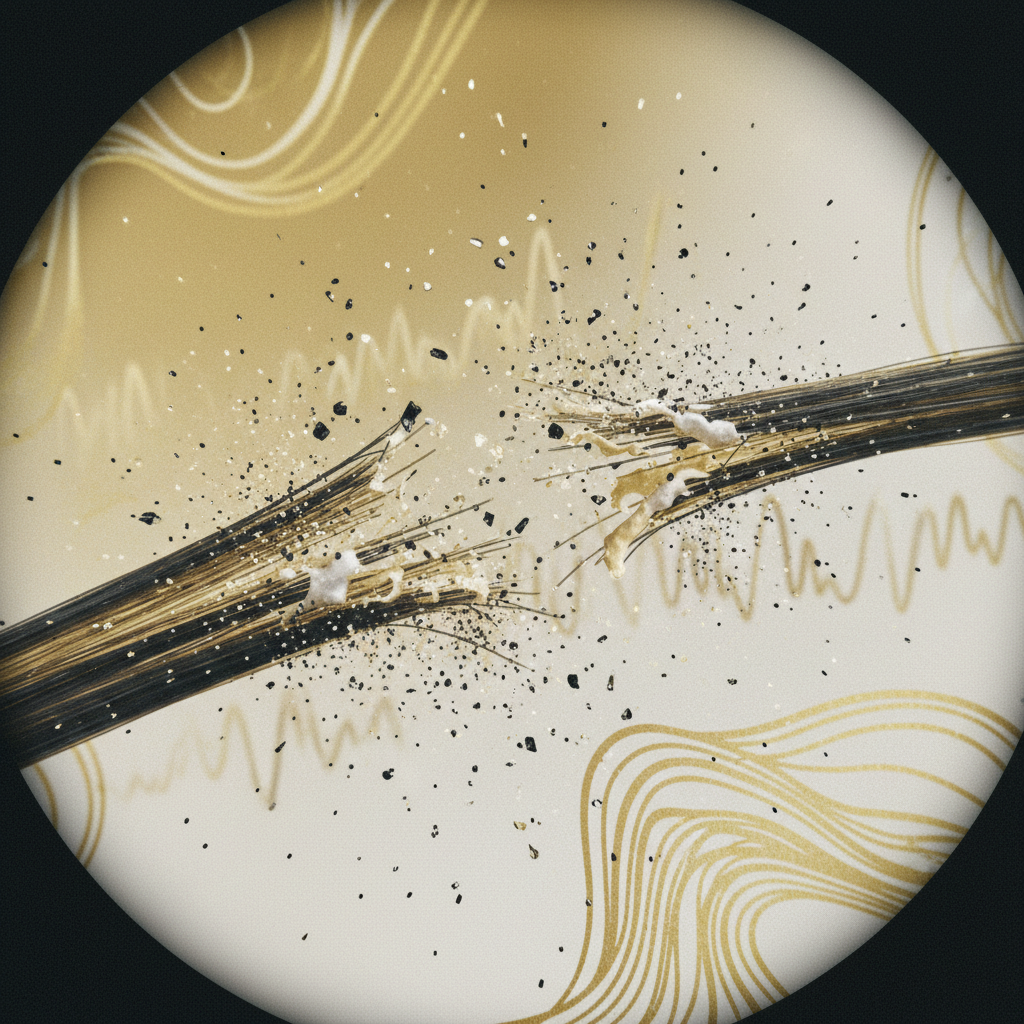
When hair undergoes weathering, ultraviolet radiation, bleaching, or alkaline straightening, these disulphide bonds oxidise into cysteic acid residues. Studies using amino acid analysis show a direct correlation between chemical exposure and a marked decrease in total cystine content, accompanied by an increase in water-soluble protein fragments that wash out during cleansing. This phenomenon of protein loss in damaged hair leaves microscopic voids inside the cortex and lifts the outer cuticle layers.
Controlled investigations into heat tools confirm that temperatures above 180 degrees Celsius cause thermal denaturation of hair keratin. At roughly 215 to 230 degrees Celsius, the alpha-helix structural conformation begins to transition into a disordered beta-sheet state, followed by thermal degradation and vaporization of bound moisture. Over repeated cycles, hair fibres exhibit quantifiable reductions in protein mass, weakening the hair shaft until it fractures under minimal mechanical stress.
Mechanisms: how structural protein leaves the fibre
The hair shaft features three distinct morphological units: the cuticle (the protective outer shingles), the cortex (the structural core that dictates strength and elasticity), and the medulla (an intermittent central core).
Protein depletion follows distinct chemical pathways depending on the external stressor:
- Alkaline swelling and chemical leaching: During bleaching or permanent colour application, alkaline agents such as ammonium hydroxide raise the fibre pH (typically between 9.0 and 11.0). This lifts the cuticle scales and swells the cortex. Hydrogen peroxide breaks disulphide bonds, dissolving low-sulphur and high-sulphur proteins from the non-keratinous matrix. Once dissolved, these polypeptide chains wash away down the basin.
- Thermal denaturation: Excessive heat shears peptide backbones. As water bound inside the fibre reaches flashpoint, it expands rapidly, creating micro-cavities within the cortical cells. This process physically shatters the keratin matrix.
- Photochemical degradation: Sunlight exposure, specifically UVB radiation (290 to 320 nm), causes tryptophan and tyrosine cleavage, producing free radicals that degrade the hair's protein backbone. UVA radiation (320 to 400 nm) primarily attacks the cystine bonds, contributing to progressive embrittlement.
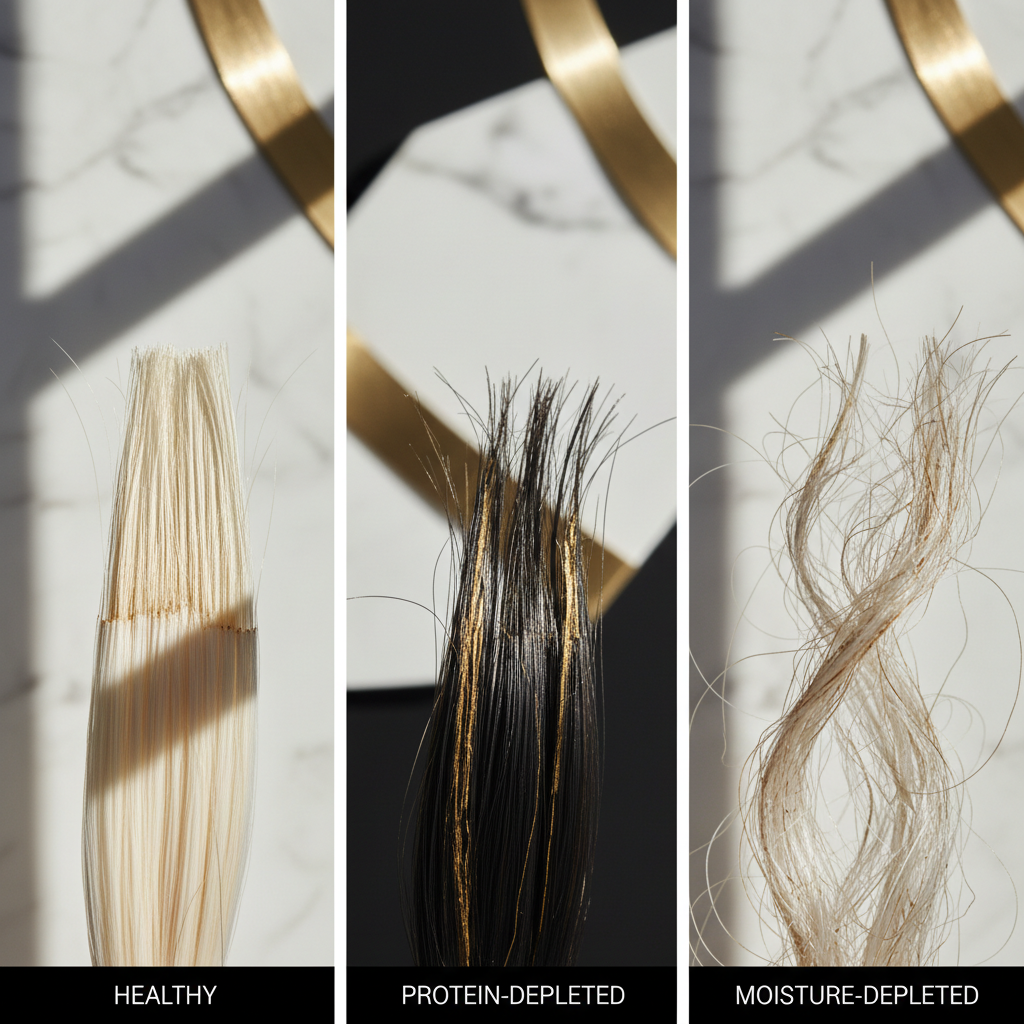
Comparing hair fibre conditions: healthy, protein-depleted, and moisture-depleted
| Fibre characteristic | Healthy hair | Protein-depleted hair | Moisture-depleted hair |
|---|---|---|---|
| Cuticle integrity | Tightly overlapping scales, low friction | Lifted, chipped, or missing scales | Intact to mildly raised scales |
| Elasticity test | Stretches 20% to 30% wet, returns to shape | Stretches excessively, feels mushy, snaps without return | Minimal stretch, feels stiff, snaps immediately |
| Porosity level | Low to medium | High (absorbs water instantly, dries unevenly) | Variable (often low or normal) |
| Tactile feel | Smooth, resilient, pliable | Gummy or mushy when wet; limp when dry | Rough, brittle, straw-like |
| Primary corrective need | Gentle maintenance | Hydrolysed proteins, bond modifiers | Emollients, humectants, conditioning lipids |
Signs to look for: identifying protein deficiency
Stylists and individuals can identify structural protein degradation through several visible and mechanical cues:
- The wet stretch test: When healthy wet hair is gently pulled between fingers, it extends slightly and returns to its original length. A fibre suffering from protein loss stretches unnaturally far, feels gummy or sticky between the fingertips, and fractures without snapping back into shape.
- Rapid water uptake and drying: Porous, protein-depleted hair absorbs water almost instantaneously in the shower due to an open cuticle and porous cortex. Conversely, it loses water just as rapidly, drying to a frizzy, uneven finish within minutes of towel drying.
- Loss of natural wave or curl pattern: Curls depend on balanced disulphide bonds and structural cortex proteins to maintain their shape. As protein washes out, curl groups become irregular, loose, and limp, often resisting heat styling or holding sets poorly.
- Random mid-shaft breakage: Unlike hair shedding, which features a white bulb at the root, protein-weakened strands snap clean in the middle of the shaft, littering sinks, clothing, and brushes with short, blunt-ended fragments.
What you can do: replenishing and protecting the hair fibre
Because hair is biologically dead tissue once it emerges from the scalp follicle, the body cannot supply new protein through diet to repair existing hair shafts. Instead, management relies on topical cosmetic reinforcement and protective handling practices.
1. Topical hydrolysed proteins
Standard whole proteins (such as unhydrolysed collagen or keratin) possess molecular weights far too high (exceeding 10,000 to 30,000 Daltons) to penetrate the cuticle barrier. Look for formulations containing hydrolysed proteins, such as hydrolysed vegetable, wheat, soy, or keratin peptides. These smaller chains (typically between 500 and 2,500 Daltons) can access the inner cortex or latch onto chipped cuticles, temporarily bridging fissures and restoring tensile resistance.
2. Acidic pH restoration
Normal hair sits at an isoelectric point of roughly pH 3.67, with the surface resting near pH 4.5 to 5.5. Cleansers and masks formulated with an acidic pH (between 4.0 and 5.0) help lower cuticle swelling, contracting the scales and reducing the rate at which residual soluble proteins are pulled from the fibre during washing.
3. Thermal and mechanical moderation
Prevention remains superior to mitigation. Using heat protectants containing film-forming polymers (such as polyquaterniums or silicones) disperses heat energy evenly across the shaft. Lower flat irons below 185 degrees Celsius and limit chemical processes to re-growth zones rather than pulling harsh bleach through previously treated lengths.
Watermans approaches to fibre care and scalp health
While protein loss in damaged hair is a cosmetic structural issue along the shaft, healthy ongoing growth requires an optimal follicular foundation. Watermans products are formulated to support the appearance of thicker, fuller hair while delivering essential conditioning to help counter everyday breakage.
Watermans Grow Me Shampoo combines hydrolysed lupin protein, biotin, rosemary extract, caffeine, and niacinamide. Hydrolysed lupin protein provides low-molecular-weight peptides that adhere to vulnerable sites on the hair fibre, helping to reduce mechanical breakage during everyday brushing. Complementing this, Watermans Condition Me Conditioner balances conditioning lipids with revitalising botanicals to seal the hair cuticle, lock in moisture, and soften brittle lengths. These formulations serve as an educational and functional tool for those seeking fuller-looking hair with diminished breakage along the hair shaft.
When the cause may be something else
It is vital to distinguish between cosmetic fibre damage and physiological follicular conditions:
- Telogen effluvium: If you notice large quantities of full-length hairs dropping with tiny white keratinous bulbs at their tips, this represents hair shedding rather than fibre snapping. This usually tracks back to metabolic, hormonal, nutritional, or systemic stressors experienced two to three months prior.
- Androgenetic alopecia: Progressive thinning characterised by widening part lines or crown reduction involves miniaturisation of the hair follicle driven by genetic sensitivity to dihydrotestosterone (DHT), not cosmetic protein leaching from the shaft.
- Over-proteinisation (protein overload): Using high-concentration protein treatments on hair that actually lacks moisture can cause it to become overly stiff and brittle, leading to severe breakage. Balanced moisture is critical when using reinforcing masks.
When to seek professional advice
If you experience intense breakage alongside scalp pain, burning, redness, or scale formation, consult a dermatologist or registered trichologist immediately. Similarly, sudden shedding exceeding 100 to 150 hairs daily that persists beyond six weeks requires a GP consultation and relevant blood tests (such as serum ferritin, full blood count, vitamin D, and thyroid panels) to rule out underlying medical factors.
Frequently asked questions about Protein Loss in Damaged Hair
Can eating more protein reverse protein loss in damaged hair?
No. Once a hair fibre emerges past the scalp surface, it is no longer metabolically active. While consuming adequate dietary protein is crucial for growing new, healthy fibres in the follicle, dietary intake cannot deliver protein to dead strands or reverse protein loss in damaged hair that has already occurred down the shaft.
How often should you use protein treatments on damaged hair?
For chemically processed or heat-compromised hair, applying a hydrolysed protein treatment once every two to three weeks is generally sufficient. Overuse can cause protein to build up on the cuticle surface, making the hair stiff, rigid, and more prone to mechanical snapping. Always balance protein with moisturising conditioning agents.
Does bleach cause permanent protein loss in the hair fibre?
Yes. Bleaching works by oxidising both melanin pigments and the surrounding keratin matrix. This chemical reaction permanently cleaves disulphide bonds, leaving high-porosity micro-cavities where structural protein has dissolved and washed out. These structural voids can be cosmetically reinforced with treatments, but the natural bond network does not regenerate.
What is the difference between hair breakage and hair shedding?
Hair breakage occurs when the hair shaft snaps midway down its length due to structural weakness or protein depletion; broken pieces vary in length and lack a root bulb. Hair shedding is the natural follicular release of a full-length strand that has completed its telogen resting phase, visibly ending in a small white bulb.
Protecting your hair from structural protein depletion
Maintaining structural integrity requires understanding how external stressors systematically erode the cortex. While modern cosmetic chemistry offers sophisticated hydrolysed peptides and bond-reinforcing technologies to temporarily mask and shore up protein loss in damaged hair, prevention remains paramount. Minimising aggressive bleaching, lowering heat styling temperatures, and maintaining an acidic, nourishing washing routine will safeguard the natural keratin lattice, preserving hair strength, shine, and natural bounce over time.
Sources and references
- International Journal of Cosmetic Science: Chemical and physical changes in hair caused by thermal styling (2011)
- Journal of the Society of Cosmetic Chemists: The effects of chemical bleaching on the amino acid composition and tensile properties of human hair (1998)
- British Journal of Dermatology: Structural changes in human hair keratin following photochemical and thermal oxidation (2004)
- National Institute for Health and Care Excellence (NICE): Alopecia: common causes and assessment (2022)
- Dermatology Practical & Conceptual: The role of hair cosmetics in addressing mechanical breakage and fibre weathering (2019)
Find these ingredients in Watermans products
- Vitamin D: you will find this ingredient in our Hair Vitamins.