Protein and Keratin Structure in Hair: Science and Care
10 min read ·
Understand the protein and keratin structure in hair, from alpha-helices and disulfide bonds to how cosmetic treatments protect fragile fibres from breakage.
Quick answer: The Protein and Keratin Structure in Hair accounts for roughly 85 to 90 percent of every hair fibre's total dry weight, providing tensile strength, elastic recovery, and thermal stability. Keratin intermediate filaments assemble into coiled-coil alpha-helices linked by robust disulfide bonds inside an amorphous, sulphur-rich matrix. However, because emerged hair fibre consists of non-living, biologically dead tissue, damaged keratin cannot naturally regenerate itself. Cosmetic proteins can patch surface cracks and reduce fibre breakage, but they cannot permanently rebuild natural biological hair architecture.
Key takeaways
- Hair fibres consist of 85 to 90 percent keratin proteins, 1 to 9 percent lipids, 3 percent water, and trace melanin and minerals.
- Keratin filaments are arranged in a hierarchical order, advancing from single amino acid polypeptide chains into protofilaments, microfibrils, and macroscopic macrofibrils inside the hair cortex.
- The chemical integrity of hair relies on three distinct bonds: covalent disulfide cross-links, ionic salt bridges, and weak hydrogen bonds.
- Chemical alkaline treatments, heat styling above 160 degrees Celsius, and UV radiation cause irreversible cleavage of cystine disulfide bonds, converting them into cysteic acid.
- Cosmetic protein treatments deposit hydrolysed fragments onto the cuticle and outer cortex to reduce breakage temporarily, but they cannot restore original biological tensile strength.
Protein and Keratin Structure in Hair: what the evidence shows
Scientific analysis demonstrates that the Protein and Keratin Structure in Hair serves as the primary mechanical engine of the hair shaft. Without this structural framework, hair fibres would lack the physical resilience needed to endure routine friction, combing, washing, and environmental exposure.
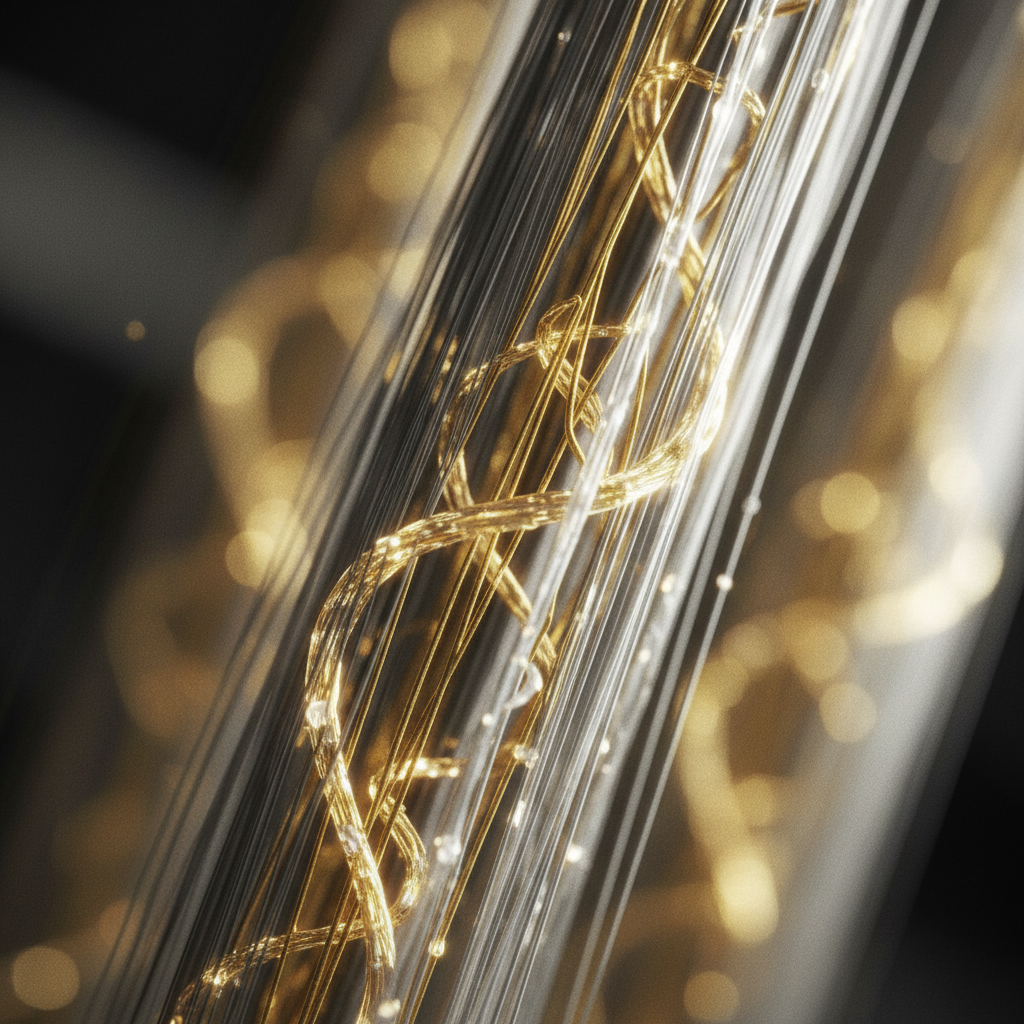
Human hair is composed of roughly 85 to 90 percent protein, primarily classified into two distinct groups: hair keratins (the hard, fibrous intermediate filament proteins) and keratin-associated proteins (KAPs). The hard keratins found in human hair differ significantly from the soft keratins in human skin. Hair keratins contain substantially higher levels of the sulphur-rich amino acid cysteine, which forms the covalent disulfide bonds responsible for rigid mechanical stability and resistance to chemical dissolution.
The remaining composition of the fibre includes water (typically 10 to 15 percent depending on relative humidity), structural lipids (such as 18-methyleicosanoic acid or 18-MEA, which coat the outer cuticle), trace minerals, and melanin pigments.
The physical strength of hair does not come from a single solid protein mass. Instead, it relies on a sophisticated composite architecture. Crystalline, low-sulphur alpha-keratin filaments act like flexible steel reinforcement rods, while high-sulphur, amorphous keratin-associated proteins act like concrete surrounding them. This composite design gives healthy hair its remarkable capacity to stretch up to 30 percent beyond its resting length when dry before suffering mechanical failure.
The hierarchical architecture of hair keratin
To understand how mechanical and chemical stress damages the fibre, one must look at how keratin molecules assemble across several structural tiers.
- Amino acid chains: Keratin begins as polypeptide sequences rich in cysteine, glycine, proline, and serine.
- Alpha-helices: The polypeptide chain twists into a right-handed alpha-helix coil, stabilised internally by hydrogen bonding between carbonyl and amino groups.
- Dimers and tetramers: Two alpha-helices twist together in a left-handed direction to create a stable coiled-coil dimer. Two dimers align side-by-side in an antiparallel arrangement to produce a tetramer.
- Intermediate filaments: Eight tetramers assemble into a cylindrical protofilament. Several protofilaments group into intermediate filaments (microfibrils) measuring approximately 7 to 8 nanometres in diameter.
- Macrofibrils and cortical cells: Hundreds of intermediate filaments embed within the dense, high-sulphur KAP matrix to create macrofibrils. Bundles of macrofibrils pack tightly inside dead, elongated cortical cells that constitute the cortex, which makes up about 80 to 90 percent of the hair shaft's volume.
- The protective cuticle: Surrounding this structural core are 5 to 10 overlapping layers of flat cuticle cells. Each cuticle scale contains its own internal protein layers (epicuticle, exocuticle, and endocuticle) cemented together by a lipid-protein cell membrane complex (CMC).
The three bonds that hold keratin together
The stability and shape of the hair fibre depend on three types of molecular bonds operating simultaneously within the cortex:
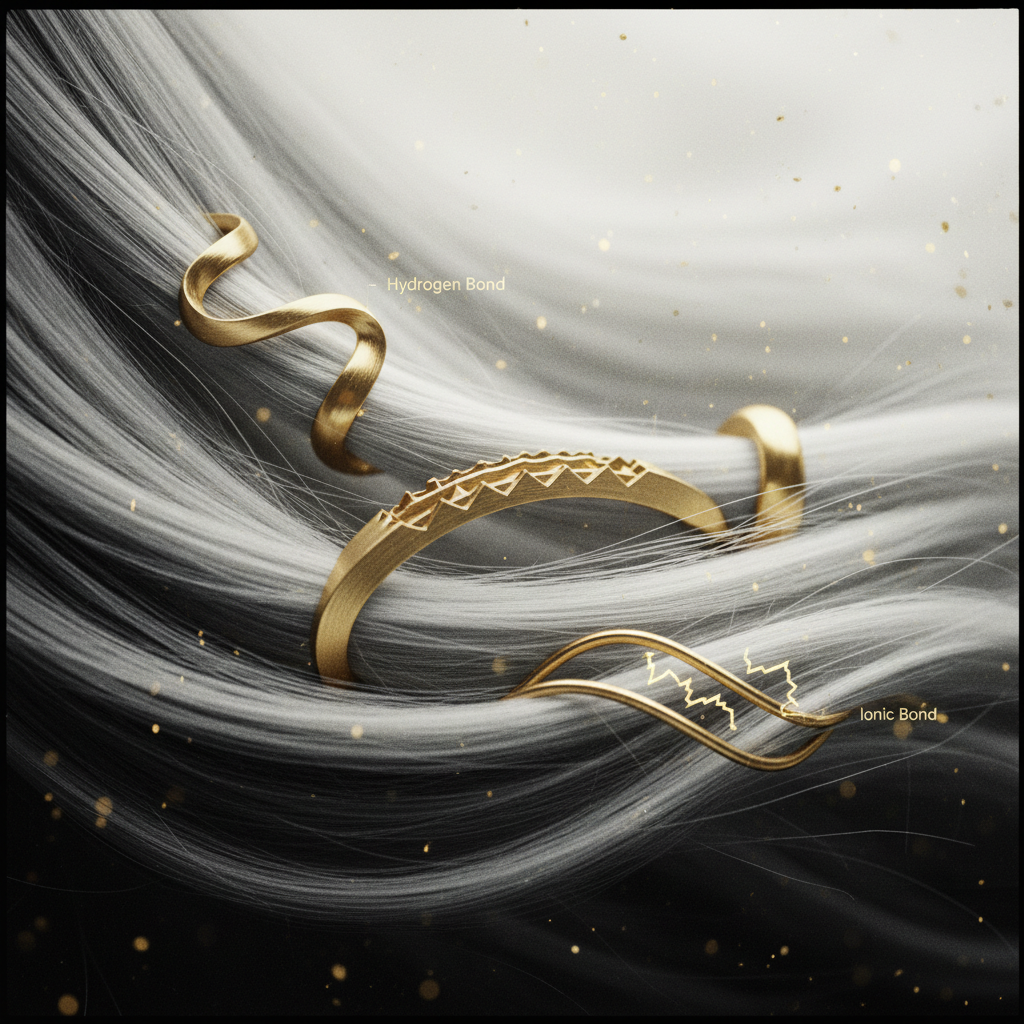
- Hydrogen bonds: These are weak physical bonds formed between polar amino acid side chains. Although individually fragile and readily broken by ambient water or heat, they are so numerous that they account for roughly one-third of the fibre's total resistance to bending. They reform automatically as hair dries, which explains temporary wet-to-dry styling.
- Salt bridges (ionic bonds): These bonds form between positively charged basic amino acids (such as lysine and arginine) and negatively charged acidic amino acids (such as aspartic acid and glutamic acid). Salt bonds are strongest at hair's natural isoionic point (pH 3.67) and remain stable within typical physiological conditions (pH 4.5 to 5.5). Alkaline products with a pH above 7.0 break salt bridges, causing the fibre to swell laterally.
- Disulfide cross-links: These are strong, permanent covalent bonds formed between two cysteine amino acid residues, creating cystine. Disulfide bonds do not break in water or during standard styling. Cleaving them requires strong reducing agents (such as ammonium thioglycolate used in perms or relaxers) or harsh oxidising environments (such as hydrogen peroxide bleaches).
| Bond Type | Bond Mechanism | Relative Strength | Triggers for Breakage | Reversibility |
|---|---|---|---|---|
| Hydrogen Bonds | Dipole attraction between polar groups | Weak | Water, humidity, mild heat | Reversible upon drying and cooling |
| Salt Bridges | Electrostatic attraction between opposite charges | Moderate | Extreme pH shifts (pH < 3.5 or pH > 7.0) | Reversible when pH normalises |
| Disulfide Bonds | Covalent cross-links between cysteine residues | High | Bleach, chemical relaxers, UV, heat > 200°C | Irreversible biological loss (cannot self-repair) |
What the evidence does not show: common keratin myths
Widespread marketing claims have blurred the boundary between true biological hair synthesis and cosmetic coating.
First, cosmetic products cannot permanently rebuild or reconnect native disulfide bonds. While modern chemical bond-building formulations deposit active multi-functional linkers to create bridges between broken protein fragments, they do not turn cosmetically damaged keratin back into virgin hair. The newly formed links remain vulnerable to subsequent washing, wear, and chemical processing.
Second, the hair fibre cannot metabolise or incorporate topically applied keratin into its living internal structure. Hair that has emerged from the scalp follicle is non-living tissue. Applying raw, unhydrolysed keratin protein to the hair shaft will not fuse with the cortex because the molecular weight of native keratin (roughly 40,000 to 65,000 Daltons) is far too large to pass through the tightly sealed outer cuticle.
Third, using excessive topical protein does not make hair infinitely stronger. In fact, over-depositing rigid protein polymers on the fibre surface without adequate plasticisers (such as water or conditioning emollients) makes the shaft excessively stiff and brittle, leading to clean mechanical snapping during styling.
Signs of damaged protein and keratin structure
When the internal keratin scaffolding is compromised, the physical properties of the fibre shift visibly and tactilely:
- Loss of wet tensile strength: The hair over-stretches like an old rubber band when wet and fails to snap back to its resting length.
- Spongy, porous texture: The fibre absorbs water almost instantly due to an eroded cuticle and exposed cortical matrix, taking an excessively long time to dry.
- Fibre snapping (breakage): Small pieces of hair break off midway down the shaft without a white follicular bulb at the end. (Notice that this is physical breakage along the shaft, not hair shedding from the follicle).
- Persistent frizz and split ends (trichoptilosis): Longitudinal splitting occurs where the macrofibrils inside the cortex separate from one another because the supporting matrix proteins have washed away.
How to support and protect hair protein
Because native keratin cannot biologically repair itself once damaged, protection and cosmetic maintenance are essential:
- Maintain a balanced wash pH: Use shampoos and conditioners formulated near the scalp and hair's natural pH (4.5 to 5.5) to keep the cuticle closed and protect salt bridges from ionic destabilisation.
- Use hydrolysed proteins thoughtfully: Hydrolysed keratin, wheat, or silk proteins have been broken down into low-molecular-weight peptides (typically 500 to 3,000 Daltons). These smaller chains can penetrate minor cuticle cracks, temporarily anchoring to damaged cortical sites to reduce breakage.
- Mitigate thermal degradation: Keep styling irons below 180 degrees Celsius. Above 160 degrees, alpha-keratin transitions irreversibly into beta-keratin, while temperatures above 215 degrees burn and melt the protein structure entirely. Always apply thermal protectants formulated to distribute heat evenly.
- Balance protein and moisture: Follow protein-rich treatments with substantive conditioning agents (such as fatty alcohols and conditioning lipids) to preserve hair flexibility and prevent rigidity-induced breakage.
When the cause may be something else
If you notice excessive hair thinning or falling out in clumps from the root, the issue does not stem from broken protein in the shaft. Shedding with a white bulb intact signals a follicular response, such as telogen effluvium, nutritional deficiencies (like low ferritin or zinc), hormonal fluctuations, or androgenetic alopecia.
Similarly, severe congenital abnormalities in the hair shaft (such as trichorrhexis nodosa or monilethrix) are structural genetic defects rather than cosmetic wear. In these cases, superficial protein treatments will not resolve the underlying structural weakness.
When to seek professional advice
Seek guidance from a consultant trichologist or board-certified dermatologist if you experience sudden, widespread hair shedding, bald patches, scalp inflammation, burning, or itching. These symptoms represent scalp and follicular conditions that cosmetic treatments cannot address. If your hair snaps relentlessly despite cutting out heat styling and chemical processing, a professional trichological assessment can evaluate your hair shaft integrity under a polarised light microscope to distinguish cosmetic cuticle erosion from genetic structural flaws.
Supporting hair health with Watermans
Cosmetic hair care works best when it supports both the emerged fibre and the scalp environment from which new hair emerges. Watermans designs formulations centred on everyday cosmetic performance, focusing on scalp health and fibre resilience. By utilising mild cleansing agents and targeted conditioning ingredients, these formulas clean the scalp without stripping the hair shaft's essential surface lipids or unnecessarily swelling its delicate internal keratin matrices. This balanced approach helps reduce cosmetic breakage, giving everyday hair a fuller, stronger, and more resilient appearance.
Frequently asked questions about Protein and Keratin Structure in Hair
What is the exact role of the Protein and Keratin Structure in Hair?
The Protein and Keratin Structure in Hair provides the mechanical foundation of the entire fibre. Keratins arrange into intermediate filaments that resist bending, stretching, and environmental wear. High-sulphur matrix proteins surround these filaments, while disulfide cross-links anchor the system together. This structure accounts for roughly 85 to 90 percent of the hair's dry weight, dictating its elasticity, thickness, and overall physical resilience.
Can a topical treatment permanently repair broken keratin bonds?
No cosmetic treatment can permanently repair broken keratin bonds back to their virgin state. When strong chemicals or extreme heat cleave cystine disulfide bonds, the sulphur atoms oxidise into cysteic acid, which cannot naturally reform. Modern bond-multiplying treatments deposit temporary chemical cross-linkers that span these gaps, reducing breakage, but these bonds gradually degrade over time with repeated washing and mechanical friction.
Why does hair become brittle after using too many protein treatments?
Hair becomes brittle when hydrolysed proteins build up heavily on the cuticle surface without enough moisture or plasticising emollients. This surplus protein creates a rigid, unyielding coating. Healthy hair requires a precise balance of flexibility and strength. When this balance tips toward absolute rigidity, the hair loses its natural elastic recovery and breaks cleanly under standard brushing tension.
How does heat styling affect the hair's internal keratin structure?
Heat styling alters the internal alpha-helical shape of keratin proteins. Up to 140 degrees Celsius, moisture leaves the fibre. Between 160 and 190 degrees, crystalline alpha-keratins unfold and denature into disorganized beta-keratins. Beyond 215 degrees, the protein matrix experiences thermal decomposition: disulfide bonds degrade, natural structural lipids evaporate, and microscopic cracks develop along the cortex, causing irreversible structural weakening.
Protecting your structural keratin
Understanding the Protein and Keratin Structure in Hair clarifies why gentle daily handling matters. Because the emerged hair fibre contains no living cells to manufacture replacement tissue, the keratin you grow is the only keratin you will ever have on that strand. Preserving its complex matrix of alpha-helices, salt bridges, and disulfide bonds requires avoiding unnecessary chemical damage, using controlled heat, and balancing low-molecular-weight protein reinforcement with moisture-locking conditioning agents. Through informed, consistent hair practices, you can safeguard your hair's internal protein architecture, prevent unnecessary breakage, and preserve fibre strength for the long term.
Sources and references
- Robbins, C. R. (2012). Chemical and Physical Behavior of Human Hair. 5th ed. Springer-Verlag New York.
- Dawber, R. (1996). Hair: Its structure and response to cosmetic preparations. Clinics in Dermatology, 14(1), 105-112.
- Feughelman, M. (1997). Mechanical Properties and Structure of Alpha-keratin Fibres. UNSW Press.
- Swift, J. A. (1999). The mechanics of fracture of human hair. International Journal of Cosmetic Science, 21(4), 227-239.
- Popescu, C., & Höcker, H. (2007). Hair, the most sophisticated biological composite material. Chemical Society Reviews, 36(8), 1282-1291.
Find these ingredients in Watermans products
- Zinc: you will find this ingredient in our Hair Vitamins.