Preventing Split Ends: A Complete Scientific and Practical Guide
8 min read ·
Discover the scientific approach to preventing split ends, from managing cuticle friction and heat stress to the truth about trims and bonding serums.

Quick answer: Preventing split ends requires protecting the outer cuticle layer of the hair shaft before structural breakdown occurs. Trichoptilosis, the clinical term for split ends, happens when physical friction, thermal stress, or chemical treatments strip away the protective cuticle scales, exposing the inner cortex to longitudinal splitting. While existing splits cannot be truly repaired and must be trimmed off, preventing split ends is entirely achievable through lubricative conditioning, lower heat settings, wide-tooth detangling, and regular micro-trims every 6 to 10 weeks.
Key takeaways
- Trichoptilosis occurs when the protective outer cuticle wears away, causing the cortical fibres of the hair shaft to separate.
- No cosmetic serum, oil, or treatment can permanently mend a split end; only trimming removes the damaged segment completely.
- Excessive heat above 160 degrees Celsius and chemical processing (bleach, relaxers, perms) dramatically accelerate fibre fraying.
- Wet hair is especially vulnerable because water weakens internal hydrogen bonds, making rough towel drying and wet brushing leading causes of split ends.
- Incorporating surface-smoothing conditioners, hydrolysed proteins, and leave-in lubricants forms the backbone of long-term prevention.
Preventing split ends: what the evidence shows
Preventing split ends is fundamentally a biological and mechanical challenge. Hair fibre is non-living tissue made predominantly of keratin proteins. Because hair cannot regenerate itself, the tips of longer strands have survived months or even years of mechanical brushing, UV radiation, laundering, and styling.
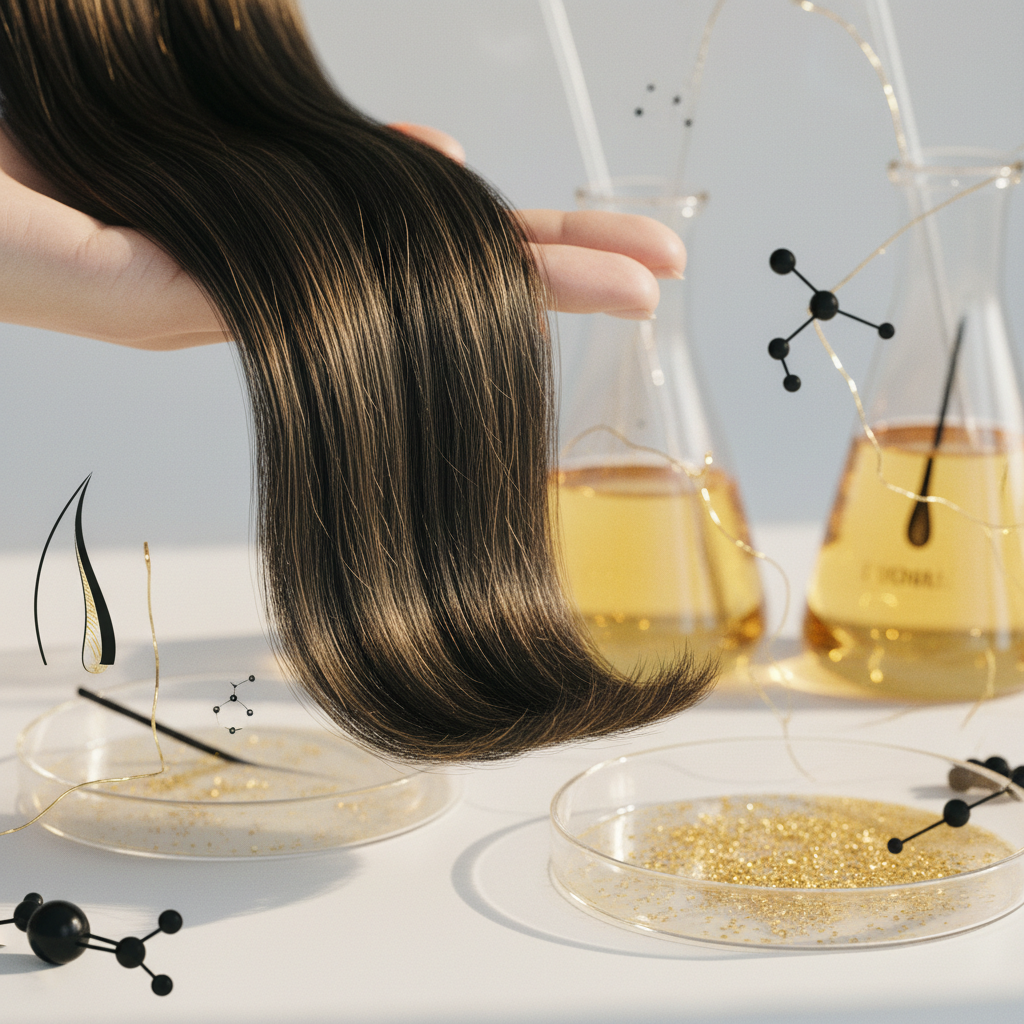
Scientific research into hair structure reveals that the cuticle consists of 5 to 10 overlapping layers of cellular scales bound together by the cell membrane complex (CMC). As long as this shingle-like armour remains intact, the cortex inside stays shielded. When environmental or mechanical abrasion wears through the cuticle scales, the cortex loses its protective boundary. The exposed macrofibrils and microfibrils inside the cortex unravel under minor physical tension, producing visible forks, feathering, or transverse snapping.
Studies published in the Journal of Cosmetic Science demonstrate that regular use of conditioning agents deposits a thin, hydrophobic lipid layer over the hair shaft. This surface film reduces inter-fibre friction by up to 50 percent during combing. By lowering mechanical drag, conditioners directly prevent the micro-tears that precede cortical splitting.
The mechanics of fibre damage: how split ends form
Hair splitting develops through predictable stages rather than happening overnight. Understanding these phases helps you intervene before irreversible breakage occurs.
Intact Cuticle ──> Cuticle Erosion ──> Cortex Exposure ──> Longitudinal Split (Trichoptilosis)
(Smooth scales) (Friction/heat wear) (Keratin exposed) (Fibre unravels upward)
- Cuticle weathering: Daily wear gradually chips the edges of outer cuticle scales. The hair begins to feel slightly rough or dry at the ends.
- Cuticle stripping: High heat, alkaline chemical processing, or aggressive brushing dislodges entire cuticle cells, exposing the cell membrane complex and underlying cortex.
- Cortical fraying: The parallel bundles of keratin filaments within the cortex lose cohesion. They begin to separate down the centre of the fibre, creating the classic "Y" shape split or multi-branched tree split.
- Upward migration: Left untrimmed, the split travels upward toward the root along the path of least resistance, weakening the shaft and leading to premature snapping.
What the evidence does not show
Marketing campaigns often promise that deep conditioning treatments, bond builders, or split-end sealers can permanently heal split ends. The scientific reality is clear: cosmetic products cannot knit fractured keratin fibres back together permanently.
Polymers and silicones can glue split ends together temporarily, lasting through one or two washes. This provides cosmetic neatness and reduces friction against neighbouring strands, but the underlying structural fracture remains. The only permanent resolution for an existing split end is physical removal with sharp shears.
Furthermore, evidence does not show that split ends slow down your hair's growth rate at the scalp level. Follicles in the dermal layer continue their anagen (growth) cycle regardless of what happens at the tips. However, when split ends snap off at the bottom as fast as new growth emerges from the scalp, hair appears stuck at a single length.
Daily practices that protect your ends
Halting the development of split ends requires addressing daily mechanical and thermal wear. Implementing these practical habits preserves cuticle integrity over time:
- Detangle from bottom to top: Always begin brushing at the ends of your hair, working out tangles in short strokes before moving upward toward the scalp. This prevents compacting tangles into tight knots that snap fibres.
- Avoid aggressive towel drying: Cotton terry cloth towels have rough loops that catch and tear fragile cuticles, especially when hair is wet and swollen. Gently squeeze excess water out with a microfibre towel or a soft cotton t-shirt instead.
- Lower your styling temperatures: Keep heat styling tools under 180 degrees Celsius. Above this threshold, internal moisture flash-boils, creating microscopic bubbles within the cortex (bubble hair deformity) that cause immediate splitting.
- Use wide-tooth combs on wet hair: Wet hair stretches easily and has a lower tensile threshold than dry hair. Use a wide-tooth comb with smooth, seamless teeth rather than a fine-tooth comb or stiff bristle brush.
- Sleep on low-friction surfaces: Cotton pillowcases create nightly friction as you turn. Silk or satin pillowcases allow hair to glide freely, cutting down on overnight fraying.
Comparing hair care techniques for end preservation
Different styling habits carry vastly different risk profiles for your hair ends. The table below outlines how common practices compare:
| Practice | Risk Level for Split Ends | Structural Impact on Fibre | Preventive Alternative |
|---|---|---|---|
| Blow-drying on high heat | High | Rapidly strips moisture; lifts cuticle scales | Blow-dry on medium or cool; keep nozzle pointed downward |
| Dry brushing with stiff bristles | High | Causes micro-fractures in cuticle scales | Use flexible-bristle brushes; detangle dry hair gently |
| Rough towel rubbing | High | Tears water-swollen cuticles through friction | Blot and squeeze with a microfibre towel |
| Using leave-in conditioners | Very Low | Coats the shaft in a lubricating lipid barrier | Apply evenly through mid-lengths and ends after every wash |
| Regular micro-trimming | Very Low | Clears early micro-splits before they migrate | Trim 0.5 to 1 cm every 6 to 10 weeks |
| Sleeping with loose hair | Moderate | Causes friction against cotton bedding | Wear hair in a loose braid or use a silk bonnet |
When breakage stems from internal or underlying factors
If your hair splits rapidly despite gentle handling and minimal heat, the fragility may stem from underlying structural vulnerabilities.
Nutritional deficiencies can compromise the quality of newly synthesized keratin. Chronic lack of iron (ferritin below 30 to 50 ug/L), inadequate dietary protein, or severe caloric restriction can produce thinner, mechanically weaker hair shafts that split under normal daily wear.
Endocrine disruptions, including hypothyroidism, alter sebum production and dry out the hair shaft, making it brittle. Similarly, rare genetic conditions like trichorrhexis nodosa cause nodes of weak cortical cells to develop along the shaft, giving the appearance of multiple split ends throughout the mid-lengths rather than just the tips.
Professional options: when to visit a stylist or trichologist
Home care provides ongoing maintenance, but professional intervention is essential at key stages:
- Routine maintenance trims: Have a qualified stylist perform a dusting or micro-trim every 6 to 10 weeks. Professional hairdressing shears are exceptionally sharp, creating a clean, blunt cut. Dull household scissors crush the fibre, leaving a frayed edge that splits again within days.
- Chemical service planning: If you bleach, colour, or chemically straighten your hair, work with a professional who can monitor cuticle porosity and incorporate structural protecting agents during the service.
- Persistent mid-shaft breakage: If you notice hair breaking off in small pieces without reaching a split stage, consult a trichologist or dermatologist to rule out conditions like trichorrhexis nodosa or underlying nutritional issues.
Supporting hair health with Watermans
Maintaining resilient hair ends starts with scalp vitality and continues through dedicated shaft protection. The Watermans Grow Me range is designed to support the appearance of fuller, stronger-feeling hair from the root, providing an ideal foundation for healthy hair growth. Pairing gentle scalp care with rich, nourishing conditioning helps fortify the length of the strand against daily mechanical wear and environmental stress, reducing the friction that leads to premature snapping.
Frequently asked questions about preventing split ends
Can you fix a split end without cutting it?
No, you cannot permanently repair a split end without cutting it. Hair fibre is biologically inactive tissue and cannot mend itself. While cosmetic serums, oils, and bond builders can temporarily stick the split fibres together until your next wash, the structural fracture remains. The only permanent solution is trimming away the damaged section using sharp hairdressing shears.
How often should you trim your hair to prevent split ends?
For most hair types, a light trim or dusting every 6 to 10 weeks is ideal for preventing split ends. Regular micro-trims remove the earliest microscopic cuticle wear before cracks travel upward into the cortex. If you regularly use heat tools or chemical treatments, you may need a light trim closer to every 6 weeks.
Does oiling your hair help in preventing split ends?
Yes, applying hair oils helps in preventing split ends by reducing surface friction and locking in moisture. Plant oils such as argan, jojoba, and coconut oil coat the cuticle scales, creating a lubricating barrier that protects against mechanical damage during brushing and styling. Apply a few drops to damp mid-lengths and ends after washing.
Why do my ends split immediately after a haircut?
Ends that split within days of a haircut are usually caused by dull cutting scissors. Dull blades crush and bend the hair fibre rather than slicing cleanly through it, leaving a ragged tip that quickly separates into a new split. Using unsharpened household scissors instead of professional shears is the most common culprit behind immediate post-cut splitting.
Moving forward with resilient hair
Preventing split ends comes down to consistent protection rather than miracle cures. Because the hair shaft cannot biologically heal, every choice you make to lower friction, moderate heat, and nourish the cuticle extends the lifespan of your ends. By combining careful detangling, rich conditioning, and regular micro-trims, you can protect your hair from preventable breakage and enjoy smoother, healthier lengths year-round.
Sources and references
- Journal of Cosmetic Science, "The mechanical properties of human hair fibres and the effect of cosmetic treatments", 2011.
- International Journal of Trichology, "Hair cosmetics: An overview", 2015.
- British Association of Dermatologists, "Hair care and hair shaft disorders", 2020.
- Journal of the American Academy of Dermatology, "Structural and chemical properties of hair fibres under thermal stress", 2018.