Preventing Heat Damage on Fragile Hair: A Complete Evidence-Based Guide
9 min read ·
Discover evidence-based strategies for preventing heat damage on fragile hair, including safe tool temperatures, thermal protection, and cuticle care.
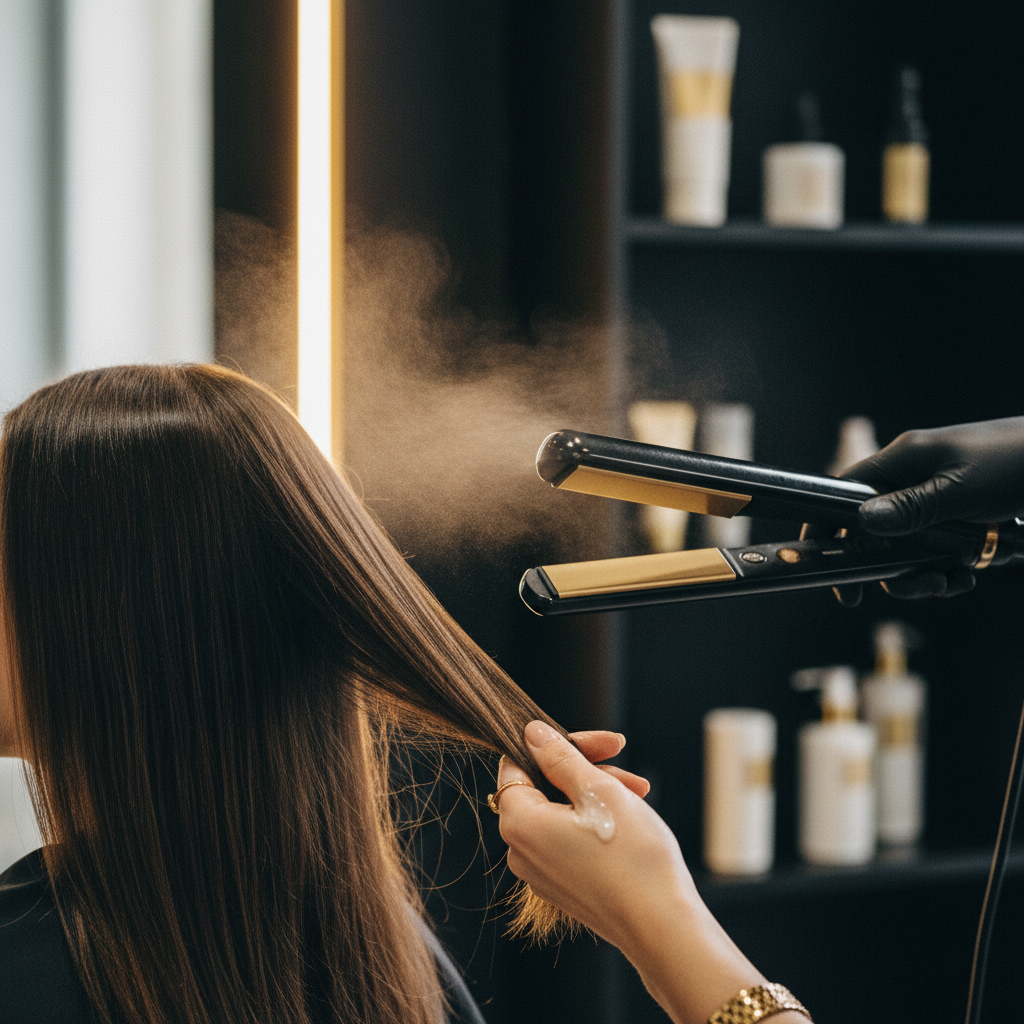
Quick answer: Successfully preventing heat damage on fragile hair requires managing tool temperature, surface friction, and moisture levels before thermal styling begins. Fragile hair, whether chemically processed, fine, or naturally dry, has a compromised protective cuticle and reduced tensile strength. Preventing heat damage on fragile hair involves strictly keeping styling tools below 150 degrees Celsius, using silicone- or polymer-based thermal protectants, and styling exclusively on thoroughly dried hair. The main limitation is that thermal protectants reduce heat conduction rather than eliminate it entirely, meaning chronic exposure still causes cumulative structural breakdown.
Key takeaways
- Fragile hair contains less cortex mass and a thinner, easily lifted cuticle layer, making it significantly more vulnerable to thermal degradation.
- Keratin protein begins to denature and lose structural integrity between 140 and 160 degrees Celsius, particularly when the hair fibre is already compromised.
- Water trapped inside the hair shaft boils at 100 degrees Celsius, causing rapid steam expansion that creates internal cavities known as bubble hair.
- Thermal protectant formulations reduce heat transfer and friction, but they do not make hair fibres completely impervious to high temperatures.
- Adjusting styling speed, lowering tool settings, and balancing moisture and protein intake provide the most effective long-term defence against thermal breakage.
Preventing heat damage on fragile hair: what the evidence shows
Scientific evaluation of thermal hair styling shows that heat alters both the chemical and physical architecture of the hair shaft. Hair consists of roughly 65 to 95 percent keratin protein, held together by disulphide bonds, hydrogen bonds, and salt linkages. Surrounding the inner cortex is the cuticle, an overlapping shingle-like sheath sealed by an exterior lipid layer called 18-methyleicosanoic acid (18-MEA).
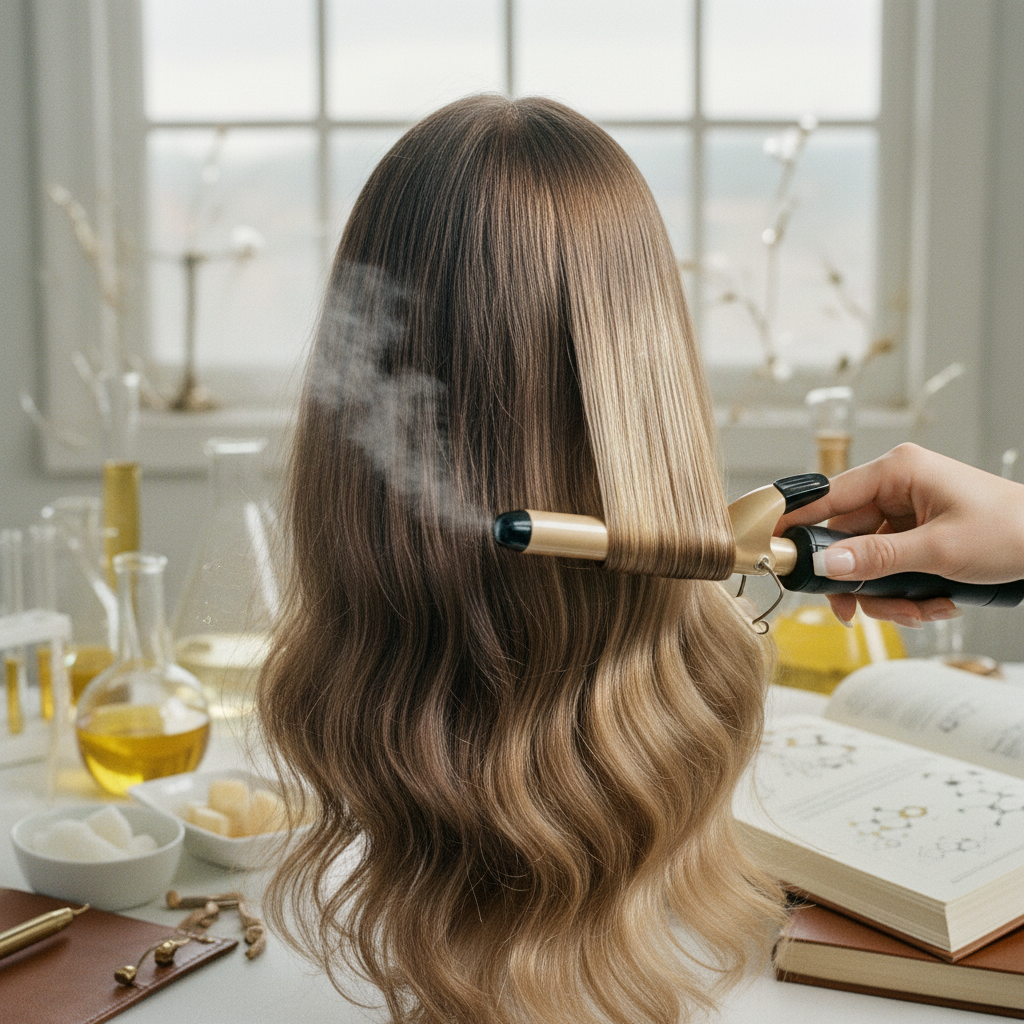
When you apply heat styling tools to fragile hair, this protective barrier degrades rapidly. Cosmetic science literature demonstrates that temperatures as low as 140 degrees Celsius begin to strip away the fatty 18-MEA layer. Once this hydrophobic lipid coating disappears, the cuticle lifts, friction increases, and moisture escapes at an accelerated rate.
Studies using differential scanning calorimetry (DSC) confirm that healthy virgin hair begins significant internal protein denaturation around 180 to 200 degrees Celsius. However, fragile hair that has experienced chemical bleaching, permanent waving, or oxidative colouring shows a lower denaturation threshold, often falling between 140 and 155 degrees Celsius. For fine or compromised strands, standard salon temperatures of 200 to 230 degrees Celsius can cause immediate, irreversible structural melting and cortical breakdown.
The biological and physical mechanisms of heat styling
Thermal styling works by temporarily modifying the physical bonds within the hair fibre. Applying heat breaks temporary hydrogen bonds between keratin chains. Once the hair cools into its new shape (whether flattened by straighteners or curved by curling tongs), those hydrogen bonds reform in the new configuration.
While hydrogen bonds are meant to be broken and reformed, high heat also targets irreversible covalent bonds. Disulphide cross-links, which provide the hair with its elasticity and tensile strength, oxidise into cysteic acid when exposed to sustained temperatures above 150 degrees Celsius.
The presence of water changes the mechanism dramatically. If hair is damp or wet when exposed to irons reaching over 100 degrees Celsius, free water inside the cortex boils instantly. The trapped steam cannot escape the compact fibre fast enough, causing explosive expansion. This produces microscopic gas pockets along the hair shaft, a clinical condition termed "bubble hair". The affected regions become brittle, lose all elasticity, and snap off under minimal mechanical stress.
Critical temperature thresholds for hair fibres
| Temperature Range | Hair Fibre Response | Impact on Fragile Hair |
|---|---|---|
| Below 100°C | Gentle water evaporation; temporary hydrogen bond relaxation. | Safe for fragile hair when using indirect airflow from a hair dryer. |
| 100°C to 140°C | Bound water begins to release; surface lipid (18-MEA) starts oxidising. | Tolerable limit for fragile strands; requires a protective coating to prevent lipid loss. |
| 140°C to 160°C | Keratin denaturation begins; cuticle edges lift and chip. | High risk for chemically lightened or fine hair; cumulative structural breakdown occurs. |
| 160°C to 190°C | Permanent disulphide bond degradation; rapid cystine conversion. | Severe cortex damage, immediate loss of elasticity, and widespread fibre splitting. |
| Above 190°C | Thermal melting of the cortex; structural carbonisation. | Immediate fibre breakage, blistering, and catastrophic structural failure. |

Signs of thermal damage on fragile strands
Thermal degradation rarely appears overnight; instead, it develops through gradual, cumulative weakening. Watch for these distinct physical indicators:
- Altered curl or wave patterns: Fine or coily fragile hair loses its natural bounce. Sections that receive frequent direct heat remain limp or permanently stretched, even after washing.
- Rough, velcro-like texture: Lifted and chipped cuticle scales catch on neighbouring strands, causing persistent tangling at the mid-lengths and ends.
- White bulb-free split ends: Hair that snaps from heat creates frayed ends or small white spots (trichorrhexis nodosa) along the shaft, rather than shedding from the scalp with a root bulb attached.
- Dullness and colour fading: Without the smooth 18-MEA lipid layer to reflect light evenly, hair looks matte and oxidized. Dyed hair fades rapidly as porous gaps allow artificial pigments to leach out.
- Loss of wet elasticity: When wet, healthy hair stretches and returns to its original length. Thermally degraded fragile hair either snaps immediately when pulled gently or stretches like wet paper and refuses to recover.
Practical steps for protecting delicate hair fibres
Safeguarding delicate strands demands an intentional styling workflow. You can dramatically reduce mechanical and thermal stress by adopting practical, evidence-backed habits.
1. Dry the hair thoroughly before direct contact styling
Never use flat irons or curling wands on damp strands. Allow hair to air-dry partially, then finish with a blow dryer on a low or medium heat setting, holding the nozzle at least 15 centimetres away from the hair shaft. Direct, high-heat metal or ceramic plates must only touch hair when it is completely dry to prevent steam cavitation and bubble hair.
2. Choose the right thermal protectant formulation
Thermal protectants work primarily through polymers (such as polyquaternium compounds) and heat-stable silicones (like dimethicone, amodimethicone, or cyclopentasiloxane). These ingredients perform two vital functions:
- They lower thermal conductivity, spreading heat more evenly across the surface rather than concentrating it in hot spots.
- They coat the cuticle, reducing friction between the styling tool and the hair fibre so the tool glides without snagging fragile outer layers.
Apply protective sprays or lightweight serums evenly through damp or dry sections, combing gently with a wide-tooth comb to ensure complete coverage.
3. Lower tool temperatures and limit passes
Most modern heat tools heat up to 230 degrees Celsius, which is intended for coarse, resistant hair types. For fine, bleached, or fragile hair, keep styling tools between 120 and 150 degrees Celsius. Run the iron smoothly down each section in a single, controlled pass lasting no more than three to four seconds. Making multiple fast passes over the same section creates more friction and heat accumulation than one steady, measured movement.
4. Strengthen between heat sessions
Fragile hair requires external lipids and hydrolysed proteins to patch microscopic gaps along the cuticle. Incorporate deep-conditioning treatments that contain fatty alcohols, ceramides, or hydrolysed wheat or vegetable proteins once a week. These replenish lost moisture and temporarily bolster the fibre's tensile strength.
When breakage is caused by something else
It is common to blame styling tools for weak strands, but fragile hair often stems from underlying internal or external issues:
- Chemical overprocessing: Bleaching, high-lift dyes, and chemical relaxers strip disulphide bonds and destroy the cell membrane complex. If hair snaps with little to no heat exposure, recent chemical treatments are often the primary cause.
- Excessive mechanical tension: Tight ponytails, rough towel drying, and aggressive brushing cause physical traction and cuticle wear that mimics heat damage.
- Nutritional and metabolic factors: Nutritional deficiencies (such as low iron ferritin, insufficient dietary protein, or zinc imbalances) and thyroid disorders can cause hair to emerge from the follicle weaker, finer, and less resilient to everyday styling.
- Hard water minerals: High concentrations of dissolved calcium and magnesium can deposit onto the hair shaft, creating a stiff, brittle film that breaks easily during normal manipulation.
Remember the clear medical distinction: hair breakage occurs along the fibre shaft due to physical or chemical trauma. It is entirely different from telogen effluvium (generalised shedding from the follicle) or alopecia (patterned hair thinning and follicular miniaturisation).
Support for fragile hair from Watermans
Maintaining resilient hair starts at the roots while caring for the physical integrity of existing strands. For those managing delicate, breakable hair, Watermans offers targeted cosmetic solutions designed to support a healthier-looking scalp and improve hair condition.
Watermans Grow Me Shampoo contains a carefully formulated blend of biotin, rosemary extract, caffeine, and hydrolysed lupin protein. While it cannot repair split ends that have already fractured, its balanced formula cleanses without stripping vital surface moisture. Pairing it with a deeply moisturising conditioner helps smooth the outer cuticle scales, reducing surface friction and helping fragile hair resist mechanical and thermal stress throughout your styling routine.
Frequently asked questions about preventing heat damage on fragile hair
What is the safest temperature for preventing heat damage on fragile hair?
The safest temperature for preventing heat damage on fragile hair is between 120 and 150 degrees Celsius. Fragile hair has a lower protein denaturation threshold than thick, virgin hair. Keeping tools within this range preserves hydrogen-bond flexibility while preventing permanent degradation of the cortex and exterior cuticle lipids.
Can a thermal protectant completely prevent heat damage?
No cosmetic product can completely prevent heat damage. Thermal protectants typically reduce heat conduction by 30 to 50 percent and smooth the cuticle to limit friction. However, high or prolonged temperatures still degrade the underlying keratin structure over time, making sensible heat settings and reduced styling frequency essential.
How can I tell if my fragile hair is broken or shedding?
Examine the fallen strands. If the hair has a tiny white bulb at one end, it has shed naturally from the follicle as part of the hair cycle. If the strand has blunt, split, or frayed ends without a root bulb, it has broken along the shaft due to mechanical, chemical, or thermal stress.
Is blow drying safer than using a flat iron on fragile hair?
Blow drying is generally safer than flat ironing because the heat is indirect and tools do not clamp directly onto the hair fibre. As long as you keep the dryer moving, maintain a 15-centimetre distance, and use medium heat settings, the hair avoids the concentrated, high-friction contact created by flat iron plates.
Can heat damage on fragile hair be reversed?
Thermal damage cannot be reversed because hair is biologically dead tissue without living cells to regenerate broken bonds. While conditioning treatments, silicones, and protein masks can temporarily smooth lifted cuticles and improve manageability, structurally melted or split fibres must ultimately be trimmed away.
Maintaining resilient hair
Successfully preventing heat damage on fragile hair comes down to respecting the biological limits of the hair fibre. Fragile strands require lower temperatures, protective barrier products, and careful handling to stay intact. By keeping hot tools below 150 degrees Celsius, working only on completely dry hair, and incorporating restorative conditioning care, you can style your hair while preserving its strength, shine, and structural integrity.
Sources and references
- Journal of Cosmetic Science: Thermal degradation of hair keratin and influence of cosmetic treatments (2011)
- International Journal of Trichology: Hair shaft damage from heat styling: mechanisms and prevention (2013)
- Journal of the Society of Cosmetic Chemists: The effects of temperature and humidity on the physical properties of human hair (2004)
- Skin Appendage Disorders: Hair cosmetics: An overview of ingredients and clinical impacts (2015)
- British Association of Dermatologists: Hair shaft disorders and weathering guide (2020)
Find these ingredients in Watermans products
- Zinc: you will find this ingredient in our Hair Vitamins.