Natural Oils for Hair
5 min read ·
Natural oils offer a range of benefits for hair health, from moisturising and strengthening to protecting against damage, with each oil possessing unique properties.
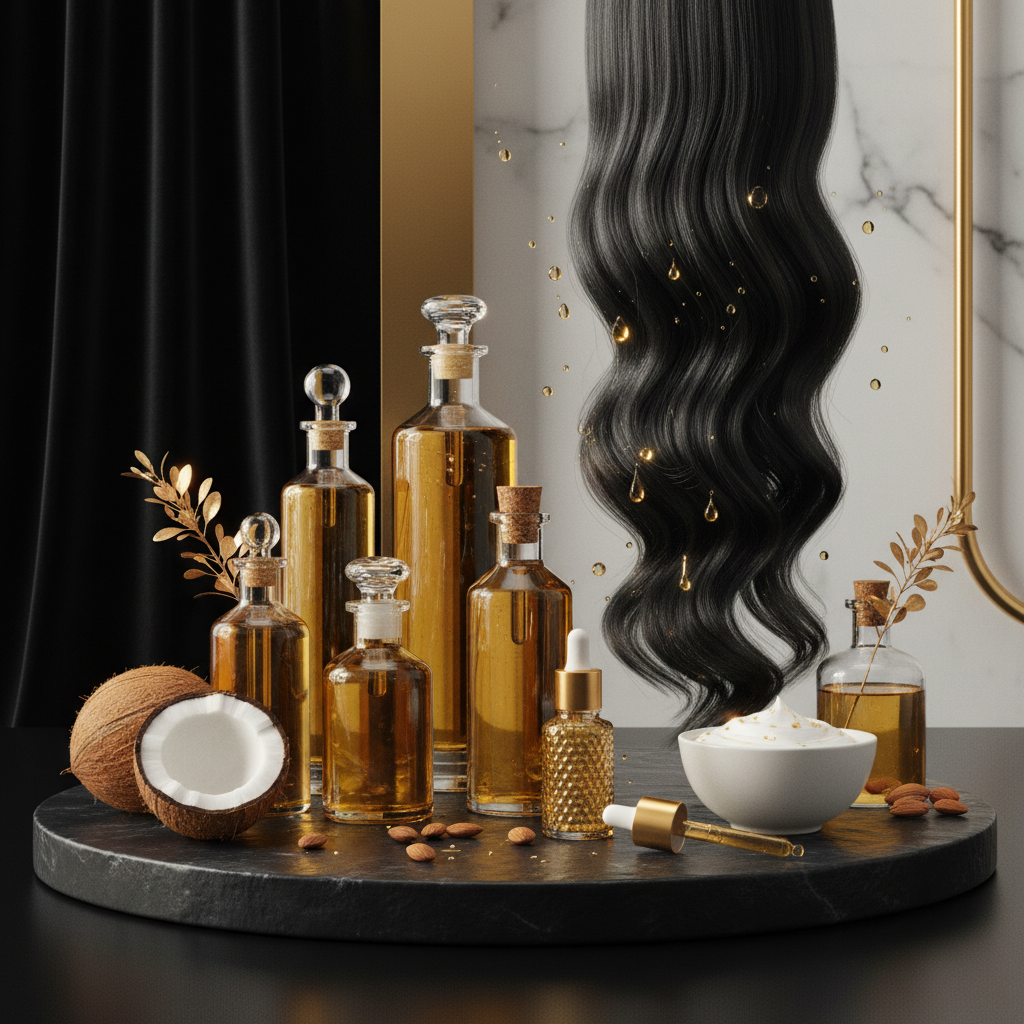
Natural oils have been used for centuries across various cultures for their hair-enhancing properties. These oils, extracted from plants, nuts, and seeds, are rich in vitamins, minerals, fatty acids, and antioxidants that can profoundly impact hair health.
How Natural Oils Benefit Hair
The primary benefits of natural oils for hair stem from their ability to penetrate the hair shaft, form a protective barrier, and nourish the scalp. This multifaceted action leads to several improvements in hair texture, strength, and appearance.
- Moisturization and Conditioning: Many natural oils are emollients, meaning they help to soften and smooth the hair. They reduce moisture loss from the hair shaft, helping to prevent dryness and brittleness.
- Strengthening: Certain oils contain fatty acids that can penetrate the hair's cortex, helping to strengthen the internal structure and reduce protein loss, which is a common cause of breakage.
- Scalp Health: Oils can moisturise the scalp, reducing dryness and flakiness. Some also possess antimicrobial properties that can help maintain a healthy scalp microbiome.
- Protection: By coating the hair, oils can create a barrier against environmental damage, heat styling, and chemical treatments.
- Shine Enhancement: The smoothing effect of oils on the hair cuticle results in increased light reflection, leading to enhanced natural shine.
Understanding Oil Types: Penetrating vs. Sealing
Natural oils can be broadly categorized based on their molecular structure and how they interact with the hair shaft.
- Penetrating Oils: These oils have smaller molecular structures, allowing them to deeply penetrate the hair shaft. They are rich in saturated and monounsaturated fatty acids, which can bind to hair proteins and reduce swelling and damage caused by water absorption. Examples include coconut oil and olive oil.
- Sealing Oils: These oils have larger molecular structures and primarily sit on the surface of the hair, forming a protective barrier. They are effective at locking in moisture and providing shine. Examples include jojoba oil and argan oil.
Popular Natural Oils and Their Properties
| Oil Type | Key Benefits | Best For |
|---|---|---|
| Coconut | Penetrates hair, reduces protein loss, moisturizes | All hair types, especially dry or damaged |
| Argan | Adds shine, moisturizes, protects from heat | Frizzy, dry, dull hair |
| Jojoba | Balances sebum, mimics natural scalp oil | Oily or dry scalp, fine hair |
| Olive | Deep conditioning, strengthens, adds elasticity | Thick, coarse, damaged hair |
| Castor | Moisturizes, supports scalp health | Dry, brittle hair, healthy scalp support |
| Rosemary | Supports circulation, stimulates follicles | Thinning hair, scalp health |
| Sweet Almond | Softens, adds shine, rich in Vitamin E | Dry, brittle, dull hair |
Coconut Oil
Derived from coconuts, this oil is renowned for its ability to penetrate the hair shaft due to its primary fatty acid, lauric acid. Lauric acid has a low molecular weight and a straight linear structure, allowing it to efficiently diffuse into the hair's cortex. This penetration helps to reduce protein loss during washing, making it particularly beneficial for strengthening the hair and preventing damage.
Argan Oil
Extracted from the kernels of the argan tree, argan oil is rich in antioxidants, vitamin E, and essential fatty acids. It is a good sealing oil that provides a remarkable shine and softness while helping to protect hair from environmental stressors and heat damage. Its high concentration of beneficial compounds helps to smooth the hair cuticle, reducing frizz and improving manageability.
Jojoba Oil
Chemically, jojoba oil is not a true oil but a liquid wax ester, closely resembling the sebum naturally produced by the human scalp. This similarity makes it an excellent choice for balancing scalp oil production. It can help regulate an overly oily scalp or provide moisture to a dry one without leaving a greasy residue. Jojoba oil also forms a protective layer on the hair shaft, enhancing shine and manageability.
Olive Oil
A staple in many kitchens, olive oil is also a powerful hair conditioner. Rich in monounsaturated fatty acids, particularly oleic acid, it can penetrate the hair shaft, providing deep moisture and strengthening the hair from within. Its emollient properties make hair soft and pliable, which can reduce breakage and improve elasticity, especially in thicker, coarser hair types.
Castor Oil
Known for its thick consistency, castor oil is derived from the castor bean. Its unique composition, rich in ricinoleic acid, gives it moisturising and humectant properties, drawing moisture to the hair and scalp. While it does not stimulate hair growth directly, it creates a healthy environment for the follicles by deeply conditioning the scalp and hair, which can reduce breakage and improve overall hair density.
Rosemary Oil
Rosemary oil is an essential oil extracted from the rosemary plant. It is often used for its stimulating properties, believed to improve circulation to the scalp. Enhanced blood flow can deliver more nutrients to hair follicles, supporting healthy hair growth and potentially reducing hair thinning. It should typically be diluted with a carrier oil before application to the scalp.
Sweet Almond Oil
Lightweight and easily absorbed, sweet almond oil is rich in vitamins E, D, and A, as well as oleic and linoleic fatty acids. It excels at softening the hair, adding shine, and reducing frizz without weighing the hair down. It is particularly beneficial for dry, brittle hair, improving its overall texture and making it more manageable.
How to Incorporate Natural Oils into Your Hair Care Routine
Natural oils can be integrated into a hair care regimen in numerous ways:
- Pre-Shampoo Treatment (Pre-Poo): Apply oil to dry hair for 30 minutes to a few hours before shampooing. This helps protect the hair from stripping during cleansing.
- Leave-In Conditioner: A small amount of a lighter oil can be applied to damp or dry hair, particularly on the ends, to seal in moisture and add shine.
- Scalp Massage: Massage oils into the scalp to moisturise, help manage flakiness, and promote a healthy environment for hair growth. Use carrier oils for essential oils like rosemary.
- Hot Oil Treatment: Warm the oil slightly before applying it to the hair and scalp. Cover with a shower cap and leave on for 20-30 minutes before shampooing. The heat helps the oil penetrate more effectively.
- Deep Conditioning Booster: Add a few drops of oil to your favourite deep conditioner for an extra boost of moisture and nutrients.
When selecting an oil, consider your hair type, concerns, and porosity. Drier, thicker hair may benefit from heavier, more penetrating oils like coconut or olive, while finer, oilier hair might prefer lighter options such as jojoba or sweet almond. Always start with a small amount and observe how your hair responds.
Find these ingredients in Watermans products
- Rosemary Extract, you will find this ingredient in our Hair Growth Shampoo.
- Vitamin E, you will find this ingredient in our Hair Vitamins.
- Castor Oil, you will find this ingredient in our Camellia & Black Castor Hair & Body Oil.