Managing Telogen Effluvium: What You Need to Know About Hair Shedding
9 min read ·
Understanding and effectively Managing Telogen Effluvium, a common type of temporary hair shedding, involves identifying its triggers and supporting healthy hair growth.

Quick answer: Managing Telogen Effluvium involves identifying and addressing underlying triggers for temporary, excessive hair shedding. It is not hair loss in the sense of permanent follicle damage, but rather a disruption of the hair growth cycle. The condition typically resolves on its own once the trigger is removed, and treatments focus on supportive care and promoting a healthy scalp environment to encourage regrowth. Consistency in self-care is key while waiting for the hair cycle to normalise. While many approaches can offer support, it's crucial to remember that Telogen Effluvium is self-limiting.
Key takeaways
- Telogen Effluvium is a temporary increase in hair shedding, not permanent hair loss, caused by a disruption to the hair growth cycle.
- Common triggers include significant stress, illness (like fever or infection), hormonal shifts, nutritional deficiencies, and certain medications.
- The shedding phase typically begins 2 to 3 months after the trigger event and can last for several months.
- Identifying and addressing the underlying cause is the most effective approach to Managing Telogen Effluvium.
- Supportive care focuses on a balanced diet, stress management, gentle hair care, and maintaining scalp health.
- Hair usually recovers within 6 to 9 months once the trigger is removed, though some cases can be chronic.
Managing Telogen Effluvium: what the evidence shows
Managing Telogen Effluvium effectively starts with understanding its nature. Telogen Effluvium (TE) is a common form of non-scarring alopecia characterised by a sudden, diffuse increase in hair shedding. It occurs when a significant number of hairs prematurely enter the telogen (resting) phase of the hair growth cycle, leading to increased shedding a few months later. Unlike androgenetic alopecia, which involves progressive miniaturisation of hair follicles, TE is typically reversible, and the follicles remain capable of producing healthy hair.

Evidence shows that TE is often triggered by a stressful event or physiological change that perturbs the normal hair cycle. This can include major surgery, severe illness (such as COVID-19 or a high fever), significant emotional stress, childbirth, sudden weight loss, dietary deficiencies, and discontinuing or starting certain medications. The delay between the trigger and the onset of shedding is typically 2 to 3 months, making it challenging to pinpoint the exact cause without careful consideration of recent life events.
Research indicates that once the trigger is resolved, the hair cycle gradually normalises. The excess shedding usually subsides within 6 to 9 months, and hair density returns to normal. In some cases, if the trigger is ongoing or recurrent, TE can become chronic, persisting for longer than 6 months. For example, chronic stress or persistent nutritional imbalances may lead to prolonged shedding.
What causes Telogen Effluvium?
The hair growth cycle has three main phases: anagen (growth), catagen (transition), and telogen (resting). In a healthy scalp, about 85 to 90% of hairs are in the anagen phase, 1% in catagen, and 10 to 15% in telogen. During the telogen phase, the hair follicle is dormant, and the old hair is eventually shed to make way for new growth. A person typically sheds 50 to 100 hairs daily, which is normal.
Telogen Effluvium occurs when a larger proportion of anagen hairs (sometimes up to 50%) are prematurely pushed into the telogen phase. This can be due to a systemic shock to the body. For instance, after a severe illness, the body diverts resources away from non-essential functions like hair growth, triggering many hairs to enter the resting phase simultaneously. When these hairs are simultaneously shed 2 to 3 months later, the shedding becomes noticeable. The exact mechanism isn't fully understood, but it is believed to involve inflammatory signals or hormonal changes that impact the follicular stem cells.
Recognising the signs of Telogen Effluvium
The primary sign of Telogen Effluvium is a sudden and noticeable increase in diffuse hair shedding. This means hair loss from all over the scalp, rather than in specific patches or at the hairline. You might find more hairs on your pillow, in the shower drain, or in your hairbrush. Unlike other forms of hair loss, the hair follicles themselves are not damaged, and new hair growth usually occurs once the shedding phase ends.
Other signs can include:
- Increased hair fall during washing or brushing: You might notice handfuls of hair coming out.
- Overall thinning: While not bald patches, the hair may feel and look less dense.
- No scalp irritation: The scalp typically remains healthy, without redness, scaling, or itching.
It is important to differentiate this from hair breakage, where the hair fibre snaps along the shaft due to damage. In Telogen Effluvium, the hair sheds from the root, often with a small, white bulb attached.
What you can do when Managing Telogen Effluvium
While Telogen Effluvium often resolves on its own, there are several supportive steps you can take to encourage healthy regrowth and minimise further stress on your hair.
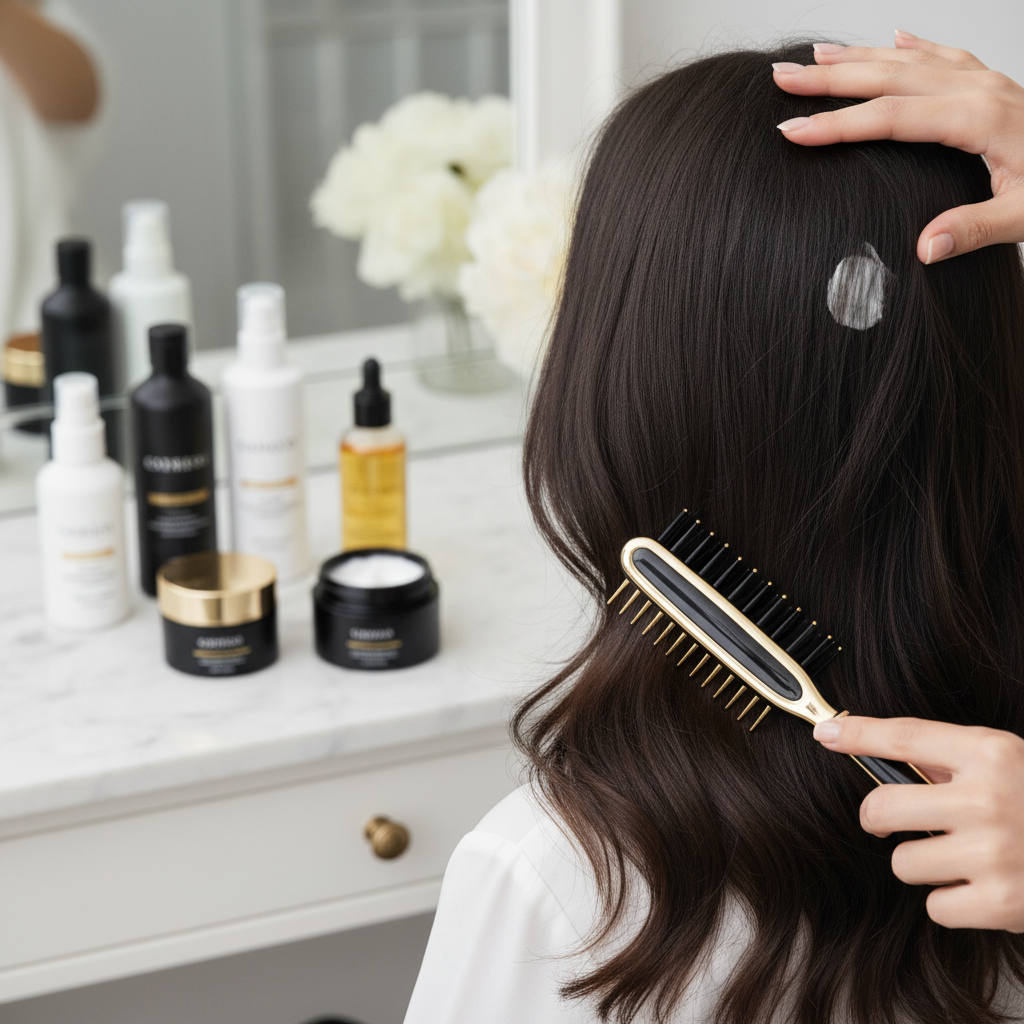
- Identify and address the trigger: This is the most crucial step. Work with a healthcare professional to identify potential causes such as nutrient deficiencies (e.g., iron, vitamin D, zinc, biotin), thyroid issues, or medication side effects. Correcting these underlying problems is key to stopping the shedding.
- Nutrition: Ensure a balanced diet rich in essential vitamins, minerals, and proteins crucial for hair health. Foods rich in iron (lean meats, leafy greens), zinc (nuts, seeds), biotin (eggs, avocado), and vitamins (B vitamins, vitamin D) are particularly important. If deficiencies are confirmed, supplements may be recommended by a doctor.
- Stress management: High stress levels can be a significant trigger. Incorporate stress-reducing activities into your routine, such as meditation, yoga, regular exercise, or spending time in nature.
- Gentle hair care: Avoid harsh styling, tight hairstyles, excessive heat, and chemical treatments that can put additional stress on your hair and scalp. Use a wide-tooth comb and be gentle when detangling wet hair.
- Scalp health: A healthy scalp provides an optimal environment for hair growth. Use gentle, nourishing shampoos and conditioners. Regular, gentle scalp massage can also help stimulate blood circulation.
When the cause may be something else
It is vital to distinguish Telogen Effluvium from other forms of hair loss or shedding, as the management strategies differ significantly. Consult a doctor or dermatologist if:
- Shedding is localised: Hair loss in specific patterns, such as a receding hairline or thinning crown, might indicate androgenetic alopecia.
- Scalp symptoms are present: Redness, itching, scaling, or burning could suggest inflammatory scalp conditions or other dermatological issues.
- Hair loss is permanent or scarring: If the hair loss appears permanent or leads to scarring on the scalp, it requires immediate medical attention.
- No apparent trigger: If the shedding began without any identifiable stressful event or physiological change, a medical evaluation can help rule out underlying health conditions.
Professional advice for Managing Telogen Effluvium
If you suspect you have Telogen Effluvium, or if your hair shedding is severe, prolonged, or accompanied by other symptoms, seeking professional advice is recommended. A dermatologist or your GP can accurately diagnose the condition, rule out other causes of hair loss, and offer guidance on managing Telogen Effluvium. They may perform blood tests to check for nutritional deficiencies, hormonal imbalances, or thyroid issues.
| Feature | Telogen Effluvium | Androgenetic Alopecia (Pattern Hair Loss) | Anagen Effluvium (e.g., Chemotherapy) |
|---|---|---|---|
| Onset | Sudden, 2-3 months post-trigger | Gradual, progressive | Sudden, days to weeks post-trigger |
| Shedding Type | Diffuse, widespread | Patterned (receding hairline, crown thinning) | Diffuse, often complete hair loss |
| Hair Condition | Normal hair, but increased shedding | Hair miniaturises, becomes finer | Hair breaks off due to inhibited growth |
| Scalp | Healthy, no inflammation | Healthy, no inflammation | Healthy, no inflammation |
| Reversibility | Usually fully reversible | Progressive, but can be managed | Reversible once trigger stops |
| Main Cause | Stress, illness, hormones, drugs, nutrition | Genetics, hormones (androgens) | Cytotoxic drugs, radiation |
Frequently asked questions about Managing Telogen Effluvium
How long does Telogen Effluvium last?
Acute Telogen Effluvium typically lasts for about 6 to 9 months once the trigger has been removed. The shedding usually peaks around 3 to 4 months after the trigger event and then gradually subsides. However, if the underlying cause is persistent or chronic, the shedding can continue for longer periods. Hair should return to its previous density within a year in most cases.
Can stress really cause Telogen Effluvium?
Yes, significant emotional or physical stress is a very common trigger for Telogen Effluvium. Stress can divert the body's resources, causing a large number of hair follicles to prematurely enter the resting (telogen) phase. This leads to increased shedding a few months later. Managing stress through relaxation techniques and lifestyle adjustments can be an important part of managing Telogen Effluvium.
Are there any specific supplements for Managing Telogen Effluvium?
While no supplement can directly treat Telogen Effluvium, addressing specific nutritional deficiencies can certainly help. If blood tests reveal low levels of iron, vitamin D, zinc, or biotin, your doctor may recommend supplements. A balanced diet rich in proteins and micronutrients is generally more effective than arbitrary supplementation. Always consult a healthcare professional before starting any new supplements.
Will my hair grow back completely after Telogen Effluvium?
In the vast majority of cases, hair lost due to Telogen Effluvium grows back completely. Since the hair follicles are not damaged, they retain their ability to produce new hair. Patience is key, as hair regrowth is a slow process, typically taking several months to a year for noticeable improvement in density. Consistent supportive care helps create an optimal environment for recovery.
Can hair products help with Telogen Effluvium?
While hair products cannot stop the shedding directly, they can support a healthy scalp and encourage an optimal environment for regrowth. Gentle, nourishing shampoos and conditioners that cleanse without stripping natural oils, and products designed to improve scalp health, can be beneficial. Avoid harsh chemicals or heavy styling products that might further stress fragile hair or irritate the scalp when managing Telogen Effluvium.
Conclusion
Managing Telogen Effluvium involves a holistic approach focused on identifying and eliminating the underlying triggers, supporting your body's recovery, and nurturing a healthy environment for hair regrowth. It is a temporary condition, and with patience and appropriate care, your hair is very likely to recover its previous density. Remember that consistency in self-care, along with professional medical guidance when needed, is essential for navigating this period of increased hair shedding. Focus on overall well-being, and your hair will follow suit as its natural cycle rebalances.
Watermans products for hair health
While Telogen Effluvium is an internal issue, supporting a healthy scalp and optimising hair growth conditions externally can be beneficial during recovery. Watermans offers products designed to cleanse the scalp gently and nourish existing hair. Our formulas, including Watermans Grow Me Shampoo and Conditioner, contain hydrolysed lupin protein and niacinamide, which are known to help create a healthier environment for hair growth. While these products do not treat the root cause of Telogen Effluvium, they can assist in maintaining hair condition and scalp vitality during the regrowth phase, promoting the appearance of thicker, stronger, and fuller-looking hair.
Sources and references
- American Academy of Dermatology Association, "Hair loss: Diagnosis and treatment", AAD.org
- British Association of Dermatologists, "Hair Loss", Bad.org.uk
- National Institute of Health (NIH), PubMed articles on Telogen Effluvium
- NHS, "Hair loss", NHS.uk
- Mayo Clinic, "Hair loss", Mayoclinic.org
Find these ingredients in Watermans products
- Niacinamide: you will find this ingredient in our Hair Mask.