Managing Hair Breakage vs Hair Shedding: Causes, Tests, and Treatment
9 min read ·
Learn the clinical differences between managing hair breakage vs hair shedding, including root causes, hair shaft testing, and targeted restorative routines.
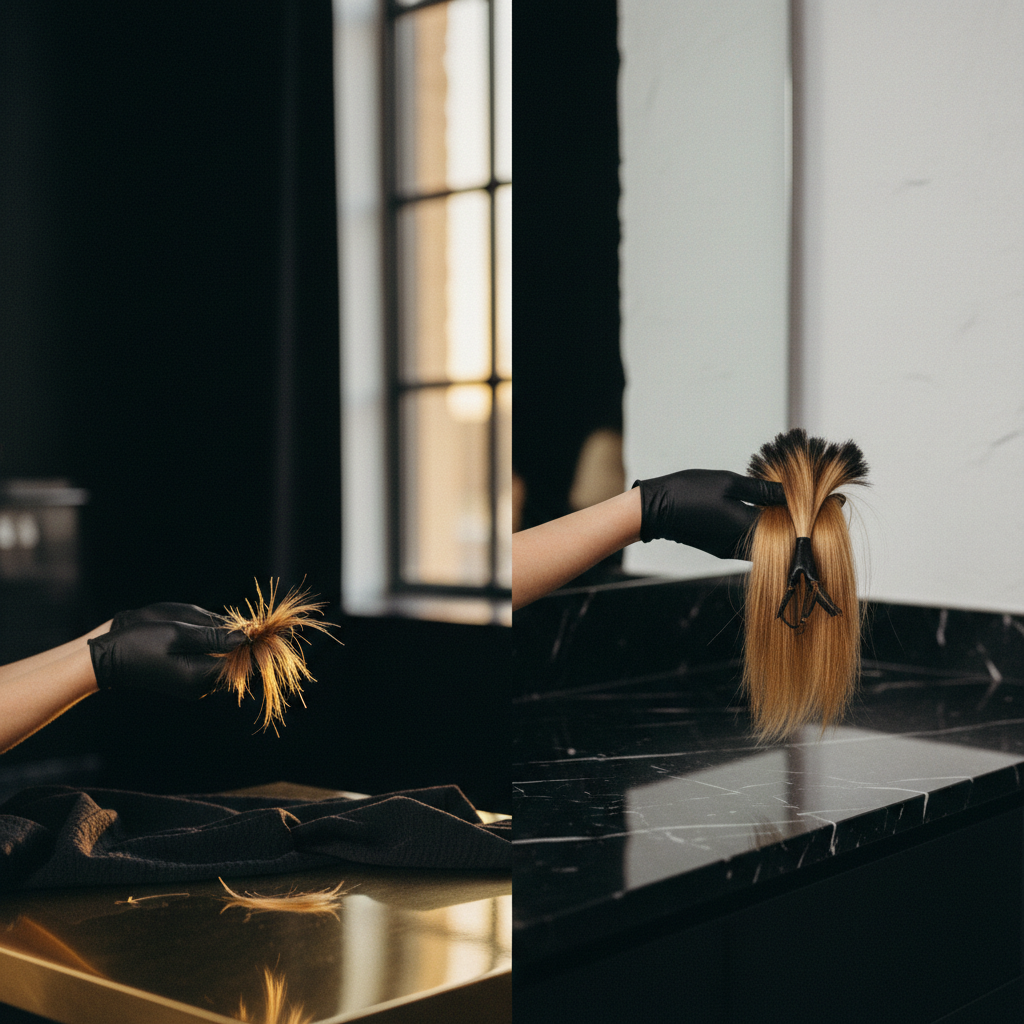
Quick answer: Successfully managing hair breakage vs hair shedding starts with identifying whether your hair fibre is snapping along its shaft or falling directly from the follicle. Shedding presents with a tiny white keratin bulb at the root and reflects the natural hair growth cycle, whereas breakage produces shorter, jagged fragments without bulbs caused by mechanical, thermal, or chemical trauma. While daily shedding of 50 to 100 strands is physiologically normal, managing hair breakage vs hair shedding requires completely different strategies, and neither topical cosmetic can resolve systemic or medical telogen effluvium.
Key takeaways
- Hair shedding originates at the scalp follicle, releasing full-length strands that feature a small, white keratinized bulb at one end.
- Hair breakage is structural fibre failure along the shaft, resulting in uneven lengths, split ends, and fractured strands with no bulb attached.
- Shedding occurs naturally at a rate of 50 to 100 hairs daily, though systemic triggers such as acute stress, thyroid disruption, or nutritional deficits can increase this rate temporarily.
- Breakage stems from mechanical friction, aggressive heat styling, bleaching, chemical relaxers, or moisture-protein imbalance in the hair shaft.
- Cosmetic care, protective styling, and gentle handling resolve hair breakage, whereas persistent excessive shedding requires a clinical evaluation by a GP, dermatologist, or trichologist.
Managing hair breakage vs hair shedding: what the evidence shows
Understanding the difference between shedding and breakage prevents wasted time, misdirected treatments, and unnecessary anxiety. When people notice increased hair in their brush or shower drain, their immediate reaction is often fear of permanent follicular loss. However, clinical studies published in dermatological literature distinguish sharply between telogen shedding (a follicular biological event) and mechanical fibre fracture (a structural material event).
Hair shedding involves the normal biological detachment of club hairs at the conclusion of the telogen phase. Between 85% and 90% of your scalp follicles sit in the anagen (active growth) phase at any given moment, 1% to 2% are in catagen (transition), and roughly 10% to 15% occupy the telogen (resting) phase. Once a new anagen hair begins to emerge underneath, the resting hair detaches and releases through exogen. This yields an average loss of 50 to 100 strands per day across an average scalp bearing 100,000 follicles.
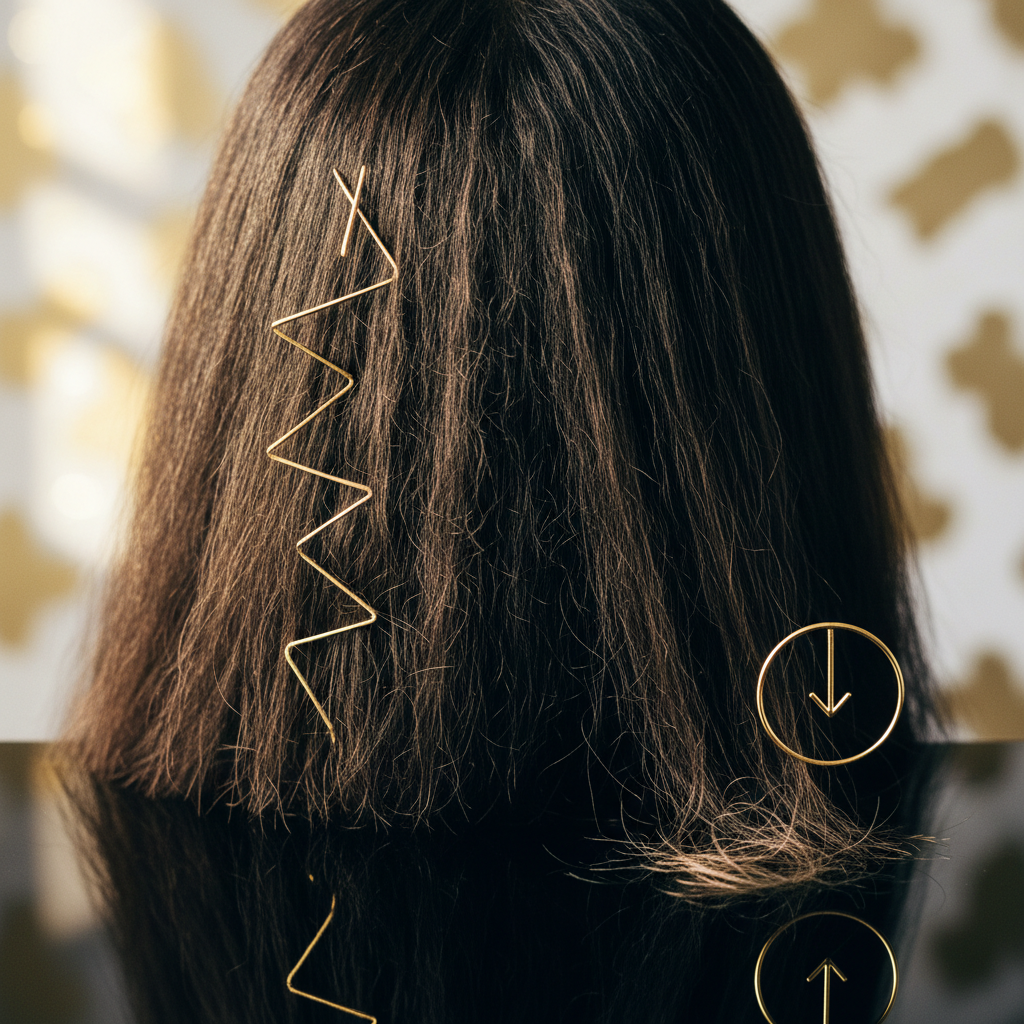
Breakage, on the other hand, is the physical fracture of the hair shaft. Hair fibres are composed of approximately 85% to 90% keratin protein, organized into an outer cuticle, an internal cortex, and a central medulla. The protective cuticle consists of overlapping scales resembling roof tiles. When chemical processing, excessive heat exceeding 180°C, or aggressive dry brushing strips away these protective layers, the internal cortex loses tensile strength. Under tension, the cortex snaps.
| Feature | Hair Shedding | Hair Breakage |
|---|---|---|
| Origin | Follicle (scalp level) | Fibre shaft (any point along the length) |
| Visual indicator | White keratin bulb present at root end | No bulb; blunt, frayed, or jagged ends |
| Strand length | Full length of the hair strand | Short, uneven fragments of varying lengths |
| Primary causes | Hormonal shifts, systemic stress, genetics, telogen cycle | Heat styling, bleach, chemical relaxers, rough brushing |
| Typical daily rate | 50 to 100 hairs per day | Variable; correlates with styling and mechanical manipulation |
| Primary solution | Medical evaluation, balanced nutrition, scalp health support | Bond repair, conditioning, lower heat, gentle handling |
The physiological mechanisms behind both conditions
Shedding occurs within the dermal papilla and follicle. During an acute event such as severe illness, rapid weight loss, high fever, or childbirth, up to 30% to 50% of active anagen hairs can be prematurely pushed into the telogen phase. This state, known clinically as telogen effluvium, becomes noticeable roughly two to three months after the triggering event due to the duration of the resting phase. Because the follicle remains fully intact and undamaged, hairs shed naturally with an intact telogen club, and regrowth typically follows once the physiological trigger resolves.
Breakage operates on mechanical engineering principles. Each hair fibre has an elastic limit. Healthy, hydrated European and Asian hair can stretch by roughly 30% of its dry length before fracturing, while chemically treated or curly and afro-textured hair possesses fewer cuticle layers and sharp curvature points that make it inherently more vulnerable to shear stress. Chemical processes such as bleaching oxidize the disulphide bonds that cross-link keratin chains, permanently weakening structural integrity. When friction from rough towels, unyielding hairbands, or high-temperature ceramic irons exerts force beyond the fibre's remaining tensile capacity, the fibre fractures.
Signs to look for: how to tell them apart
A simple examination of discarded strands reveals the true nature of your hair loss:
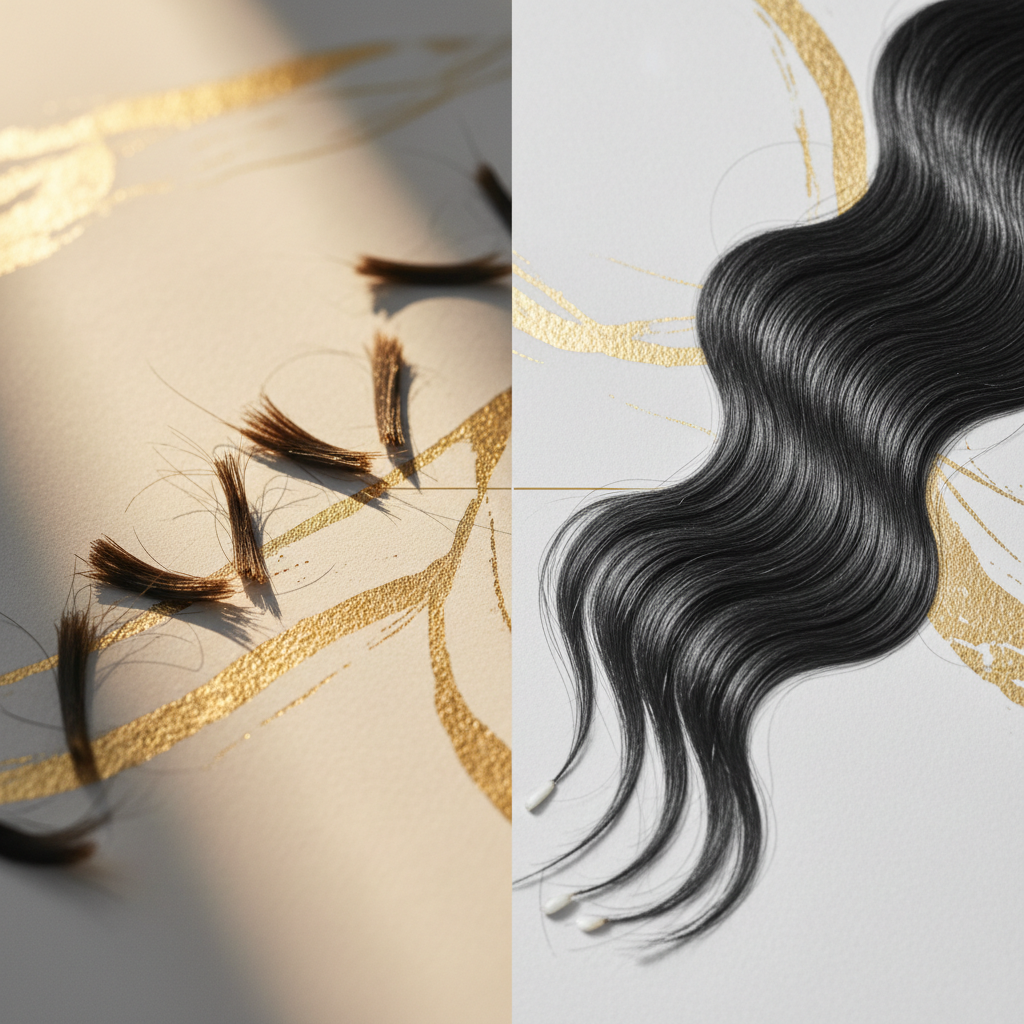
- Check for the bulb: Lay the shed or broken hair onto a contrasting dark or white sheet of paper. Look at both ends. If one end features a distinct, rounded, off-white or translucent bulb, the strand detached cleanly from the follicle. If both ends are tapered, frayed, or abruptly severed, it is breakage.
- Inspect strand lengths: Gather the discarded hair from your sink, brush, or pillowcase. Consistent, full-length strands indicate shedding. An accumulation of tiny, centimetre-long fragments, uneven shards, or split ends points directly to breakage.
- Examine overall volume versus density: Shedding thins your overall density at the scalp level, widening part lines or reducing the circumference of a ponytail near the base. Breakage produces "halo frizz," short flyaways along the crown, thinning ends that look sparse despite dense roots, or broken bangs around the temples.
- Perform the gentle tug test: Gently grasp a group of 40 to 60 strands close to the scalp and pull smoothly through your fingers toward the tips. If four to six full-length hairs slide out easily with visible bulbs, shedding activity is currently elevated. If strands snap midway through with an audible pop or produce short pieces, your fibre integrity is compromised.
Practical strategies for managing hair breakage vs hair shedding
Managing hair breakage vs hair shedding requires distinct regimens tailored to whether the root or the shaft is compromised.
Strategies for managing hair breakage
- Lower your thermal exposure: Keep heated styling tools below 180°C. Above this temperature, keratin denaturation occurs rapidly, and internal moisture vaporizes violently into the cortex, causing bubble hair deformity. Always coat damp hair with a silicone- or polymer-based thermal protectant before using heat.
- Restore fibre lubrication and slip: Conditioners formulated with cetyl alcohol, behentrimonium chloride, and lightweight plant oils reduce surface friction. Reducing the friction coefficient between individual hair strands by just 20% to 30% dramatically cuts down on comb-induced snapping.
- Switch your mechanical habits: Never brush wet hair with a rigid bristle brush; wet hair has a lower yield point and breaks under less strain. Use a wide-tooth comb or flexible wet detangler, working upward from the ends to the roots. Replace abrasive cotton pillowcases with smooth silk or satin to reduce nocturnal friction.
- Use protein and moisture treatments judiciously: Over-processed hair benefits from hydrolyzed wheat, soy, or keratin proteins that temporarily patch fissures in the cuticle layer, followed by humectants such as glycerin to retain elasticity.
Strategies for managing hair shedding
- Assess your systemic health: Because shedding is driven by follicular physiology, audit your blood markers. Request a full panel from your GP, including serum ferritin (iron stores), vitamin D, vitamin B12, and thyroid-stimulating hormone (TSH). Ferritin levels below 40 to 50 ng/mL are frequently associated with diffuse telogen shedding.
- Prioritize scalp care and circulation: A clean, balanced scalp environment free from excess sebum, malassezia overgrowth, or product buildup ensures optimal follicle function. Regular scalp massage stimulates localized blood circulation to the dermal papilla.
- Manage acute stress and diet: Ensure adequate caloric intake with at least 0.8 to 1.2 grams of protein per kilogram of body weight daily. Since hair fibres consist almost entirely of protein, severe dietary restriction prompts the body to triage resources away from non-essential hair synthesis into vital organs.
Supporting hair vitality with targeted care
Cosmetic formulations play a valuable supportive role in keeping the scalp environment primed and reducing mechanical fibre snap. Watermans specializes in haircare solutions designed to address external and surface hair concerns. Watermans Grow Me Shampoo and Condition Me Conditioner work in synergy to clean the scalp gently while depositing fortifying ingredients including biotin, caffeine, rosemary, argan oil, and hydrolyzed lupin protein directly onto the fibre surface.
While topical shampoos cannot cure underlying hormonal or endocrine conditions such as androgenetic alopecia or hypothyroidism, a nutrient-dense, sulphate-free wash system helps prevent unnecessary breakage, improves fibre slip, and leaves hair feeling thicker, stronger, and more resilient during everyday washing and styling.
When to seek medical advice
Consult a GP, dermatologist, or registered trichologist if you notice:
- Sudden, widespread shedding exceeding 150 to 200 strands daily that lasts longer than three months without improvement.
- Distinct circular or patchy bald spots anywhere on the scalp, which may signal alopecia areata or fungal infections like tinea capitis.
- Scalp symptoms such as intense burning, tenderness, itching, redness, or pustules, which can accompany scarring (cicatricial) alopecias.
- Marked widening of the central parting line alongside thinning around the temples, characteristic of female or male pattern hair loss (androgenetic alopecia).
Frequently asked questions about managing hair breakage vs hair shedding
How can I immediately identify if my hair is shedding or breaking?
Look closely at the discarded strand under good light. If you see a tiny white or semi-clear bulb on one tip, the hair has shed naturally from the follicle. If both ends are flat, rough, or split, and the strand is shorter than your normal hair length, you are dealing with fibre breakage.
What is the most critical rule when managing hair breakage vs hair shedding?
The most critical rule when managing hair breakage vs hair shedding is targeting the correct site of damage. You cannot fix shedding at the follicle with deep conditioning masks, nor can you stop heat-induced fibre breakage with internal dietary supplements alone. Address the shaft for breakage and internal scalp health for shedding.
Can severe hair breakage look like hair shedding?
Yes. When extensive breakage occurs near the root or crown, often due to aggressive bleach overlap, tight tension hairstyles, or chemical burns, it can mimic diffuse shedding. However, close trichoscopic inspection will reveal fractured shafts anchored into the scalp rather than empty follicles.
Does brushing stimulate hair growth or cause more breakage?
Gentle brushing redistributes natural sebum and stimulates scalp circulation, but vigorous brushing or 100 strokes a day does not accelerate growth. In fact, excessive dry brushing causes mechanical friction, cuticle wear, and substantial breakage, particularly on fine or chemically treated fibres.
How long does it take for hair shedding to normalise?
If your shedding stems from an acute trigger such as illness or physical stress (telogen effluvium), it typically peaks around two to three months after the event and normalizes within six to nine months, provided the underlying physiological trigger has resolved.
Managing hair breakage vs hair shedding for long-term health
Effectively managing hair breakage vs hair shedding comes down to recognizing the physical evidence your hair leaves behind and taking precise, methodical action. Shedding is a natural biological turnover that warrants patience, balanced nutrition, and medical evaluation when severe. Breakage, by contrast, is a physical cry for help from overworked fibres that requires gentle styling, restorative conditioning, and protective habits. By learning to distinguish between a follicle release and a fibre fracture, you can build a tailored routine that preserves hair length, restores tensile strength, and supports a healthy scalp.
Sources and references
- British Association of Dermatologists. Telogen Effluvium: An Information Leaflet. 2021.
- Robbins, C. R. Chemical and Physical Behavior of Human Hair. 5th ed., Springer, 2012.
- Trüeb, R. M. "The impact of oxidative stress on hair." International Journal of Cosmetic Science, 2015.
- American Academy of Dermatology Association. Hair Shedding vs. Hair Breakage: What Is the Difference? 2022.
- Sinclair, R. "Diffuse hair loss: Its triggers and management." Cleveland Clinic Journal of Medicine, 2010.