Repairing Damaged Hair Cuticles: Evidence-Based Science and Care
9 min read ·
Learn the science of repairing damaged hair cuticles. Discover how to smooth scales, restore lipids, and protect hair fibre from breakage with expert advice.
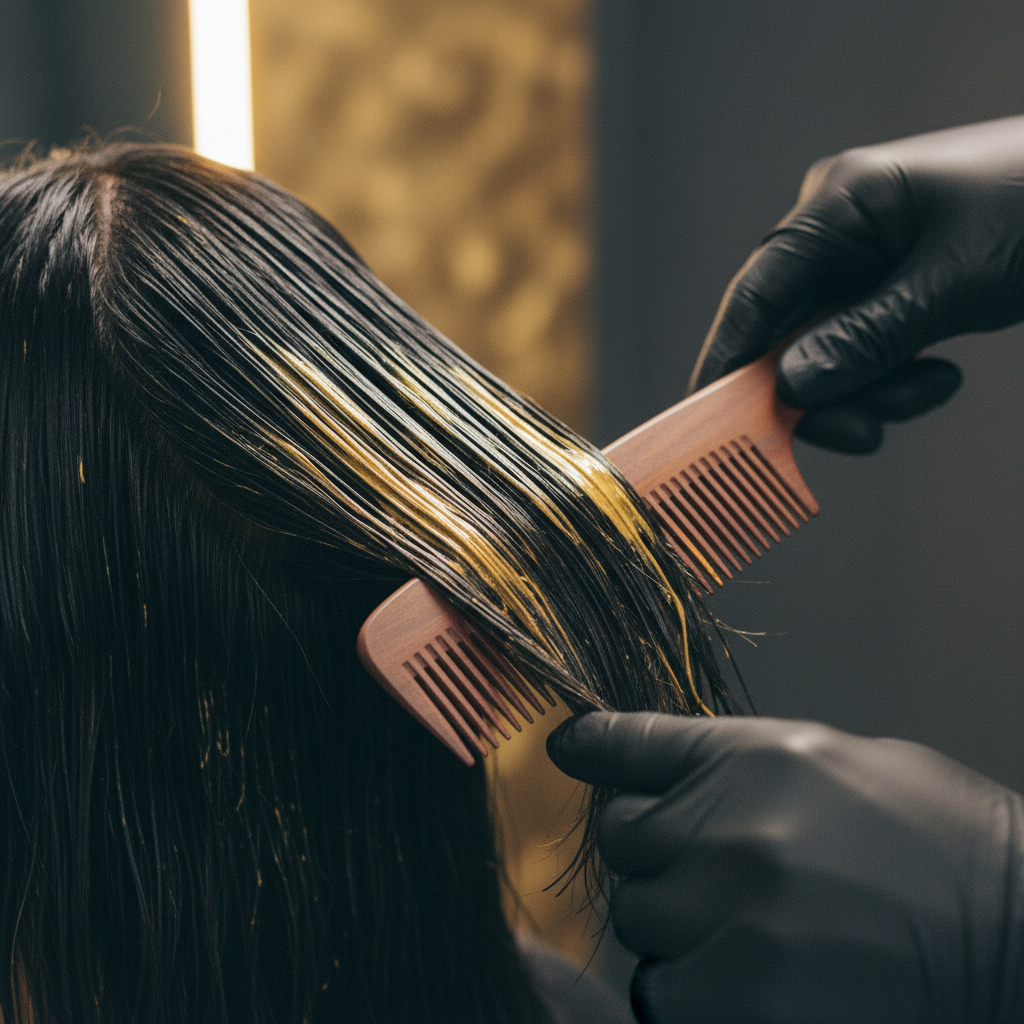
Quick answer: With repairing damaged hair cuticles, genuine biological regeneration is impossible because hair is non-living tissue. Hair cuticles consist of dead, overlapping keratin scales that cannot heal once chipped or stripped. However, you can functionally restore and smooth them using acidic pH formulations, biomimetic lipids like 18-methyleicosanoic acid, hydrolysed proteins, and conditioning agents. These ingredients seal raised edges, reduce porosity, and prevent fibre breakage, effectively mimicking healthy cuticle function until new hair grows.
Key takeaways
- Hair cuticles cannot biologically heal or regenerate because the hair shaft contains no living cells, blood supply, or metabolic activity.
- The cuticle is an overlapping protective shield of 6 to 10 layers of dead keratin scales cemented together by the cell membrane complex.
- Alkaline chemicals, thermal tools above 185°C, and friction physically lift, chip, or strip cuticle scales away.
- Cosmetic products patch and seal lifted cuticles by depositing film formers, hydrolysed proteins, and lipids, restoring hydrophobicity and slip.
- Formulations buffered to an acidic pH (between 3.5 and 5.5) contract the cuticle layer, helping scales lie flatter against the cortex.
- Severe structural damage where the cuticle has completely worn away leaves the cortex exposed, meaning a trim is the only definitive fix for split ends.
Repairing Damaged Hair Cuticles: what the evidence shows
Understanding the reality of repairing damaged hair cuticles requires separating marketing claims from cosmetic chemistry and trichology. Peer-reviewed research confirms that cosmetic treatments can significantly improve the mechanical strength, surface smoothness, and hydrophobic properties of damaged cuticles. They do not, however, revive or biologically rebuild the dead keratin architecture.
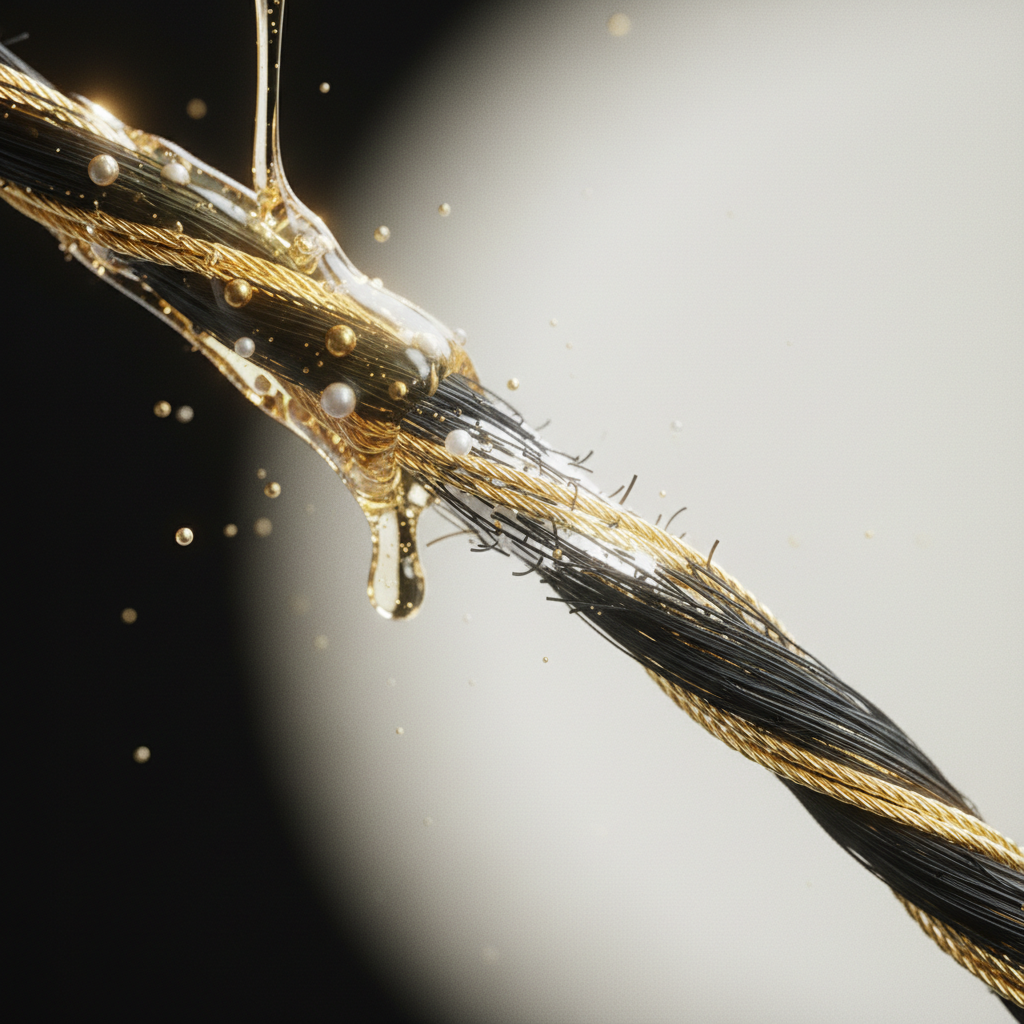
When cuticle scales lift, the hair fibre loses its natural protective lipid coating, primarily 18-methyleicosanoic acid (18-MEA). This loss turns the fibre from hydrophobic (water-repelling) to hydrophilic (water-absorbing). Damaged hair absorbs excess moisture, swells unevenly, and tangles readily.
Studies show that treatments containing cationic surfactants (such as behentrimonium chloride), hydrolysed proteins, and functional silicones electrostatically bind to the negatively charged, damaged sites on the cuticle. These ingredients form a temporary protective sheath, effectively sealing the open edges of the scales. The result is a marked reduction in combing friction (often by over 50%), reduced moisture loss from the cortex, and an immediate visual improvement in shine.
The anatomy of the hair cuticle and how damage occurs
The hair cuticle forms the outermost protective barrier of the hair shaft. It consists of 6 to 10 layers of flattened, overlapping cells arranged like shingles on a roof or scales on a pinecone. Each cuticle cell is roughly 0.3 to 0.5 micrometres thick and points towards the tip of the hair fibre.
Cuticle cells are composed of three distinct sub-layers beneath an outer lipid film:
- The Epicuticle: A thin, hydrophobic membrane covered by a monolayer of fatty acids, predominantly 18-MEA, which repels water and provides natural lubricity.
- The Exocuticle: A layer rich in cystine (roughly 30% of the total cuticle protein content), making it highly cross-linked, rigid, and resistant to physical wear.
- The Endocuticle: An inner layer with very low cystine content (around 3%), making it soft and prone to swelling when water penetrates the fibre.
Between each overlapping cell lies the cell membrane complex (CMC), a lipid-protein mortar that glues the scales together. Cuticle damage occurs when external stresses compromise this structure:
- Chemical damage: Bleaching, permanent dyeing, and chemical relaxers raise the cuticle by introducing alkaline agents (pH 9.0 to 11.0). This process strips the 18-MEA layer, dissolves the CMC lipids, and oxidises disulphide bonds, leaving the scales permanently flared or broken.
- Thermal damage: Heat styling tools operating above 185°C degrade keratin proteins and boil residual moisture within the fibre, leading to cuticle blistering and cracking.
- Mechanical damage: Aggressive brushing, backcombing, and rough towel drying physically chip away the brittle edges of lifted cuticle scales.
- Environmental damage: Ultraviolet (UV) radiation oxidises cystine in the exocuticle, while hard water minerals deposit calcium and magnesium complexes on the surface, increasing roughness and friction.
Signs that your hair cuticles are compromised
You can often identify cuticle weathering before it progresses to visible breakage. Look for these hallmark signs:
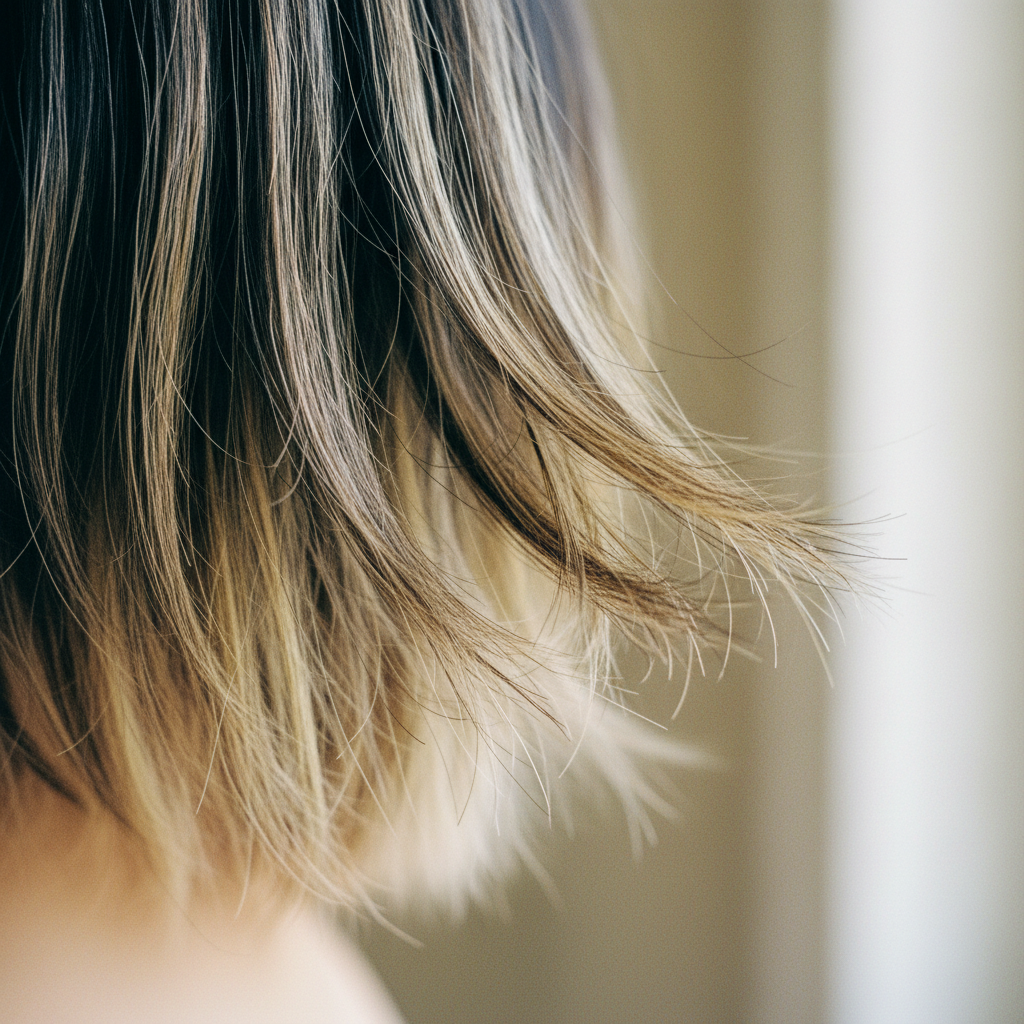
- High porosity and rapid drying: The hair absorbs water instantly in the shower but loses it just as quickly, drying out into a rough, straw-like texture.
- Persistent tangling and matting: When cuticle scales lift, adjacent hair strands snag on one another like Velcro, leading to severe friction knots.
- Dullness and lack of shine: A smooth cuticle acts like a flat mirror, reflecting light evenly. Lifted, jagged cuticle edges scatter light in all directions, making the hair look matte and lacklustre.
- Frizz in humid environments: Because damaged cuticles lack a protective lipid seal, atmospheric humidity penetrates directly into the cortex. This causes the endocuticle to swell and warps the hair shaft into frizz.
- Rough texture: Running your fingers from the ends towards the roots creates noticeable resistance, squeaking, or coarseness.
How to restore and seal damaged hair cuticles
While biological repair cannot happen, you can implement targeted steps to smooth, seal, and protect existing cuticle layers.
+-------------------+-------------------------------+-----------------------------------+
| Damage Level | Cuticle Condition | Recommended Interventions |
+-------------------+-------------------------------+-----------------------------------+
| Mild (Weathering) | Scales slightly raised; minor | Acidic rinses (pH 4.0 to 5.0), |
| | loss of 18-MEA surface lipid. | light leave-in conditioners. |
+-------------------+-------------------------------+-----------------------------------+
| Moderate | Scales chipped; edges curled; | Hydrolysed wheat or keratin |
| (Heat / Colour) | CMC partially depleted. | proteins, lipid masks, silicones. |
+-------------------+-------------------------------+-----------------------------------+
| Severe | Entire cuticle sections gone; | Bond-building treatments, deep |
| (Bleach / Relax) | cortex exposed and frayed. | conditioning, dusting / trimming. |
+-------------------+-------------------------------+-----------------------------------+
1. Maintain an acidic pH
The natural isoelectric point of human hair sits at roughly pH 3.67, while the scalp maintains a pH around 5.5. Alkaline shampoos cause the hair cuticle to swell and open. Using shampoos, conditioners, and leave-in formulas buffered to an acidic pH (between 3.5 and 5.5) neutralises static charges, contracts the cuticle layer, and helps the scales lie flat against the cortex.
2. Replenish lipids and conditioning agents
Because chemical and heat processing permanently removes the native 18-MEA lipid layer, replacing it with synthetic or plant-derived emollients is essential. Cationic conditioning agents, such as cetrimonium chloride, adhere strongly to the negative charges of damaged cuticle sites. Plant oils rich in monounsaturated fats, such as argan or jojoba oil, lubricate the outer layer and reduce inter-fibre friction.
3. Use low-molecular-weight hydrolysed proteins
Standard proteins are too large to interact with the hair structure. Hydrolysed proteins (with molecular weights between 500 and 2,000 Daltons), derived from wheat, silk, or keratin, can slip beneath lifted scales. They temporarily fill micro-voids in the endocuticle and cross-link with existing keratin fragments, smoothing the surface and boosting tensile resilience.
4. Minimise mechanical stress during wet styling
Hair swells and weakens by up to 30% when wet because water temporarily breaks weak hydrogen bonds. Never aggressively rub wet hair with a standard terrycloth towel, which acts like sandpaper against swollen cuticles. Instead, gently squeeze excess moisture out using a microfibre towel or cotton T-shirt, and detangle using a wide-tooth comb working upwards from ends to roots.
5. Control thermal exposure
Keep styling irons below 185°C. Always apply a film-forming heat protectant beforehand; ingredients such as polyquaterniums and dimethicone spread heat evenly across the shaft and form a sacrificial barrier that shields the fragile cuticle from scorching.
Supporting overall hair quality with Watermans
Cosmetic cuticle sealing manages the existing fibre, but long-term hair quality starts at the scalp where new hair is synthesised. Products from Watermans support a healthy environment for emerging hair growth. Formulated with hydrolysed lupin protein, biotin, caffeine, and rosemary extract, Watermans blends promote vitality at the follicle level while delivering conditioning agents that smooth and protect the hair fibre against everyday styling friction.
When the issue is not cuticle damage
It is vital to distinguish surface cuticle damage from internal cortex failure or genuine scalp disorders:
- Cortex breakage: If individual strands snap easily during light tension without stretching, the internal disulphide bonds within the cortex are degraded, not just the outer cuticle scales.
- Telogen effluvium: Finding full-length hairs on your pillow or in the shower drain with a tiny white bulb attached indicates hair shedding from the follicle, not cuticle damage or fibre breakage.
- Trichorrhexis nodosa: This condition involves swollen, fragile nodes along the hair shaft where the cuticle has vanished entirely, leaving exposed cortical fibres that look like two paintbrushes pushed together. It requires professional diagnosis from a trichologist or dermatologist.
Frequently asked questions about Repairing Damaged Hair Cuticles
Can products permanently repair damaged hair cuticles?
No, cosmetic products cannot permanently mend hair cuticles. Because hair contains no living cells, it cannot produce new tissue or undergo biological repair. Treatments work by coating, filling, and smoothing the lifted scales using lipids, polymers, and proteins. These wash out over time and must be reapplied regularly to maintain smooth, manageable hair.
What is the fastest way to smooth raised hair cuticles at home?
The fastest way to smooth raised cuticles is to wash with a sulphate-free shampoo, apply a [deep conditioner](https://watermanshair.com/products/masque-me-luxurious-hair-mask) formulated at an acidic pH (around 4.0 to 4.5), and finish with a cold water rinse or acidic leave-in spray. The acidic environment helps contract the cuticle scales, while conditioning agents lubricate the surface to reduce friction.
Can split ends be healed by repairing damaged hair cuticles?
No product can reattach or heal split ends. A split end occurs when the protective cuticle layers have completely worn away, allowing the internal cortex fibres to unravel and separate. While serums can temporarily glue the split fibres together until your next wash, the only definitive solution is to trim the damaged ends away.
Does hard water damage hair cuticles?
Yes. Hard water contains dissolved calcium and magnesium ions that bind to the hair shaft, forming an insoluble film on top of the cuticle. This mineral buildup prevents moisture from penetrating, makes the scales rough and brittle, and increases mechanical friction during brushing, which gradually strips the cuticle layers away.
Does cold water really close hair cuticles?
Cold water has a very modest physical effect compared to pH balance. While a cool rinse can help slightly contract the cuticle and firm up conditioning agents deposited on the shaft, it cannot overcome the cuticle-swelling effects of an alkaline shampoo. Using an acidic product is vastly more effective for closing cuticles than water temperature alone.
Summary
The journey of repairing damaged hair cuticles is an ongoing management strategy rather than a one-time cure. Because hair lacks metabolic activity, broken or absent cuticle scales cannot regenerate. However, through thoughtful haircare, relying on acidic pH balancing, biomimetic lipids, protective conditioning agents, and gentle handling, you can restore surface slip, defend the inner cortex from structural failure, and keep your hair looking smooth, glossy, and resilient.
Sources and references
- Robbins, C. R. (2012). Chemical and Physical Behavior of Human Hair. 5th ed. Springer-Verlag New York.
- Dawber, R. (1996). Hair: its structure and response to cosmetic preparations. Clinics in Dermatology, 14(1), 105-112.
- Gavazzoni Dias, M. F. (2015). Hair cosmetics: an overview. International Journal of Trichology, 7(1), 2-15.
- Swift, J. A. (1999). The mechanics of fracture of human hair. International Journal of Cosmetic Science, 21(4), 227-239.
- D'Souza, P., & Rathi, S. K. (2015). Shampoo and conditioners: What a dermatologist should know? Indian Journal of Dermatology, 60(3), 248-254.