Preventing Mechanical Hair Damage: The Complete Evidence-Based Guide
9 min read ·
Discover evidence-based strategies for preventing mechanical hair damage, reducing detangling friction, and stopping avoidable breakage along the hair shaft.
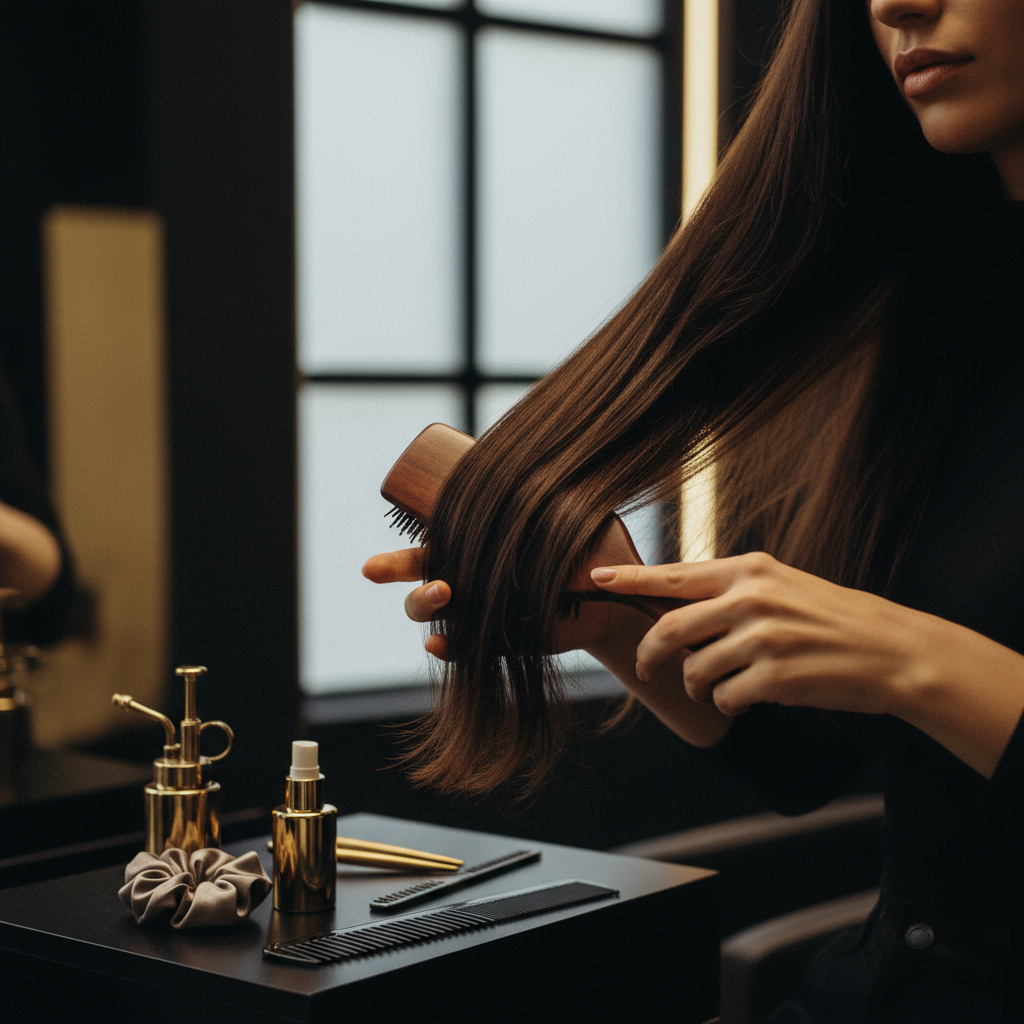
Quick answer: Preventing mechanical hair damage requires minimising physical friction, tension, and shear forces that wear away the protective outer cuticle. True mechanical damage occurs during aggressive brushing, tight styling, rough towel drying, and nighttime friction, leading to fibre breakage rather than root-level hair loss. Effective protection relies on wide-tooth detangling, lubricative conditioners, gentle silk or satin sleep surfaces, and tension-free hairstyles. However, once a hair shaft splits or snaps completely, cosmetic products cannot rebuild the broken structure; prevention remains the only permanent defence.
Key takeaways
- Mechanical hair damage is physical wear and tear caused by friction, detangling, and styling tension.
- Hair fibres are weakest when wet because hydrogen bonds break, making damp hair roughly 30 to 50 percent more elastic but far easier to stretch past its breaking point.
- Breakage is not follicular shedding; mechanical stress snaps the mid-lengths and ends without altering root growth cycles.
- Lowering interfacial friction with leave-in conditioning agents and wide-tooth combs provides the highest level of mechanical defence.
- Physical damage is cumulative and permanent because the hair shaft contains non-living keratinised tissue that cannot biologically self-repair.
Preventing Mechanical Hair Damage: what the evidence shows
Preventing mechanical hair damage focuses on preserving the integrity of the epicuticle and the 6 to 10 overlapping layers of flat cuticle cells that seal the hair cortex. The outermost lipid layer, primarily composed of 18-methyleicosanoic acid (18-MEA), provides a naturally hydrophobic, low-friction shield.
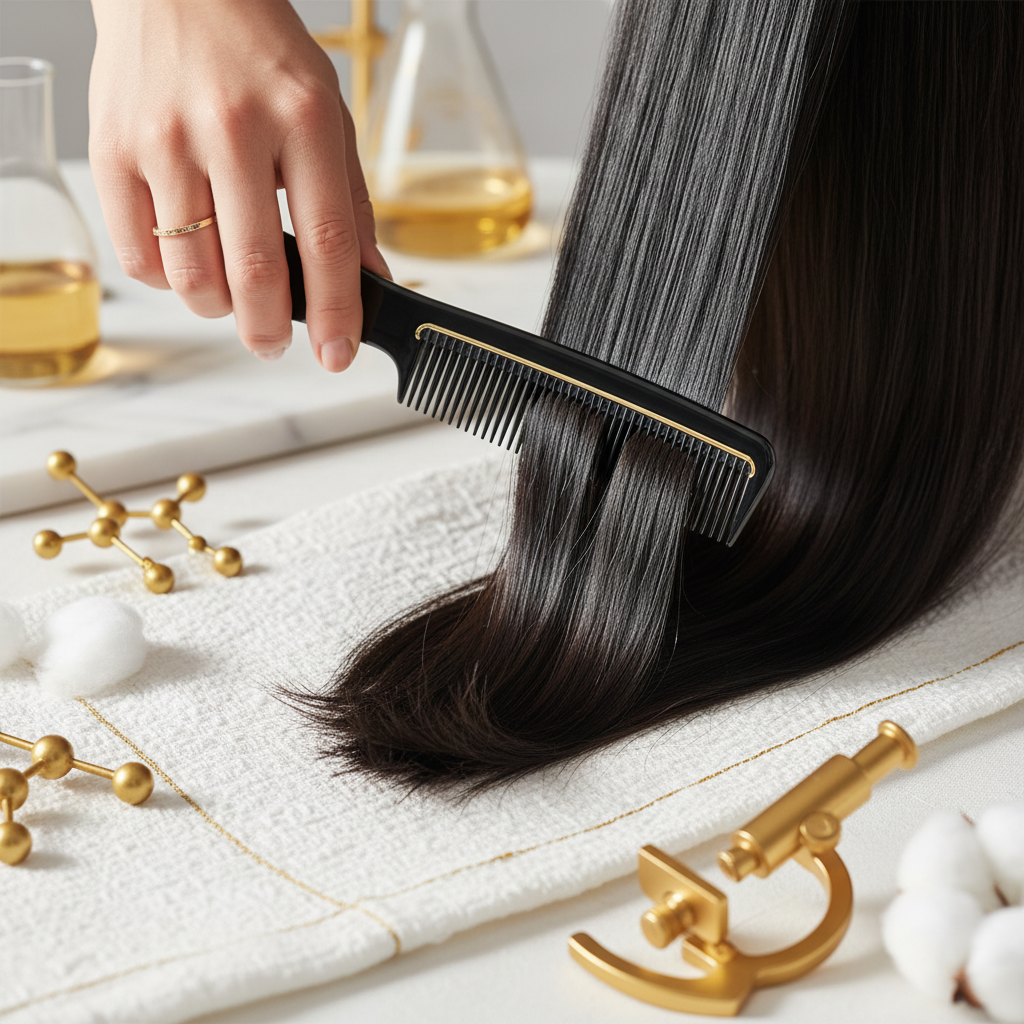
Cosmetic science demonstrates that repeated combing, brushing, backcombing, and friction strip this delicate lipid film. When the cuticle scales lift or break off, the interior cortex becomes exposed. Without the protective cuticle sheath, moisture escapes, cortical microfibrils unravel, and the hair fibre fractures under everyday tensile loads.
Research published in cosmetic and dermatological literature shows that wet hair behaves fundamentally differently from dry hair under physical strain. Water penetrates the porous cuticle and breaks the temporary hydrogen bonds between keratin chains. While wet hair can stretch up to 30 percent beyond its resting length without immediate failure, its yield point drops significantly. Aggressive brushing while wet places high tensile stress on swollen fibres, causing plastic deformation where the hair permanently stretches, thins, and snaps.
Lubrication dramatically alters this dynamic. Formulations containing cationic surfactants, silicones, and plant-derived lipids deposit a micro-thin slip across the fibre surface. This reduces the combing force (the mechanical energy required to pass an implement through a tress) by upwards of 50 to 80 percent, effectively preventing the snagging that causes structural fractures.
What the evidence does not show
Controlled research does not support the idea that mechanical trauma triggers androgenetic alopecia or changes the natural hair growth cycle at the follicle level, provided the tension does not reach the threshold of chronic traction. Snapped fibres discovered in brushes or sinks are frequently misidentified as excessive shedding. A simple visual inspection reveals the difference: shed hairs feature a tiny white keratin bulb at the root, whereas mechanically damaged hairs show blunt, frayed, or fractured ends without a bulb.
Furthermore, no scientific evidence demonstrates that conditioners, oils, or bond-building cosmetic treatments can knit a severed hair shaft back together. While conditioning agents temporarily glue split ends together via surface adhesion until the next wash, they do not restore the original tensile strength of virgin keratin. Mechanical prevention must occur before the structural fracture takes place.
The physical mechanisms of fibre wear
Mechanical stress degrades hair through three primary mechanisms:
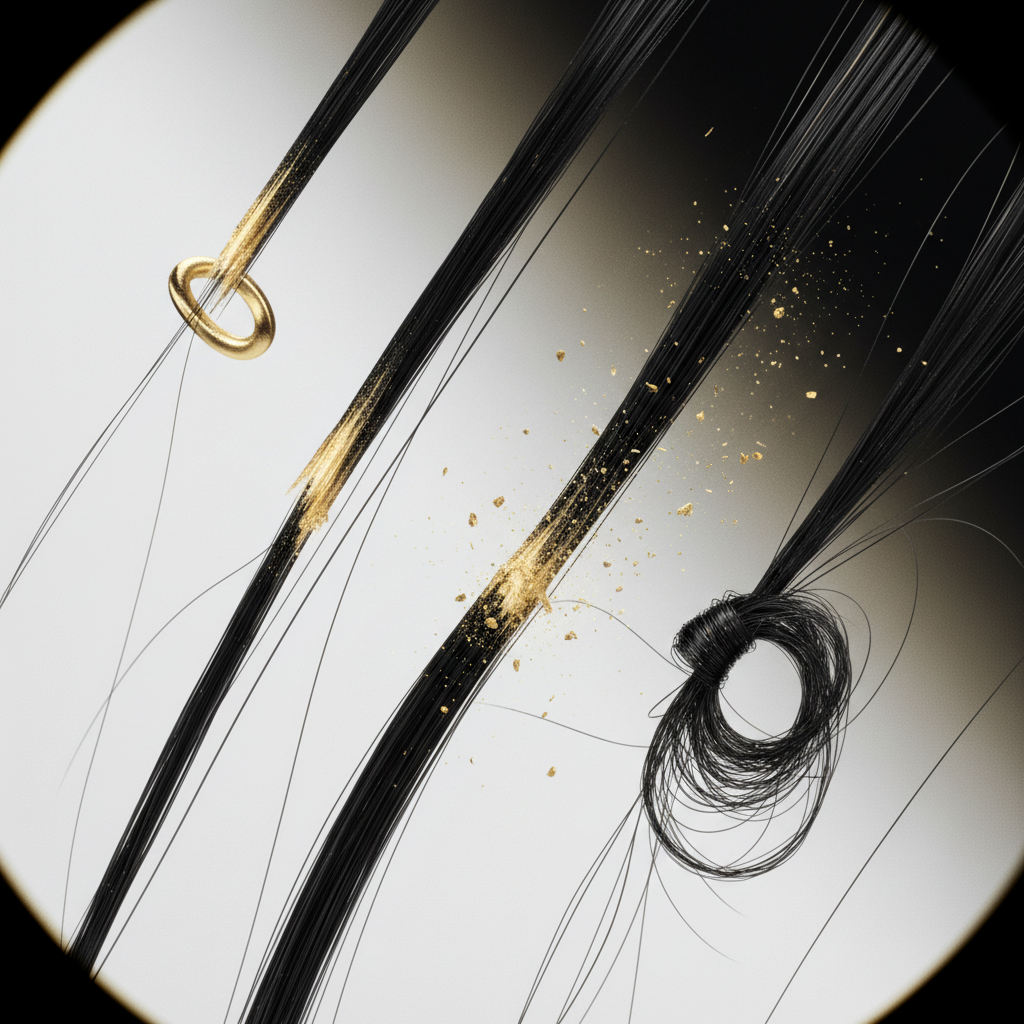
- Abrasive friction: Dry brushing, friction against rough cotton pillowcases, and vigorous rubbing with terry-cloth towels abrade the edges of cuticle scales. Over time, this constant abrasion chips away the margins of the scales, leaving jagged edges that catch easily on neighbouring strands.
- Excessive tensile strain: Pulling, snatching through knots, and wearing high-tension hairstyles (such as tight ponytails, braids, or extensions) exceed the yield point of the hair shaft. Once the strain passes the elastic limit of the keratin cortex, structural micro-fractures develop.
- Shear stress: Forcing fine-toothed bristles or metal edges across knotted hair applies a shearing action. This lateral force shears off entire chunks of the cuticle layer, accelerating the onset of trichoptilosis (longitudinal splitting) and trichorrhexis nodosa (node-like weak points that snap cleanly).
Signs of mechanical stress to look for
Identifying physical wear early allows you to alter your routine before extensive fibre loss occurs:
- Uneven, frayed lengths: Hemlines that look thin, sparse, or ragged despite consistent root growth.
- Short snapped pieces: Small fragments of hair littering your sink, shoulders, or clothes after detangling, lacking a root bulb.
- Persistent fairy knots (trichonodosis): Single-strand knots that form primarily on fine, curly, or coily hair when rough cuticles snag around each other.
- Extreme wet tangling: Hair that instantly mats or feels velcro-like when wet, indicating severe cuticle erosion and exposed, high-friction cortical surfaces.
- White bulb-free specks: Tiny white dots visible along the mid-lengths, marking localized crush injuries (trichorrhexis nodosa) where the fibre is about to snap.
Mechanical damage vs chemical and heat damage
Understanding how mechanical stress interacts with other hair threats helps pinpoint the root cause of breakage.
| Feature | Mechanical Damage | Chemical Damage | Heat Damage |
|---|---|---|---|
| Primary Cause | Brushing, friction, tight styling, towels | Bleach, permanent colour, relaxers, perms | Flat irons, curling wands, high-heat dryers |
| Microscopic Effect | Chipped, abraded cuticles; broken ends | Dissolved 18-MEA; oxidised disulphide bonds | Melted keratin matrix; cortical bubble formation |
| Fibre Behaviour | Snaps under tension; persistent tangles | Spongy when wet; gummy, high porosity | Brittle, dry, permanently altered curl pattern |
| Primary Location | Ends, friction points (nape, crown) | All treated lengths uniformly | Mid-lengths to ends, styling contact zones |
| Core Solution | Slip, wide-tooth tools, low-tension wear | Protein treatments, pH-balancing care | Thermal protectants, lower tool temperatures |
Practical steps for reducing mechanical stress
Adopting proactive, low-friction habits protects the hair shaft throughout its multi-year lifespan:
Detangle with deliberate slip
Never drag a brush through dry, product-free hair that is prone to knots. For straight to wavy patterns, gently detangle dry hair using a wide-tooth comb or flexible-bristle brush, starting at the bottom 2 inches and working upward in sections. For curly and coily patterns, detangle exclusively when the hair is saturated with a slippery conditioner during washing. The slip lowers surface resistance and prevents sudden snapping.
Switch to low-friction materials
Standard cotton pillowcases absorb moisture and present a microscopically abrasive surface that tugs on fibres throughout the night. Sleeping on silk or satin pillowcases (or wrapping hair in a satin bonnet) allows strands to glide smoothly. Replace coarse, looped terry-cloth bath towels with smooth microfibre wraps or soft cotton T-shirts, pressing moisture out gently rather than scrubbing the lengths.
Manage styling tension
Avoid hairstyles that pull tightly on the scalp or place continuous use on the same section of the shaft. Rotate ponytail placements, choose seamless fabric hairbands instead of elastic bands with metal clasps, and avoid wearing tight protective styles for longer than 6 to 8 weeks.
Keep ends trimmed regularly
Split ends will naturally unzip further up the hair shaft if left unaddressed. Trimming every 8 to 12 weeks removes damaged terminal ends before they split upward, reducing the overall tangling that triggers further combing trauma.
Supporting hair health with Watermans
While physical handling techniques are the cornerstone of protecting hair from friction, keeping hair fibres nourished and resilient makes everyday styling less hazardous.
Watermans focuses on non-invasive cosmetic care that promotes an optimal scalp environment and soft, manageable hair. Watermans GrowMe Shampoo cleanses the scalp gently without stripping away the essential surface lipids that keep strands supple. Pairing this with Watermans ConditionMe Conditioner infuses the hair lengths with hydrolysed lupin protein, cholesterol, and essential fatty acids. These conditioning agents smooth down lifted cuticle scales, creating a lubricating barrier that directly reduces combing friction and protects delicate ends from mechanical snapping.
When the cause may be something else
If you observe shedding from the scalp rather than mid-shaft snapping, physical styling is unlikely to be the primary cause. A typical scalp sheds between 50 and 100 telogen hairs each day. If shedding suddenly increases to hundreds of hairs per day across the entire scalp, this points toward telogen effluvium, often triggered by systemic illness, rapid weight loss, high psychological stress, or thyroid fluctuations.
Similarly, if hair thinning follows a distinct pattern (widening of the central parting in women or recession at the temples and vertex in men), this indicates androgenetic alopecia, which is driven by genetics and dihydrotestosterone (DHT) rather than physical friction.
When to seek professional advice
Consult a qualified trichologist or dermatologist if you notice:
- Distinct patches of bare skin or inflammation on the scalp.
- Persistent pain, tenderness, redness, or pustules around hair follicles, which may signal traction alopecia from chronic styling tension.
- Sudden, massive shedding at the root level lasting longer than three months.
- Extreme, spontaneous breakage that occurs despite gentle handling, which can indicate structural hair shaft disorders such as trichothiodystrophy or monilethrix.
Frequently asked questions about Preventing Mechanical Hair Damage
What is the single most effective step for preventing mechanical hair damage?
The most effective step is applying a quality conditioner or leave-in slip before detangling, paired with a wide-tooth comb. Lubricating the surface cuticles reduces mechanical friction and combing force significantly, allowing knots to unravel without the physical snapping that breaks dry or unconditioned fibres.
Is it better to brush hair wet or dry to avoid damage?
For straight and wavy textures, gently detangling when dry (or slightly damp with a leave-in conditioner) is safer because wet keratin is more prone to over-stretching. For curly and afro-textured hair, detangling should only occur while hair is wet and coated with a rich, slippery conditioner, as dry brushing creates severe friction and fractures curl bundles.
Can silk pillowcases really reduce mechanical breakage?
Yes. Silk and high-grade satin fabrics possess a smoother weave with significantly lower friction coefficients than standard woven cotton. As you move during sleep, your hair glides across silk rather than snagging against cotton fibres, substantially reducing nighttime friction, cuticle chipping, and morning knots.
How do I know if my hair is shedding or breaking mechanically?
Check the ends of the fallen strands. A naturally shed hair features a small, white bulb at its base, showing it completed its telogen cycle and detached from the follicle. A mechanically broken hair has blunt, split, or frayed ends and lacks any root bulb, indicating it snapped along the shaft.
Summary
Preventing mechanical hair damage is fundamentally an exercise in physics: reducing the friction, shear, and tension exerted on non-living keratin fibres. Because the hair shaft cannot biologically repair itself once fractured, preserving the external cuticle requires deliberate daily practices. Gentle detangling methods, slippery conditioning agents, low-friction fabrics, and sensible styling habits protect the structural integrity of your lengths, allowing your hair to grow longer, stronger, and noticeably smoother over time.
Sources and references
- British Association of Dermatologists. Hair Breakage and Shaft Abnormalities. (2021). Bad.org.uk
- Robbins, C. R. Chemical and Physical Behavior of Human Hair. 5th Edition, Springer-Verlag. (2012).
- Dawber, R. Hair and Scalp Disorders: Common Presenting Signs, Differential Diagnosis and Management. Dermatologic Clinics. (2001).
- Swift, J. A. The mechanics of human hair: the physical basis of hair handling. International Journal of Cosmetic Science. (1999).
- Evans, T. A. Measuring hair damage. Practical Modern Hair Science, Allured Publishing. (2012).