Understanding Traction Alopecia: Clinical Causes, Stages, and Prevention
9 min read ·
Understanding Traction Alopecia: explore the mechanical causes, early warning signs, clinical stages, and evidence-based ways to prevent permanent follicular scarring.

Quick answer: Understanding Traction Alopecia begins with recognising that it is a mechanical, preventable form of hair loss caused by prolonged, repetitive pulling forces on the hair follicle. Frequently triggered by tight hairstyles such as braids, weaves, slick ponytails, and heavy extensions, it causes localised inflammation that can progress from reversible thinning to permanent scarring alopecia. The primary limitation is time: if caught early, hair follicles usually recover completely, but late-stage fibrotic scarring destroys the follicle permanently, preventing natural regrowth.
Key takeaways
- Mechanical tension, not genetic predisposition or hormonal imbalance, serves as the direct trigger for traction alopecia.
- Early signs include scalp tenderness, redness, bumps (traction folliculitis), and short broken hairs along the hairline.
- The condition is fully reversible in its early stages if tension is removed promptly.
- Chronic, unaddressed tension causes follicular miniaturisation and permanent scarring (fibrosis), after which hair cannot regrow naturally.
- Combining chemical relaxers or heat styling with high-tension hairstyles dramatically accelerates follicular and structural damage.
- Cosmetic products can support scalp health and fibre strength, but they cannot reverse end-stage scarred follicles.
Understanding Traction Alopecia: what the evidence shows
Understanding Traction Alopecia requires looking at epidemiological and clinical dermatological research. First formally described in the early 20th century among women in Greenland who wore tight traditional topknots, the condition is now recognised globally. Clinical studies published in journals such as the British Journal of Dermatology and the Journal of the American Academy of Dermatology confirm that sustained mechanical load induces micro-trauma at the follicular base.
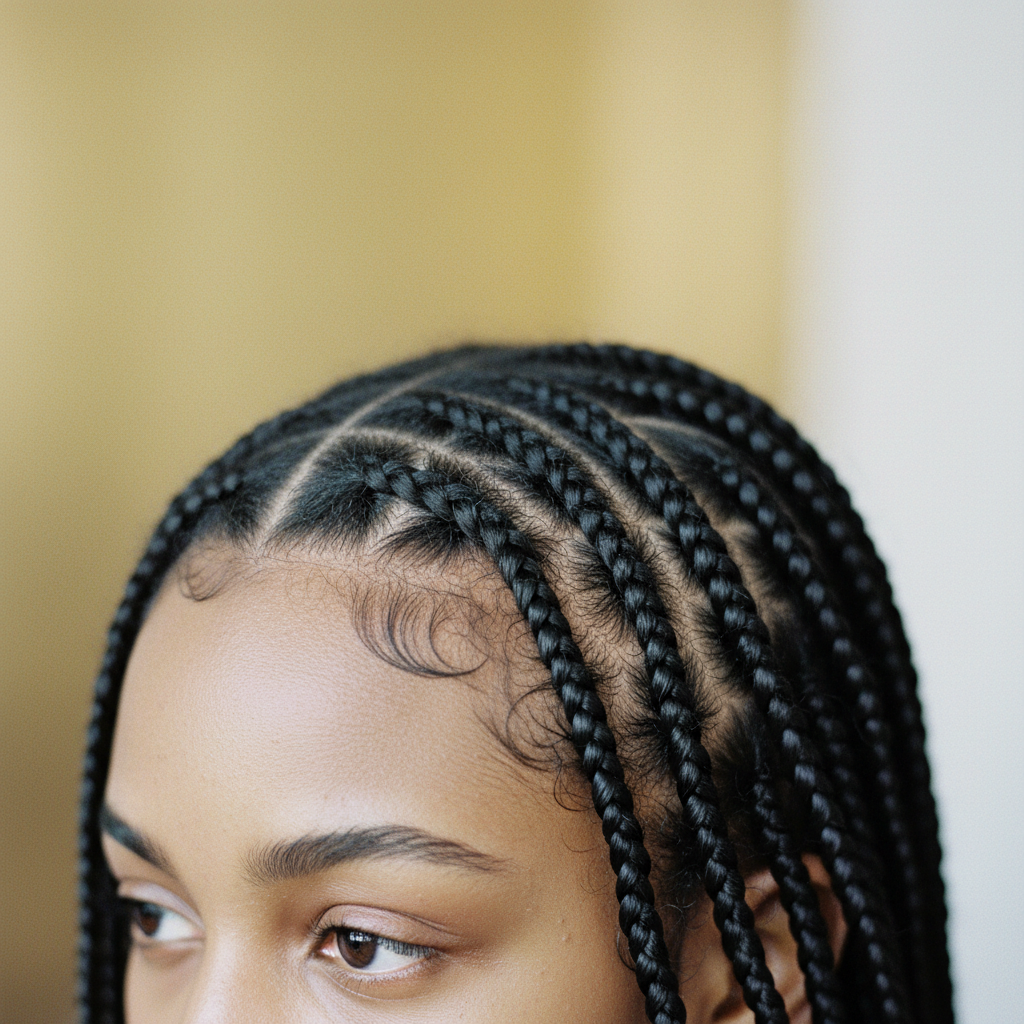
Research demonstrates that mechanical strain is the sole necessary driver, though external factors modify risk. When hair is pulled taut for weeks or months, the outer root sheath separates from the follicular wall, and the dermal papilla experiences ischaemia (restricted blood flow). While traction alopecia can affect anyone regardless of background, observational studies show higher prevalence rates among individuals who regularly wear tight protective styles, including box braids, cornrows, dreadlocks, chignons, and bonded hair extensions.
Clinical data also highlights a significant compounding factor: the use of chemical relaxers. Relaxers break the disulphide bonds within the hair fibre to alter curl patterns, reducing the tensile strength of the hair shaft by up to 30 to 50 percent. When chemically weakened hair is subsequently placed under mechanical tension, the rate of both shaft breakage and follicular extraction increases significantly.
The biological mechanism: how tension damages the follicle
The hair follicle is a delicate mini-organ anchored in the dermis. Under normal circumstances, it cycles through anagen (growth), catagen (regression), and telogen (resting) phases without physical disturbance.
When external pulling forces exceed the physiological tolerance of the follicle, a clear pathological sequence occurs:
- Perifollicular inflammation: Chronic mechanical strain causes micro-tears around the follicular infundibulum. The body mounts an inflammatory response, visible on the scalp surface as redness and tiny pustules or papules, termed traction folliculitis.
- Premature catagen induction: Mechanical stress shocks anagen hair follicles, forcing them prematurely into the catagen regression phase. The hair bulb detaches early from its dermal blood supply.
- Follicular miniaturisation: If tension persists across multiple hair cycles, the dermal papilla shrinks. Subsequent hair shafts emerge finer, shorter, and with reduced pigmentation.
- Permanent fibrosis: In late-stage disease, chronic inflammation triggers collagen deposition around the follicle. The sebaceous gland and follicular stem cell niche in the bulge area are gradually replaced by scar tissue. Once fibrotic obliteration occurs, the follicular ostium (pore) closes, resulting in permanent, irreversible alopecia.
Recognising the signs: early vs late stage
Catching the condition early makes the difference between complete recovery and permanent hair loss. Clinicians divide traction alopecia into early (non-marginal and marginal reversible) and late (scarring and irreversible) stages.
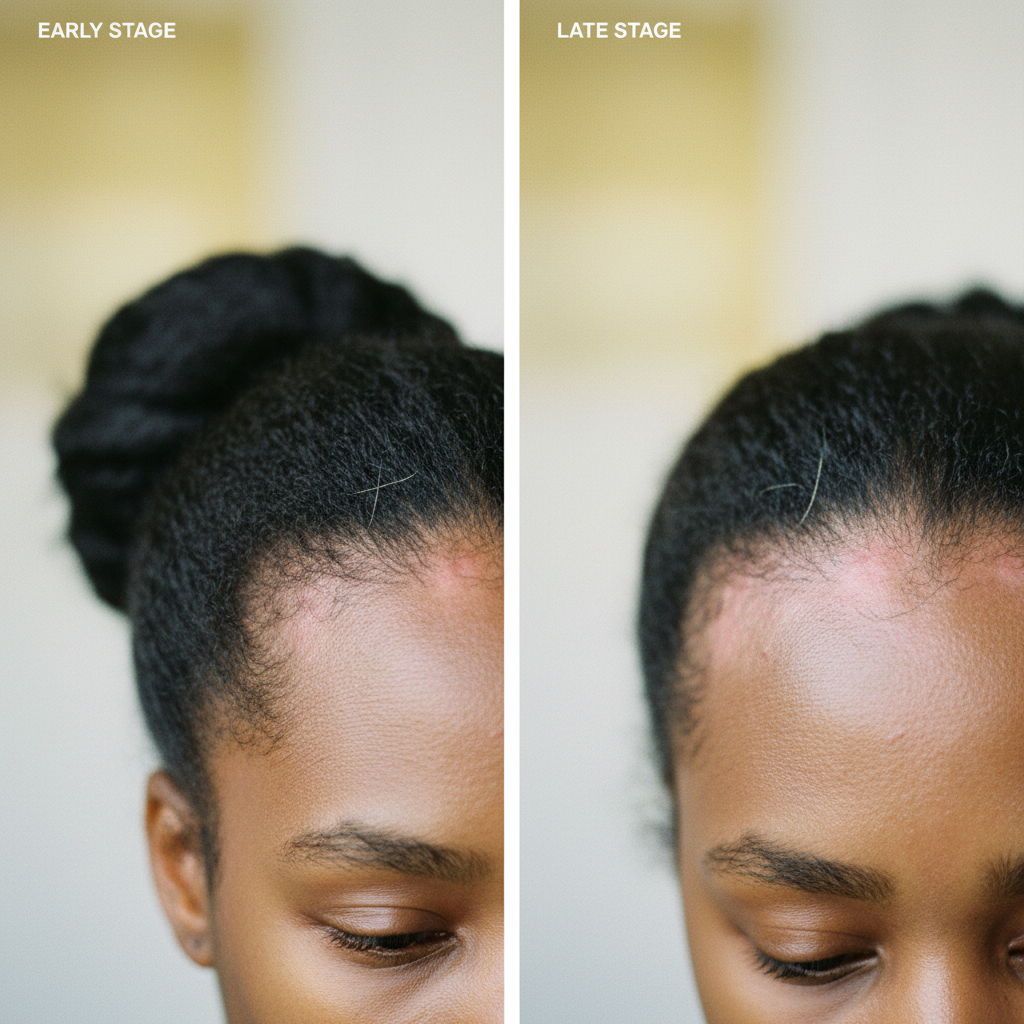
One of the most valuable diagnostic indicators is the fringe sign. In marginal traction alopecia affecting the frontal or temporal hairline, clinicians often observe a preserved, sparse rim of very fine, short hairs directly along the edge of the hairline, immediately in front of the area of significant thinning. This occurs because the outermost hairs were too short to be caught in the tight braid or ponytail band, thereby escaping mechanical tension.
| Feature | Early Stage (Reversible) | Late Stage (Irreversible) |
|---|---|---|
| Scalp appearance | Erythema (redness), tenderness, scaling | Pale, smooth, shiny scalp surface |
| Follicular openings | Visible pores; perifollicular papules/pustules | Absent follicular openings (pores closed) |
| Hair fibre characteristics | Variable shaft diameters, broken short stubs | Complete absence of hair fibres |
| Symptoms | Itching, stinging, feeling of tightness | Usually asymptomatic; no active sensation |
| Fringe sign | Often developing along tension margins | Prominent, showing clear border of bare skin |
| Biopsy findings | Mild lymphocytic infiltrate, preserved follicles | Extensive dermal fibrosis, loss of sebaceous glands |
| Prognosis | Regrowth expected within 3 to 9 months | Permanent loss; surgical intervention required |
What the evidence does not show
There are persistent myths surrounding traction alopecia that create confusion and delay effective management:
- It does not stem from internal hormone imbalances: Unlike androgenetic alopecia, traction alopecia is not driven by dihydrotestosterone (DHT) sensitivity or thyroid dysfunction. Blood tests for hormones will almost always return normal results in isolated traction cases.
- It is not an autoimmune disease: Conditions like alopecia areata involve the immune system attacking healthy hair bulbs due to a breakdown of immune privilege. Traction alopecia is purely physical and mechanical in origin.
- Topical oils cannot overcome mechanical strain: No botanical oil, butter, or serum can prevent traction alopecia if physical tension remains on the scalp. While emollients may soothe surface dryness, they do not neutralise the physical shearing forces exerted on the dermal papilla.
- It does not happen overnight: A single tight ponytail worn for an evening may cause temporary scalp soreness, but it will not cause traction alopecia. The condition requires sustained, repetitive, or long-term pulling over weeks, months, or years.
When the cause may be something else
Thinning around the hairline or temples is not always traction alopecia. Differential diagnosis is essential before assuming mechanical damage:
- Frontal Fibrosing Alopecia (FFA): A primary lymphocytic scarring alopecia that typically affects post-menopausal women. It presents as a band of symmetrical recession along the frontal hairline, often accompanied by the loss of eyebrow hair and perifollicular erythema without a history of tight styling.
- Androgenetic Alopecia (Female or Male Pattern Hair Loss): Presents with progressive thinning, but primarily targets the vertex and crown, or presents as temporal recession in men. Follicular openings remain visible until very late stages.
- Trichotillomania: A behavioural condition characterised by recurrent, compulsive pulling of one's own hair. Patches often show irregular, geometric borders with hairs broken at varying lengths, typically without the classic margin distribution of traction alopecia.
- Alopecia Areata: Characterised by smooth, round, well-circumscribed patches of sudden hair loss that can appear anywhere on the scalp, often displaying exclamation point hairs under trichoscopy.
Practical steps to prevent and manage traction alopecia
Understanding Traction Alopecia allows stylists and individuals to adopt protective styling habits that preserve follicular health:
- Eliminate tension immediately: Loosen braids, widen cornrows, and avoid pulling hair into severe, slicked-back buns. If a style causes pain, headaches, or bumps within the first 24 to 48 hours, it is too tight and must be redone.
- Rotate styling patterns: Never install high-tension styles back-to-back. Give the scalp a complete rest period of at least 2 to 4 weeks between protective installs, allowing the follicular apparatus to recover.
- Limit weight and length: Heavy extensions and waist-length braids place substantial gravitational drag on the hairline. Opt for lighter, shorter extensions and larger partings to distribute the load across more follicles.
- Avoid combining chemicals and tension: Do not apply tight braids or extensions to freshly relaxed, bleached, or chemically straightened hair. Wait several weeks, or avoid high-tension styles entirely on chemically altered hair.
- Support cosmetic hair resilience: Maintain fibre elasticity by using gentle, conditioning haircare. Products containing caffeine, niacinamide, biotin, and hydrolysed lupin protein can help nourish the surface scalp environment and reduce mechanical fibre snapping, supporting a healthier-looking appearance while follicles recover.
When to seek professional clinical advice
If you notice persistent scalp bumps, stinging, redness, or progressive thinning along your hairline, consult a board-certified dermatologist or qualified trichologist immediately.
Professional evaluation typically involves dermoscopy (trichoscopy), which magnifies the scalp up to 70 times to evaluate follicular openings, hair shaft diameter diversity, and white fibrotic patches. In ambiguous presentations, a 4 mm punch scalp biopsy may be performed to differentiate traction alopecia from other scarring alopecias like FFA or lichen planopilaris. If treated during the inflammatory or early non-scarring phase, dermatologists may prescribe short courses of topical corticosteroids or antimicrobials to resolve traction folliculitis, alongside tailored guidance to safeguard remaining hair.
Frequently asked questions about Understanding Traction Alopecia
Can hair regrow once traction alopecia starts?
Yes, hair can regrow completely if you intervene during the early stages. Once you remove the mechanical tension, resting follicles typically re-enter the anagen growth phase, with visible improvement appearing within 3 to 9 months. However, if chronic pulling has caused permanent scarring and closed the follicular pores, regrowth is impossible without hair restoration surgery.
What is the earliest warning sign of traction alopecia?
The earliest warning sign is traction folliculitis, which presents as small red bumps, pimples, or tender pustules around the hair follicles where tension is greatest. Scalp tenderness, an itchy feeling, and a persistent sensation of tight skin after styling also indicate that hair follicles are experiencing excessive mechanical strain.
How does Understanding Traction Alopecia help in choosing protective styles?
Understanding Traction Alopecia helps you recognise that protective styles only protect hair if they are installed without tension. It encourages choosing knotless braids, looser cornrows, and thicker bases, while ensuring styles are not kept in for longer than 6 to 8 weeks, preserving follicle integrity.
Does washing hair frequently worsen traction alopecia?
No, washing hair frequently does not cause or worsen traction alopecia. Traction is purely driven by mechanical pulling forces. Gentle cleansing keeps the scalp clean and reduces sebum and microbial buildup around stressed follicles. However, vigorously scrubbing or pulling wet, fragile hair into tight styles immediately after washing can accelerate fibre breakage.
Responsible scalp care for tension-stressed hair
Understanding Traction Alopecia empowers you to make informed decisions about your daily routine and styling practices. While clinical scarring requires medical diagnosis, maintaining an optimal scalp environment is essential for supporting existing hair. Watermans provides targeted, revitalising formulas like Grow Me Shampoo, formulated with caffeine, biotin, argan oil, and rosemary, designed to invigorate the scalp surface and fortify delicate hair fibres against everyday cosmetic breakage. Paired with low-manipulation styling, proactive care gives your hair the ideal conditions to flourish.
Sources and references
- British Association of Dermatologists. Traction Alopecia Patient Information Leaflet. 2020.
- Journal of the American Academy of Dermatology. Traction alopecia: the root of the problem. 2017; 76(4): 737-743.
- Billero, V. & Miteva, M. Traction alopecia: the root of the problem. Clinical, Cosmetic and Investigational Dermatology. 2018; 11: 149-159.
- Samrao, A. Et al. The "Fringe Sign", A useful clinical feature in traction alopecia. Dermatologic Surgery. 2011; 37(11): 1601-1607.
- NHS England. Hair loss (alopecia). Overview and management guidance. 2023.
Find these ingredients in Watermans products
- Niacinamide: you will find this ingredient in our Hair Mask.