Hair Breakage vs Root Shedding: The Complete Diagnostic Guide
9 min read ·
Understand the vital differences in Hair Breakage vs Root Shedding, from bulb identification to fibre physics, and learn how to treat each correctly.
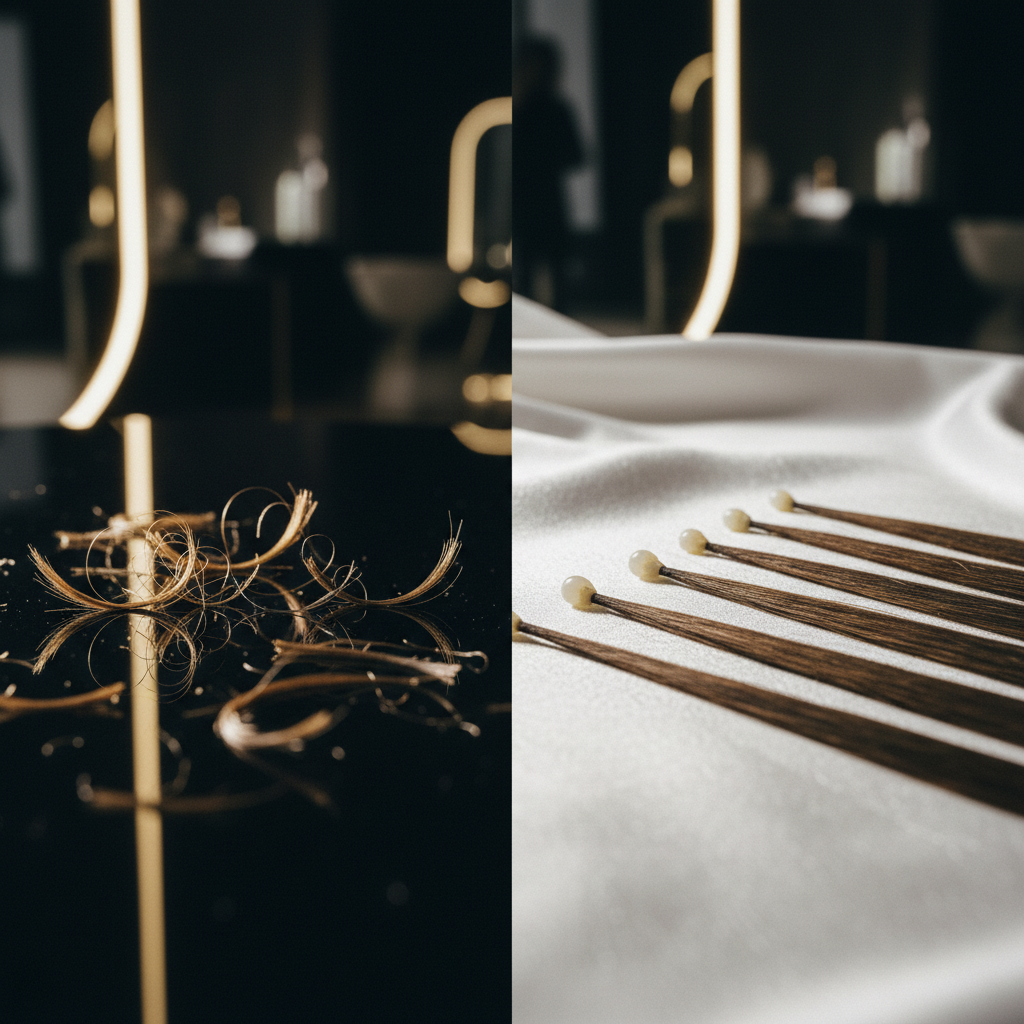
Quick answer: Hair Breakage vs Root Shedding comes down to where the strand separates. Root shedding is a biological process where a full-length hair reaches the end of its life cycle and detaches cleanly from the follicle, complete with a tiny white bulb at its base. Breakage is structural trauma where the hair fibre snaps along the shaft due to mechanical, thermal, or chemical damage, leaving uneven, bulb-free fragments. The main limitation is that both can happen simultaneously, requiring different targeted treatments.
Key takeaways
- Root shedding involves a natural biological cycle, releasing 50 to 100 hairs daily that carry a visible, keratinised white bulb at the root end.
- Hair breakage is physical fibre failure caused by mechanical friction, heat degradation, or chemical over-processing, yielding shorter strands without bulbs.
- Telogen effluvium and hormonal shifts cause diffuse root shedding, whereas brittle, weathered hair shafts cause localised breakage.
- Shampoos and topical cosmetics cannot cure follicular hair loss, but fortifying routines can significantly reduce shaft breakage.
- Inspecting your fallen hair lengths against a dark background reveals whether the issue stems from the follicle or mechanical wear.
Hair Breakage vs Root Shedding: what the evidence shows
Understanding Hair Breakage vs Root Shedding requires distinguishing between follicular biology and fibre physics. Normal biological turnover causes roughly 50 to 100 hairs to detach from the scalp each day. Every follicle operates independently through three main phases: anagen (active growth, lasting 2 to 7 years), catagen (regression, lasting 2 to 3 weeks), and telogen (resting, lasting roughly 3 months). At the end of telogen, the strand enters exogen, releasing from the skin with a club-shaped keratinised bulb. This shedding represents a healthy renewal mechanism unless daily numbers sharply spike.
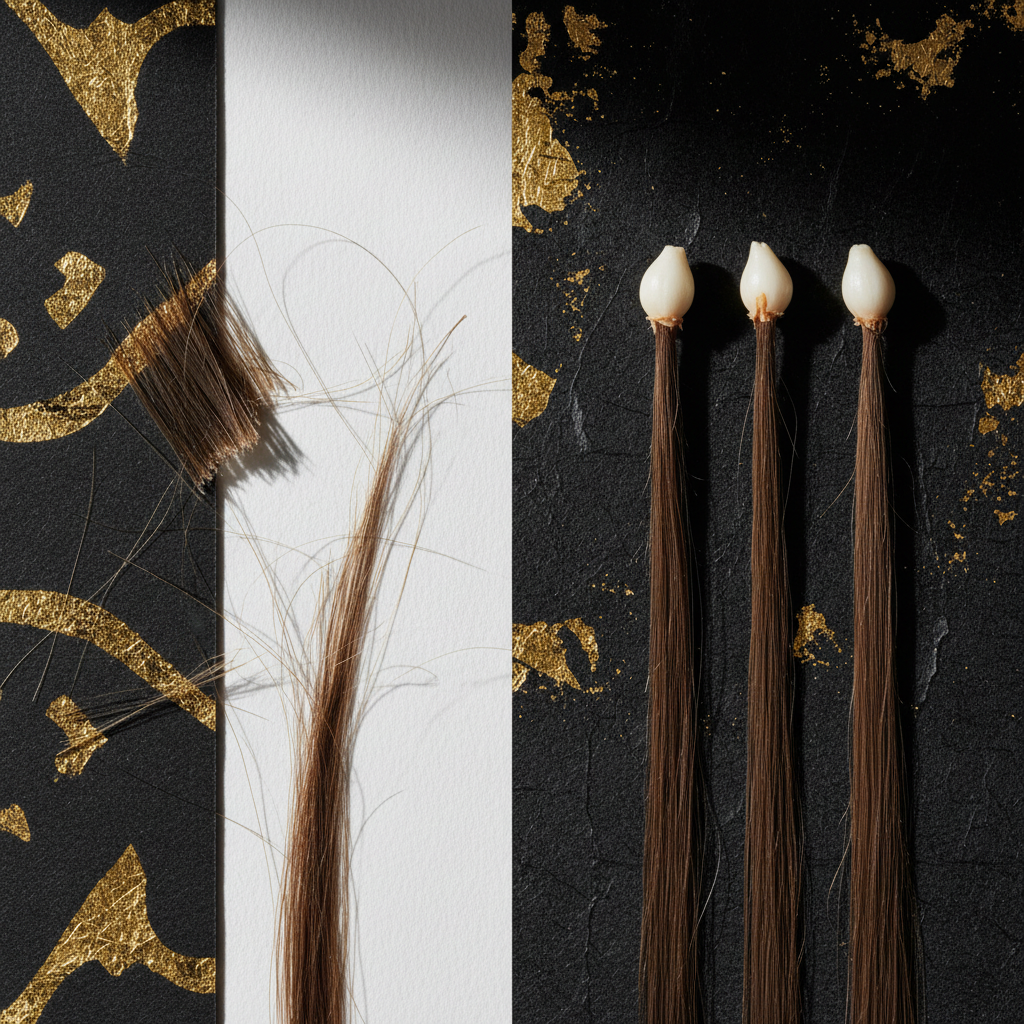
Conversely, breakage occurs entirely outside the scalp. The hair shaft consists of an inner cortex protected by an outer cuticle of overlapping scales. When the cuticle suffers physical or chemical erosion, the cortex loses moisture, elasticity, and structural cohesion. Under tension, the strand fractures at weak points along its length. It is not hair loss in the dermatological sense, because the follicle remains actively anchored in the scalp and continues to grow. Confusing breakage with follicular shedding leads people to treat the wrong problem, such as applying scalp tonics to repair bleached ends, or using protein treatments to stop systemic shedding.
| Characteristic | Root Shedding (Exogen Phase) | Hair Breakage (Fibre Fracture) |
|---|---|---|
| Point of separation | At the follicular opening (scalp level) | Anywhere along the hair shaft |
| Presence of white bulb | Yes, a tiny white or clear keratin bulb | No, both ends appear blunt or frayed |
| Strand length | Full length of your current hair | Variable, often short, irregular fragments |
| Primary root cause | Biological cycle, stress, hormones, health | Heat tools, chemical processing, friction |
| Elasticity test | Strand has normal stretch before snapping | Strand snaps immediately under light tension |
| Corrective approach | Scalp health, medical review, nutrition | Fibre conditioning, bond care, reduced heat |
What the evidence does not show
Research does not show that daily root shedding indicates progressive baldness. Finding shed hair in your brush or shower drain is standard human physiology, not a sign of permanent follicular death. Furthermore, cosmetic products cannot physically alter follicular genetics or reverse pattern hair loss.
Scientific trials also show that products labelled as "anti-hair loss" shampoos rarely stop biological shedding inside the dermal papilla. At best, high-performance cosmetic formulas improve the tensile strength of the fibre, preserve the cuticle layer, and reduce friction during washing. This dramatically cuts down on breakage, making the hair appear thicker and fuller overall, but it does not alter systemic exogen shedding.
The physical mechanisms: why hair sheds and why it breaks
Biological shedding is driven by cellular signalling inside the hair follicle. When the dermal papilla signals the end of the anagen phase, the lower follicle regresses. As the hair transitions through catagen to telogen, the base of the hair shaft transforms into a solid, rounded structure known as a club hair. During exogen, enzymatic action degrades the anchoring desmosomes around the base of this club hair, allowing it to slip freely from the follicle without pain.
Breakage, by contrast, is a study in material failure. Healthy human hair can support roughly 100 grams of weight per strand and stretch up to 30 percent beyond its resting length before snapping. However, chemical bleaching and permanent dyes oxidise cystine, the amino acid responsible for the disulphide bonds that give hair its strength. Heat styling above 180 degrees Celsius strips structural moisture and denatures alpha-keratin proteins. Combined with surface friction from rough towels, plastic brushes, or cotton pillowcases, the protective cuticle lifts, exposes the cortex, and causes the fibre to snap under regular grooming tension.
The signs to look for
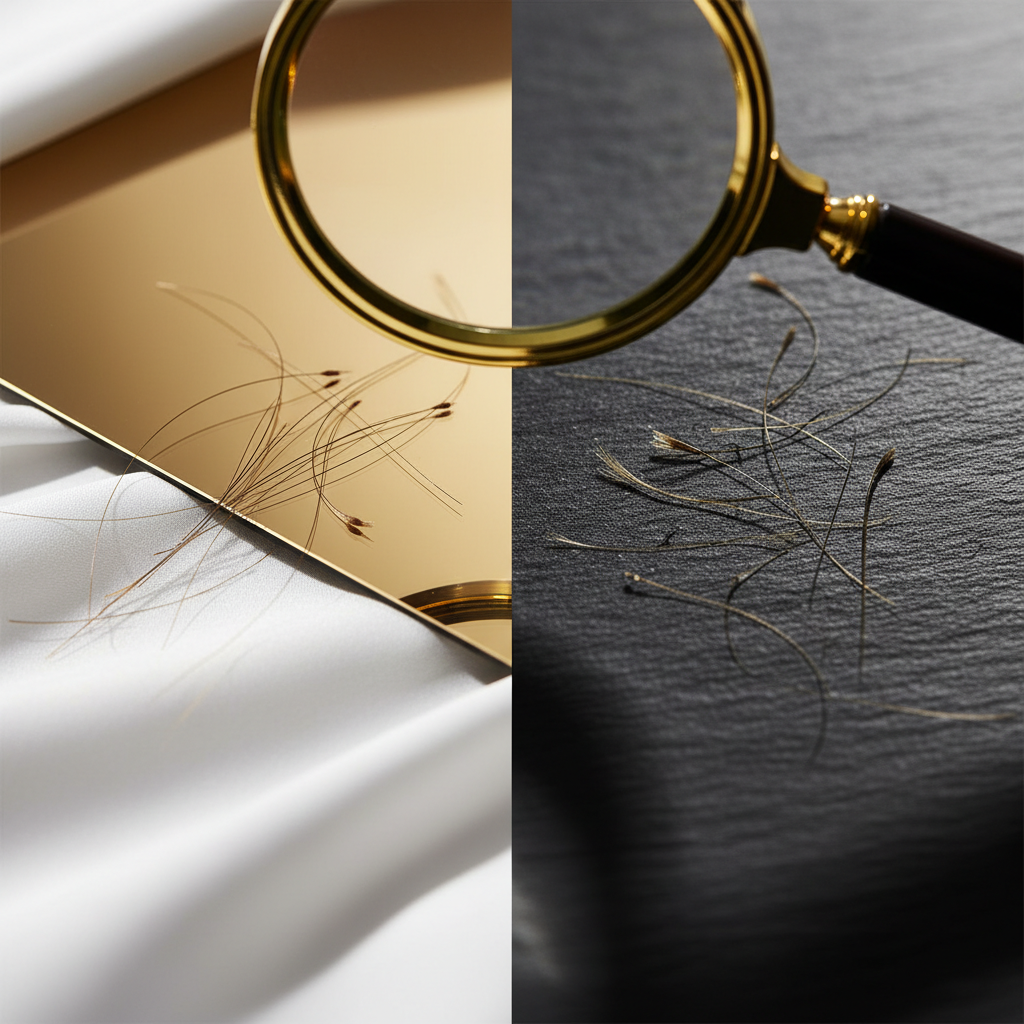
To determine whether you are dealing with shedding or breakage, collect five to ten fallen strands from your brush or shower and examine them under good lighting:
- Inspect the ends: Look closely at the tips of the fallen strand. If one end features a small, pale, firm nodule, you are looking at a shed hair complete with its telogen bulb. If both ends are straight, jagged, or split into microscopic fibres, the strand has broken.
- Compare the lengths: Measure the fallen strands against your overall hair length. Root shedding produces hairs that match the full length of your cut. Breakage produces small, uneven shards, typically ranging from a few millimetres to several centimetres.
- Assess the texture: Breakage often coincides with a rough, straw-like tactile feel, high porosity, and persistent tangling. Shed hairs often feel smooth and healthy from root to tip, reflecting normal hair that simply reached the end of its life cycle.
What you can do to address each issue
Managing follicular shedding and mechanical breakage requires distinct routines. When dealing with increased root shedding, the focus belongs on scalp condition and systemic balance. Maintain a clean, balanced scalp environment by washing regularly with a gentle, sulphate-free shampoo to remove excess sebum, environmental debris, and microbes that could induce scalp inflammation. Ensure your diet contains adequate protein, iron, zinc, and vitamin D, as nutritional deficits directly trigger sudden telogen effluvium.
To tackle hair breakage, prioritise fibre resilience and friction reduction:
- Lower the temperature on your thermal styling tools below 180 degrees Celsius and always apply a silicone- or polymer-based heat protectant.
- Detangle damp hair carefully using a wide-tooth comb or flexible-bristle brush, working upward from the ends to the roots.
- Introduce leave-in conditioners and rich conditioning treatments that coat the hair fibre, seal lifted cuticle scales, and lower wet combing friction.
- Switch to a silk or satin pillowcase to minimise abrasive friction while sleeping.
The role of targeted haircare
When brittle hair causes premature snapping, targeted haircare formulations provide essential structural support. While cosmetics do not treat genetic alopecia, topically supporting the scalp and fibre creates optimal conditions for hair retention.
Watermans focuses on this dual objective. Formulas such as Watermans Grow Me Shampoo and Condition Me Conditioner blend natural stimulants like caffeine, rosemary extract, and biotin with moisturising agents like argan oil and hydrolysed lupin protein. This targeted combination fortifies the cuticle, restores elasticity to fragile shafts, and leaves hair feeling visibly denser, stronger, and more resilient against daily mechanical breakage.
When the cause may be something else
If you observe heavy root shedding exceeding 100 to 150 hairs daily for longer than six to eight weeks, the underlying trigger could be telogen effluvium. This sudden shift of growing hairs into the resting phase is often triggered by physical illness, high fever, rapid weight loss, severe psychological stress, or hormonal changes such as childbirth or stopping oral contraceptives.
Alternatively, if shedding presents in distinct circular patches, or if you notice gradual widening of your parting or recession at the temples without excessive hair in the brush, you may be experiencing alopecia areata or androgenetic alopecia. These are progressive follicular conditions, not mechanical breakage.
When to get professional advice
Consult a GP, dermatologist, or qualified trichologist if you notice any of the following symptoms:
- Redness, severe itching, flaking, or burning pain on your scalp.
- Hair falling out in discrete, smooth, round patches.
- Sudden, diffuse shedding that persists for more than two months without slowing.
- Marked thinning across the crown or hairline accompanied by irregular menstrual cycles or other systemic symptoms.
- Excessive breakage that continues despite eliminating heat tools, chemical services, and tight hairstyles.
A specialist can carry out a gentle pull test, use trichoscopy to magnify the scalp surface, and order routine blood panels to check ferritin, thyroid function, and vitamin levels.
Frequently asked questions about Hair Breakage vs Root Shedding
How can I tell the difference between Hair Breakage vs Root Shedding?
Check the end of the fallen hair strand. Root shedding presents a tiny, firm, whitish keratin bulb at one tip and matches your full hair length. Hair breakage produces shorter, jagged fragments with blunt or split ends and no bulb.
Can a single hair break and shed at the root at the same time?
Yes. If a hair fibre is severely damaged by bleach or heat, it can snap along the shaft while the follicle simultaneously completes its natural cycle and sheds the remaining root section later.
Does brushing hair aggressively cause root shedding?
Aggressive brushing causes mechanical breakage rather than true root shedding. While rough brushing can pull out loose hairs already in the exogen phase, it typically snaps fragile fibres mid-shaft instead of extracting healthy, active roots.
Can conditioner stop root shedding?
No, regular conditioner cannot stop root shedding because shedding is governed by cellular processes inside the scalp follicle. Conditioner works on the dead fibre, smoothing the cuticle, improving slip, and significantly reducing breakage during styling.
How much daily root shedding is considered normal?
Dermatologists consider shedding between 50 and 100 telogen hairs per day completely normal. This steady turnover reflects the natural biological rhythm of roughly 100,000 follicles cycling through growth and rest phases across your scalp.
Making sense of Hair Breakage vs Root Shedding
Navigating Hair Breakage vs Root Shedding is all about knowing where the damage occurs. When you identify the white club bulb on a full-length strand, trust that your scalp is going through its natural biological turnover. When you see short, fractured pieces accumulating on your shoulders, shift your focus to gentler handling, deep conditioning, and heat reduction to restore your hair fibre from within.
Sources and references
- British Association of Dermatologists. "Telogen Effluvium: An Overview." bad.org.uk.
- National Institute for Health and Care Excellence (NICE). "Alopecia androgenetica and telogen effluvium: Clinical knowledge summaries." nice.org.uk.
- Robbins, C. R. (2012). Chemical and Physical Behavior of Human Hair. Springer Science & Business Media.
- Sinclair, R. (2015). "Healthy hair: what is it?" Journal of Investigative Dermatology Symposium Proceedings, 17(2), 40-42.
- Trueb, R. M. (2009). "Oxidative stress in ageing of hair." International Journal of Trichology, 1(1), 6-14.
Find these ingredients in Watermans products
- Zinc: you will find this ingredient in our Hair Vitamins.