Managing Damaged Hair Cuticles: A Complete Evidence-Based Guide
8 min read ·
Managing damaged hair cuticles requires understanding the non-living nature of the hair shaft, using low pH formulations, and reducing friction to protect the inner cortex.
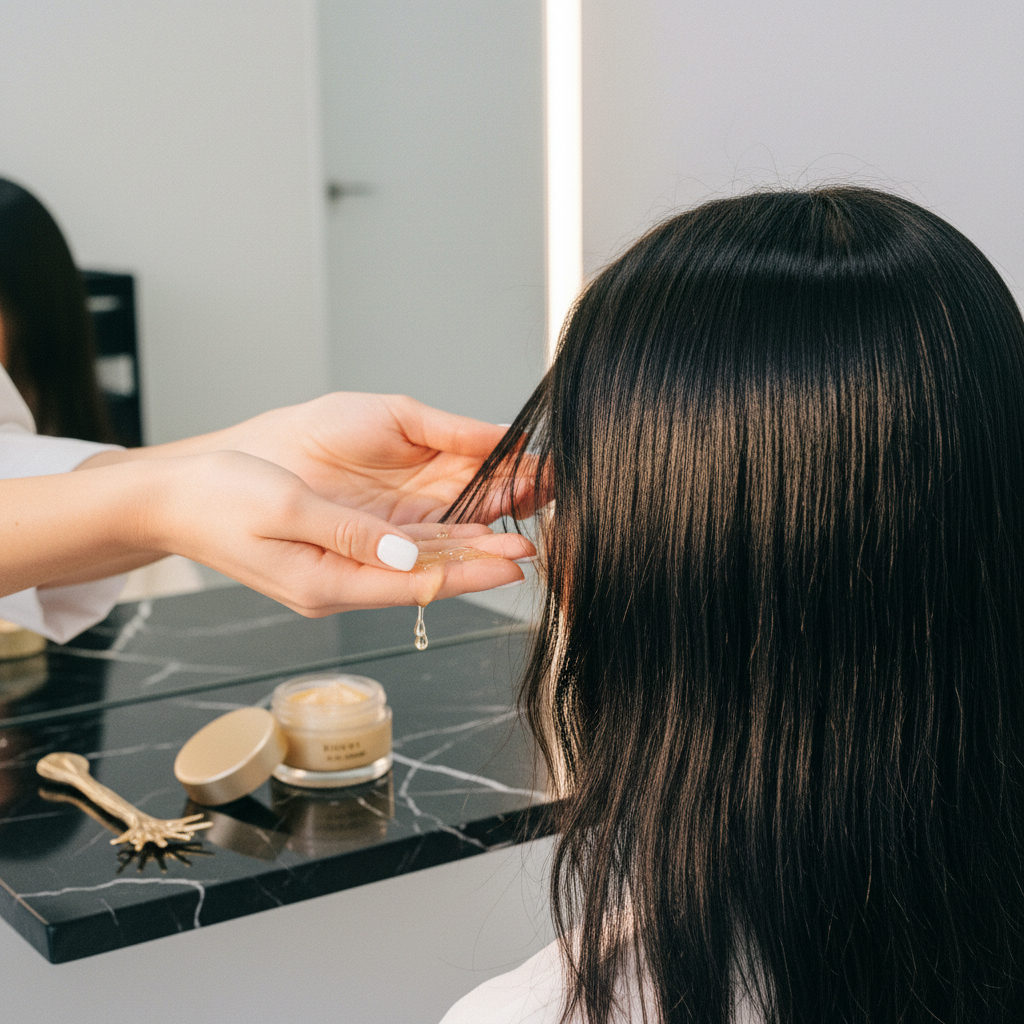
Quick answer: Successfully managing damaged hair cuticles requires smoothing and sealing the protective outer layers of the hair fibre using conditioning agents, balanced pH products, and reduced mechanical friction. Because hair is non-living biological tissue, cuticles cannot biologically heal or regenerate once chipped, stripped, or lifted. Managing damaged hair cuticles therefore focuses on cosmetic preservation, artificial lipid replacement, and minimising further structural erosion until healthy new growth emerges from the scalp.
Key takeaways
- The hair cuticle consists of 6 to 10 overlapping cellular layers that shield the inner cortex from environmental and chemical degradation.
- Cuticles cannot regenerate biological cells; care routines must focus on sealing, coating, and physically protecting the remaining structure.
- Alkaline chemical processes (bleaching, relaxing, permanent dyes) lift and dissolve cuticle scales, while acidic solutions (pH 4.5 to 5.5) help compact them.
- Excessive friction, heat over 185°C, and uv radiation strip the 18-methyleicosanoic acid (18-MEA) lipid layer, leaving fibres porous and prone to moisture loss.
- High porosity, dullness, tangling, and fibre breakage indicate severe cuticle loss, which must not be confused with follicular hair loss.
Managing Damaged Hair Cuticles: what the evidence shows
Managing damaged hair cuticles starts with understanding their physical architecture. In healthy human hair, the cuticle forms a shingle-like armour of flattened cells pointing toward the tip. Each cell contains three distinct protein layers: the epi-cuticle, the exo-cuticle (rich in cystine), and the endo-cuticle. On top of this lies a monomolecular layer of fatty acid known as 18-methyleicosanoic acid (18-MEA), which renders the hair naturally hydrophobic (water-repellent).
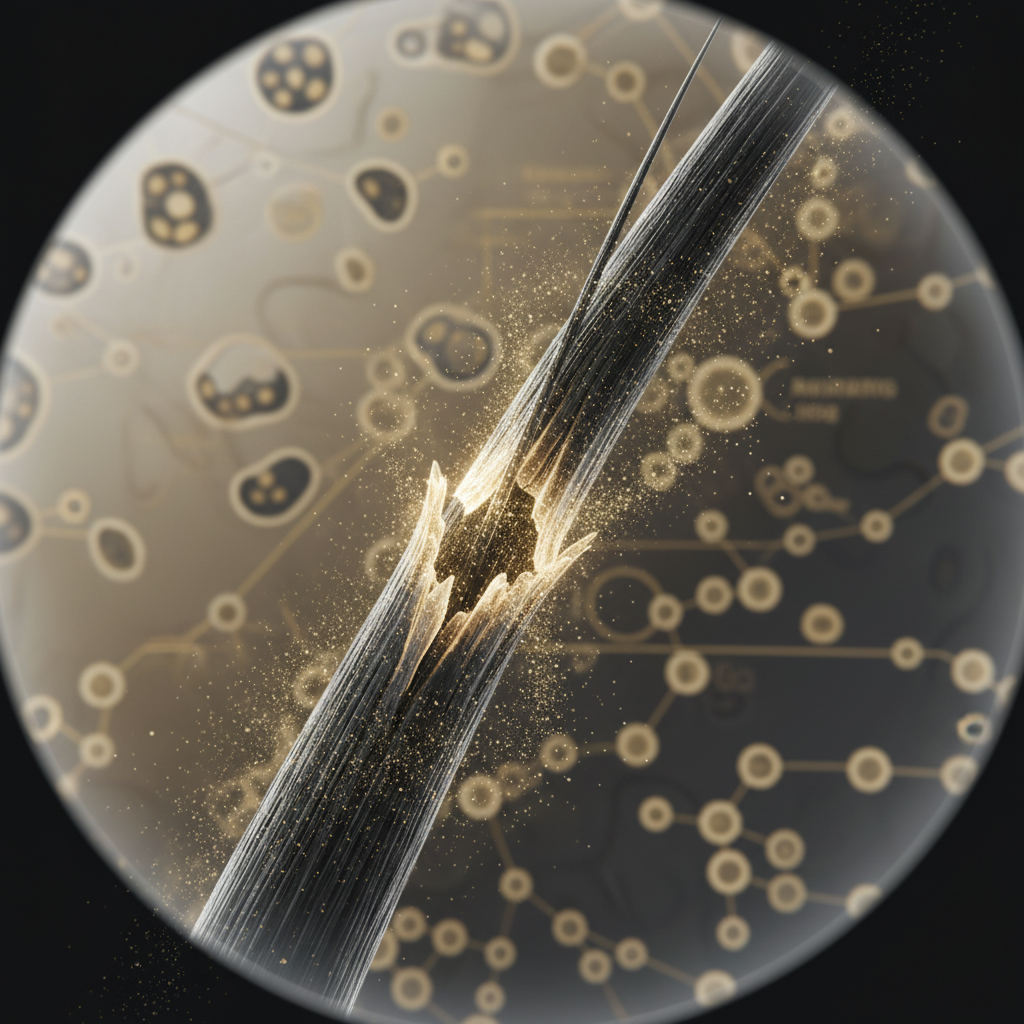
Peer-reviewed cosmetic dermatology demonstrates that chemical processing and physical abrasion degrade this barrier. A single bleaching or permanent colouring process removes up to 80 percent of surface 18-MEA. When this lipid shield is gone, water rapidly enters and exits the cortex, causing hygral fatigue (repeated swelling and deswelling of the hair fibre). The edges of the cuticle scales lift, catch against adjacent strands, chip away, and expose the underlying keratin cortex to environmental wear. Managing damaged hair cuticles relies on replacing this protective layer with artificial conditioning agents, including silicones, cationic surfactants, and plant lipids that smooth the surface and lower friction.
What the evidence does not show
Cosmetic marketing often blurs the line between functional protection and biological repair. Controlled scientific research does not show that any cosmetic ingredient, treatment, or bond builder can permanently regenerate missing cuticle cells. Once a cuticle scale is broken off or dissolved, that fragment is lost permanently.
Furthermore, products cannot fuse chipped cuticles back into a living, unified matrix. While certain multivalent acids and bond-building complexes can temporarily cross-link disrupted keratin bonds within the cortex, they do not regrow the protective outer shingle. Managing damaged hair cuticles cannot revert hair to virgin status; it can only manage porosity, restore temporary tensile strength, and shield the interior fibre until new hair grows.
Mechanisms of cuticle breakdown
To repair and manage the fibre effectively, you need to understand the four primary mechanisms that destroy cuticle integrity:
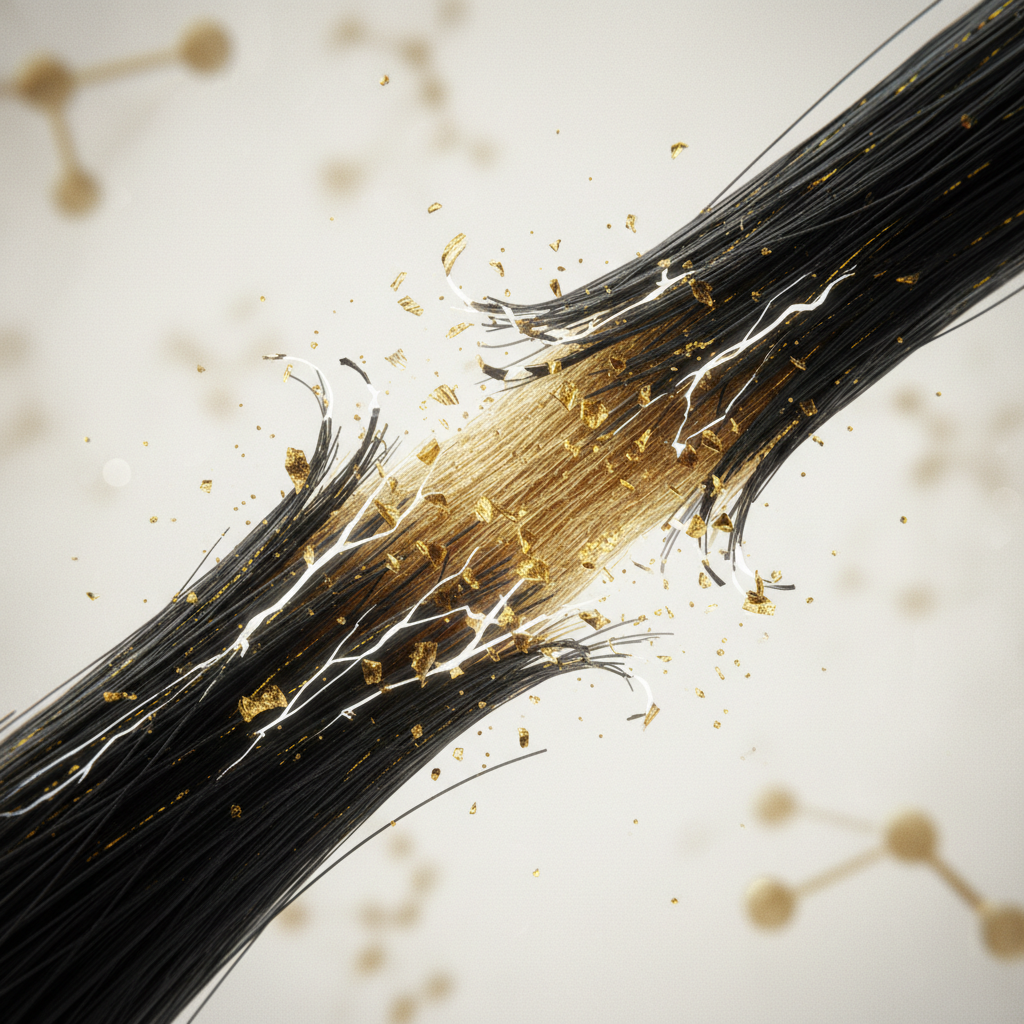
- Chemical degradation: Alkaline solutions with a pH above 8.0 force the cuticle layers open to allow active chemicals into the cortex. Bleaching agents oxidise disulphide bonds, dissolving the cystine-rich exocuticle and stripping 18-MEA.
- Thermal erosion: Heat tools operated above 185°C degrade hair proteins and melt surface lipids. If water is present inside the shaft during rapid heating, it vaporises instantly, creating micro-cavities (bubble hair) that shatter the cuticle from the inside out.
- Mechanical friction: Aggressive brushing, backcombing, rough towel-drying, and friction against coarse fabrics physically abrade the raised edges of lifted cuticles, shearing them away.
- Photochemical oxidation: Ultraviolet radiation (UV-A and UV-B) cleaves disulphide bonds in both the cuticle and cortex, producing free radicals that leave the hair brittle, dry, and bleached of pigment.
| Characteristic | Healthy, Intact Cuticle | Damaged Cuticle | Severely Stripped Cuticle |
|---|---|---|---|
| Surface Hydrophobicity | Strongly hydrophobic (repels water) | Moderately hydrophilic (absorbs water slowly) | Strongly hydrophilic (absorbs water instantly) |
| 18-MEA Lipid Layer | Fully intact, continuous shield | Partially removed or patchy | Completely absent |
| Porosity Level | Low to medium | Medium to high | Extreme high porosity |
| Tactile Texture | Smooth, uniform slip when moving upward | Rough, raspy friction when sliding fingers upward | Velcro-like, snags and tangles easily |
| Friction Coefficient | Low (glides freely) | Elevated (catches during styling) | Very high (leads to immediate breakage) |
| Primary Risk | None | Frizz, dullness, minor tangling | Fibre snapping, split ends, cortex loss |
Signs to look for
You can assess cuticle damage through both tactile and visual signs:
- Immediate water uptake: If clean hair becomes soaked and limp the second it touches water, its hydrophobic barrier is gone.
- The reverse-stroke test: Hold a single strand taut by the tip and slide the thumb and forefinger of your other hand downward toward the root, then upward toward the tip. An intact cuticle offers smooth resistance; a damaged cuticle feels raspy, rough, and uneven when sliding upward.
- Dull, matte appearance: Light reflects cleanly off a flat, smooth surface. Lifted, jagged cuticle edges scatter light randomly, making the hair look flat and lifeless even when clean.
- Velcro tangling: When cuticles are raised, opposing fibres hook into one another like micro-fasteners, causing intractable knots and high comb resistance.
- Mid-shaft snapping: If you notice short pieces of hair falling onto your clothes or sink without a white bulb attached, the cortex has been exposed and snapped. This is fibre breakage, not root-level hair shedding.
What you can do to manage damaged cuticles
While you cannot regrow the outer layer, practical interventions significantly reduce mechanical stress and restore manageability.
1. Maintain an optimal acidic pH
The natural pH of healthy hair and scalp is acidic, resting between 4.5 and 5.5. Washing with alkaline cleansers or tap water lifts the cuticle scales. Formulations balanced to an acidic pH (between 4.0 and 5.5) encourage the cuticle shingles to flatten and lie flush against the hair shaft, restoring surface reflectivity and minimising friction.
2. Introduce cationic conditioners and emollients
Because damaged, porous hair carries a strong negative electrical charge, positively charged (cationic) ingredients actively bond to the damaged areas. Cationic surfactants (such as behentrimonium methosulfate and cetrimonium chloride) and film-forming polymers coat the exposed cortex, mimicking the lost 18-MEA lipid layer and cutting combing friction by more than 50 percent.
3. Lower heat exposure and friction
Keep thermal styling tools below 185°C, and never apply direct heat to damp hair. Switch to wide-tooth detangling combs, detangle only when hair is saturated with slip-providing conditioner, and swap coarse cotton towels for smooth microfibre wraps or old cotton t-shirts that absorb water through gentle blotting rather than vigorous rubbing.
4. Watermans: targeted cosmetic support
A comprehensive routine requires gentle, restorative products that clean without stripping structural lipids. Watermans GrowMe Shampoo and ConditionMe Conditioner are formulated to clean and condition the hair fibre with balanced pH and nourishing botanicals. ConditionMe uses targeted conditioning agents, cholesterol, and natural oils that coat compromised cuticles, smooth the fibre surface, improve slip, and reduce the breakage associated with high-porosity cuticle loss.
When the cause may be something else
It is critical to distinguish cuticle damage from underlying scalp and follicular conditions. Cuticle degradation causes fibre snapping, split ends, and dry texture. It does not cause the hair follicle to release its strand from the root.
If you are noticing hair shedding from the scalp (strands coming away with a white keratin bulb attached at the root), diffuse thinning across your parting, or patchy round areas of total bareness, this is not cuticle damage. These symptoms suggest physiological hair shedding (such as telogen effluvium) or follicular hair loss (such as androgenetic alopecia or alopecia areata). No amount of cuticle-smoothing treatment will alter shedding driven by hormonal shifts, systemic illness, nutritional deficiencies, or autoimmune conditions.
When to get professional advice
Seek guidance from a qualified stylist, trichologist, or dermatologist when:
- Hair snaps continuously along the shaft despite eliminating heat tools and using heavy conditioning routines.
- Chemical burns, burning sensations, redness, or blistering occur on the scalp following a salon chemical service.
- You observe substantial shedding exceeding 100 strands per day for more than two consecutive months.
- Thinning is concentrated at the crown, temples, or presents in discrete, smooth round patches on the scalp.
Frequently asked questions about Managing Damaged Hair Cuticles
Can you ever permanently heal a damaged hair cuticle?
No. Hair fibres are biologically non-living tissue made of non-cellular keratinised structures. They have no cellular machinery, blood supply, or metabolic activity to regenerate missing cells. Managing damaged hair cuticles involves using acidic products, cationic agents, and emollients to artificially seal the gaps, reduce friction, and prevent moisture loss until healthy new hair grows out from the follicle.
How does water pH affect managing damaged hair cuticles?
Hard water and alkaline water (with a pH above 7.0) cause cuticle scales to swell and flare outward, accelerating structural friction. Rinsing with products balanced between pH 4.5 and 5.5 contracts the cuticle matrix, helping scales lie flat against the shaft to protect the inner cortex.
What is the difference between cuticle damage and hair loss?
Cuticle damage is the physical erosion of the hair shaft's protective outer layer, causing rough texture and fibre breakage along the strand. Hair loss and shedding occur inside the hair follicle beneath the scalp, where biological factors cause the follicle to shrink or shed the bulb prematurely.
Can oil repair chipped cuticles?
Natural oils cannot reattach or regrow missing cuticle fragments. However, certain penetrating oils (like coconut oil) can diffuse into the cortex to curb water absorption, while heavier oils lubricate the outer surface. This coating mimics the missing 18-MEA layer, smoothing rough edges and reducing combing stress.
Managing Damaged Hair Cuticles for the long term
Successfully managing damaged hair cuticles demands a shift from attempting biological repair to establishing daily mechanical preservation. Because the cuticle serves as the sole mechanical guard for the inner cortex, treating it with acidic, friction-reducing formulations, avoiding extreme thermal stress, and minimising harsh chemical treatments remains your most dependable strategy. By shielding the remaining fibre and mitigating daily wear, you protect current hair from premature snapping while creating the optimal conditions for new, undamaged growth to thrive.
Sources and references
- Robbins, C. R. (2012). Chemical and Physical Behavior of Human Hair. 5th ed. Springer-Verlag.
- Draelos, Z. D. (2010). Essentials of Hair Care often Neglected: Hair Cleansing and Conditioning. International Journal of Trichology, 2(1), 24-29.
- Gavazzoni Dias, M. F. (2015). Hair Cosmetics: An Overview. International Journal of Trichology, 7(1), 2-15.
- Sinclair, R. D. (2007). Healthy Hair: What Is It? Journal of Investigative Dermatology Symposium Proceedings, 12(2), 2-5.