Managing Cuticle Damage: Practical Science and Fibre Care
8 min read ·
Learn the science of Managing Cuticle Damage. Discover how cuticle scales erode, why hair cannot biologically heal, and how to smooth and protect fragile fibres.
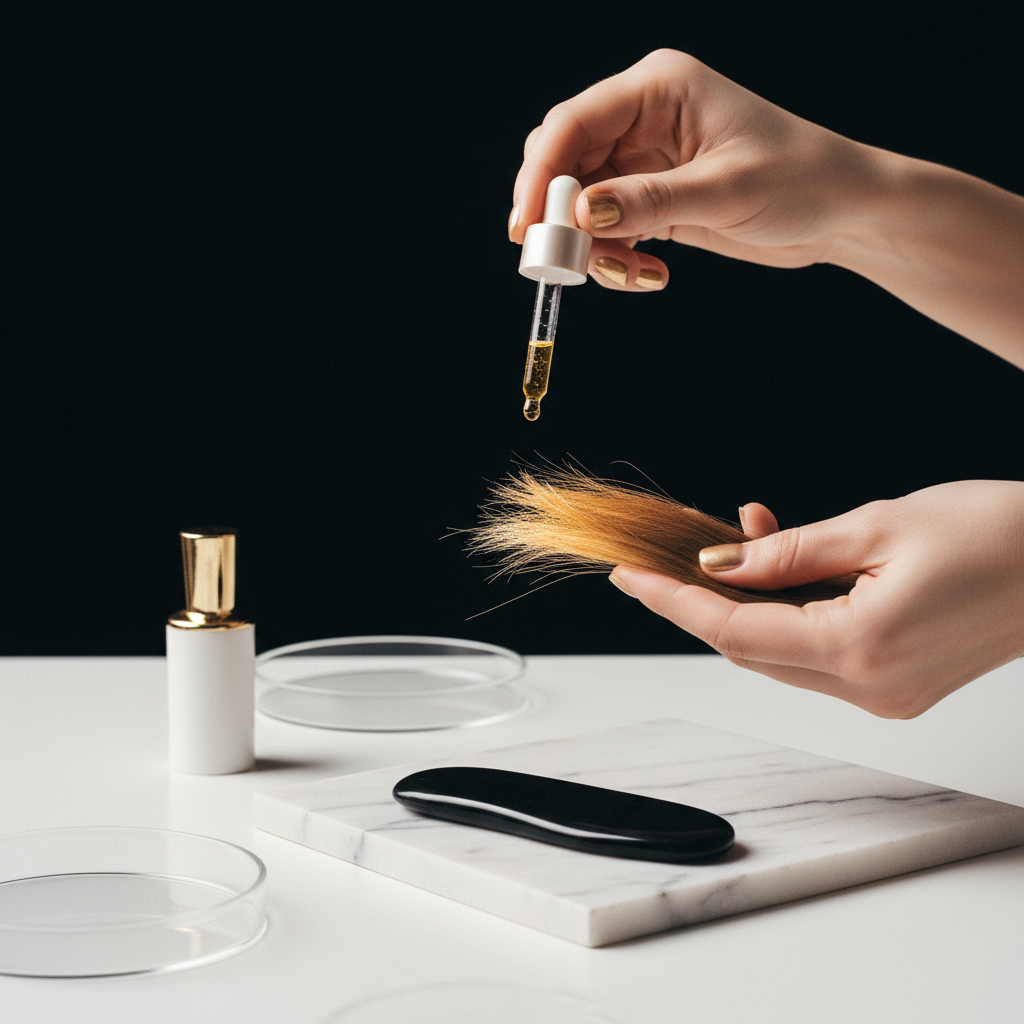
Quick answer: Managing Cuticle Damage requires smoothing, sealing, and protecting the hair's outer protective layer to prevent shaft breakage and moisture loss. Hair cuticles consist of dead, overlapping keratin cells; once chipped, lifted, or worn away by heat, chemicals, or friction, they cannot regenerate biologically. Effective management relies on low-pH formulations, lipid replenishment, film-forming conditioning agents, and mechanical protection to mimic natural cuticle function and prevent irreversible breakage until healthy new hair grows from the follicle.
Key takeaways
- The hair cuticle comprises 5 to 10 overlapping cellular layers that shield the internal cortex.
- True biological repair is impossible because cuticles are non-living biological structures without cell renewal mechanisms.
- Cuticle damage directly causes fibre friction, tangle formation, and snapped strands, which differ fundamentally from follicular hair loss.
- Acidic products (pH 3.5 to 5.5) help contract and flatten raised cuticle scales, reducing porosities.
- Thermal tools above 150°C and chemical bleaches oxidise and permanently strip the protective 18-methyleicosanoic acid (18-MEA) lipid layer.
Managing Cuticle Damage: what the evidence shows
Managing Cuticle Damage successfully requires an understanding of trichological science and physical hair mechanics. Peer-reviewed investigations in cosmetic dermatology show that external stressors target the cuticle first. When healthy, these overlapping scales lie flat like shingles on a roof, anchored by a naturally hydrophobic lipid layer known as 18-methyleicosanoic acid (18-MEA).
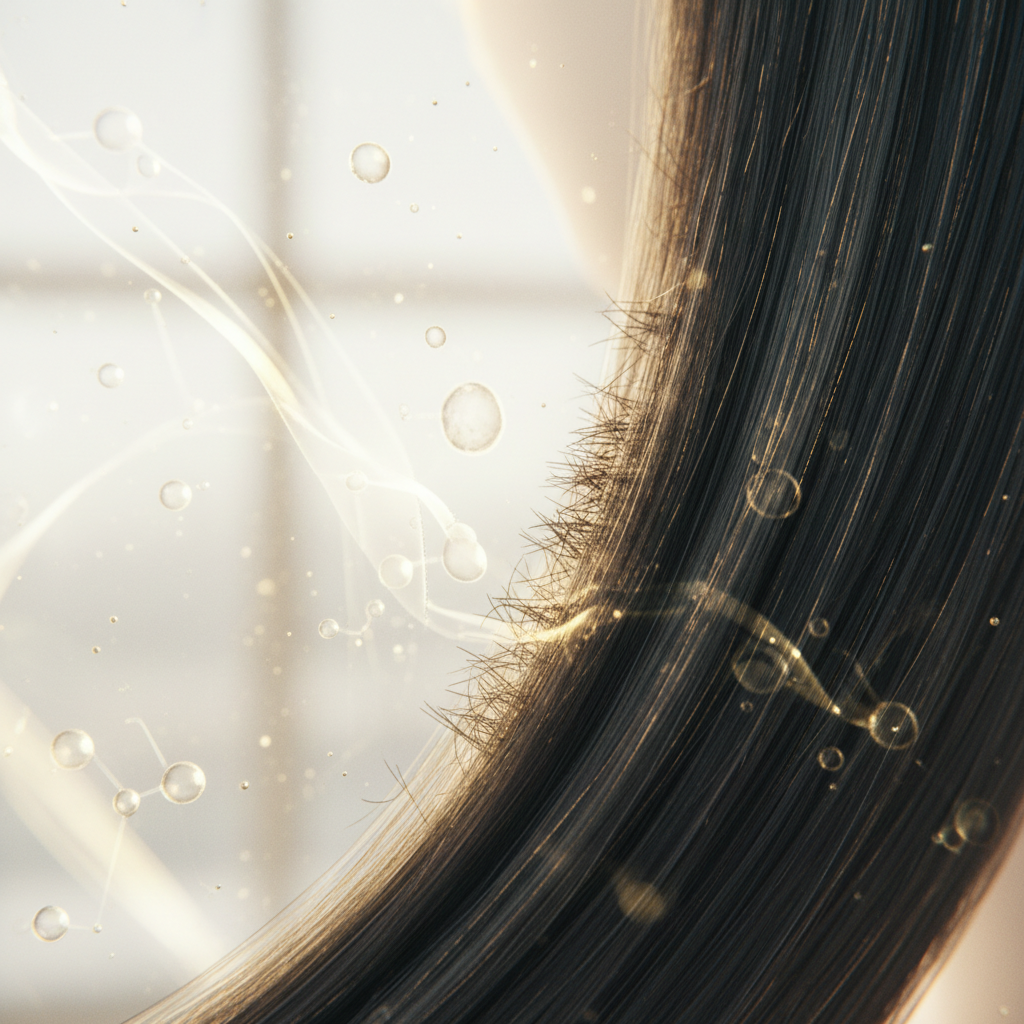
Chemical treatments such as permanent hair colour, relaxers, and bleaching agents penetrate this barrier by swelling the shaft under an alkaline pH (often pH 9.0 to 11.0). In doing so, they strip the 18-MEA layer, leaving the fibre hydrophilic (water-absorbing) and prone to swelling, fraying, and friction.
Controlled laboratory trials demonstrate that cosmetic ingredients cannot fuse broken cuticles permanently back into their virgin state. Instead, evidence confirms that specific conditioning agents (quaternary ammonium compounds, hydrolysed proteins, silicones, and plant oils) deposit thin, microscopic films over exposed areas. These films reduce the coefficient of friction by up to 60 percent, preventing the daily mechanical snagging that turns simple cuticle erosion into complete mid-shaft fractures.
How the cuticle structure breaks down
To address the issue effectively, you must understand the microscopic architecture of the hair fibre:
[ Outer Epicuticle (18-MEA lipid layer) ]
 │
[ Exocuticle (High cysteine, brittle) ]
 │
[ Endocuticle (Low cysteine, swells in water) ]
 │
[ Cell Membrane Complex (CMC intercellular cement) ]
 │
[ Internal Cortex (Structural keratin chains) ]
The outer epicuticle is naturally water-repellent. Beneath it lie the exocuticle and endocuticle, glued together by the cell membrane complex (CMC). When you subject hair to mechanical tension, wet brushing, or excessive heat, several distinct stages of degradation occur:
- Lipid loss: Heat above 150°C or single chemical processing sessions strip the surface 18-MEA, making the hair attract excess moisture.
- Scale lifting: When washed in neutral or alkaline water, the endocuticle swells significantly more than the exocuticle, forcing the outer edges of the scales to lift upwards.
- Chipping and scale loss: Daily brushing against lifted edges mechanically snaps the brittle exocuticle scales off the shaft.
- Cortical exposure: With the cuticle sheath gone, the fibrous cortex is exposed directly to environmental abrasion, leading to split ends (trichoptilosis) and horizontal snapping.
Cuticle erosion versus follicular hair loss
One of the most common errors in haircare is confusing cuticle breakage with hair shedding. Cuticle degradation occurs along the non-living length of the hair strand. If you find short, jagged fragments on your shoulders or bathroom counter without a white bulb at the root, you are experiencing hair breakage due to compromised cuticles.
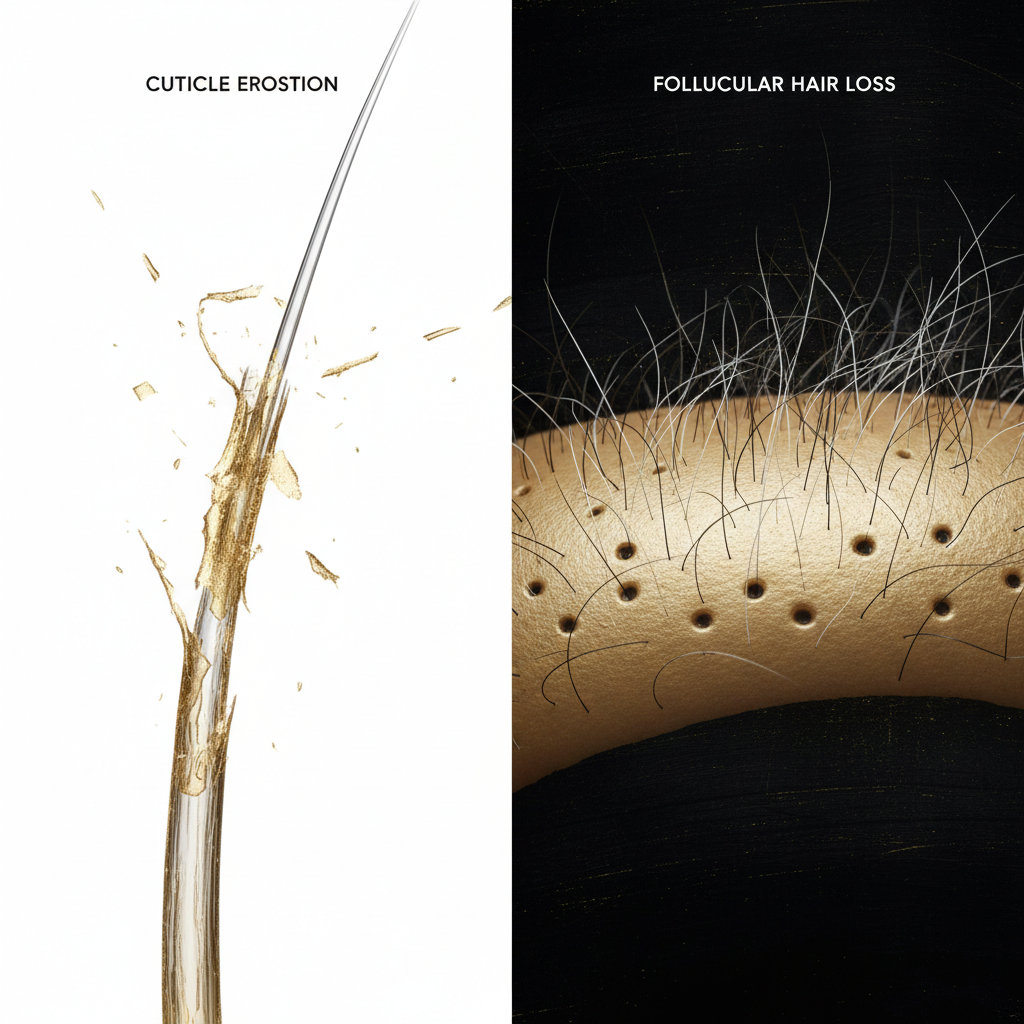
Conversely, telogen effluvium and androgenetic alopecia originate entirely within the follicle beneath the scalp surface. Managing Cuticle Damage will strengthen the fibre, retain length, and prevent mechanical snapping, but it will not alter hair density at the root or halt follicular thinning.
Comparing healthy versus damaged cuticles
| Feature | Healthy Cuticle Surface | Damaged Cuticle Surface |
|---|---|---|
| Microscopic appearance | Smooth, uniform, tightly tiled scales | Chipped, raised, cracked, or absent scales |
| Surface charge | Low negative charge | High negative (anionic) charge |
| Fibre porosity | Low to medium | High; absorbs and loses water rapidly |
| Moisture interaction | Hydrophobic (repels excess water) | Hydrophilic (swells uncontrollably in water) |
| Wet combability | Smooth glide; low friction | High drag; snags, tangles, and snaps easily |
| Elasticity | Stretches up to 30% wet and snaps back | Over-stretches, deforms, or breaks immediately |
| Surface sheen | Reflects light evenly; high natural shine | Scatters light diffusely; dull, matte appearance |
Practical steps for managing cuticle wear
While you cannot biologically regenerate dead keratin cells, you can deploy targeted strategies to seal the cuticle layer and prevent further structural breakdown.
1. Maintain an acidic pH environment
Human hair and scalp maintain a natural, slightly acidic pH around 4.5 to 5.5. Washing with alkaline shampoos (pH 7.0 and above) induces cuticular swelling and scale detachment. Use pH-balanced shampoos and follow with acidic rinses or conditioners formulated between pH 3.5 and 4.5. This electrical neutralisation lowers the negative surface charge of the hair, allowing the scales to contract and lie flat.
2. Replenish lost surface lipids
Because stripped cuticles lose their natural 18-MEA, applying non-greasy plant oils or engineered lipids helps recreate an artificial hydrophobic shield. Ingredients such as argan oil, jojoba esters, and squalane penetrate small micro-fractures in the cell membrane complex, coating the exposed fibre and limiting moisture-induced swelling.
3. Modulate thermal exposure
Hair proteins begin to denature thermally at approximately 155°C, with severe cuticle blistering occurring past 190°C. Never apply flat irons or curling wands to damp hair, as the trapped water within the endocuticle vaporises instantly, creating microscopic gas cavities inside the fibre (bubble hair deformity). Always apply a heat protectant containing polymers like polyquaterniums or silicones, which disperse thermal energy across the fibre surface.
4. Mitigate mechanical wet friction
Hair is at its weakest when wet. Water breaks the hydrogen bonds that give keratin its structural rigidity, increasing hair's elasticity while lowering its resistance to abrasive shear. Never vigorously rub wet hair with a standard terrycloth towel. Instead, squeeze gently with a smooth microfibre cloth and detangle starting from the ends using a wide-tooth comb or flexible detangling brush with ample slip.
The Watermans approach to resilient hair
At Watermans, our formulation philosophy addresses hair integrity from both the scalp environment and the fibre structure. Products like Watermans GrowMe Shampoo and ConditionMe Conditioner are engineered with balanced pH profiles, delivering restorative botanicals, hydrolysed lupin protein, and conditioning agents that reinforce fragile fibres. By coating compromised strands and smoothing lifted cuticles, these formulas reduce friction, ease combing, and protect against premature snapping, providing an optimal cosmetic shield while supporting overall hair vitality.
When to seek professional salon or clinical advice
If your hair tangles instantly upon contact with water, feels rough like sandpaper along the mid-lengths, or snaps under negligible tension, salon intervention may be required. A professional colourist or trichologist can assess whether in-salon bond-building services or structural trims are necessary. When cuticles have worn away completely, leaving the cortex split down the vertical axis, no topical treatment can fuse the fibre back together; in these cases, trimming the damaged ends is the only way to stop the split from travelling up the hair shaft.
Frequently asked questions about Managing Cuticle Damage
Can damaged hair cuticles ever repair themselves?
No, hair cuticles cannot regenerate or heal naturally. Hair strands consist of non-living, keratinised biological tissue without blood supply, cellular metabolism, or division. Once a cuticle scale is fractured or removed, it cannot grow back. Managing Cuticle Damage relies entirely on topical agents that fill fissures, smooth raised edges, and seal the fibre artificially until new, healthy hair emerges from the scalp.
What is the fastest cosmetic fix for raised cuticles?
The fastest way to smooth raised cuticles is applying a low-pH, deeply lubricating conditioner containing cationic surfactants and hydrolysed proteins. The positive electrical charge of the conditioning molecules binds electrostatically to the negative charge of the damaged cuticle, temporarily flattening scales, sealing micro-fissures, and dramatically reducing comb resistance.
How does hard water interfere with Managing Cuticle Damage?
Hard water contains dissolved calcium and magnesium ions that bind directly to damaged hair fibres. These mineral deposits oxidise, crystallise between raised cuticle scales, and prevent conditioners from adhering smoothly. The resulting mineral buildup creates additional friction and makes the hair feel brittle, complicating efforts focused on Managing Cuticle Damage until chelating washes are introduced.
Does split end mending serum really work?
Split end serums provide a cosmetic, temporary hold rather than a permanent cure. Most employ polyelectrolyte complexes, plant resins, or silicones that physically glue the split cortical fibres together through surface tension. This temporary bond lasts until the next wash, making regular trims essential for permanently eliminating severe cuticle erosion.
Summary
Successfully Managing Cuticle Damage demands a consistent, gentle haircare regimen grounded in trichological reality. Because external hair cannot biologically regenerate, every wash, heat application, and detangling session either preserves or degrades the delicate 5 to 10 layers of cuticle scales covering your hair fibres. By keeping product formulations mildly acidic, minimising wet tension, moderating styling heat, and sealing compromised areas with protective lipids, you can prevent structural snapping, preserve cosmetic shine, and safeguard your hair length over time.
Sources and references
- Robbins, C. R. (2012). Chemical and Physical Behavior of Human Hair. 5th ed. Springer-Verlag.
- Gavazzoni Dias, M. F. (2015). Hair cosmetics: An overview. International Journal of Trichology, 7(1), 2 to 15.
- Marsh, J. M., et al. (2015). Role of internal lipids in hair health and shine. Journal of the Society of Cosmetic Chemists, 66(4), 235 to 244.
- Sinclair, R. D. (2007). Healthy hair: what is it? Journal of Investigative Dermatology Symposium Proceedings, 12(2), 2 to 5.
- British Association of Dermatologists. (2021). Hair breakage and hair shaft disorders: Patient information.