Low Porosity Hair Care Guide: The Science of Hydrating Resistant Strands
9 min read ·
Master the science of low porosity hair. Learn why cuticles resist moisture, how to use heat effectively, and which lightweight ingredients keep strands healthy.
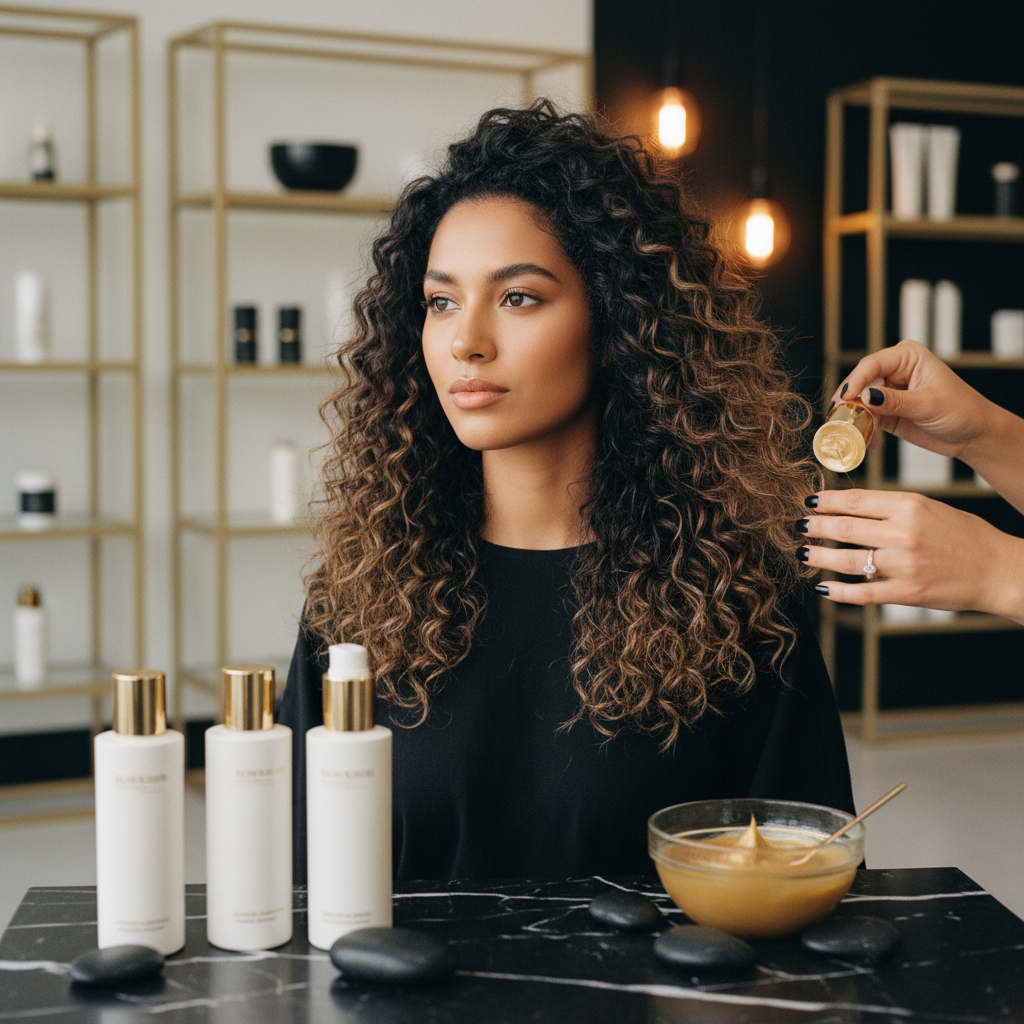
Quick answer: A comprehensive Low Porosity Hair Care Guide centres on one physical reality: cuticles that lie tightly overlapping and flat, repelling water and cosmetic formulations. Managing this hair type requires gentle heat to raise cuticles, lightweight humectants such as glycerin, and clarifying washes to prevent surface buildup. Heavy butters and dense proteins must be restricted. The main limitation is that hair porosity is an inherent structural trait determined by genetics and cuticle integrity, so care routines cannot permanently alter porosity, only manage how moisture penetrates.
Key takeaways
- Low porosity hair has tightly bound, overlapping cuticle scales that resist water penetration and take hours to dry.
- Mild, indirect heat (such as a warm towel or thermal cap) is the most effective way to lift the cuticle layer temporarily during conditioning.
- Heavy plant butters and thick mineral oils sit on the surface, causing dullness and rapid product buildup rather than hydration.
- Protein treatments should be used sparingly because low porosity fibres already have strong, intact keratin structures and become brittle under excess protein.
- Regular clarifying washes prevent surfactant and polymer accumulation, which otherwise creates an impermeable hydrophobic barrier.
Low Porosity Hair Care Guide: what the evidence shows
This Low Porosity Hair Care Guide examines how structural biology dictates everyday product performance. Under scanning electron microscopy, a healthy human hair shaft exhibits 5 to 10 layers of overlapping cuticle scales. In low porosity hair, these cuticles lie completely flat and tight against the cortex, bound by an intact cell membrane complex rich in 18-methyleicosanoic acid (18-MEA).
Cosmetic science demonstrates that 18-MEA makes the virgin hair surface intensely hydrophobic. Because the outer lipid layer remains undamaged by bleaching, high-heat styling tools, or chemical relaxers, water beads on the surface rather than absorbing easily. When water finally enters the cortex, the tight cuticles trap it inside, leading to notoriously slow drying times. Clinical research confirms that low porosity hair is inherently strong and resilient against tensile stress, but it struggles with cosmetic absorption, making standard rich conditioners ineffective.
| Feature | Low Porosity Hair | High Porosity Hair |
|---|---|---|
| Cuticle Structure | Flat, tightly overlapping, intact lipid layer | Raised, chipped, missing cuticle fragments |
| Water Absorption | Very slow; water beads on the surface | Immediate; absorbs water rapidly |
| Drying Time | Extended; often takes several hours | Fast; loses water quickly to ambient air |
| Protein Requirement | Minimal; excess causes stiffness and snap | High; requires structural reinforcement |
| Product Reaction | Prone to surface buildup and grease | Absorbs heavy creams easily; dries out fast |
| Ideal Active Ingredients | Glycerin, aloe vera, light hydrolysed silk | Shea butter, coconut oil, heavy keratin complexes |
The biological mechanism of low porosity strands
Porosity is defined by how easily liquid and gas move through the cuticle into the hair cortex. The cuticle consists of the epicuticle, the exocuticle, and the endocuticle. In low porosity hair, the intercellular cement between these layers is fully intact.
When you apply a cosmetic formula at room temperature, high-molecular-weight ingredients cannot slip beneath the tightly shingled edges. Instead, polymers, silicones, and triglycerides settle onto the epicuticle. Over multiple wash cycles, these unabsorbed compounds cross-link and coat the hair shaft. This surface film deflects ambient moisture and creates a paradox: the internal cortex becomes chronically dehydrated while the outside appears coated, stiff, and greasy.
Identifying low porosity hair: signs to look for
You do not need a laboratory microscope to recognise low porosity hair. Common physical signs include:
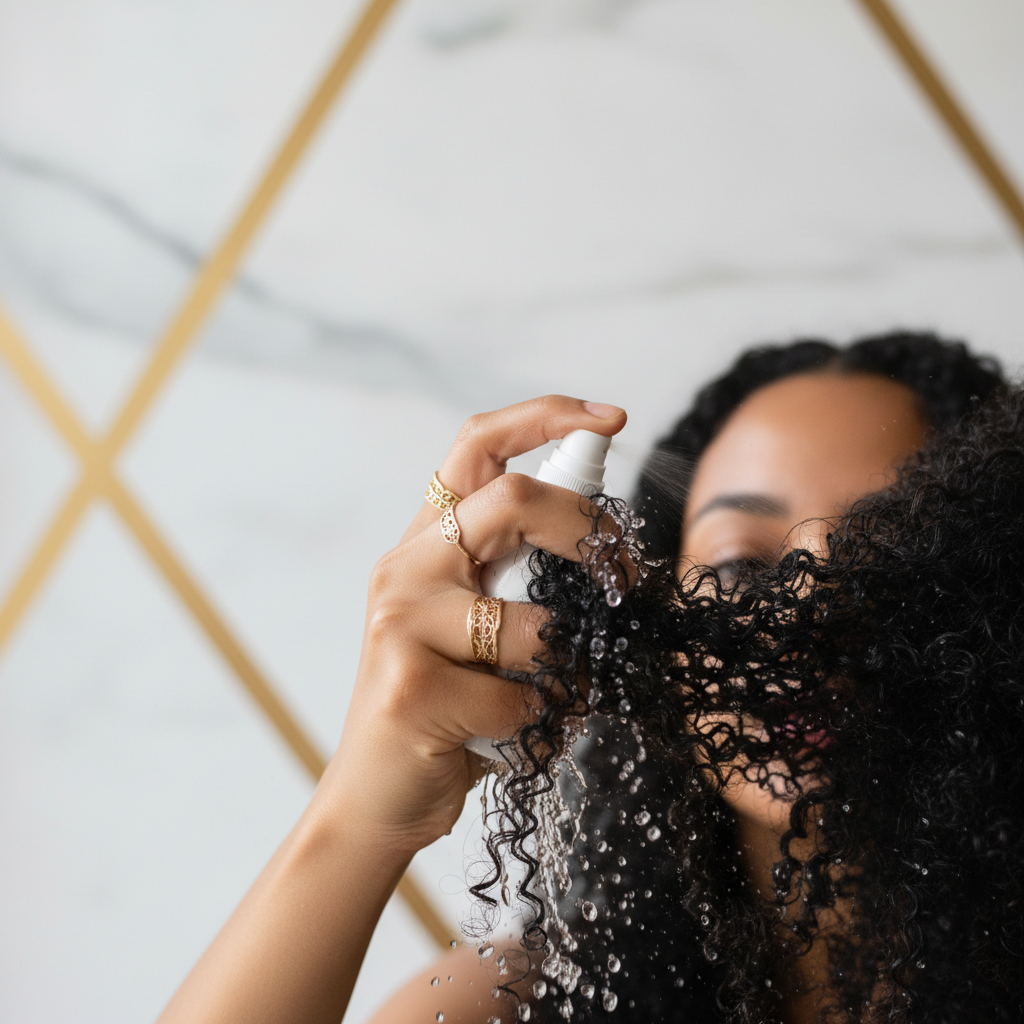
- Water beading: In the shower, droplets sit visibly on your strands for several minutes before the hair feels genuinely saturated.
- Product sitting: Leave-in conditioners and oils remain visible as a white film or greasy sheen rather than vanishing into the fibre.
- Prolonged drying: Your hair takes four to eight hours (or even longer) to air-dry completely.
- Rapid buildup: Your scalp and lengths feel coated, heavy, or sticky within a day or two of washing.
- Protein sensitivity: Using a reconstructive protein mask leaves your hair feeling like straw, leading to breakage along the shaft rather than elasticity.
The popular "float test" (dropping a strand in a glass of water) is notoriously unreliable because surface tension and natural sebum can make any hair float. Observing how your hair responds to clean water in the shower provides a far more accurate assessment.
Practical steps for low porosity hair care
Managing low porosity hair demands techniques that coax the cuticle open and formulas that deliver hydration without heavy residues.
1. Harness heat during conditioning
Because the cuticles resist penetration, thermal energy is your greatest tool. Warm water during shampooing helps loosen sebum, but applying a deep conditioning treatment under a warm processing cap, a heated towel, or a hair steamer for 15 to 20 minutes is transformative. Heat gently lifts the cuticle shingles, allowing humectants and conditioning agents to reach the cortex.
2. Choose lightweight humectants
Prioritise water-soluble humectants that draw moisture into the fibre without leaving occlusive coatings. Look for:
- Glycerin
- Propylene glycol
- Hyaluronic acid
- Aloe vera leaf juice
- Panthenol (provitamin B5)
Avoid raw, unrefined butters like shea, cocoa, or heavy castor oil as your primary moisturiser. If you use plant oils, choose light oils with smaller molecular structures, such as argan oil, jojoba oil, or grapeseed oil, applied sparingly to seal damp ends.
3. Clarify regularly
Because products easily accumulate on low porosity hair, a clarifying shampoo formulated with chelating agents or anionic surfactants (such as sodium C14-16 olefin sulfonate) should be used every two to three weeks. Clarifying removes polymer build-up and mineral deposits from hard water, resetting the hair surface so moisturising treatments can function.
4. Limit heavy protein treatments
Low porosity hair already possesses a dense, structurally sound keratin core. Frequent treatments containing large proteins (such as hydrolysed wheat protein or collagen) overload the cuticle, making the fibre rigid and prone to snapping. If you use protein, select micro-sized hydrolysed amino acids and apply them no more than once a month.
When the issue is not low porosity
It is easy to misdiagnose your hair condition. If your hair feels coated, dull, and takes hours to dry, the root cause may not be natural low porosity.
Hard water is the most frequent culprit. Water containing high levels of calcium and magnesium ions reacts with fatty acids in shampoos to form an insoluble curd on the cuticle. This mineral shield mimics low porosity hair by blocking water and product absorption.
Similarly, excessive use of non-water-soluble silicones or polyquaternium conditioning agents can seal the cuticle artificially. If your hair becomes dry and unresponsive after moving to a new area or adopting a co-washing routine, mineral or silicone buildup is more likely the cause than your natural porosity.
Scalp health and supportive care: Watermans
While low porosity care focuses largely on the hair shaft's cuticle behaviour, a healthy foundation at the follicle level remains essential for long-term hair quality. The scalp requires an optimal environment free from product accumulation, excess sebum, and oxidative stress.
For individuals seeking to maintain a balanced, revitalised scalp environment alongside their low porosity regimen, Watermans provides targeted, nutrient-rich formulations. Watermans GrowMe Shampoo is formulated with caffeine, biotin, argan oil, rosemary extract, and niacinamide. These ingredients work to support a clean, invigorated scalp and promote fuller-looking, resilient hair without depositing heavy, suffocating waxes that weigh down low-porosity fibres. Incorporating an invigorating wash into your schedule helps keep the hair follicle clear of the heavy residues that low porosity routines seek to avoid.
When to seek professional advice
Consult a certified trichologist or dermatologist if you experience sudden changes in hair texture, widespread thinning, or excessive shedding at the root (telogen effluvium). If your hair snaps easily despite avoiding proteins and heat tools, a professional can analyse your strands using polarised light microscopy to rule out structural genetic defects, such as monilethrix or trichorrhexis nodosa. Scalp irritation, redness, scaling, or persistent itching also require medical assessment, as these indicate dermatological conditions such as seborrhoeic dermatitis rather than a simple porosity issue.
Frequently asked questions about Low Porosity Hair Care Guide
Can you permanently change low porosity hair into high porosity?
No. Porosity is determined by the genetic architecture of your hair and the degree of cumulative environmental or chemical damage. While chemical bleaching, alkaline perms, and extreme heat will artificially raise cuticles by damaging or stripping them, this degrades the structural integrity of the fibre rather than producing healthy high porosity hair.
How often should you wash low porosity hair?
Most people with low porosity hair benefit from washing one to two times per week. Because low porosity hair is prone to product accumulation on its tightly closed cuticles, waiting too long between washes leads to heavy buildup, scalp irritation, and dullness. Clarifying once every few weeks is usually recommended.
Is rice water safe according to this Low Porosity Hair Care Guide?
Rice water should be used with extreme caution on low porosity hair. Rice water is rich in surface-coating starches and large protein complexes. On low porosity hair with flat cuticles, these proteins accumulate rapidly on the exterior, making the shaft brittle, stiff, and prone to breakage.
Does cold water close the cuticle on low porosity hair?
Cold water has minimal physical impact on cuticles that are already tightly sealed flat against the cortex. While a cool rinse does no harm, warm water is far more beneficial during the cleansing and conditioning phases for low porosity hair, as slight warmth relaxes the cuticle layers and aids moisture penetration.
Which oils work best for low porosity strands?
Lightweight oils with smaller molecular structures perform best, including jojoba oil, argan oil, and squalane. Heavy, saturated fats like coconut oil or raw shea butter often struggle to penetrate low porosity hair, instead sitting on the exterior and causing rapid buildup.
Conclusion
Mastering a Low Porosity Hair Care Guide comes down to understanding the physics of tightly bound cuticle scales. Low porosity hair is structurally strong, naturally protected, and resistant to environmental damage. However, its hydrophobic surface requires deliberate techniques: using heat to open the cuticles, reaching for lightweight humectants, avoiding excessive proteins, and clarifying regularly. By working with your hair's natural cuticle architecture rather than fighting it with heavy products, you can maintain hydrated, flexible, and healthy-looking hair.
Sources and references
- American Academy of Dermatology Association. "Hair Care Basics." AAD.org, 2022.
- Robbins, Clarence R. Chemical and Physical Behavior of Human Hair. 5th ed., Springer-Verlag, 2012.
- Cruz, C. F., et al. "Human Hair Characteristics: Morphological and Biochemical Features." Cosmetics, vol. 3, no. 3, 2016, p. 24.
- Dawber, Rodney. "Hair: Its Structure and Response to Cosmetic Preparations." Clinics in Dermatology, vol. 14, no. 1, 1996, pp. 105-112.
- Evans, Trefor, and R. Randall Wickett. Practical Modern Hair Science. Allured Business Media, 2012.
Find these ingredients in Watermans products
- Castor Oil: you will find this ingredient in our Camellia & Black Castor Hair & Body Oil.
- Panthenol (Provitamin B5): you will find this ingredient in our Heat Protection Spray.
- Aloe Vera: you will find this ingredient in our Curly Hair Conditioner.