Hard Water Hair Damage Guide: Evidence, Signs, and Solutions
9 min read ·
Discover the science-backed Hard Water Hair Damage Guide: understand mineral buildup, stop friction breakage, and learn proven ways to protect your hair.
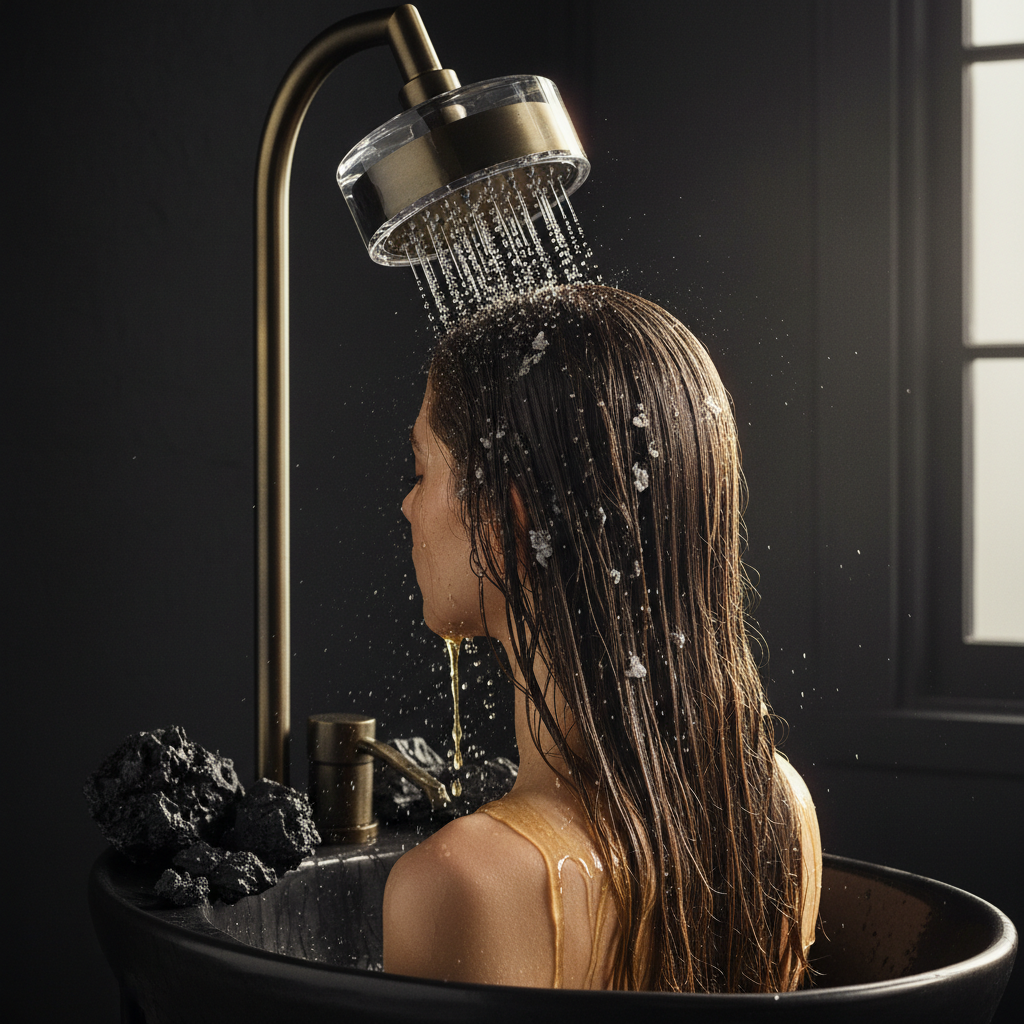
Quick answer: This Hard Water Hair Damage Guide explains how dissolved minerals, primarily calcium and magnesium, interact with your hair fibre. Washing in hard water leaves an insoluble mineral film that disrupts the cuticle, causing roughness, dullness, tangling, and mechanical breakage. However, hard water does not cause medical hair loss or kill follicles. While clarifying treatments and chelating agents can remove surface mineral buildup, they cannot repair permanent structural fractures already present in the hair shaft.
Key takeaways
- Hard water contains elevated concentrations of dissolved calcium and magnesium carbonates, typically above 120 mg/L.
- Minerals react with fatty acids in shampoos to form insoluble salts (curd) that coat the hair fibre.
- Hard water causes cuticle lifting and physical breakage, but controlled studies show it does not cause follicular hair loss or alopecia.
- Tensile strength reductions from mineral exposure are primarily driven by increased grooming friction rather than internal cortex destruction.
- Weekly chelating shampoos, water softeners, and acidic rinses effectively manage mineral accumulation.
Hard Water Hair Damage Guide: what the evidence shows
Hard water is defined by high concentrations of dissolved multivalent metallic cations, predominantly calcium (Ca2+) and magnesium (Mg2+). Water hardness is measured in milligrams per litre (mg/L) or parts per million (ppm) of calcium carbonate equivalent. Water measuring between 0 and 60 mg/L is classified as soft, 61 to 120 mg/L as moderately hard, 121 to 180 mg/L as hard, and above 180 mg/L as very hard.
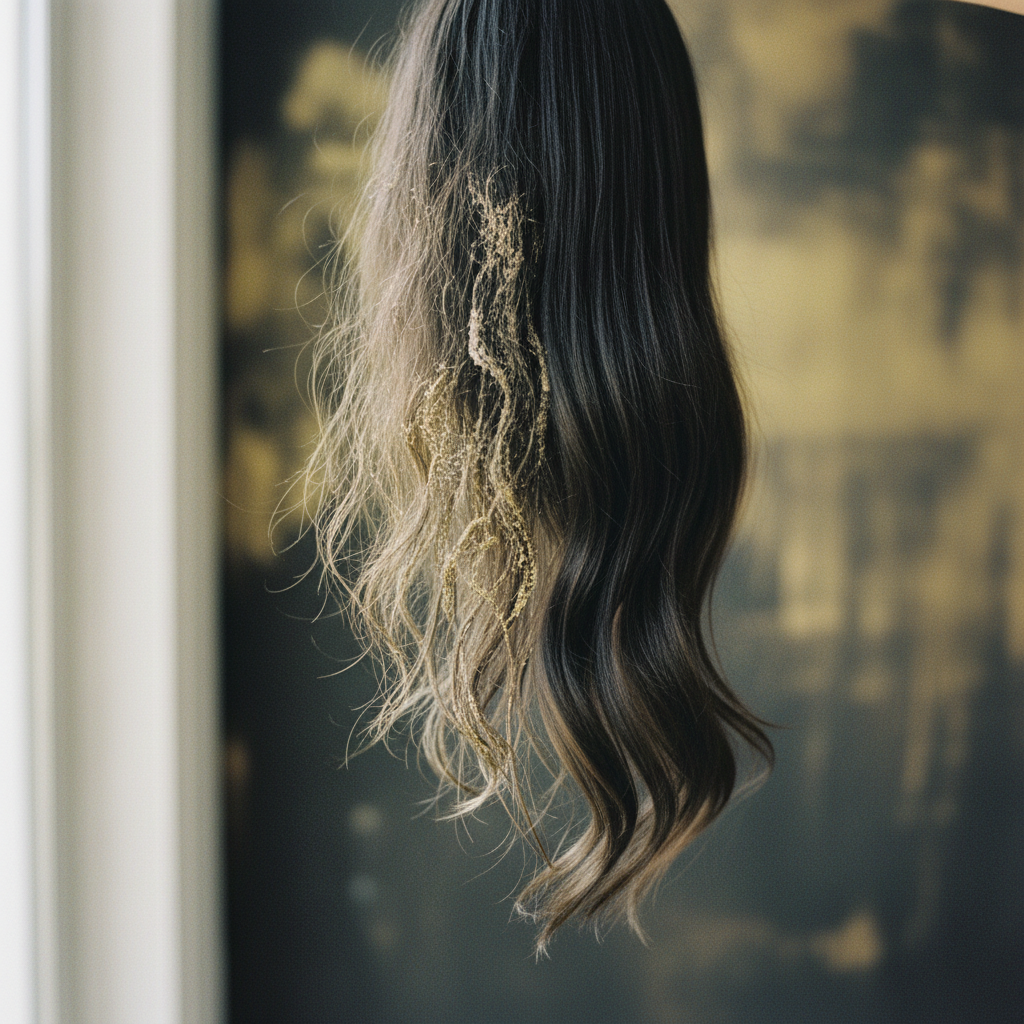
When you wash your hair in hard water, these dissolved minerals bind to the negatively charged surface of the hair shaft. Hair keratin has an isoelectric point around pH 3.67. In ordinary shower water, which typically ranges from pH 6.5 to 8.5, the hair carries a net negative surface charge. Positively charged calcium and magnesium ions readily bind to these sites.
Research examining mineral deposition on hair shows that calcium binds strongly to the cuticular layers and outer cortex. Electron microscopy confirms that mineral crystallisation lifts the cuticular scales, leaving them propped open rather than lying flat. This lifted state prevents the cuticle from reflecting light uniformly, resulting in visible dullness, increased inter-fibre friction, and severe tangles.
What the evidence does not show: hair loss versus hair breakage
A critical distinction in this Hard Water Hair Damage Guide is separating fibre breakage from true hair loss. Medical hair loss, such as androgenetic alopecia or telogen effluvium, takes place beneath the surface inside the follicle. The living hair bulb receives its nutrition and cellular signalling from the dermal papilla via the bloodstream, not from shower water.
A landmark study published in the International Journal of Trichology in 2013 tested hair fibres immersed in hard water against fibres immersed in distilled water over 30 days. The researchers found no statistically significant difference in the tensile strength of the hair between the two groups. A follow-up study in 2016 corroborated that hard water did not decrease the tensile strength of untreated hair, although it altered the physical surface and appearance.
Hard water does not shrink follicles, shorten the anagen (growth) cycle, or cause telogen shedding. When people living in hard water areas notice thinning, the primary cause is almost always mechanical breakage. Because the mineral coating makes individual fibres stiff and prone to tangling, brushing and styling snap the weakened shafts. Breakage sheds short, fractured hair pieces without the tiny white keratin bulb attached. If you see full-length hairs with the root bulb intact, the cause is follicular shedding, not water hardness.
The mechanism of mineral buildup and soap scum
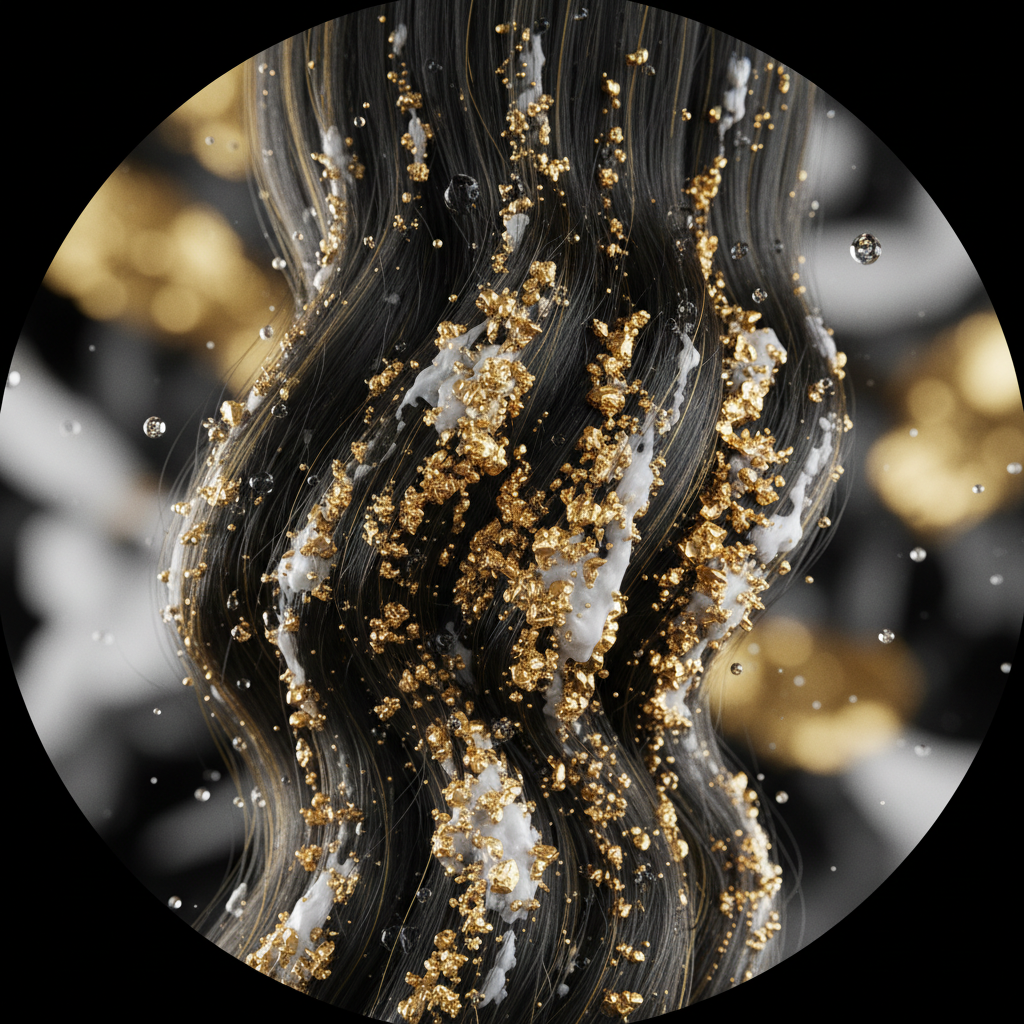
The chemical reaction between dissolved minerals and cleansing surfactants is the primary engine of surface damage. Traditional soaps and certain anionic surfactants react with free calcium and magnesium ions to form an insoluble precipitate known as soap scum, or calcium stearate.
Ca2+ + 2(C17H35COO-) -> Ca(C17H35COO)2 [insoluble precipitate]
This insoluble salt forms a stubborn film over the scalp and hair shaft. The consequences of this layer include:
- Occlusion of moisture: The mineral crust prevents conditioning agents from penetrating into the cuticle layers.
- Cuticle abrasion: As fibres rub together during movement, hard mineral crystals abrade neighbouring cuticles, accelerating the erosion of the protective F-layer (18-methyleicosanoic acid).
- Chemical interference: Minerals like copper and iron, often found alongside calcium in domestic plumbing, act as catalysts for free radical generation during colour processing, accelerating oxidative damage.
Signs of hard water hair damage
You can identify mineral buildup by evaluating physical texture, visual cues, and styling behaviour:
- Stiff, straw-like feel: Hair feels coarse even immediately after applying a [deep conditioner](https://watermanshair.com/products/masque-me-luxurious-hair-mask).
- Persistent dullness: Hair lacks shine because the raised, mineral-encrusted cuticle scatters light rather than reflecting it.
- Rapid colour fading or brassiness: Hair treated with artificial colour shifts tone rapidly. Blonde shades may turn brassy or take on a greenish tint due to trace copper oxidisation.
- Dry, irritated scalp: Mineral deposits dry out the stratum corneum on the scalp, triggering flaking and itchiness that mimic dandruff.
- Poor lathering: Shampoos struggle to foam, requiring you to use double or triple the normal amount of product to achieve a lather.
| Feature | Soft Water Effect | Hard Water Effect |
|---|---|---|
| Mineral Content | 0 to 60 mg/L CaCO3 | > 120 mg/L CaCO3 |
| Surfactant Action | Foams easily, rinses clean | Precipitates lather, leaves soap scum |
| Cuticle Condition | Cuticles lie flat and smooth | Cuticles lift and gather mineral crystals |
| Hair Feel | Soft, occasionally limp or slippery | Coarse, dry, straw-like, stiff |
| Combing Friction | Low surface friction | High surface friction, snaps easily |
| Colour Retention | Standard longevity | Accelerated fading and brassiness |
What you can do: mitigation and care strategies
Managing hard water requires a dual approach: neutralising the incoming water supply where possible, and periodically removing bound minerals from the hair shaft.
1. Chelating and clarifying shampoos
Clarifying shampoos remove surface dirt and sebum, but true mineral removal requires chelating agents. Chelators are molecules that bind to metal ions, forming a water-soluble ring complex that washes away easily. Look for ingredients such as:
- Tetrasodium EDTA or Disodium EDTA
- Citric acid (at therapeutic chelating percentages)
- Sodium phytate
Use a chelating shampoo once every one to two weeks. Overuse can strip natural lipids, so always follow with an intensive conditioning treatment.
2. Acidic rinses
Hair exists naturally at an acidic pH of 4.5 to 5.5. Hard water is typically alkaline, which encourages cuticle swelling. An acidic rinse formulated with diluted apple cider vinegar or lactic acid helps lower the pH, contract the cuticle scales, and dissolve alkaline mineral salts. A safe ratio is one tablespoon of vinegar to 500 ml of filtered water, rinsed through the hair after shampooing.
3. Shower filters versus water softeners
It is vital to distinguish between cosmetic shower filters and genuine water softeners. Standard carbon or KDF shower filters remove chlorine, volatile organic compounds, and large sediments. However, they do not soften water because they cannot remove dissolved calcium and magnesium ions under high-flow shower conditions. Genuine softening requires an ion-exchange system, which replaces calcium and magnesium ions with sodium or potassium ions throughout the household plumbing.
4. Supporting fibre resilience with Watermans
When mineral buildup creates friction and elevates the risk of snapping, maintaining a nourished scalp environment and supporting fibre strength is essential. Watermans GrowMe Shampoo provides a sulphate-free cleansing base that avoids stripping delicate fibres while clearing away daily debris. Formulated with biotin, rosemary, caffeine, and argan oil, it supports scalp vitality and coats stressed hair strands to reduce combing resistance. Pairing it with a deeply moisturising treatment helps restore elasticity to hair fibres that have become rigid from environmental mineral exposure.
When the cause may be something else
If your hair continues to shed from the root or thins noticeably despite implementing water-softening solutions, look beyond your shower:
- Nutritional deficiencies: Low ferritin (iron stores), vitamin D insufficiency, or inadequate protein intake trigger telogen effluvium.
- Hormonal imbalances: Thyroid disorders, postpartum shifts, or androgenetic alopecia directly affect follicular cycles.
- Heat and chemical processing: Bleaching, perming, and heat styling above 185°C cause thermal degradation of keratin bonds, producing identical symptoms to hard water breakage.
When to seek professional advice
Consult an NHS general practitioner, dermatologist, or qualified trichologist if you notice:
- Sudden diffuse hair shedding where large volumes of hair with intact white bulbs shed daily.
- Patchy hair loss, widening part lines, or receding temples.
- Severe scalp inflammation, burning sensations, redness, or thick, adherent scaling that does not respond to clarifying washes.
Frequently asked questions about Hard Water Hair Damage Guide
Can hard water cause permanent baldness?
No. As outlined in this Hard Water Hair Damage Guide, hard water minerals only touch the non-living hair shaft outside the scalp. They cannot enter the bloodstream, alter hormonal activity, or destroy hair follicles. Any loss associated with hard water is shaft breakage caused by friction and roughness, not permanent follicular death.
How often should I use a chelating shampoo for hard water?
Most people living in hard water areas should use a chelating shampoo once every 7 to 14 days. If your water is classified as very hard (above 180 mg/L) or you swim regularly in chlorinated pools, once a week is appropriate. Always follow with a deep conditioner to restore flexibility.
Do shower head filters completely fix hard water hair?
No. Most screw-on shower head filters use activated carbon, ceramic balls, or KDF media. While they excel at neutralising chlorine and catching pipe sediment, they do not perform ion exchange. Only an authentic salt-based ion-exchange water softener removes dissolved calcium and magnesium to genuinely soften water.
Why does my hair feel greasy yet dry after washing in hard water?
Hard water minerals react with natural sebum and cleansing agents to form an insoluble film. This coating blocks conditioning agents from penetrating the cortex, leaving the inner fibre parched. Simultaneously, the waxy mineral residue sits on your roots, making the hair feel dirty, heavy, and coated.
Conclusion
Understanding the mechanisms detailed in this Hard Water Hair Damage Guide allows you to protect your hair without unnecessary anxiety about hair loss. While hard water minerals bind to the cuticle and cause dryness, dullness, and mechanical breakage, they do not compromise follicular health. By using chelating washes, balancing hair pH with acidic conditioning, and minimising friction, you can keep your hair smooth, resilient, and manageable regardless of your local water supply.
Sources and references
- Srinivasan, G., et al. (2013). 'Evaluation of the Effect of Hard Water on Hair through Tensile Strength'. International Journal of Trichology, 5(3), pp. 147 to 151.
- Evans, T. And Wickett, R. R. (2012). Practical Modern Hair Science. Allured Business Media.
- World Health Organization (2011). Hardness in Drinking-water: Background document for development of WHO Guidelines for Drinking-water Quality. WHO/SDE/WSH/03.04/06.
- Robbins, C. R. (2012). Chemical and Physical Behavior of Human Hair. 5th edn. Springer-Verlag.
- British Water (2021). Code of Practice: Water Treatment for Domestic Properties. British Water.
Find these ingredients in Watermans products
- Vitamin D: you will find this ingredient in our Hair Vitamins.