Hair Porosity Test Guide: How to Accurately Test Cuticle Health
9 min read ·
Discover how to test your hair porosity accurately at home. Learn the science behind low, medium, and high porosity, test reliability, and tailored haircare routines.
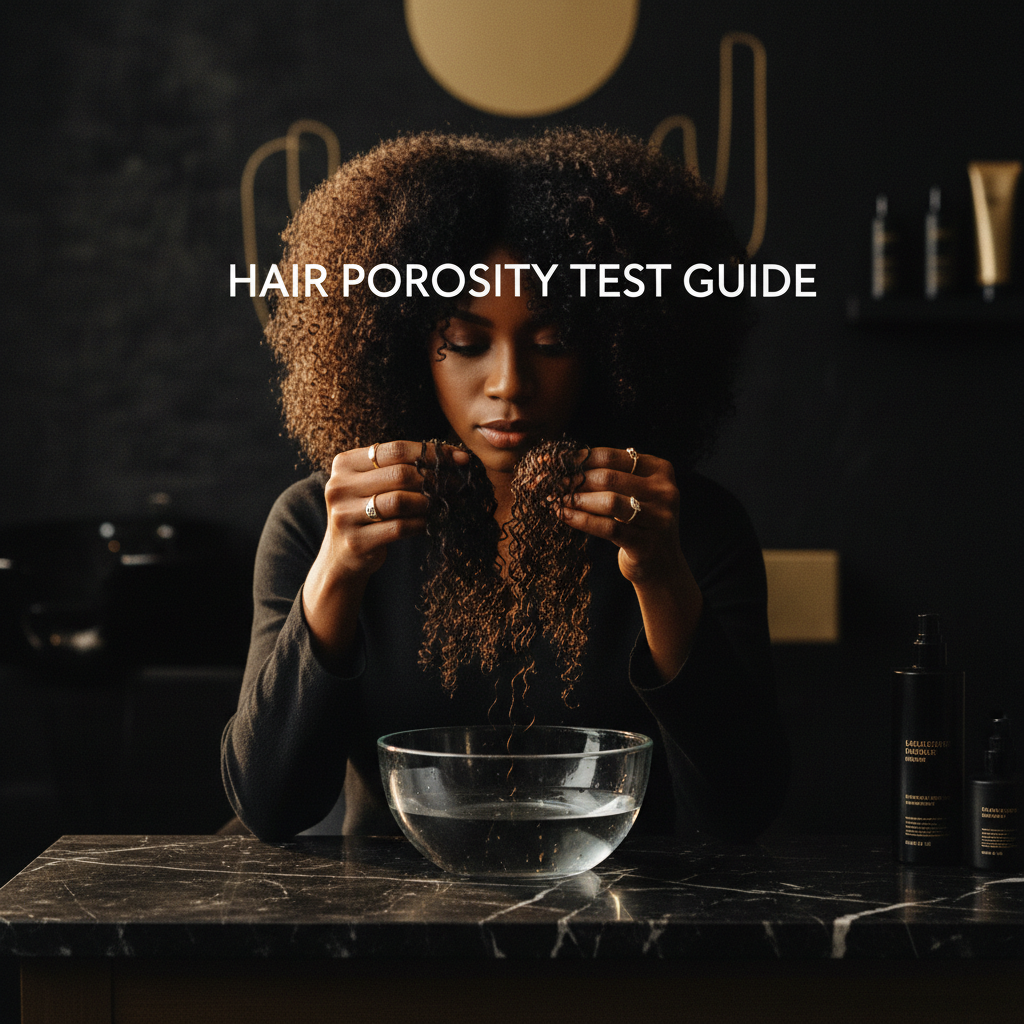
Quick answer: A Hair Porosity Test Guide helps you identify how easily your hair fibre absorbs and retains moisture, lipid layers, and chemical treatments. Porosity is dictated by the structural integrity of the outer cuticle layer, categorised as low, medium, or high. While simple home checks like the water glass test provide a quick estimate, surface tension and residual oils often skew results. True assessment relies on tactile strand checks, water absorption timing, and understanding your chemical and heat history.
Key takeaways
- Hair porosity describes how readily water and cosmetic formulations pass through the protective outer cuticle into the cortex.
- Low porosity hair features tightly overlapping, flat cuticle scales that resist moisture absorption but retain it once penetrated.
- High porosity hair has raised, chipped, or missing cuticle scales, absorbing water almost instantly while losing moisture just as fast.
- Popular home tests like the water float test can produce false readings due to surface tension, sebum, and silicone residues.
- Gentle mechanical handling, balanced protein-moisture routines, and pH-appropriate hair care help stabilise moisture retention across all porosity levels.
Hair Porosity Test Guide: what the evidence shows
This Hair Porosity Test Guide evaluates how the outermost layer of the hair fibre, known as the cuticle, governs hydration. The cuticle consists of 5 to 10 overlapping cellular layers made of hardened keratin, bonded by the cell membrane complex. When these scales lie flat and intact, moisture movement is restricted. When chemical processing, UV radiation, or thermal tools chip away at these layers, the cuticle opens up, dramatically altering porosity.
Cosmetic scientists categorise porosity along a spectrum rather than rigid buckets:
- Low porosity: Cuticles lie exceptionally flat and compact. Water beads up on dry hair, products tend to sit on the surface, and drying times are prolonged.
- Medium (normal) porosity: Cuticles are slightly raised, allowing balanced water intake and retention. Styles hold reliably, and colour absorbs evenly.
- High porosity: Cuticles are flared, lifted, or missing. The cortex is exposed. Water saturates the strand instantly, but the fibre dries out rapidly, feeling rough, brittle, and prone to mechanical breakage.
Understanding where your strands fall dictates whether you need lightweight, heat-assisted hydration or heavier lipid sealants and hydrolysed proteins.
How to test your hair porosity: methods and reliability
Assessing your porosity at home requires clean, product-free hair. Buildup from silicones, heavy butters, or styling polymers alters how water interacts with the strand. Wash your hair thoroughly with a clarifying shampoo, skip conditioner, and let your hair air-dry fully before running these tests.
| Test Method | Reliability | What It Involves | Potential Limitation |
|---|---|---|---|
| Float Test (Water Glass) | Low to Moderate | Dropping clean shed hairs into a glass of room-temperature water. | Water surface tension and natural sebum cause damaged hair to float, giving false low-porosity readings. |
| Slide and Feel Test | Moderate to High | Sliding fingers up a single dry strand from tip to root. | Subjective; calloused fingers or textured curls can misinterpret curl patterns as rough cuticles. |
| Spray Absorption Test | High | Misting a section of clean, dry hair with a fine water spray. | Ambient humidity and distance of the spray nozzle can influence water droplet behaviour. |
| Drying Time Observation | High | Tracking how long unconditioned hair takes to dry in normal indoor conditions. | Hair density, thickness, and room temperature impact overall drying speed alongside porosity. |
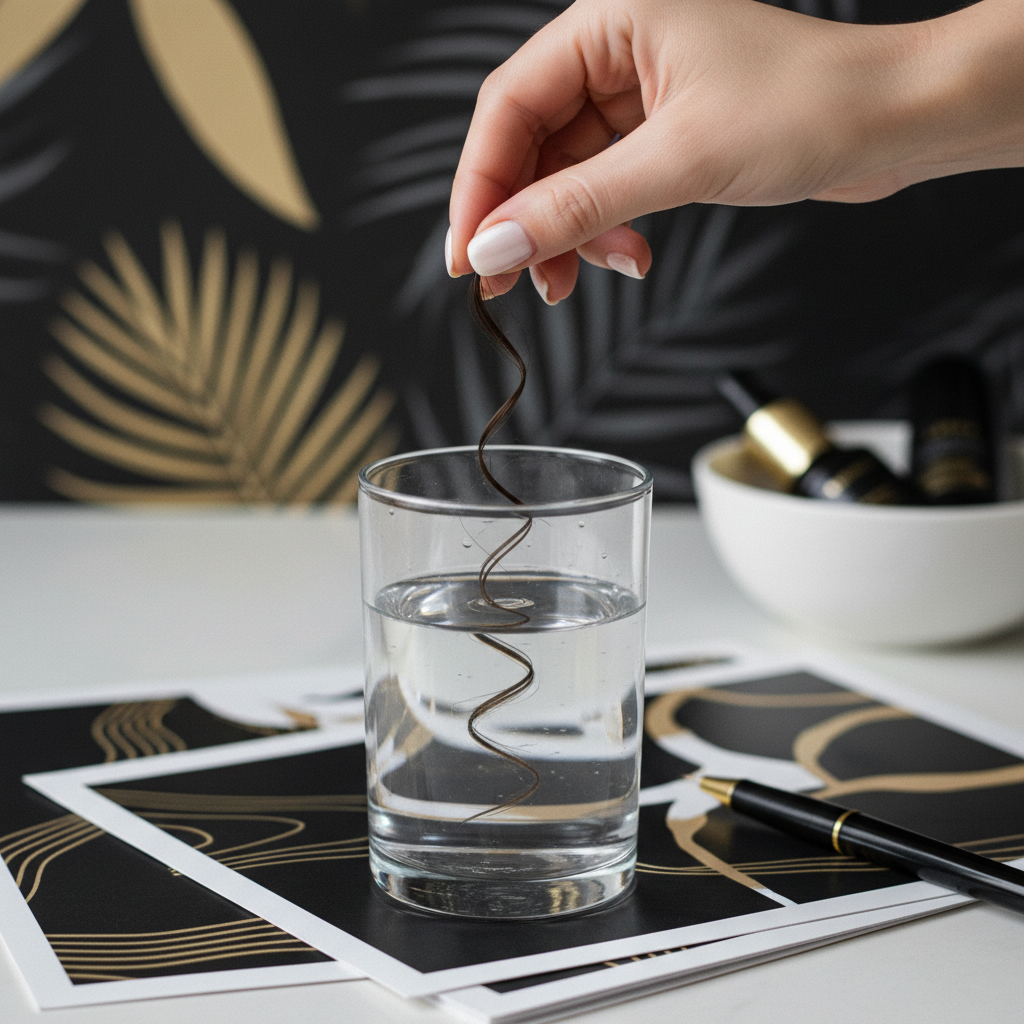
The Float Test
Drop a clean, shed strand of hair into a glass of room-temperature water. Observe it for 2 to 4 minutes:
- Sinks quickly to the bottom: Suggests high porosity, as water penetrates the cuticle gaps swiftly.
- Drifts in the middle: Suggests medium porosity.
- Floats at the very surface: Suggests low porosity.
The primary limitation of this test is physical surface tension. Even highly damaged hair can rest on the surface film of water unless gently submerged or freed of all trace lipids.
The Slide and Feel Test
Take an individual strand from your crown or mid-lengths. Hold the tip firmly with one hand, then pinch the strand with your other thumb and forefinger, sliding upward toward the scalp.
- If the strand feels completely smooth and glassy, your cuticles lie flat, indicating low porosity.
- If you feel slight friction or minor ridges, your hair is likely medium porosity.
- If the strand feels rough, gritty, or catches repeatedly against your skin, cuticles are raised or missing, signalling high porosity.
The Spray Absorption Test
Separate a small section of clean, dry hair. Spritz it once with a fine mist of pure water from 10 centimetres away. Watch the droplets:
- Droplets sit on the surface, beading up for several minutes without soaking in: Low porosity.
- Droplets sink in within 30 to 60 seconds: Medium porosity.
- Droplets disappear into the fibre almost immediately: High porosity.
The biological mechanism of hair porosity
Hair porosity is governed by the structural integrity of 18-methyleicosanoic acid (18-MEA) and the endocuticle. The epicuticle, the thinnest outer membrane of the hair shaft, is naturally coated in 18-MEA, a fatty acid layer that provides hydrophobicity, meaning it repels water.
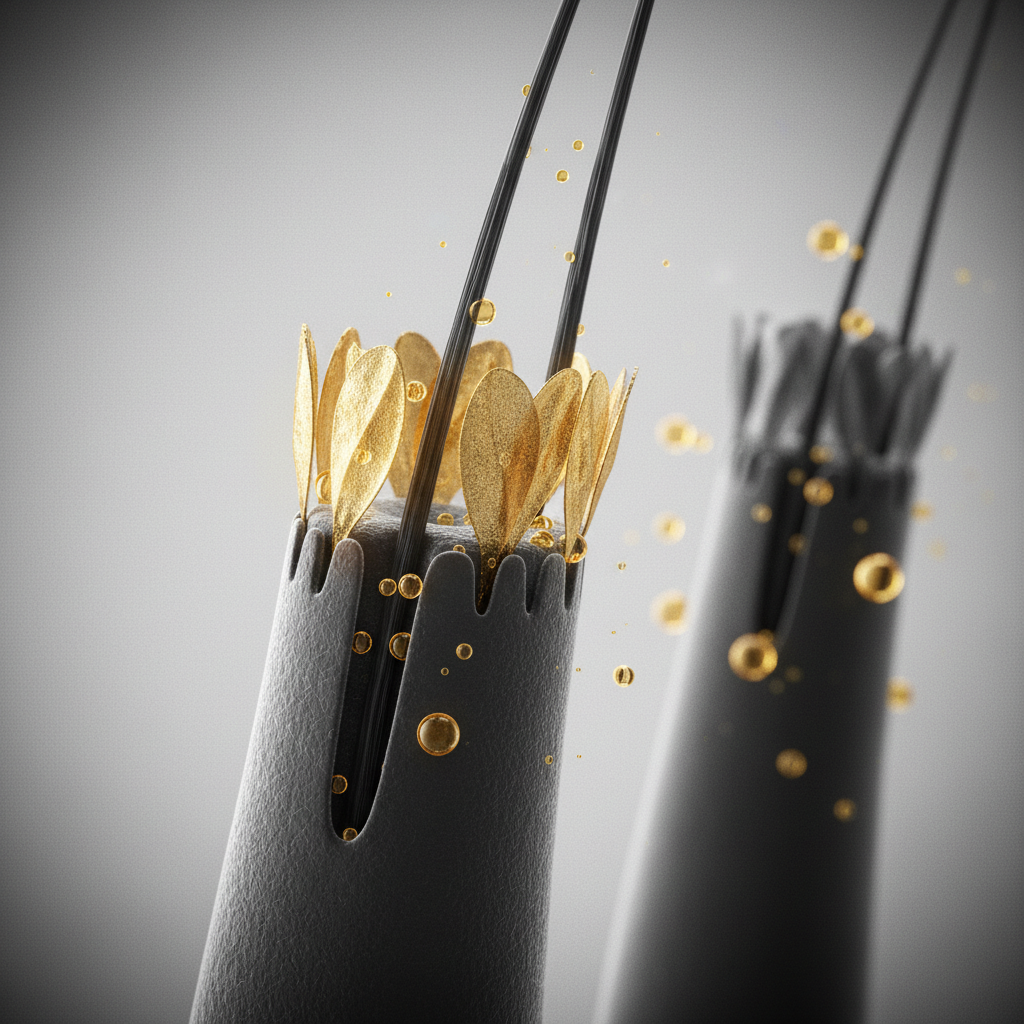
When hair undergoes alkaline chemical processes such as bleaching, permanent dyeing, or chemical relaxing, the alkaline pH (often between pH 9.0 and 11.0) swells the cuticle scales. This process strips away the protective 18-MEA lipid layer. Once this hydrophobic barrier vanishes, the hair becomes hydrophilic, absorbing water rapidly like a sponge.
High porosity hair swells drastically when wet. Because water stretches the inner cortex and exerts pressure on weakened cuticles, repeated swelling and contracting, termed hygral fatigue, leads to structural stress and eventual hair breakage. Conversely, low porosity hair retains its dense lipid shield, which repels moisture but protects internal keratin bonds from environmental stress.
Tailoring your routine by porosity level
Your Hair Porosity Test Guide results should determine how you formulate your wash and styling routine. Matching formulation weights and temperatures to your cuticle structure prevents both product buildup and dehydration.
Managing low porosity hair
Low porosity hair requires techniques that gently encourage the cuticle to accept moisture:
- Use mild warmth, such as a warm damp towel, hooded dryer, or steam cap, during deep conditioning to relax cuticle scales.
- Choose lightweight, humectant-rich formulas containing glycerin, aloe vera, and panthenol over heavy plant butters.
- Avoid heavy, unhydrolysed proteins, which cling to the exterior and cause the hair to feel stiff or brittle.
- Wash regularly with clarifying agents to clear polymer residue that readily coats low-porosity strands.
Managing high porosity hair
High porosity hair requires reinforcement to seal gaps and shield the vulnerable cortex:
- Rinse hair with cool to lukewarm water to help settle the cuticle layer after cleansing.
- Use products formulated with hydrolysed wheat, soy, or keratin proteins. These low-molecular-weight amino acids temporarily deposit within cuticle gaps to fortify the fibre.
- Layer leave-in conditioners under rich emollient oils or butters to physically slow down moisture evaporation.
- Maintain a slightly acidic hair routine (pH 4.5 to 5.5) to keep the remaining cuticle scales chemically compact and aligned.
When porosity issues mask deeper hair conditions
Porosity describes the physical condition of the hair shaft, not the health of the hair follicle. It is critical to distinguish between cuticle porosity changes and genuine follicular shedding or medical hair loss.
If you notice excessive shedding from the root (characterised by a small white bulb at the end of the hair fibre), porosity treatments will not resolve the issue. Conditions such as telogen effluvium, androgenetic alopecia, or nutritional deficiencies occur beneath the scalp surface within the follicle.
High porosity frequently leads to hair breakage along the mid-lengths or ends due to compromised structural tensile strength. While reducing breakage makes the hair appear thicker and retains length, it does not alter the biological rate of hair growth from the scalp.
Supporting hair fibre integrity with Watermans
When addressing fragile or damaged hair across any porosity level, scalp support and fibre strength work together. Watermans provides targeted formulations designed to improve the cosmetic look and feel of stressed strands.
Watermans Grow Me Shampoo cleanses the scalp without harsh sulphates that can aggressively strip natural lipids, making it suitable for high porosity hair that needs gentle handling as well as low porosity hair prone to residue. Formulated with hydrolysed lupin protein, biotin, rosemary, and niacinamide, it helps reinforce the hair fibre to reduce daily breakage, leaving hair feeling thicker and more resilient from root to tip.
Frequently asked questions about Hair Porosity Test Guide
Can my hair porosity change over time?
Yes. While your natural hair texture has a baseline porosity, environmental factors, heat styling, and chemical treatments constantly alter it. Bleaching, perming, and UV exposure raise porosity along the mid-shaft and ends. New growth near the scalp remains at your biological baseline, meaning a single strand can display low porosity near the root and high porosity at the tip.
Which method in this Hair Porosity Test Guide is most accurate?
The spray absorption test combined with the tactile slide-and-feel test is far more accurate than the glass float test. Home float tests frequently produce false results because surface tension keeps damaged, high-porosity strands floating, while styling product residue can make low-porosity hair sink prematurely.
Does high porosity hair require more protein than low porosity hair?
High porosity hair generally benefits more from hydrolysed proteins. Because its cuticle layer is compromised with microscopic gaps, hydrolysed proteins can temporarily patch these fissures, strengthening the strand against mechanical breakage. Low porosity hair already has compact cuticles, meaning excess protein simply accumulates on the outside, causing hair to feel stiff and dry.
Can cold water close cuticles permanently?
No. While cool water does not swell the hair cuticle the way hot, alkaline water does, it cannot permanently seal damaged or missing cuticles. Cuticle scales do not contain muscles or living cells. Acid-balanced formulations with a pH of 4.5 to 5.5 are far more effective at aligning cuticle scales than water temperature alone.
Why does low porosity hair take so long to dry?
Low porosity hair takes longer to dry because its tightly compacted cuticle scales slow the evaporation of water trapped inside the cortex. While it takes longer for water to get past the flat cuticle barrier during washing, once saturated, the dense outer layer makes it harder for that moisture to escape into the air.
Practical steps using your porosity results
Using this Hair Porosity Test Guide gives you the practical clarity needed to construct a sustainable haircare routine. Knowing whether your cuticles are tightly sealed, naturally balanced, or chemically lifted allows you to select the right product textures, water temperatures, and protein levels with confidence. Focus on consistent hydration, minimise extreme thermal styling, and protect the fragile outer fibre to maintain resilient, healthy-looking hair.
Sources and references
- Journal of Cosmetic Science, "Investigation of the surface hydrophobicity of human hair," 2008.
- International Journal of Trichology, "Shampoo and Conditioners: What a Dermatologist Should Know?" 2015.
- Robbins, C. R., "Chemical and Physical Behavior of Human Hair," 5th Edition, Springer, 2012.
- British Association of Dermatologists, "Hair breakage and cosmetic damage," 2021.
Find these ingredients in Watermans products
- Niacinamide: you will find this ingredient in our Hair Mask.
- Panthenol (Provitamin B5): you will find this ingredient in our Heat Protection Spray.
- Aloe Vera: you will find this ingredient in our Curly Hair Conditioner.