Ketoconazole Hair Washing Guide: Evidence-Based Scalp Protocol
9 min read ·
A clinical Ketoconazole Hair Washing Guide detailing application steps, dwell times, evidence, and advice for treating dandruff and seborrhoeic dermatitis safely.

Quick answer: This Ketoconazole Hair Washing Guide explains how to use medicated ketoconazole shampoo correctly for scalp conditions like dandruff and seborrhoeic dermatitis. For active flaking, lather the shampoo directly onto the scalp and leave it in contact with the skin for 3 to 5 minutes before rinsing thoroughly, repeating 2 times per week for 2 to 4 weeks. The main limitation is that ketoconazole targets fungal overgrowth, not dry skin or genetic hair loss, and excessive use can dry out hair fibres.
Key takeaways
- Ketoconazole is a broad-spectrum antifungal agent that treats scalp flaking by suppressing Malassezia yeast populations.
- The active ingredient requires 3 to 5 minutes of direct scalp contact time to penetrate the stratum corneum effectively.
- Standard treatment protocols involve using a 1% or 2% formulation 2 times per week for 2 to 4 weeks, followed by once weekly or fortnightly maintenance.
- Ketoconazole shampoo should be concentrated on the scalp rather than the mid-lengths and ends to avoid fibre dryness and breakage.
- While preliminary research suggests ketoconazole may reduce local scalp dihydrotestosterone (DHT) binding and inflammation, it is not a primary medical treatment for androgenetic alopecia.
Ketoconazole Hair Washing Guide: what the evidence shows
Medicated shampoos require a different washing technique than standard cosmetic cleansers. In this Ketoconazole Hair Washing Guide, the focus is on achieving therapeutic contact with the epidermis while protecting the delicate hair shaft from excessive surfactant stripping.
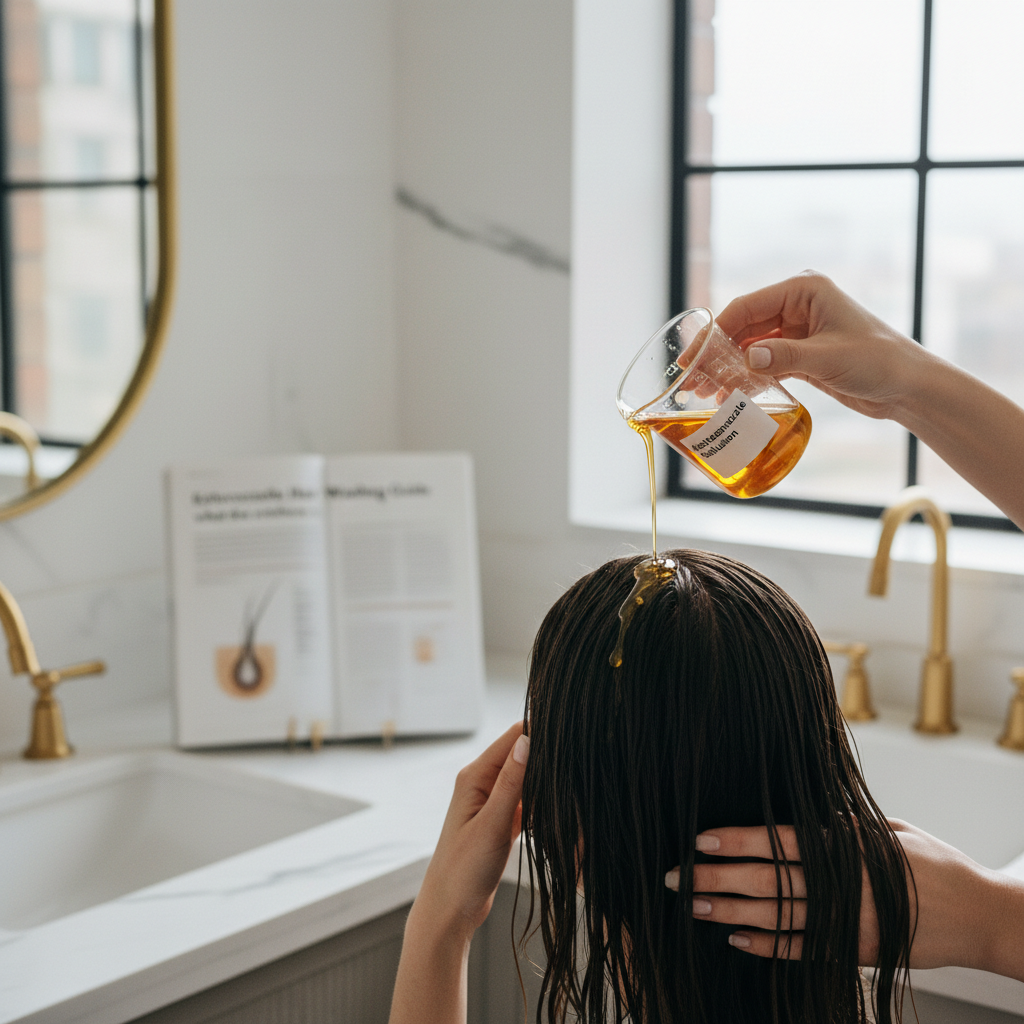
Ketoconazole works primarily by inhibiting the fungal enzyme cytochrome P450 14-alpha-demethylase. This enzyme converts lanosterol to ergosterol, an essential component of the fungal cell membrane. When ergosterol synthesis is blocked, the cell membrane of Malassezia (formerly known as Pityrosporum) becomes permeable and breaks down.
Peer-reviewed clinical trials published in journals such as the British Journal of Dermatology confirm that 2% ketoconazole shampoo significantly reduces scaling, erythema, and pruritus in seborrhoeic dermatitis. Trials show marked clinical improvement within 2 to 4 weeks of consistent application twice weekly. Over-the-counter 1% formulations provide effective relief for milder pityriasis capitis (standard dandruff), though moderate to severe seborrhoeic dermatitis typically responds faster to 2% medical concentrations.
Small-scale pilot studies have explored ketoconazole's effect on pattern hair loss. A widely cited 1998 study by Piérard-Franchimont and colleagues showed that 2% ketoconazole shampoo used 2 to 4 times weekly over 6 months improved hair density and the proportion of anagen (growing) follicles in men with androgenetic alopecia, showing results comparable to 2% minoxidil. Proposed mechanisms include reducing micro-inflammation caused by yeast colonisation and mild anti-androgenic activity in the pilosebaceous unit. However, dermatology guidelines classify ketoconazole as an adjunctive, off-label support rather than a standalone cure for genetic hair loss.
What the evidence does not show
Ketoconazole does not repair hair fibres or cure systemic alopecia. Scientific evidence does not support claims that washing with ketoconazole can:
- Regrow hair destroyed by scarring alopecias like lichen planopilaris or frontal fibrosing alopecia.
- Treat telogen effluvium, which is triggered by internal physiological disruptions such as iron deficiency, thyroid illness, or post-febrile stress.
- Reverse genetic male or female pattern hair loss on its own without comprehensive medical management.
- Hydrate dry, brittle hair strands. Medicated ketoconazole vehicles contain strong anionic surfactants, typically sodium laureth sulphate, formulated to clear sebum. They often increase shaft friction and cuticular roughness.
If your flaking stems from simple scalp xerosis (dehydration caused by cold weather or harsh products), ketoconazole offers no therapeutic benefit and will worsen dryness.
How to use ketoconazole: step-by-step instructions
Following this Ketoconazole Hair Washing Guide ensures you maximise the antifungal efficacy while preserving your hair condition.
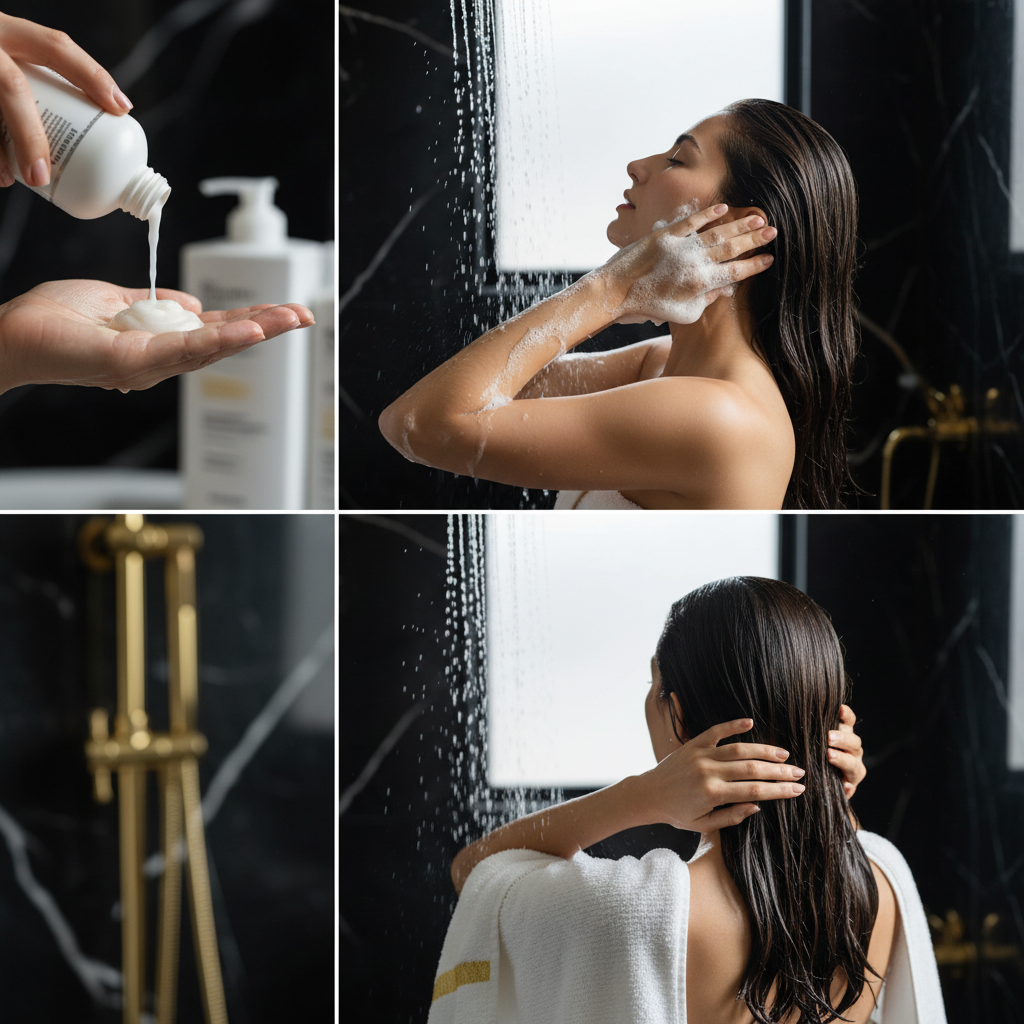
Step 1: Thorough pre-rinse
Soak your hair completely with lukewarm water for at least 60 seconds. Avoid hot water, which strips natural lipids and aggravates scalp inflammation.
Step 2: Targeted application
Dispense a 5-pence to 10-pence sized amount of ketoconazole shampoo into your palms. Part your hair and apply the product directly to your scalp skin, focusing on areas with active itching, flaking, or redness. Avoid dragging the lather down through your mid-lengths and ends.
Step 3: Gentle scalp massage
Use the pads of your fingers, never your fingernails, to work the shampoo into a rich lather across the scalp. Massaging loosens accumulated scale and sebum without scratching or inflaming the epidermal barrier.
Step 4: The 3 to 5 minute dwell time
Leave the lather on your scalp for a full 3 to 5 minutes. This dwell time is critical. Ketoconazole must remain in contact with the stratum corneum long enough to bind to keratin and permeate fungal cell walls. Rinsing immediately washes the active compound down the drain before it can act.
Step 5: Complete rinsing
Rinse your scalp thoroughly with lukewarm water until every trace of lather disappears. Residual surfactants left on the skin can provoke contact dermatitis and itching.
Step 6: Mid-length and end care
Medicated shampoos can leave hair fibres feeling coarse. Apply a rich, silicone-free or moisture-dense conditioner to your mid-lengths and ends, keeping it away from your freshly cleansed scalp. Rinse after 2 to 3 minutes.
Comparing ketoconazole formulations and common scalp actives
| Active Ingredient | Typical Strengths | Primary Mechanism | Best Suited For | Common Drawbacks |
|---|---|---|---|---|
| Ketoconazole | 1% (OTC), 2% (Prescription/Pharmacy) | Disrupts fungal ergosterol synthesis (Malassezia) | Seborrhoeic dermatitis, persistent dandruff, adjunct scalp care | Can dry out hair fibres; requires 3-5 min dwell time |
| Zinc Pyrithione | 1% to 2% | Normalises epithelial keratinisation, antifungal | Mild to moderate flaking, general dandruff maintenance | Slower resolution for thick, stubborn seborrhoeic plaques |
| Selenium Sulfide | 1% to 2.5% | Slows epithelial cell turnover, cytostatic, antifungal | Heavy greasy scale, tinea versicolor | Can discolour light or chemically treated hair; distinct odour |
| Salicylic Acid | 2% to 3% | Keratolytic (breaks down desmosomes between dead skin cells) | Thick, adherent psoriasis plaques, hyperkeratotic scale | Does not target yeast directly; can dry the scalp if overused |
| Coal Tar | 0.5% to 5% | Suppresses DNA synthesis, slows epidermal hyperproliferation | Scalp psoriasis, severe eczema | Strong odour, stains light hair, increases UV sensitivity |
Signs to monitor during use
When using ketoconazole, monitor your scalp and hair fibre response carefully.
Positive signs of progress include:
- A noticeable reduction in scalp itching within 7 to 10 days.
- Flakes becoming smaller, drier, and progressively disappearing over 2 to 4 weeks.
- Decreased redness and scalp tenderness.
Signs of adverse reaction or overuse include:
- Increased scalp stinging, burning, or contact redness.
- Severe hair shaft dryness, tangling, and cosmetic breakage during combing.
- Heightened shedding. If you notice diffuse shedding, you may be experiencing irritation or an unrelated telogen effluvium triggered by underlying inflammation.
When the cause may be something else
Not all scalp flakes stem from Malassezia yeast. If your condition does not improve within 4 weeks of following this Ketoconazole Hair Washing Guide, consider alternative causes:
- Scalp psoriasis: Features well-demarcated, thick, silvery-white plaques that often extend past the hairline and onto the neck or ears. This is an autoimmune disorder, not a fungal infection.
- Contact dermatitis: An allergic reaction or sensitivity to fragrances, preservatives (like methylisothiazolinone), or hair dyes that produces intense itching and diffuse scaling.
- Scalp xerosis: Simple dry scalp caused by low ambient humidity, frequent central heating, or overly aggressive daily washing without adequate conditioning.
- Tinea capitis: A true dermatophyte ringworm infection common in children, presenting with localized scaly patches, broken "black dot" hairs, and occasional swollen lymph nodes. It requires oral antifungal prescription treatment, as topical shampoos cannot penetrate deep into the hair follicle bulb.
Supporting the scalp between treatments
Because ketoconazole is a targeted treatment, using it every single day is neither recommended nor beneficial for most individuals. To keep the scalp calm and the hair fibre supple between medicated washes, alternating with a nourishing, sulphate-free cosmetic formula is ideal.
Watermans Grow Me Shampoo offers a balanced, nutrient-dense option to support healthy hair maintenance on alternate days. Formulated with biotin, rosemary, caffeine, niacinamide, and argan oil, it revitalises the feel of the hair and nurtures the scalp environment without stripping away moisture or interfering with your antifungal treatment schedule.
When to seek medical advice
Consult a GP, dermatologist, or qualified trichologist if you encounter any of the following:
- Your scalp exhibits oozing, open sores, honey-coloured crusting, or signs of bacterial infection.
- Flaking and intense redness persist after 4 weeks of consistent 2% ketoconazole use.
- You observe patches of hair loss leaving smooth, shiny skin (suggestive of cicatricial alopecia).
- You experience facial swelling, severe hives, or widespread dermatitis after shampoo application.
Frequently asked questions about Ketoconazole Hair Washing Guide
Can I use ketoconazole shampoo every day?
No, daily use is generally not advised. Most clinical protocols recommend using ketoconazole 2 times per week for active conditions, and once weekly or fortnightly for maintenance. Using it daily can strip the scalp's protective moisture barrier, cause compensatory oil production, and leave hair fibres brittle, leading to friction and shaft breakage.
How long should I leave ketoconazole on my scalp?
You should leave the lather on your scalp for 3 to 5 minutes before rinsing. This Ketoconazole Hair Washing Guide highlights dwell time because the active antifungal agent must bind to the stratum corneum and disrupt Malassezia membranes. Rinsing it off immediately reduces its clinical efficacy.
Does ketoconazole shampoo cause hair loss?
Ketoconazole does not cause follicular hair loss or miniaturisation. Some individuals report slight shedding when first introducing the product, which is typically telogen hairs dislodged during scalp massage, or hairs released as thick scaling lifts away. However, if severe scalp irritation occurs from an allergic reaction, discontinue use and speak to a doctor.
Can I use regular conditioner after washing with ketoconazole?
Yes, using conditioner is strongly recommended. Ketoconazole formulations focus on scalp cleansing and often dry the lengths. Apply your regular or deep conditioner exclusively to the mid-lengths and ends of your hair, keeping the formula off your scalp so it does not interfere with the active medication or feed yeast.
Can ketoconazole help with female pattern hair loss?
Ketoconazole may serve as an adjunctive support for female pattern hair loss by calming local follicular micro-inflammation and clearing excess sebum. However, robust evidence demonstrating that it regrows female hair independently is lacking. It should be used alongside proven therapies recommended by a dermatologist or trichologist.
Practical steps from this Ketoconazole Hair Washing Guide
Using medicated products requires consistency and proper technique. As outlined in this Ketoconazole Hair Washing Guide, success relies on applying the product directly to wet scalp skin, maintaining the 3 to 5 minute contact time, and limiting application to 2 times weekly during flare-ups. Protect your lengths with targeted conditioning, alternate with gentle cleansers, and consult a medical professional if scaling persists beyond 4 weeks.
Sources and references
- British Association of Dermatologists. Seborrhoeic dermatitis guidelines and management. bad.org.uk.
- National Institute for Health and Care Excellence (NICE). Ketoconazole: clinical knowledge summaries. nice.org.uk.
- Piérard-Franchimont, C., et al. (1998). Ketoconazole shampoo: effect of long-term use in androgenic alopecia. Dermatology, 196(4), 474-477.
- Danby, F. W., et al. (1993). A direct comparison of ketoconazole 2% and selenium sulfide 2.5% shampoos in the treatment of moderate to severe dandruff. Journal of the American Academy of Dermatology, 29(6), 1008-1012.
- Gupta, A. K., & Nicol, K. (2004). The use of sulfur in dermatology. Journal of Drugs in Dermatology, 3(4), 427-431.
- American Academy of Dermatology Association. How to treat dandruff. aad.org.
Find these ingredients in Watermans products
- Zinc: you will find this ingredient in our Hair Vitamins.