Keratin Treatments Explained: The Science, Safety, and Truth
9 min read ·
Keratin Treatments Explained: uncover the chemistry, safety facts, frizz-smoothing mechanisms, and maintenance steps behind salon semi-permanent hair smoothing systems.
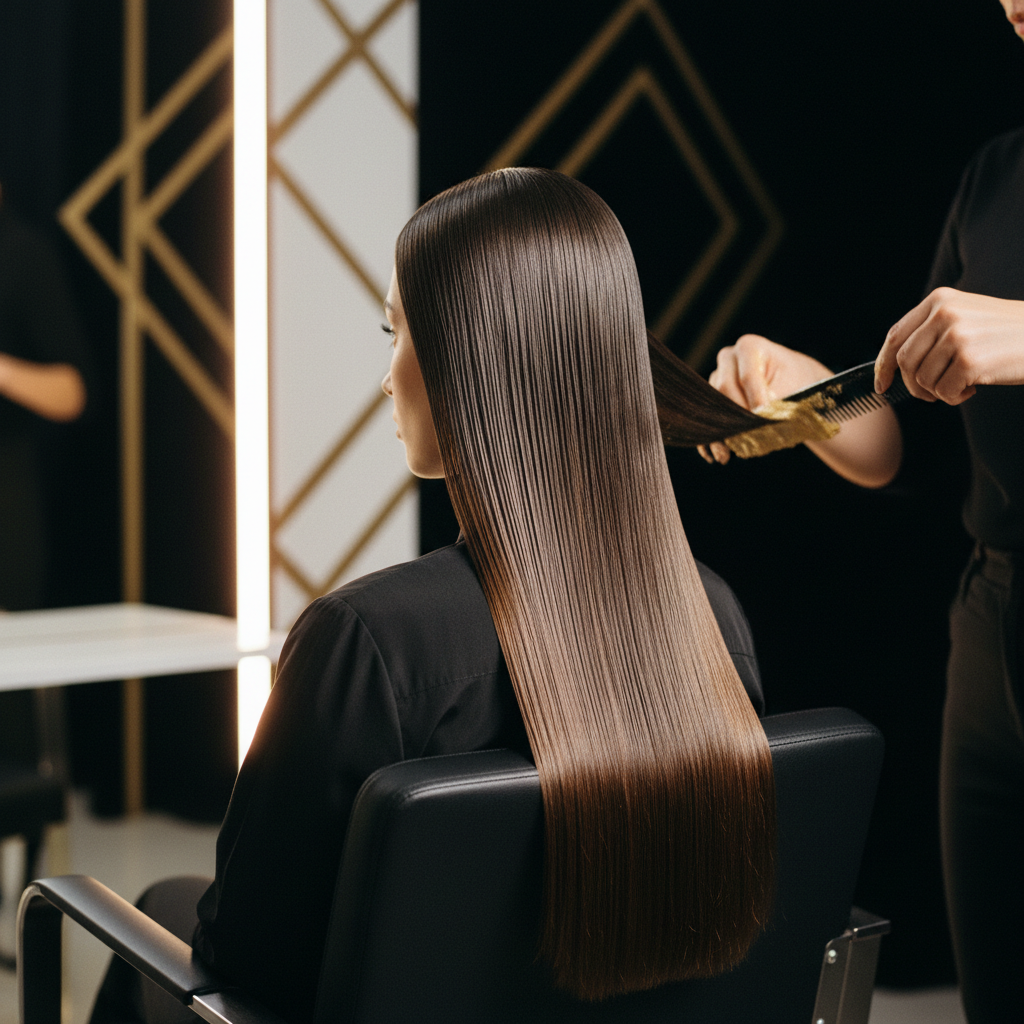
Quick answer: With Keratin Treatments Explained, you learn how salon semi-permanent smoothing systems work to reduce frizz, loosen curl patterns, and resist humidity. A hydrolysed protein solution coats the fibre and relies on heat-activated cross-linking agents, traditionally formaldehyde or glyoxylic acid, to seal the cuticle flat. The main limitation is that they do not permanently restructure the hair cortex like traditional chemical relaxers. Results fade over 8 to 16 weeks, and repeated high-heat application can trigger thermal damage and breakage.
Key takeaways
- Keratin treatments do not alter the internal disulfide bonds of the hair permanently; they create an external and sub-cuticle protein shield that washes out over 2 to 4 months.
- The smoothing mechanism relies heavily on chemical aldehydes or carboxylic acids combined with flat irons set between 200°C and 230°C.
- Safety regulations in the UK, EU, and US restrict formaldehyde levels, leading salons to favour glyoxylic acid alternatives.
- Improper heat application or over-processing causes hair breakage along the shaft rather than true hair shedding at the follicle level.
- Post-treatment longevity requires sulphate-free cleansing to avoid stripping the hydrophobic protein seal prematurely.
Keratin Treatments Explained: what the evidence shows
When having Keratin Treatments Explained, the first concept to understand is that the word "keratin" describes the active ingredient's marketing face, not its sole active mechanism. Your natural hair fibre is roughly 85% to 90% keratin protein, rich in the sulfur-containing amino acid cysteine. These cysteine residues form covalent disulfide bonds that dictate whether your hair is straight, wavy, curly, or coily.
Clinical cosmetic dermatology demonstrates that topical keratin proteins cannot penetrate deep into the cortex and reshape these bonds on their own. Instead, commercial formulations suspend hydrolysed keratin or botanical amino acids in an acidic solution alongside a cross-linking agent. During application, the stylist saturates the hair, allows it to process, and blow-dries the solution into the fibre.
The decisive step occurs during flat ironing at temperatures typically between 200°C and 230°C. The thermal energy vaporises the solvent and drives cross-linking reactions. The active chemical agent bonds the topical keratin to the outer surface and endocuticle of your hair shaft. This creates a semi-permanent, hydrophobic (water-repelling) film. By sealing the porous gaps in the cuticle, the treatment prevents atmospheric moisture from entering the cortex. This mechanism stops the swelling that creates frizzy hair in humid conditions.
The chemistry: formaldehyde versus glyoxylic acid
The cosmetic industry categorises these services into two chemical classes based on how they bridge the keratin matrix.
Traditional aldehyde systems
Early formulations used methylene glycol, a liquid form of formaldehyde, often at concentrations reaching 5% to 10%. When heated with a styling iron, methylene glycol dehydrates into gaseous formaldehyde. Formaldehyde forms methylene cross-links between the free amine groups in hair keratin and the applied formula.
These formulas produce long-lasting, glass-like straightness. However, formaldehyde is classified as a human carcinogen and respiratory sensitiser. The UK and EU Cosmetic Regulations restrict free formaldehyde in cosmetics to a maximum of 0.2% for preservation, effectively banning its use as an active straightening agent. In the United States, the Occupational Safety and Health Administration (OSHA) and the FDA issue warnings regarding salon exposure limits.
Modern carboxylic acid systems
Modern salon formulas widely utilise glyoxylic acid or glyoxyloyl carbocysteine. Under high heat (200°C to 215°C), glyoxylic acid forms hemiacetal and amide cross-links with hair proteins, temporarily realigning the fibre structure without producing formaldehyde gas during standard salon use.
Controlled studies published in cosmetic science literature show that glyoxylic acid treatments soften the natural curl pattern and reduce volume by roughly 30% to 60%, rather than rendering the hair bone-straight. They wash out more rapidly, generally lasting 8 to 12 weeks, but offer a significantly safer toxicological profile for both client and salon professional.
| Feature | Formaldehyde / Methylene Glycol Systems | Glyoxylic Acid / Carbocysteine Systems | Traditional Hydroxide / Thio Relaxers |
|---|---|---|---|
| Primary Mechanism | Methylene cross-linking with cuticle and cortex proteins | Hemiacetal and amide cross-linking via heat | Permanent breaking and rearranging of disulfide bonds |
| Duration | 12 to 20 weeks | 8 to 12 weeks | Permanent (grows out from roots) |
| Thermal Requirement | High (220°C to 230°C) | High (200°C to 215°C) | None (purely chemical) |
| Curl Reduction | High (straightening) | Moderate (smoothing and de-frizzing) | Complete (bone-straight) |
| Damage Risk | Thermal fibre degradation, health hazard from fumes | Thermal breakage if heat is excessive | Chemical over-processing, scalp burns, fibre snapping |
| Regulatory Status | Heavily restricted or banned in UK/EU | Widely permitted within standard cosmetic rules | Permitted under professional usage controls |
What the evidence does not show
The term keratin suggests a restorative, strengthening treatment. However, peer-reviewed cosmetic evaluations confirm several misconceptions.
First, keratin treatments do not heal or repair structurally broken hair. While they temporarily fill porous gaps on the cuticle surface to make hair feel smoother, they do not restore natural tensile strength. The internal cortex remains structurally degraded if it was previously damaged by bleach or mechanical stress.
Second, keratin treatments do not speed up hair growth at the scalp. The treatment alters the non-living hair shaft. It does not penetrate the skin barrier to influence the follicle, dermal papilla, or hair cycle.
Third, evidence does not show that these treatments are entirely risk-free for your hair integrity. The repetitive passes of a flat iron required to set the chemical bond (often 7 to 10 passes per strand at 230°C) strip the protective outer 18-methyleicosanoic acid (18-MEA) lipid layer and denature hair proteins. If your hair is already fine, double-processed, or lightened, this heat step can cause significant mechanical breakage along the shaft.
Signs of over-processing and hair breakage
When evaluating hair post-treatment, it is vital to distinguish between cosmetic breakage along the shaft and biological hair loss at the follicle. Keratin treatments do not cause telogen effluvium (generalised shedding from the scalp) or alopecia unless the chemical solution touches the scalp and triggers severe chemical contact dermatitis.
Look for these signs of hair breakage along the fibre:
- Short, jagged pieces of hair snapping off during brushing or styling without a white bulb at the end.
- Increased brittleness or a stiff, glassy texture that lacks natural elastic stretch when damp.
- Split ends appearing higher up the hair shaft within two to four weeks of your salon appointment.
- Thinning along the ends and mid-lengths while the scalp density remains entirely normal.
Practical care: maintaining results and minimising damage
If you decide to undergo a semi-permanent smoothing service, disciplined aftercare protects your investment and preserves hair integrity.
- Observe the initial curing window: Depending on the specific cross-linking agent, stylists recommend avoiding water, clips, bands, or rigorous exercise for 24 to 72 hours. This prevents physical indentations while the polymer finish stabilises.
- Wash with sulphate-free surfactants: Strong anionic detergents (such as sodium lauryl sulphate) strip the topical protein matrix. Choose mild cleansers based on glucosides, isethionates, or betaines that clean without aggressively eroding the hydrophobic seal.
- Limit salt and chlorine exposure: Sea salt and pool chlorine disrupt the protein film and lift cuticle scales. Rinse hair thoroughly with tap water and apply a protective leave-in barrier before swimming.
- Moderate home heat styling: Because your cuticle is already sealed, you should not need intense daily heat. Keep your home blow-dryer on medium settings and avoid daily flat-ironing.
A supportive approach with Watermans
When managing hair that has undergone professional chemical smoothing, maintaining a healthy scalp environment while protecting the hair shaft is essential.
Watermans focuses on gentle, evidence-based hair maintenance. Using a sulphate-free formula such as Watermans GrowMe Shampoo cleanses the scalp without stripping the delicate protein coating left behind by salon treatments. Packed with natural ingredients like biotin, rosemary, caffeine, and hydrolysed lupin protein, it supports a clean, revitalised scalp environment and promotes fuller-looking hair.
Pairing it with Watermans ConditionMe Conditioner provides lightweight hydration through cholesterol, niacinamide, and shea butter. This helps soften brittle ends, improves elasticity, and minimises the risk of mid-shaft breakage without weighing down newly smoothed strands.
Frequently asked questions about Keratin Treatments Explained
How long does a keratin smoothing treatment last?
Most modern glyoxylic acid formulas last between 8 and 12 weeks, while stronger traditional systems can last up to 16 weeks. Longevity depends on how frequently you wash your hair, whether you use sulphate-free shampoos, and your exposure to swimming pools or salt water. The treatment gradually fades with every wash rather than creating a harsh line of regrowth.
Can you receive a keratin treatment if your hair is bleached or highlighted?
Yes, but with significant caution. When Keratin Treatments Explained covers compromised hair, stylists must lower the flat iron temperature (typically to 180°C or 190°C) and reduce the number of passes. High-heat cross-linking on bleached, highly porous hair can denature fragile cortex proteins, leading to severe thermal breakage rather than smooth results.
Is a keratin treatment the same thing as a chemical relaxer?
No. Chemical relaxers contain strong alkaline agents (such as sodium hydroxide, calcium hydroxide, or ammonium thioglycolate) with a pH of 9.0 to 14.0 that permanently break and reconstruct the cortex's disulfide bonds. Keratin treatments work at an acidic pH (around 1.5 to 2.5), using heat and cross-linking acids to coat and temporarily alter the shape without permanently breaking disulfide bonds.
Can a keratin treatment cause hair shedding from the scalp?
Keratin treatments are applied strictly to the hair shaft, roughly one centimetre away from the scalp. They do not enter the dermal layer or influence the follicle growth cycle. Any hair loss noticed following a treatment is almost always mid-shaft breakage caused by thermal damage during the flat-ironing phase, rather than true shedding (telogen effluvium) from the roots.
The final verdict on keratin treatments
Having Keratin Treatments Explained highlights that these salon services are powerful cosmetic tools for controlling frizz, reducing styling time, and smoothing unruly hair textures. However, they are not structural hair repairs. They rely on acidic cross-linking chemistry paired with precise, high-temperature flat-ironing to seal the cuticle in a flat, hydrophobic configuration.
By understanding the difference between traditional formaldehyde formulas and modern glyoxylic alternatives, you can make an informed choice that balances smoothing performance with long-term hair health. Prioritise a certified salon professional, monitor your hair's mechanical limits, and support your treated hair with mild, sulphate-free cleansers to prevent unnecessary breakage.
Sources and references
- Occupational Safety and Health Administration (OSHA). Hazard Alert: Hair Smoothing Products That Could Emit Formaldehyde. U.S. Department of Labor, 2011.
- Scientific Committee on Consumer Safety (SCCS). Opinion on Methylene Glycol. European Commission, SCCS/1498/12, 2012.
- Gouveia, C. A., et al. Assessment of the Effects of Chemical Straightening and Smoothing Treatments on Human Hair. International Journal of Trichology, 2015. DOI: 10.4103/0974-7753.167466.
- Robbins, C. R. Chemical and Physical Behavior of Human Hair. 5th ed., Springer-Verlag, 2012.
- Food and Drug Administration (FDA). Keratin Hair Smoothing Products: What You Should Know. Consumer Updates, 2023.
Find these ingredients in Watermans products
- Biotin: you will find this ingredient in our Hair Growth Shampoo.
- Niacinamide: you will find this ingredient in our Hair Mask.
- Shea Butter: you will find this ingredient in our Curly Hair Conditioner.