How to keep straight hair smooth: an evidence-based guide
11 min read ·
Discover how to keep straight hair smooth by understanding hair fibre structure, product ingredients, and styling techniques for sleek, frizz-free results.
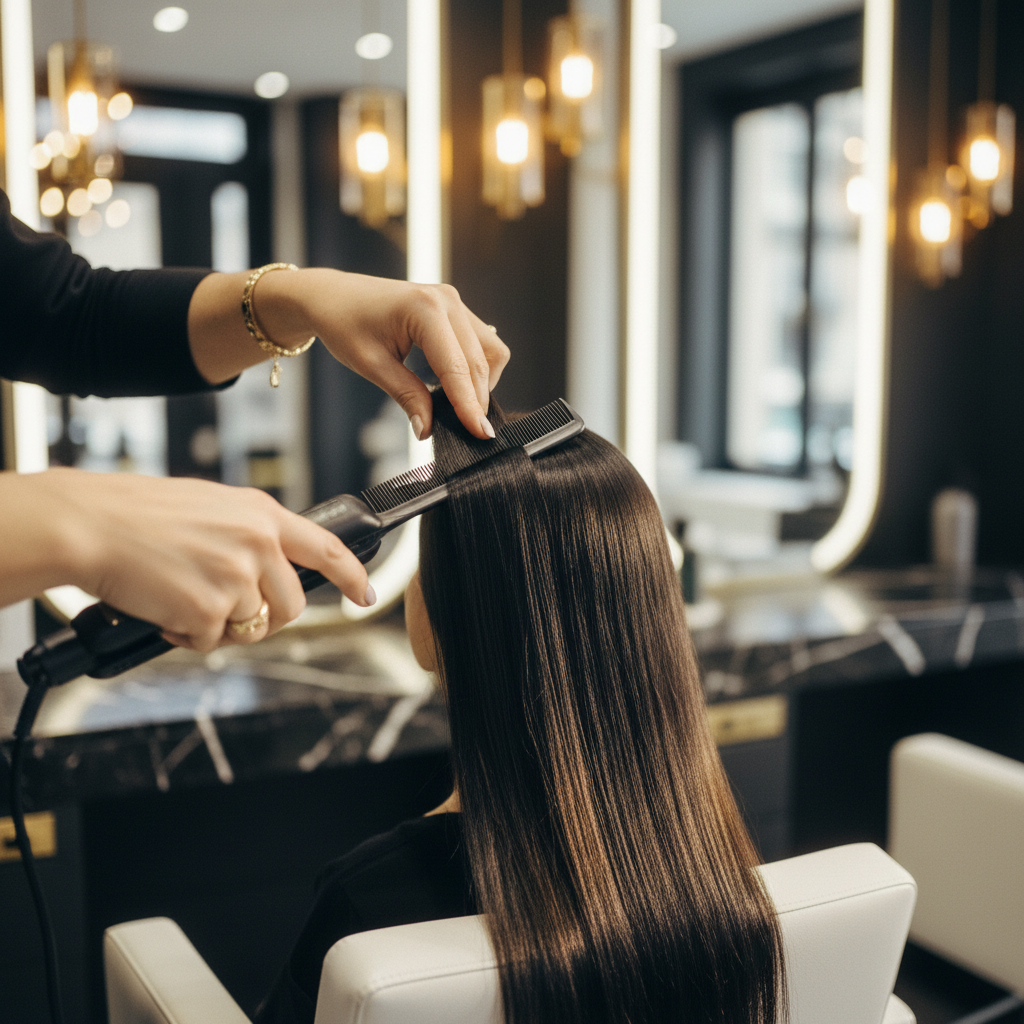
Quick answer: How to keep straight hair smooth involves a multi-faceted approach focusing on minimising cuticle damage, maintaining adequate hydration, and using appropriate styling techniques and products. This helps prevent frizz and flyaways, contributing to a sleek appearance, though individual hair types and environmental factors can influence the final result.
Key takeaways
- Smooth hair relies on a sealed, intact cuticle layer, which reflects light evenly and resists moisture absorption.
- Hydration is crucial; humectants and emollients in products can attract and retain moisture within the hair fibre.
- Friction from vigorous washing or towel drying can raise the cuticle, leading to frizz and a rough texture.
- Heat styling requires careful practice and heat protectants to prevent thermal damage, which compromises smoothness.
- Product selection matters: choose shampoos, conditioners, and styling aids designed to support cuticle integrity and moisture balance.
How to keep straight hair smooth: what the evidence shows
Keeping straight hair smooth is primarily about maintaining the integrity of the hair's outermost layer, the cuticle, and ensuring proper hydration. When the cuticle lies flat, hair fibres reflect light uniformly, resulting in a smooth, shiny appearance. Conversely, a raised or damaged cuticle leads to a rough texture, increased friction between strands, and makes hair more susceptible to frizz because it readily absorbs environmental moisture.
The Hair's Structure and Smoothness
Hair is composed of three main layers: the medulla (innermost, not always present), the cortex (middle layer, providing strength and colour), and the cuticle (outermost layer). The cuticle consists of overlapping, scale-like cells, much like shingles on a roof. In healthy, smooth hair, these scales lie flat and are tightly bound, creating a protective barrier and a smooth surface. When these scales are lifted or damaged, the hair feels rough, looks dull, and can become more tangled.
Factors that can lift the cuticle and disrupt smoothness include:
- Mechanical friction: vigorous brushing, harsh towel drying, or aggressive shampooing.
- Chemical processes: perms, relaxers, or excessive hair colouring (see Chemical Hair Treatments: What They Are and How They Affect Hair).
- Heat styling: high temperatures from straighteners, curling irons, or blow dryers without proper protection (see Heat Styling: Understanding Its Effects and How to Protect Your Hair).
- Environmental factors: high humidity causes the hair to absorb moisture unevenly, swelling the cortex and lifting the cuticle, leading to frizz. Damage from UV radiation can also degrade the hair fibre over time.
- pH imbalance: hair and scalp are naturally acidic, typically between pH 4.5 and 5.5. Products with a high (alkaline) pH can cause the cuticle to swell and open, making hair rougher. Conditioners, often acidic, help to flatten the cuticle.
Hair Hydration and Flexibility
Adequate hair hydration is another critical element in achieving and maintaining smoothness. Well-hydrated hair is more flexible, less prone to breakage, and has a smoother surface. The cortex needs a balanced moisture content to remain supple. When hair is dry, it can become brittle, and the cuticle may lift, contributing to a rough, dull look. Products containing humectants, like glycerin or hyaluronic acid, draw moisture from the air into the hair, while emollients, such as natural oils or silicones, seal that moisture in and create a smooth surface (see Hair Hydration: The Science Behind Keeping Hair Moist).
What you can do: maintaining straight hair smoothness
Achieving and maintaining smooth straight hair involves a consistent routine that protects the cuticle, provides hydration, and minimises damage. Here's what the evidence suggests:
1. Gentle Washing and Conditioning
- Choose suitable products: Opt for shampoos and conditioners formulated to smooth or moisturise. These often contain ingredients like silicones, emollients (e.g., argan oil, coconut oil, shea butter), or hydrolysed proteins that coat the hair fibre, reduce friction, and fill in gaps in the cuticle. Sulphate-free shampoos can be beneficial for some, as they are generally milder and less likely to strip natural oils, helping to maintain the hair's natural moisture balance (see Sulfate-Free Shampoo Benefits).
- Washing technique: Focus shampoo on the scalp to cleanse thoroughly, allowing the suds to gently rinse through the lengths. Apply conditioner from mid-lengths to ends. Use lukewarm water rather than hot, which can strip oils and open the cuticle more aggressively. A final rinse with cool water can help to signal the cuticle to close, enhancing smoothness and shine.
- Post-wash care: Instead of rubbing vigorously, gently blot your hair with a microfiber towel. Microfiber is less abrasive than traditional cotton towels, reducing friction and minimising cuticle disturbance that can lead to frizz and breakage. (See How to Reduce Frizz in Hair).
2. Detangling and Brushing
- Wet detangling: Detangle wet hair gently using a wide-tooth comb, starting from the ends and working your way up. This prevents pulling and undue stress on fragile wet hair, which is more elastic and prone to breakage. Applying a leave-in conditioner or detangling spray before combing can further reduce friction.
- Dry brushing: For straight hair, a boar bristle brush can be effective for distributing natural oils from the scalp down the hair shaft, adding shine and helping to lay the cuticle flat. Brushing gently and consistently can improve overall smoothness, but avoid over-brushing, which can cause friction damage.
3. Hydration and Styling Products
- Leave-in treatments: A leave-in conditioner or serum applied to damp hair provides an extra layer of moisture, protection, and can help to seal the cuticle before styling. Look for products with humectants, emollients, and film-forming agents.
- Styling creams and oils: Lightweight styling creams or hair oils can be applied to damp or dry hair to provide smoothness, control flyaways, and add shine. Be mindful of product amount, as too much can weigh straight hair down or make it look greasy.
- Heat protectants: If using heat styling tools, a heat protectant spray is non-negotiable. These products form a protective barrier on the hair surface, reducing direct heat damage and helping to maintain the hair's internal moisture. Look for formulations that can withstand the temperatures you typically use (see Heat Styling Safety Best Practices).
4. Smart Heat Styling
When using blow dryers, straighteners, or curling irons to achieve a smooth finish:
- Rough dry first: Air-dry or rough-dry your hair with a blow dryer on a medium-cool setting until it's about 60 to 70% dry. This reduces the total exposure time to direct heat.
- Use a concentrator nozzle: When blow-drying, attach a concentrator nozzle to direct the airflow down the hair shaft, which helps to smooth the cuticle. Use a flat or round brush (like a boar bristle brush) to pull sections taut and direct the heat from root to tip.
- Section and style: Work in small, manageable sections. This ensures even heat distribution and a thorough, smooth finish. For flat ironing, pass the iron over each section slowly and steadily, ideally only once or twice, to minimise heat exposure.
- Temperature control: Use the lowest effective temperature setting on your heat tools. Higher temperatures cause more damage. For fine or chemically treated hair, lower temperatures are especially important.
When the cause may be something else
Sometimes, despite a diligent routine, achieving smoothness remains a challenge. This can be due to underlying issues:
- Hair porosity: Highly porous hair, often due to damage, has a very open cuticle and struggles to retain moisture. This makes it more prone to frizz and difficulty achieving smoothness. Understanding your hair porosity can help you choose more effective products (see Understanding Hair Porosity: How Your Hair Absorbs and Retains Moisture).
- Hard water: Water with high mineral content (hard water) can leave a residue on hair, making it feel rough, look dull, and impede smoothness. Minerals like calcium and magnesium can accumulate, preventing products from working effectively. A chelating shampoo or a shower filter can help mitigate this (see Hard Water and Hair Damage: Understanding the Impact on Your Hair).
- Scalp health issues: An unhealthy scalp environment can impact the quality of new hair growth. Conditions like excessive oiliness, dryness, or inflammation can affect the hair follicle, potentially leading to compromised hair texture (see Understanding Scalp Health and Oily Scalp Care: Understanding and Managing Scalp Oiliness).
- Hair damage: Hair that is severely damaged from chemical treatments, excessive heat, or mechanical stress may have permanently compromised cuticles that cannot be fully smoothed without significant effort or even trimming. In such cases, focus shifts to damage repair and prevention (see Hair Damage: Causes, Signs, and Solutions).
Professional advice
If you're consistently struggling to achieve smooth straight hair despite following these recommendations, or if you notice sudden changes in your hair texture, it may be beneficial to consult a professional. A trichologist or an experienced hairstylist can diagnose underlying issues, recommend tailored treatments, and suggest professional smoothing services if appropriate. They can also assess for issues like alopecia or shedding, which are distinct from hair texture challenges.
Product comparison for smooth straight hair
| Product Type | Key Benefit for Smoothness | Common Ingredients | Application Tips | Limitations |
|---|---|---|---|---|
| Smoothing Shampoo | Gently cleanses while preparing hair for smoothness. | Mild surfactants, conditioning agents, silicones, oils. | Focus on scalp, gentle rinse. | Can weigh down fine hair if too rich. |
| Smoothing Conditioner | Detangles, flattens cuticle, adds shine, reduces frizz. | Silicones, emollients (shea butter, argan oil), hydrolysed proteins. | Mid-lengths to ends, leave on for a few minutes. | Overuse can lead to product build-up. |
| Leave-in Conditioner | Extra hydration, cuticle protection, detangling, frizz control. | Humectants (glycerin), silicones, light oils, proteins. | Apply to damp hair, mid-lengths to ends, before styling. | Too much can make hair greasy or stiff. |
| Hair Serum/Oil | Adds shine, tames flyaways, smooths cuticle, protects. | Silicones (dimethicone), argan oil, camellia oil, squalane. | A few drops on dry hair for finish, or damp hair for styling. | Can make hair look oily if over-applied. |
| Heat Protectant | Shields hair from thermal damage, maintains fibre integrity. | Film-forming polymers, silicones, hydrolysed proteins. | Spray evenly on damp or dry hair before heat styling. | Not all are effective at very high temperatures. |
Frequently asked questions about How to keep straight hair smooth
How often should I wash my hair to keep it smooth?
How often you wash your hair depends on your hair type, activity level, and scalp oiliness. Washing too frequently can strip natural oils, leading to dryness and frizz, while washing too little can cause product build-up. For most straight hair types, washing every 2 to 3 days is a good starting point. Adjust based on how your hair feels and looks, aiming for a balance that keeps it clean without over-drying.
Can hair type affect how smooth my straight hair can be?
Yes, absolutely. Even within straight hair types, variations in hair fibre diameter (fine vs. thick), density, and natural texture can influence how smooth it appears. Fine hair might struggle with being weighed down by products, while thicker straight hair might require more effort to thoroughly smooth each strand. Genetics play a significant role in your hair's natural characteristics.
Do diet and lifestyle impact hair smoothness?
There is no direct evidence suggesting specific foods instantly make straight hair smoother. However, a balanced diet rich in vitamins, minerals, and proteins supports overall hair health, which can indirectly contribute to stronger, healthier hair fibres over time. Stress management and adequate sleep also support bodily functions, including those that influence hair growth and quality. Lifestyle factors primarily affect hair health from the inside out.
Are there natural remedies to keep straight hair smooth?
Some natural ingredients, like certain plant-based oils (e.g., coconut oil, argan oil) and aloe vera, are often used for their conditioning and emollient properties. While they can contribute to a smoother feel and appearance by coating the hair and providing moisture, they typically work as cosmetic aids rather than fundamental treatments. Always perform a patch test for any new ingredient, and remember that consistent, gentle care is key.
Why does my hair become frizzy even when I try to keep straight hair smooth?
Frizz occurs when the hair's outer cuticle layer is raised, allowing moisture from the air to penetrate the hair shaft unevenly. This can happen due to damage, dryness, high humidity, or mechanical friction. Even with efforts to keep straight hair smooth, environmental humidity or insufficient moisture in the hair can cause frizz. Using anti-frizz products and protecting hair from excessive moisture can help.
Keeping straight hair smooth: final thoughts
Mastering how to keep straight hair smooth is an achievable goal with the right knowledge and consistent care. It involves understanding your hair's structure, protecting its delicate cuticle layer, and providing consistent hydration. By choosing appropriate products, adopting gentle styling techniques, and being mindful of environmental factors, you can significantly enhance your hair's natural shine and sleekness. Remember that patience and consistency are your best allies in achieving and maintaining beautiful, smooth straight hair.
Sources and references
- Gavazzoni Dias, M. F. R. (2015). Hair Cosmetics: An Overview. International Journal of Trichology, 7(1), 2-15. PubMed. DOI: 10.4103/0974-7753.153927
- Robbins, C. R. (2012). Chemical and Physical Behavior of Human Hair (5th ed.). Springer. (Reference for general hair science and structure)
- National Center for Biotechnology Information (NCBI). Journal of Cosmetic Science articles on hair care ingredients and their effects (various years).
- University of California, San Francisco (UCSF) Department of Dermatology. (General information on hair health and care).
- American Academy of Dermatology Association (AAD). (Information on hair care and conditions).
- European Academy of Dermatology and Venereology (EADV). (Research and guidelines on dermatological conditions, including hair).
- Goren, A., & Shapiro, J. (2019). The Role of Water in Hair Health. Dermatology and Therapy, 9(3), 441-451. (Discusses water quality and hair, though specific to hard water for this context).
- The Cosmetic, Toiletry and Perfumery Association (CTPA). (Information on cosmetic ingredients and safety).
Find these ingredients in Watermans products
- Camellia Oil: you will find this ingredient in our Camellia & Black Castor Hair & Body Oil.
- Aloe Vera: you will find this ingredient in our Curly Hair Conditioner.