The Hair Cuticle: Understanding Your Hair's Protective Outer Layer
10 min read ·
The Hair Cuticle is the outermost protective layer of each hair strand, crucial for its strength, shine, and overall health.
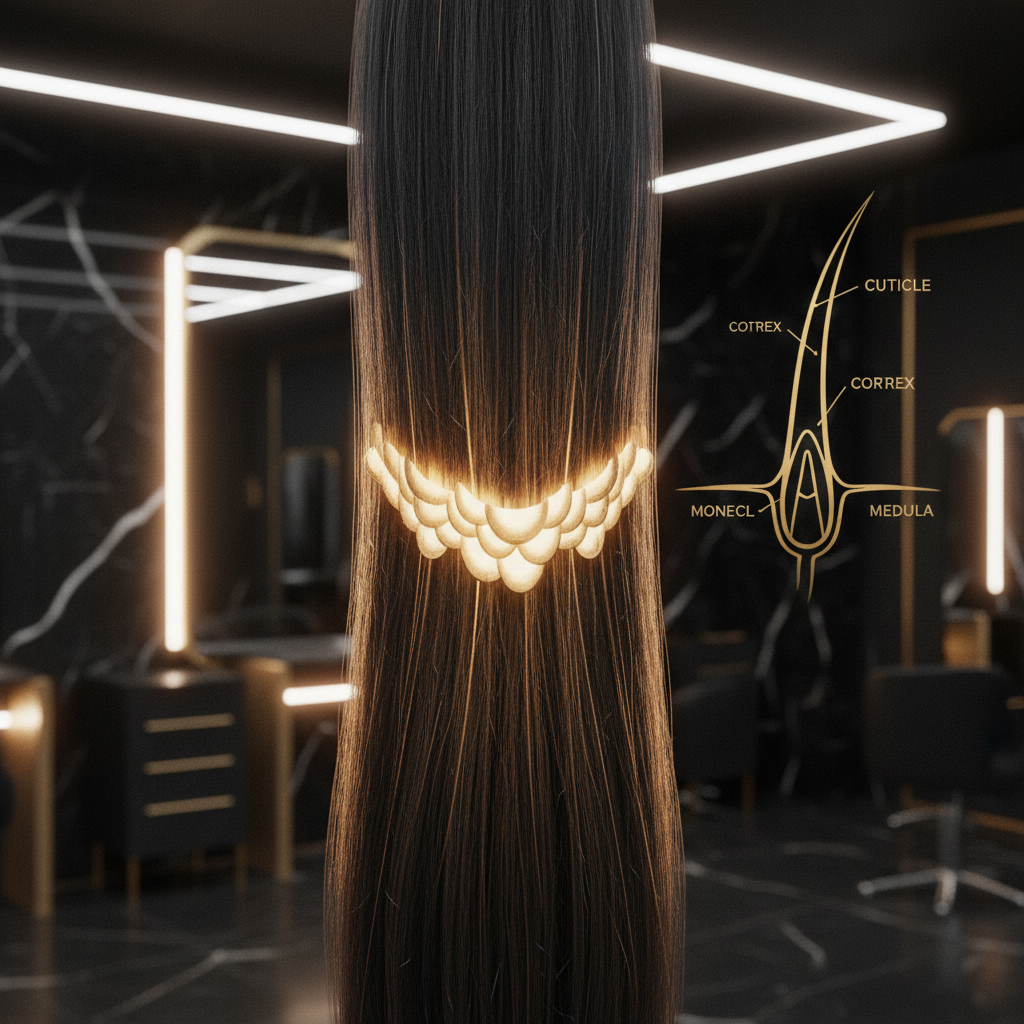
Quick answer: The Hair Cuticle is the outermost protective layer of each hair strand, made of overlapping, flattened cells. It acts like a shield, safeguarding the hair's inner structure from damage, retaining moisture, and contributing to shine. Its condition directly impacts hair health and appearance, with damage leading to dullness, frizz, and increased breakage, though it is not the sole determinant of hair problems.
Key takeaways
- The Hair Cuticle is the outermost layer of the hair shaft, forming a protective barrier of overlapping keratin cells.
- Its primary role is to shield the inner cortex from physical, chemical, and environmental stressors, preventing moisture loss.
- When healthy, the cuticle lies flat, reflecting light for shine and reducing friction to prevent tangles and breakage.
- Damage to the cuticle from heat, chemicals, friction, or high pH products can lead to lifted scales, causing dullness, frizz, and increased vulnerability.
- Maintaining cuticle health involves gentle care, appropriate product choices, and protection from damaging factors.
- A healthy Hair Cuticle is essential for strong, elastic, and smooth-looking hair.
Hair Cuticle: what the evidence shows
Your hair is a marvel of biological engineering, and at its very surface lies the Hair Cuticle, a vital protective shield. Each strand of hair has three main layers: the medulla (the innermost core, not always present), the cortex (the middle layer that gives hair its strength and colour), and the cuticle. The cuticle is the outermost layer, comprising several layers of flat, overlapping cells, much like shingles on a roof. These cells are made of keratin, a tough protein, and they overlap with their free ends pointing towards the tip of the hair.
This imbricated structure provides a robust defence for the delicate inner cortex. A healthy Hair Cuticle lies flat and smooth. This smooth surface is crucial for reflecting light evenly, giving hair its characteristic shine and lustre. It also reduces friction between hair strands, which helps prevent tangling and mechanical damage. The number of cuticle layers can vary, generally ranging from 5 to 10 layers depending on hair type and ethnicity. For instance, some research suggests that Afro-textured hair types may have fewer and thinner cuticle layers compared to Asian hair types, which tend to have more and thicker layers, with European hair types falling in between. This structural difference can influence how different hair types respond to styling and chemical treatments (Gavazzoni Dias, 2015).
The Cell Membrane Complex and cuticle integrity
While often described as a sealed barrier, the Hair Cuticle is not completely impermeable. Microscopic gaps and channels exist, particularly around the edges of the overlapping cells. Binding these cuticle cells together is the Cell Membrane Complex (CMC), an intercellular cement rich in lipids. The CMC plays a critical role in maintaining the integrity and flexibility of the hair shaft. It acts as a pathway for some substances, such as water and certain chemicals, to penetrate the hair shaft, especially when the cuticle scales are lifted (Robbins, 2012). Damage to the CMC can weaken the adhesion between cuticle cells, making the hair more susceptible to damage.
What happens when the Hair Cuticle is damaged?
When the Hair Cuticle becomes damaged, its scales lift, crack, or even break away. This exposes the inner cortex, making the hair more porous and vulnerable to further harm. Signs of a damaged cuticle include:
- Dullness: A roughened surface scatters light instead of reflecting it uniformly.
- Frizz: Lifted scales cause hair to absorb moisture from the air unevenly, leading to a frizzy appearance. Hair with a damaged cuticle may also be more susceptible to humidity.
- Rough texture: The hair feels coarse and dry to the touch.
- Tangles: Increased friction between strands makes hair prone to tangling and knotting.
- Increased breakage: The exposed cortex is weaker and more easily fractured, especially during styling.
- Colour fade: For colour-treated hair, a compromised cuticle allows dye molecules to escape more rapidly, leading to quicker colour fade.
Factors affecting Hair Cuticle health
Several common factors can compromise the integrity of the Hair Cuticle:
- Chemical processes: Treatments like hair colouring, perming, and chemical straightening use alkaline agents that deliberately raise the cuticle scales to allow chemicals to penetrate the cortex. Repeated or improperly applied chemical services can cause significant and irreversible damage to the cuticle.
- Heat styling: High temperatures from tools like blow dryers, straighteners, and curling irons can dehydrate the hair, causing the cuticle cells to lift, crack, and become brittle. Temperatures exceeding 180°C can cause severe damage to the cuticle and cortex (McMullen and Jachowicz, 2003).
- Mechanical stress: Vigorous brushing, aggressive towel drying, tight hairstyles, and even friction from clothing can physically abrade the cuticle, leading to wear and tear. Detangling wet hair, which is more fragile, without care can also contribute to damage.
- UV radiation: Prolonged exposure to ultraviolet (UV) radiation from the sun can degrade the keratin proteins and lipids within the cuticle and CMC, making the hair more porous, brittle, and discoloured (Harrison and Sinclair, 2003).
- pH levels: The natural pH of the hair and scalp is acidic, typically between 4.5 and 5.5. Products with a high (alkaline) pH can cause the cuticle scales to swell and open. Conversely, products formulated with an acidic pH help to flatten and seal the cuticle, promoting smoothness and shine. This is why many conditioners are acidic.
- Environmental factors: Exposure to harsh winds, pollution, and hard water can contribute to cuticle damage. Hard water contains high levels of minerals like calcium and magnesium, which can build up on the hair shaft, making the cuticle feel rough and hindering its ability to lie flat (Mintel, 2022).
What you can do to protect your Hair Cuticle
Maintaining the health of your Hair Cuticle is fundamental for strong, shiny, and manageable hair. Fortunately, several practices can help preserve its integrity:
- Gentle cleansing and conditioning: Opt for shampoos with a balanced pH (ideally slightly acidic) that cleanse effectively without stripping the hair's natural oils. Always follow with a conditioner, which typically has a lower pH, to help close the cuticle scales, smooth the hair surface, and add moisture. Conditioners often contain ingredients that bind to the negatively charged surface of damaged hair, helping to mend the appearance of lifted cuticles.
- Heat protection: Always use a heat protection product before applying heat styling tools. These products create a barrier that distributes heat more evenly, reduces direct thermal damage, and can sometimes contain ingredients that smooth the cuticle. Try to use lower heat settings where possible.
- Careful detangling: Detangle hair gently, starting from the ends and working your way up. Use a wide-tooth comb or a soft brush designed for detangling to minimise mechanical stress on the cuticle. Wet hair is more vulnerable, so be especially careful when detangling after washing.
- Limit chemical treatments: Reduce the frequency of chemical services and ensure they are performed by experienced professionals. Always follow up with intensive conditioning treatments after any chemical process to help restore the hair's integrity.
- UV protection: When spending extended periods in direct sunlight, wear a hat or use hair products formulated with UV filters to shield your hair from sun damage.
- Rinsing with cooler water: While not directly affecting the cuticle's physical structure, finishing your wash with cooler water can help seal the cuticle, contributing to a smoother feel and enhanced shine.
- Proper drying techniques: Instead of aggressive towel rubbing, gently squeeze excess water from your hair with a microfibre towel or an old cotton t-shirt to reduce friction and cuticle damage.
The role of hair products
Many haircare products are specifically formulated to support Hair Cuticle health. Conditioners, leave-in treatments, and serums often contain ingredients such as silicones, natural oils, and hydrolysed proteins that can temporarily fill in gaps in damaged cuticles, create a smoother surface, and enhance shine. Humectants help draw moisture into the hair, while emollients can provide a protective film over the cuticle, reducing friction and improving manageability. The pH of these products is also a key consideration, with acidic formulations generally favoured for cuticle health.
Hair Cuticle vs. Hair Cortex
Understanding the distinct roles of the Hair Cuticle and the Hair Cortex helps clarify how hair responds to care and damage.
| Feature | Hair Cuticle | Hair Cortex |
|---|---|---|
| Location | Outermost layer | Middle layer, beneath the cuticle |
| Structure | 5 to 10 layers of flat, overlapping keratin cells | Elongated, spindle-shaped keratin cells, often containing melanin pigments |
| Primary Function | Protection, moisture retention, shine, friction reduction | Strength, elasticity, texture, natural colour (melanin) |
| Damage Impact | Dullness, frizz, roughness, tangles, increased porosity | Weakness, reduced elasticity, breakage, split ends, loss of natural curl pattern (in severe cases) |
| Appearance when Healthy | Smooth, flat, reflective | Strong, flexible, resilient |
Frequently asked questions about Hair Cuticle
Can a damaged Hair Cuticle be fully repaired?
Once the Hair Cuticle cells are damaged, they are not living and cannot "heal" in the biological sense. However, many haircare products can temporarily smooth down lifted cuticle scales, fill in gaps, and create a protective layer, improving the appearance and feel of the hair. These cosmetic solutions help to reduce further damage and enhance shine, but they do not biologically repair the underlying structure.
Does high porosity mean a damaged Hair Cuticle?
Not necessarily. High porosity means your hair can absorb moisture quickly but also lose it just as fast. While a damaged Hair Cuticle (with lifted scales) is a common cause of high porosity, some hair types, such as Afro-textured hair, can be naturally highly porous even with an intact cuticle due to genetic differences in cuticle structure. Chemical treatments are also a significant cause of increased hair porosity.
How does hard water affect the Hair Cuticle?
Hard water contains dissolved mineral ions, primarily calcium and magnesium. These minerals can accumulate on the Hair Cuticle, leading to a rough, dull surface. This mineral build-up can prevent the cuticle scales from lying flat, making hair feel coarse, look lacklustre, and potentially leading to increased friction and tangling. Regular clarifying washes can help remove this mineral residue.
Why is pH balance important for the Hair Cuticle?
The Hair Cuticle is sensitive to pH levels. Its natural, optimal state is slightly acidic, typically around pH 4.5 to 5.5. Products with a higher (alkaline) pH cause the cuticle scales to swell and lift, making the hair vulnerable to damage and moisture loss. Acidic products, like many conditioners, help to close and flatten the cuticle, enhancing smoothness, shine, and protection.
Can hair type affect Hair Cuticle structure?
Yes, hair type and ethnicity can influence the structure and number of cuticle layers. For example, some studies suggest that Asian hair tends to have more cuticle layers that are more densely packed, contributing to its strength. Afro-textured hair may have fewer and thinner layers and unique structural twists that can make it more prone to damage if not cared for appropriately, impacting how the Hair Cuticle behaves.
The Hair Cuticle: your hair's first line of defence
The Hair Cuticle is far more than just the outer surface of your hair strand; it is a meticulously structured protective layer that dictates much of your hair's health, appearance, and resilience. From reflecting light for dazzling shine to shielding the delicate inner cortex from everyday aggressors, its condition is paramount. Understanding how this vital layer functions and the factors that can compromise it empowers you to make informed choices about your haircare routine. By adopting gentle practices and using appropriate products, you can significantly contribute to maintaining an intact, smooth Hair Cuticle, leading to hair that not only looks healthy but is truly strong and vibrant. Watermans products are formulated with ingredients and pH levels designed to respect the integrity of the hair cuticle, supporting overall hair health and resilience.
Sources and references
- Gavazzoni Dias, M. F. R. (2015). Hair cosmetics: An overview. International Journal of Trichology, 7(1), 2 to 15.
- Harrison, S., & Sinclair, R. (2003). Hair colouring, permanent waving and bleaching. Journal of Cosmetic Dermatology, 2(4), 180-185.
- McMullen, R. L., & Jachowicz, J. (2003). Thermal degradation of hair: Part 1: Effect of high temperature air on the tensile properties and morphology of human hair. Journal of Cosmetic Science, 54(5), 455-470.
- Mintel. (2022). Hard Water Concerns for Hair and Skin: Trends and Innovations. (Report reference, specific page or section not publicly available).
- Robbins, C. R. (2012). Chemical and Physical Behavior of Human Hair (5th ed.). Springer Science & Business Media. (Chapter on Hair Structure and Properties, specific page numbers vary by edition).", seo_title=