The Impact of Chemical Bleaching on Keratin: Structural Changes and Fibre Care
8 min read ·
Explore the impact of chemical bleaching on keratin, including disulphide bond oxidation, protein loss, structural changes, and evidence-based hair repair strategies.
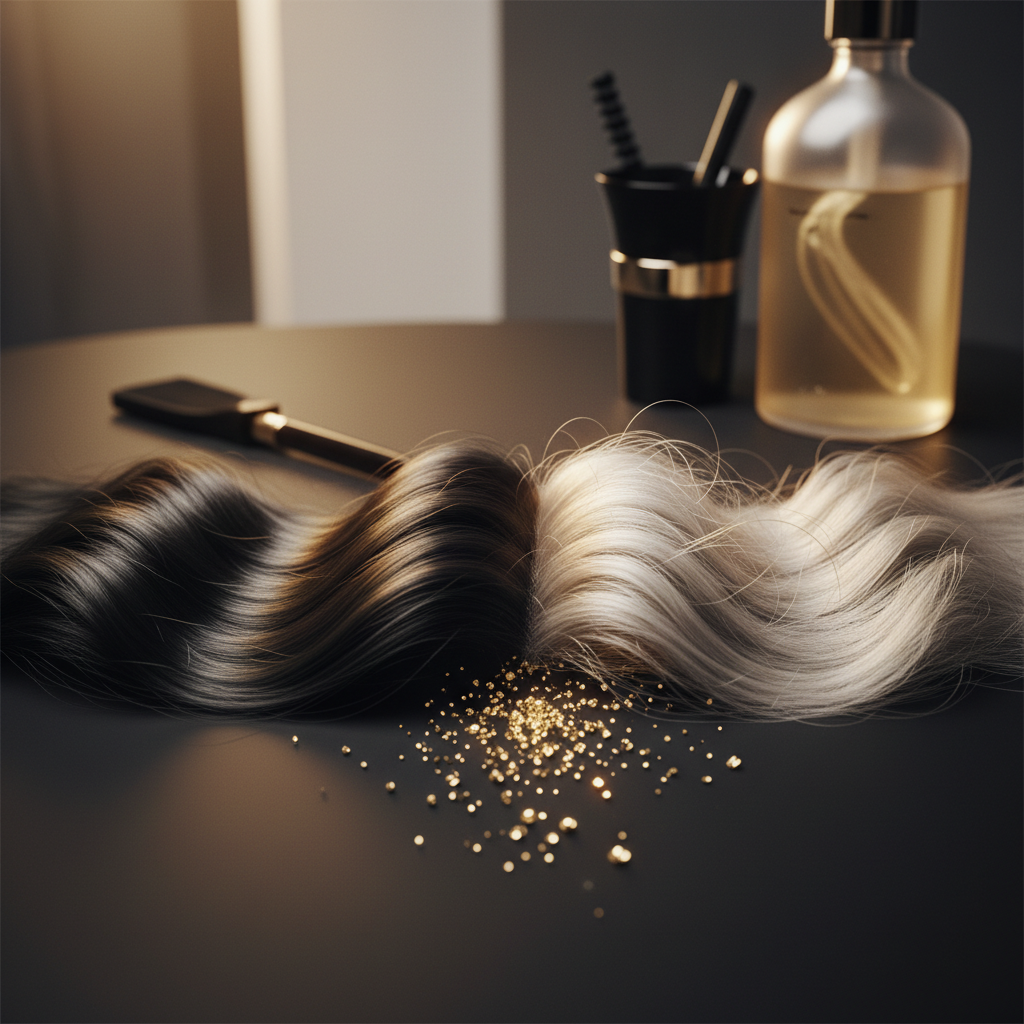
Quick answer: The impact of chemical bleaching on keratin involves the irreversible oxidation of structural proteins inside the hair shaft. Bleaching agents, typically alkaline hydrogen peroxide and persulphate salts, break the covalent disulphide bonds that give keratin its strength and elasticity, converting cystine into cysteic acid. This process degrades the hair cortex, strips protective surface lipids, and increases porosity. While cosmetic conditioning treatments can temporarily coat and reinforce damaged fibres, severed keratin disulphide bonds cannot be biologically regenerated once destroyed.
Key takeaways
- Chemical bleaching oxidises cystine, permanently cleaving the disulphide bonds that stabilise the keratin protein matrix.
- The process converts cystine into cysteic acid, significantly reducing the tensile strength and elasticity of the hair fibre.
- Bleach strips the protective 18-methyleicosanoic acid (18-MEA) lipid layer from the cuticle, leaving the cortex vulnerable to mechanical friction and moisture loss.
- Structural keratin loss causes breakage along the fibre, which is entirely distinct from follicular hair shedding or alopecia.
- Cosmetic treatments can patch porosity and improve slip, but no topical product can biologically regrow or permanently knit severed keratin fibres back together.
Impact of Chemical Bleaching on Keratin: what the evidence shows
The impact of chemical bleaching on keratin is primarily an oxidative breakdown of the hair's primary structural matrix. Human hair consists of roughly 65 to 95 percent protein by weight, predominantly alpha-keratin. This fibrous protein relies on cross-linking disulphide bonds, formed between pairs of the amino acid cysteine (creating cystine), to maintain structural integrity, spring, and resistance to environmental stress.
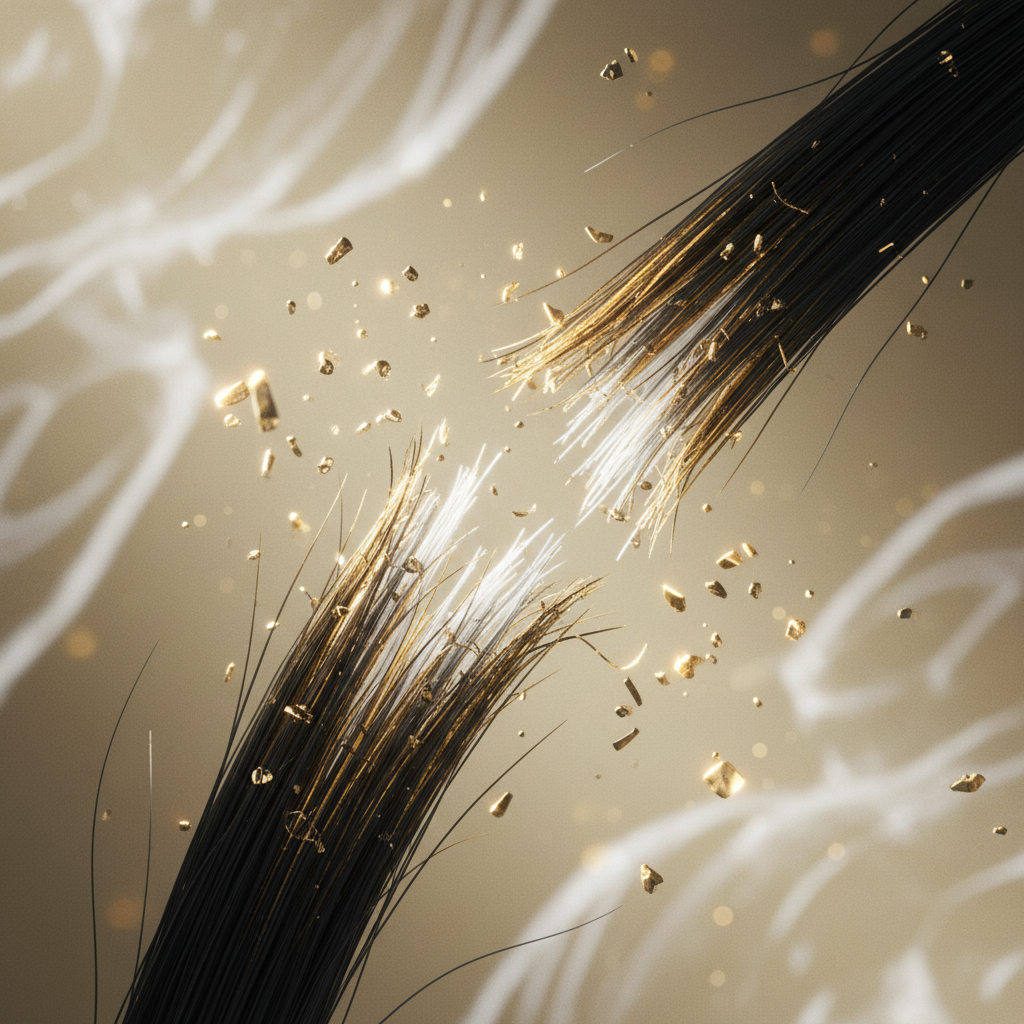
When bleach is applied to lighten melanin pigments, the alkaline carrier (usually ammonium hydroxide or ethanolamine) raises the hair pH from its natural resting state of 4.5 to 5.5 up to an alkaline range of 9.0 to 11.0. This swelling forces the protective outer cuticle scales to lift.
Once inside the cortex, persulphate boosters and hydrogen peroxide oxidise melanin granules to lighten the hair. Concurrently, they oxidise cystine disulphide bonds. Spectroscopy research confirms that this reaction produces cysteic acid residues. Because cysteic acid contains strongly polar sulphonic acid groups, it introduces negative electrostatic charges into the cortex. This internal disruption weakens the alpha-helical coils of keratin, leaving the fibre structurally compromised, porous, and prone to snapping under minimal tension.
Structural mechanisms: how bleaching alters the hair fibre
The physical degradation of hair keratin during bleaching occurs in three distinct structural stages:
1. Stripping the F-layer lipid barrier
The outermost surface of a virgin hair cuticle is coated with an ultra-thin lipid layer composed primarily of 18-methyleicosanoic acid (18-MEA). This layer makes the hair hydrophobic, causing water to bead off and preventing friction between neighbouring strands. Bleach breaks the covalent thioester bonds holding 18-MEA to the cuticle proteins. Within minutes of exposure, the surface becomes hydrophilic, meaning it readily absorbs atmospheric water, swells unevenly, and suffers severe frictional drag during brushing.
2. Oxidation of cortical disulphide bonds
The hair cortex contains intermediate filaments made of low-sulphur keratin proteins surrounded by an amorphous, high-sulphur protein matrix. The high-sulphur matrix acts as a cross-linked cushion that distributes physical stress. Bleach oxidises the disulphide linkages across both regions. Studies show that a single round of aggressive bleaching can cleave 15 to 25 percent of hair's total disulphide bonds, while repeated lightening can destroy upwards of 50 percent, converting them irreversibly into cysteic acid.
3. Protein loss and micro-cavity formation
As disulphide bonds break, small fragments of keratin peptide chains dissolve and wash away during the rinsing process. This protein leaching leaves microscopic voids or cavities within the cortex. The density of the fibre decreases, leading to what stylists describe as hollow, spongy, or gummy hair when wet.
| Property | Virgin Keratin | Chemically Bleached Keratin |
|---|---|---|
| Surface Nature | Hydrophobic (repels excess water) | Hydrophilic (absorbs water rapidly) |
| Primary Bond State | Intact cystine disulphide bridges | High concentration of cysteic acid |
| Cuticle Condition | Flat, overlapping, tightly sealed | Lifted, chipped, or partially eroded |
| Tensile Strength | High resistance to mechanical stretch | Low breaking point; snaps easily |
| Elastic Recovery | Stretches up to 30% wet and snaps back | Over-stretches wet; deforms or breaks |
| Internal Porosity | Low, uniform density | High, with microscopic cortical voids |
What the evidence does not show
It is critical to separate established chemical realities from common marketing myths.
First, the evidence does not show that chemical bleaching causes follicular hair loss. Bleach damages the non-living fibre protruding from the scalp. It snaps, frays, and breaks. Breakage is not hair loss or shedding; the follicle beneath the scalp remains completely intact unless a severe chemical burn occurs on the skin itself.
Second, scientific literature does not support claims that bond-building treatments permanently restore hair to a virgin state. Certain cosmetic additives (such as maleic acid derivatives or cross-linking polymers) can form temporary bridges across broken bonds or deposit film-forming shields over damaged cuticles. However, these treatments do not rebuild the exact biological crystalline structure of native alpha-keratin. The improvements wash out over time and must be maintained continuously.
Recognising keratin degradation: signs to look for
When evaluating the impact of chemical bleaching on keratin, examine the hair both wet and dry. The following structural signs point directly to cortical protein depletion:
- The wet stretch test failure: Healthy wet hair can stretch roughly 30 percent of its length and return to its original shape. Keratin-depleted hair feels like wet chewing gum. It stretches excessively without bouncing back, or it snaps immediately under light tension.
- Extreme porosity: The hair absorbs water instantaneously in the shower but takes exceptionally long to dry because the damaged cortex holds onto excess moisture.
- Tricorrhexis nodosa (breakage nodules): Microscopic examination reveals small, white, bulbous nodes along the shaft where cortical fibres have separated. The hair cleanly snaps at these nodes when combed.
- Persistent tangling and dullness: Because the cuticle scales are stripped of 18-MEA and cannot lie flat, neighbouring fibres snag on one another constantly, scattering light instead of reflecting it.
Mitigating and managing bleached hair fibres
Because damaged keratin cannot repair itself biologically, fibre management relies on synthetic reinforcement, lubrication, and mechanical protection.
Rebalance porosity with proteins and lipids
Use conditioning agents containing hydrolysed vegetable, wheat, or silk proteins. These short-chain peptides temporarily lodge into the micro-voids created in the bleached cortex, adding temporary structural mass. Pair protein treatments with fatty alcohols (such as cetyl or stearyl alcohol) and natural lipids to mimic the lost 18-MEA barrier and seal the cuticle surface.
Control pH
Bleach forces the hair into an extreme alkaline state. Post-bleach care requires slightly acidic formulations (pH 4.0 to 5.5) to encourage cuticle contraction and neutralise residual alkalinity. Acidic glosses and rinses help reduce cuticle flaring.
Minimise thermal and mechanical load
Bleached keratin denatures at lower temperatures than virgin keratin. A healthy hair fibre can withstand dry heat up to roughly 215 degrees Celsius before severe structural breakdown occurs; heavily bleached hair begins to scorch and decompose at significantly lower temperatures. Keep heat tools below 160 degrees Celsius, always use a heat protectant, and detangle exclusively with wide-tooth combs or flexible-bristled brushes while hair is lubricated with conditioner.
When the issue is not bleach damage
If you notice excessive shedding rather than mid-shaft snapping, bleaching is unlikely to be the primary cause. True shedding involves the entire hair shaft coming away with a small, white bulb at the root.
Conditions such as telogen effluvium (diffuse shedding triggered by systemic stress, illness, or nutritional deficits) or androgenetic alopecia (pattern thinning driven by hormonal sensitivity) occur within the follicle beneath the scalp surface. Bleach applied correctly to the hair fibre does not enter the bloodstream or alter follicular growth cycles. If hair is falling out from the root in high volumes, consult a GP or trichologist rather than focusing solely on keratin repair products.
Support for stressed hair: the Watermans approach
For individuals managing the physical aftermath of chemical services, a comprehensive care routine addresses both the hair fibre and the scalp environment.
Watermans focuses on gentle, sulphate-free scalp and fibre support. Formulated with hydrolysed lupin protein, biotin, allantoin, and rosemary, Watermans products provide a mild cleansing experience that respects fragile hair shafts. By avoiding harsh sulphates that strip remaining cuticle lipids, the range helps reduce friction and mechanical stress on compromised, bleached strands while keeping the scalp balanced and conditioned.
Frequently asked questions about Impact of Chemical Bleaching on Keratin
Does bleaching completely destroy hair keratin?
Bleaching does not dissolve all keratin instantly, but it permanently alters its chemical composition. It oxidises cystine into cysteic acid, severing up to half of the structural disulphide bonds depending on the strength of the developer and processing time. This causes irreversible porosity and weakness.
What is the most noticeable impact of chemical bleaching on keratin?
The most evident symptom is a loss of elasticity and tensile strength. Hair that has suffered high chemical bleach damage stretches abnormally when wet, feels mushy or gummy, and snaps easily during standard brushing due to the loss of its internal cross-linked protein matrix.
Can olaplex or bond builders permanently fix bleached keratin?
No. Bond builders create artificial bridges between broken chemical bonds or coat the hair fibre with protective polymers. While they measurably improve tensile strength and reduce immediate breakage during the bleaching process, they do not recreate native, biological alpha-keratin. The structural change is temporary and requires ongoing use.
Why does bleached hair break instead of shedding from the root?
Bleach weakens the protein scaffolding along the exposed hair fibre. Breakage happens when the fragile shaft snaps under mechanical tension. Shedding occurs when a hair reaches the end of its natural follicular growth cycle and drops from the root. Bleach causes breakage, not biological shedding.
Summary of bleached keratin dynamics
Understanding the impact of chemical bleaching on keratin clarifies why lightened hair requires gentle handling and deliberate care. Chemical lightening is an intrinsically destructive oxidative reaction: it cannot target dark melanin pigments without simultaneously degrading the cystine bonds, surface lipids, and structural proteins that keep hair resilient. While cosmetic science offers sophisticated conditioning agents, hydrolysed proteins, and bond modifiers to shield fragile fibres, the biological loss of cortical keratin remains permanent until new, unbleached hair emerges from the follicle.
Sources and references
- Chemical and Physical Behavior of Human Hair (Clarence R. Robbins, 5th Edition, Springer, 2012)
- Journal of Cosmetic Dermatology, "Hair protein removal and cuticle damage during chemical bleaching", 2018
- International Journal of Cosmetic Science, "The effect of chemical treatments on the hair cuticle and cortex", 2015
- Society of Cosmetic Chemists, "Oxidative damage to human hair cystine and mechanical properties", 2011
Find these ingredients in Watermans products
- Biotin: you will find this ingredient in our Hair Growth Shampoo.