Cortex vs Cuticle Hair Anatomy: A Structural Guide
9 min read ·
Explore Cortex vs Cuticle Hair Anatomy to discover how these inner and outer layers shape hair strength, shine, porosity, and resilience against damage.
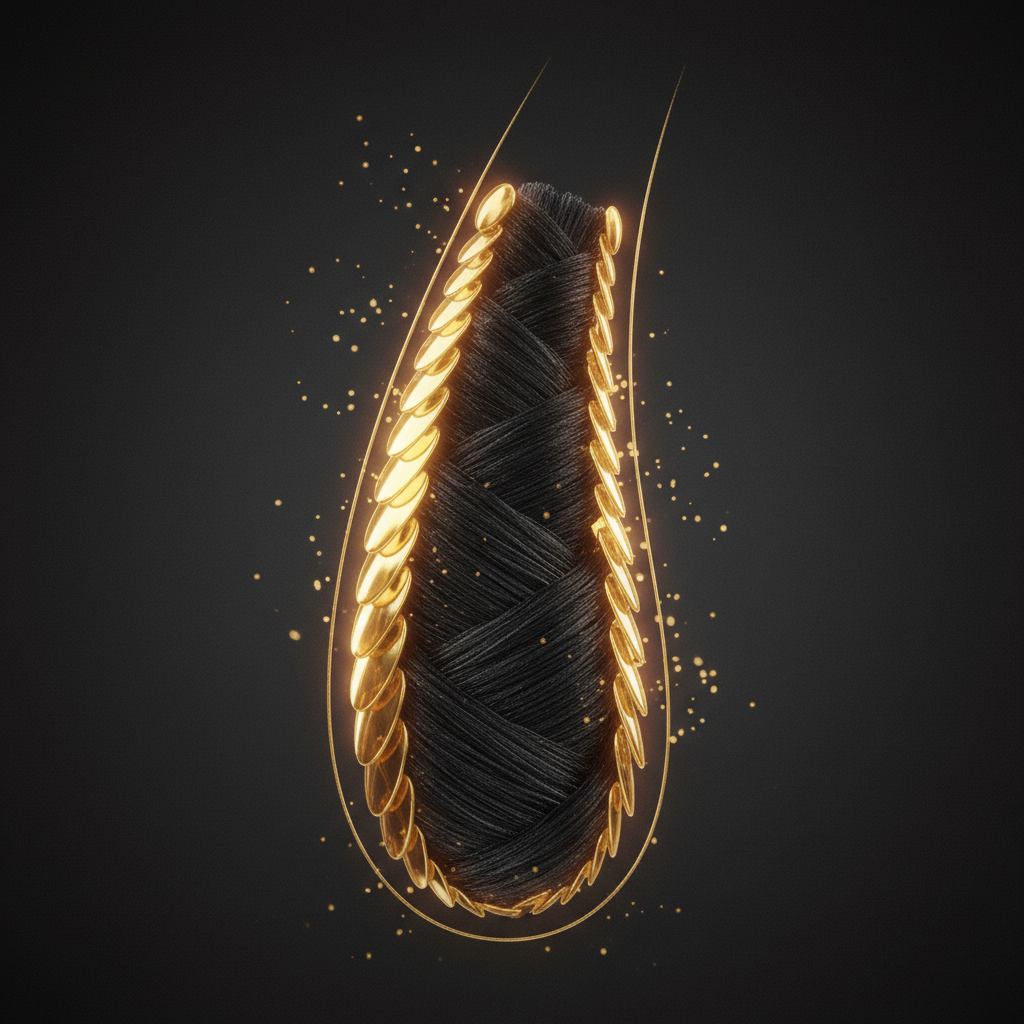
Quick answer: Understanding Cortex vs Cuticle Hair Anatomy comes down to distinguishing between the protective outer shield and the structural core of the hair fibre. The cuticle consists of overlapping, flat keratin scales that control moisture barrier function and surface shine. The cortex forms roughly 85% to 90% of the hair's mass, housing the keratin intermediate filaments and melanin that give hair its strength, elasticity, and colour. However, cosmetic products can only coat or temporarily patch these layers; they cannot permanently re-grow or biological restore damaged keratin.
Key takeaways
- The cuticle is an external barrier made of 5 to 10 layers of overlapping scales, anchored by the fatty 18-methyleicosanoic acid (18-MEA) lipid layer.
- The cortex is the internal engine room of the fibre, providing tensile strength, elastic recovery, moisture retention, and natural pigmentation.
- Chemical processes like bleaching and permanent straightening deliberately lift or dissolve the cuticle barrier to alter cortical disulfide bonds and melanin.
- Cuticle degradation leads to dullness, tangling, and high porosity, while cortical damage causes snapping, loss of curl pattern, and true structural breakage.
- Hair fibres are non-living biological structures, meaning neither the cortex nor the cuticle can biologically regenerate once degraded.
Cortex vs Cuticle Hair Anatomy: what the evidence shows
A cross-section of a human hair fibre reveals a complex, multi-layered biomaterial engineered to endure physical tension, chemical exposure, and environmental stress. When analysing Cortex vs Cuticle Hair Anatomy, researchers focus on their distinct micro-architectures, lipid profiles, and biochemical roles.
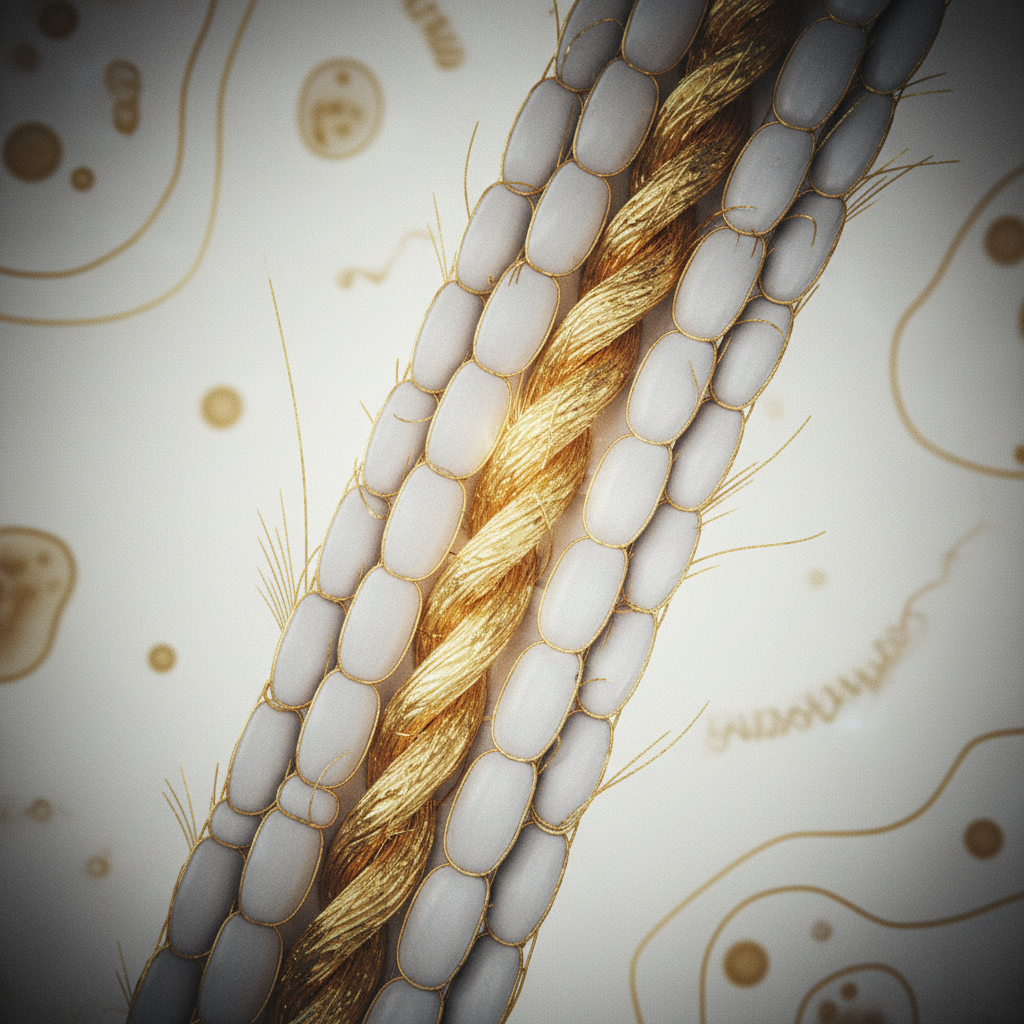
The cuticle serves as the fibre's first line of defence. It comprises flat, shingle-like cells arranged in 5 to 10 overlapping layers directed from root to tip. Each cuticle cell is roughly 0.3 to 0.5 micrometres thick. The outermost surface of the virgin cuticle features the epicuticle, a thin membrane covered by a covalently bonded monolayer of fatty acids, predominantly 18-methyleicosanoic acid (18-MEA). This hydrophobic lipid coat causes water to bead on healthy hair, reduces friction during combing, and shields the interior from environmental insults.
Directly beneath the cuticle layers lies the cortex, representing the vast majority of the fibre's bulk (typically 85% to 90%). The cortex consists of spindle-shaped cortical cells aligned parallel to the hair's longitudinal axis. Inside these cells sit macrofibrils, which are dense bundles of intermediate filaments (microfibrils) embedded in an amorphous, sulfur-rich protein matrix. This matrix is packed with cystine, an amino acid that forms resilient covalent disulfide bonds. These bonds provide the mechanical toughness and elastic memory that allow hair to stretch up to 30% of its resting length when dry before snapping. The cortex also houses melanin granules (eumelanin and pheomelanin), which dictate your natural hair shade.
Some thicker terminal hairs also feature a central core called the medulla, consisting of air-filled pockets and porous structural proteins. However, the medulla is frequently intermittent or entirely absent in fine fibres and plays minimal role in hair cosmetics.
| Structural Feature | Cuticle Layer | Cortex Layer |
|---|---|---|
| Location | Outermost perimeter (protective sleeve) | Middle bulk (internal core) |
| Share of Hair Mass | Roughly 10% to 15% | Roughly 85% to 90% |
| Primary Composition | Amorphous keratin, endocuticle, exocuticle, 18-MEA lipids | Keratin intermediate filaments, high-sulfur matrix, melanin |
| Dominant Function | Barrier protection, shine, friction reduction, porosity control | Tensile strength, elasticity, elongation, natural colour |
| Bond Types | Extensive isopeptide cross-links, hydrophobic lipid bonds | Disulfide bonds, hydrogen bonds, salt bridges |
| Damage Manifestation | Chipping, raised scales, loss of shine, rough texture, frizz | Splitting, fibre snapping, loss of curl recoil, extreme elasticity |
The mechanisms of cuticle and cortex damage
Damage does not hit the cuticle and the cortex equally. Because of their differing chemical compositions and positions, each layer responds to external stress in distinct ways.
Cuticle weathering and lipid stripping
Everyday mechanical grooming (vigorous brushing, backcombing, and friction against fabrics) wears down the physical edges of cuticle cells. When hair encounters alkaline solutions, such as regular tap water at an elevated pH or harsh chemical cleansers, the cuticle scales swell and flare outward.
Chemical bleaching and oxidative colour treatments hydrolyse the delicate 18-MEA lipid layer in a single application. Without this protective lipid envelope, the hair transforms from a water-repelling (hydrophobic) surface to a water-absorbing (hydrophilic) one. Once the scales lift and break off, the underlying cortex is exposed to friction, UV degradation, and environmental moisture swings.
Cortical degradation and bond cleavage
To reach the cortex, cosmetic chemicals must permeate or dissolve through the cuticle barrier. Alkaline relaxers (pH 12 to 14) and permanent wave solutions use reducing agents (like ammonium thioglycolate) to target the cortex directly, breaking cystine disulfide bonds so the hair can be re-shaped.
Similarly, hydrogen peroxide bleaches penetrate the cortex to oxidise and degrade natural melanin pigments. This oxidation inadvertently breaks disulfide bonds as well, converting cystine into cysteic acid. As the density of intact disulfide bonds drops, the cortex loses its tensile strength and elasticity. If thermal tools exceeding 185°C to 200°C are introduced, moisture trapped in the cortex boils, creating micro-cavities (bubble hair) and irreversibly denaturing the alpha-helical keratin proteins.
Signs to look for: diagnosing where the damage sits
Differentiating surface damage from internal structural breakdown helps you select the correct approach:
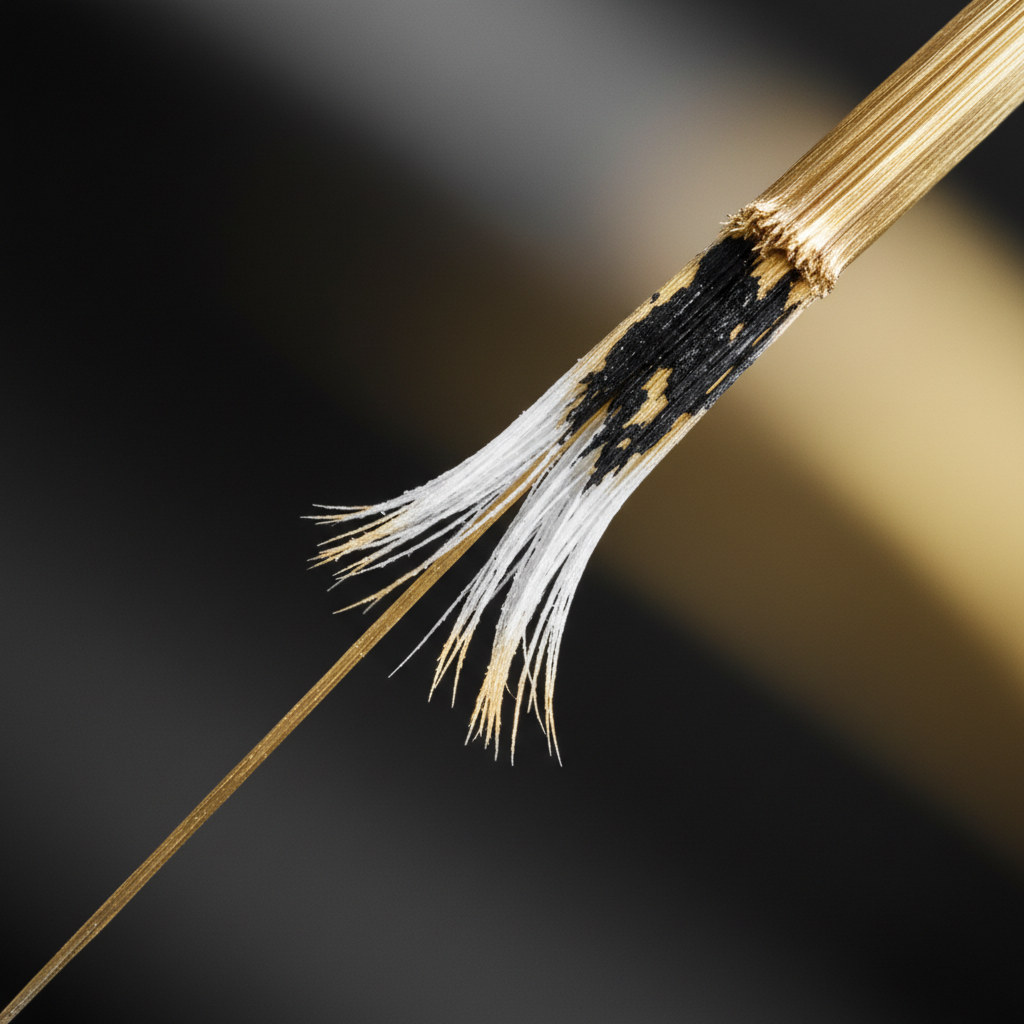
- Surface cuticle distress: Hair feels raspy or snaggy when you slide your fingers from tip to root (against the grain). Strands tangle readily upon washing, appear visibly dull or matte under bright light, and soak up water instantly like a sponge.
- Deep cortical failure: Hair displays extreme "gummy" stretch when wet and fails to snap back to its resting length. You notice tiny white dots along the shaft (trichorrhexis nodosa) where the cortex has collapsed inside, or the fibre snaps off cleanly mid-shaft with minimal tension during light styling.
What you can do: protecting both anatomical layers
Because hair fibre is biologically dead tissue, it cannot heal or regenerate like skin. Management requires preserving existing structures and mimicking the lost natural barriers:
- Maintain an optimal acidic pH: The hair cuticle naturally compacts and lies flat in an acidic environment (pH 4.5 to 5.5). Using shampoos and conditioning treatments formulated within this slightly acidic range prevents cuticle swelling and reduces wet combing friction.
- Deposit artificial hydrophobicity: Once chemical processing strips the natural 18-MEA layer, replace it topically. Conditioners containing cationic surfactants (such as cetrimonium chloride or behentrimonium methosulfate), fatty alcohols, and plant oils electrostatically bind to negatively charged, damaged sites on the cuticle to restore slip and manageability.
- Use hydrolysed proteins for cortical support: Low molecular weight hydrolysed proteins (below 1,000 Daltons) can penetrate past damaged cuticle gaps into the cortex matrix. There, they temporarily bind via hydrogen bonds, lending transient tensile reinforcement to weakened fibres.
- Cap heat exposure: Keep hot tools below 180°C and always apply heat protectants containing film-forming polymers (such as polyquaterniums or silicones). These slow down heat conduction into the cortex and shield the cuticle from scorching.
- Wash gently: Avoid harsh physical friction when shampooing. Work cleansers through the scalp with your fingertips and let the suds rinse naturally down the lengths, avoiding rough lathering that chips cuticle scales.
When the cause is something else: hair shedding versus hair breakage
A common error in hair evaluation is confusing cosmetic structural damage with physiological hair loss. If you notice an influx of hairs on your brush or shower drain, inspect the ends of the loose strands:
- Breakage (structural/cortical failure): The fallen hairs are short, uneven fragments lacking a small white bulb at either end. This reflects mechanical or chemical fracture across the cuticle and cortex.
- Shedding (telogen effluvium or natural cycling): The fallen fibres are full length and display a distinct, tiny white bulb (keratinised root sheath) at the proximal tip. This indicates the hair naturally separated from the follicle at the end of its growth cycle.
- Follicular miniaturisation (androgenetic alopecia): The overall diameter of newly emerging hairs decreases over time, resulting in diffuse thinning across the crown or hairline, independent of whether the shaft structure is healthy.
Cosmetic formulations cannot resolve systemic shedding or follicular miniaturisation. If you suspect an internal trigger, consult a trichologist, dermatologist, or your GP to examine your scalp and review relevant blood markers.
Supporting outer resilience: a role for balanced cosmetic care
Targeted haircare formulations work to protect vulnerable strands by reinforcing both surface slip and scalp comfort. While no topical cosmetic can physically rebuild a severed cortex, high-quality, pH-balanced hair cleansers and conditioning complexes reduce day-to-day cuticle friction. Watermans develops nutrient-rich formulations that support a clean, nourished scalp environment while coating the fibre surface with gentle botanical oils and strengthening extracts, reducing the daily friction that exposes the fragile cortex.
Frequently asked questions about Cortex vs Cuticle Hair Anatomy
What is the most critical difference in Cortex vs Cuticle Hair Anatomy?
The fundamental difference lies in their functional roles. The cuticle acts as a thin, multi-layered protective armour controlling surface porosity, gloss, and friction. In contrast, the cortex makes up the internal bulk of the fibre, providing mechanical tensile strength, elastic resilience, and natural pigmentation.
Can a damaged cuticle repair itself over time?
No. Because hair fibres are composed of non-living, fully keratinised cells, the cuticle cannot regenerate biological tissue. Once cuticular scales chip away or lose their protective 18-MEA lipid layer, you can only coat or smooth them using acidic rinses, film-forming conditioning agents, and lightweight plant lipids.
Why does bleaching cause cortical damage?
Bleaching requires an alkaline agent to force open the cuticle scales so that hydrogen peroxide can penetrate into the cortex. Inside the cortex, the peroxide breaks down melanin pigments to lighten colour. Unfortunately, this chemical process also oxidises and cleaves essential disulfide bonds in the keratin matrix, weakening the hair's internal support structure.
Does high hair porosity mean the cuticle or the cortex is damaged?
High porosity directly reflects cuticle breakdown. When cuticle scales are stripped, missing, or permanently flared from chemical exposure, water and environmental moisture flow rapidly into and out of the cortex. This makes the fibre prone to chronic moisture loss, tangling, and cortical protein loss.
Which layer determines whether hair is straight or curly?
The cortex dictates hair shape, guided by the asymmetry of the hair follicle beneath the scalp. In curly hair, the follicle is curved, creating an uneven distribution of cortical cell types (orthocortical and paracortical cells) across the hair shaft. This asymmetrical protein structure within the cortex generates natural bends and coils.
Summary of hair fibre architecture
Grasping the principles of Cortex vs Cuticle Hair Anatomy transforms the way you approach everyday washing, styling, and chemical services. The cuticle provides a smooth, protective shield against the outside world, while the cortex provides the internal strength and flexibility that keeps strands intact. Because neither layer can regenerate living cells, preserving the cuticle's delicate lipid layer and shielding the cortex from thermal and chemical stress remains the true foundation of long-term hair health.
Sources and references
- Robbins, C. R. (2012). Chemical and Physical Behavior of Human Hair. 5th ed. Springer-Verlag New York.
- Dawber, R. (1996). Hair: Its structure and response to cosmetic preparations. Clinics in Dermatology, 14(1), 105-112.
- Swift, J. A. (1999). Human hair cuticle: biologically conspired to the owner's advantage. International Journal of Cosmetic Science, 21(4), 227-239.
- Cruz, C. F., et al. (2016). Human hair characteristics and methods to explore them. Cosmetics, 3(3), 26.
- Wolfram, L. J. (2003). Human hair: A unique physicochemical composite. Journal of the American Academy of Dermatology, 48(6), S106-S114.
Where Watermans fits
If you want a routine built around the science above, these are the products from the range that apply here: