How to Wash Hair in Hard Water: The Definitive Guide
10 min read ·
Learn how to wash hair in hard water effectively. Discover the science behind mineral build-up, clarifying routines, acidic rinses, and how to prevent hair breakage.
Quick answer: Learning how to wash hair in hard water requires a deliberate routine: use a chelating or clarifying shampoo once a week to dissolve calcium and magnesium, lather with warm water, finish with an acidic rinse (such as diluted apple cider vinegar or a low-pH conditioner) to close cuticles, and apply lightweight leave-in moisture. While these techniques neutralise surface residue and reduce friction-induced breakage, they cannot change your domestic water chemistry permanently without a physical ion-exchange water softener.
Key takeaways
- Hard water contains high concentrations of dissolved minerals, predominantly calcium and magnesium carbonates, which bind electrostatically to keratin fibres.
- Mineral build-up forms an insoluble film, commonly called soap curd, which prevents moisture absorption, leaves hair feeling brittle, and reduces shampoo lathering efficiency.
- Clarifying or chelating agents containing ingredients like tetrasodium EDTA bind and lift metal ions away from the hair shaft.
- Finishing with an acidic rinse (pH 3.5 to 4.5) helps contract the cuticle scales, counteracting the alkaline swelling caused by mineral-rich water.
- Hard water causes external fibre friction and physical breakage; it does not cause follicular hair loss or hormonal alopecia.
How to Wash Hair in Hard Water: what the evidence shows
Learning how to wash hair in hard water begins with understanding how dissolved minerals interact with surfactant chemistry and biological tissue. Hard water is classified as water containing more than 120 to 180 milligrams of dissolved calcium carbonate per litre (mg/L). When you step into a shower fed by hard water, these dissolved calcium and magnesium ions interact with standard cleansing agents.
Standard anionic surfactants in shampoo carry negative charges. Positively charged calcium ($Ca^{2+}$) and magnesium ($Mg^{2+}$) ions bind with these surfactant molecules, creating insoluble precipitates. Instead of producing a rich, cleansing foam that lifts sebum and debris, the lather collapses. The resulting mineral salts adhere firmly to the cuticle layer of the hair fibre.
Research published in the International Journal of Trichology demonstrates that while hard water does not reduce the tensile strength of the hair cortex in healthy virgin fibres, it significantly alters the outer surface. The mineral deposition increases inter-fibre friction. This surface roughness makes individual strands tangle easily, leading to mechanical breakage during brushing and styling.
To wash hair effectively under these conditions, you must alter your cleansing sequence to remove existing scale, improve lathering, and smooth the exterior cuticle.
Step 1: Pre-rinse thoroughly with warm water
Spend at least 60 seconds saturating your scalp and hair before applying any product. Warm water helps lift superficial dust and loosens sebum, giving your cleanser a fighting chance despite the mineral interference.
Step 2: Use a chelating or clarifying cleanser periodically
A standard moisturising shampoo is rarely strong enough to dislodge bonded mineral films. Incorporate a chelating shampoo into your routine once every 7 to 10 days. Chelating agents, such as ethylenediaminetetraacetic acid (EDTA), possess multiple bonding sites that capture metal ions, forming soluble ring complexes that rinse cleanly away down the drain. On other wash days, use a sulphate-free, nutrient-dense shampoo designed to cleanse without stripping natural lipids.
Step 3: Work the product directly into the scalp
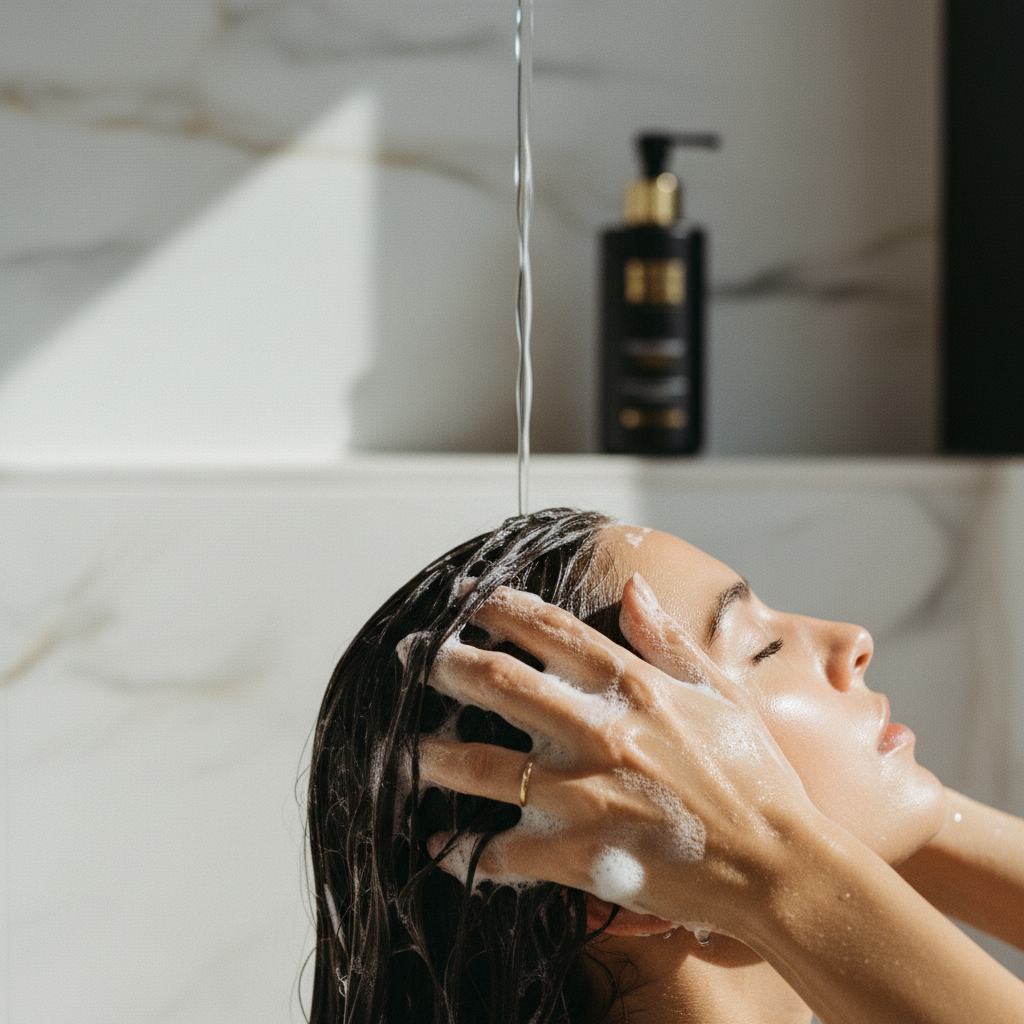
Because hard water suppresses foam, you may feel tempted to use double the normal amount of shampoo. Avoid this, as excess detergent dries out the scalp skin. Instead, disperse the shampoo between your palms, apply it directly to your scalp roots, and massage with your fingertips to lift mineral flakes and sebum. Let the running lather cleanse the mid-lengths and ends as you rinse.
Step 4: Neutralise the pH with an acidic rinse or conditioner
Hard water typically leans alkaline, with a pH ranging from 7.5 to 8.5. Natural human hair and scalp sebum maintain a mildly acidic environment between pH 4.5 and 5.5. Alkaline conditions cause the outer cuticle shingles to swell and flare open. After rinsing your shampoo, apply a deep conditioner formulated at an acidic pH, or rinse with a solution of one tablespoon of raw apple cider vinegar diluted in 500 ml of filtered water. This acidic environment neutralises mineral salts and flattens the cuticle layer.
Step 5: Seal moisture into the fibre
Pat your hair gently with a microfibre towel rather than rubbing roughly with terry cloth. Apply a lightweight leave-in conditioner containing humectants (like glycerin or panthenol) and protective fatty alcohols. This creates a barrier against environmental dryness and mitigates residual roughness.
What the evidence does not show
There is a widespread misconception that hard water causes alopecia or medical hair loss. Clinical evidence does not support this claim. A study evaluating hair shedding under different water hardness levels found no correlation between high mineral content and telogen effluvium or follicular miniaturisation.
Follicles reside beneath the dermis, where external tap water cannot interfere with cellular growth cycles or dermal papilla vascularisation. When people complain that hard water makes their hair fall out, they are almost always experiencing hair breakage along the shaft or observing shed hairs that were trapped in mineral-induced tangles until the wash process released them.
Hard water also does not permanently alter the internal keratin structure of your hair. The damage is superficial and reversible once the mineral deposits are chelated away.
The mechanical mechanism: how minerals disrupt hair
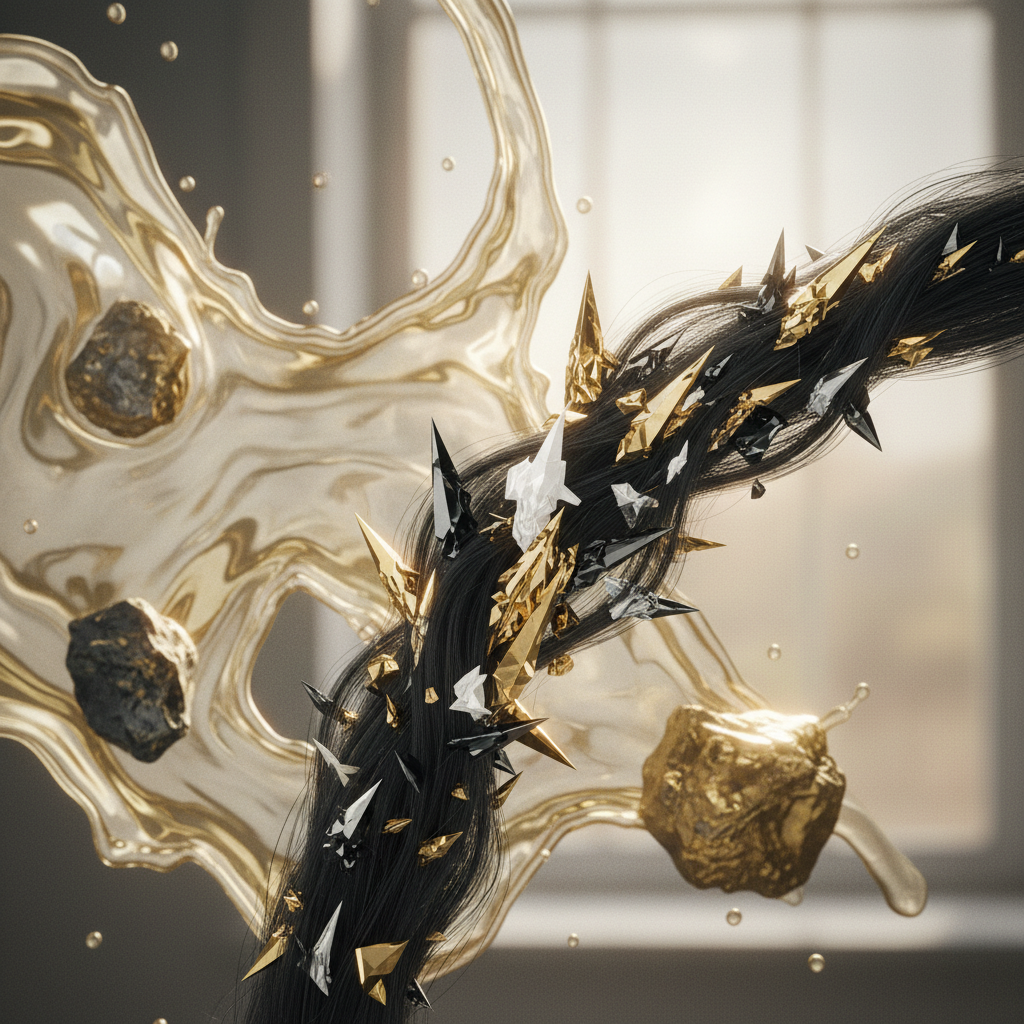
Hair cuticles overlap like tiles on a roof. In soft water with a neutral or slightly acidic wash, these cuticles lie flat, allowing light to reflect cleanly (producing shine) and fibres to glide past one another without resistance.
When hard water hits the hair shaft, two distinct problems occur:
- Mineral entrapment: Calcium and magnesium ions lodge beneath the edges of the cuticle scales. Over successive washes, these minerals form microscopic crusts that prop the cuticles open.
- Surfactant curd formation: Fatty acids in sebum and shampoo bind with calcium ions to form calcium stearate, the same substance that creates bathroom soap scum. This leaves a waxy, hydrophobic film over the hair that resists water penetration, leaving the interior cortex dehydrated while the exterior feels perpetually coated.
| Water type | Mineral concentration | Impact on shampoo | Cuticle behaviour | Hair texture result |
|---|---|---|---|---|
| Soft water | Under 60 mg/L $CaCO_3$ | Lathers easily, rinses clean | Cuticles remain smooth and closed | Soft, pliable, higher natural shine |
| Moderately hard | 61 to 120 mg/L $CaCO_3$ | Moderate lather, minimal curd | Minor cuticle lifting | Slight dryness, manageable |
| Hard to very hard | Over 120 to 180 mg/L $CaCO_3$ | Poor lather, heavy soap curd | Scales prop open, mineral deposits form | Brittle, tangly, dull, high friction |
Signs you are washing hair in hard water
If you are unsure whether your local supply is hard, look for these physical indicators in your bathroom and on your hair:
- Chalky residue on fixtures: White crusting around showerheads and taps indicates heavy calcium and magnesium deposits.
- Persistent dullness: Hair lacks lustre because the rough, mineral-coated cuticle scatters light instead of reflecting it.
- Fading salon colour: Minerals interact with artificial dye molecules, causing brassiness in blonde tones and rapid fading in rich brunettes.
- Rough, straw-like ends: Individual strands feel coarse, stiff, and snag against each other even immediately after conditioning.
- Scalp irritation: Soap curd residues can trap dead skin cells and natural sebum, leading to an itchy, flaky, or congested scalp.
What you can do: equipment and routine modifications
Beyond adjusting your shampoo technique, you can alter your physical wash setup.
First, consider installing an in-line shower filter. Standard carbon shower filters remove chlorine and volatile organic chemicals, which helps reduce general oxidative stress on the hair. However, keep in mind that basic carbon filters do not soften water; removing dissolved calcium and magnesium requires true ion-exchange technology. If a whole-house water softener is not feasible, look for shower heads featuring compact ion-exchange resin cartridges, or use bottled or distilled water for your final rinse.
Second, avoid excessive heat styling when washing in hard water. Because cuticles are already raised and vulnerable, high temperatures from hair dryers and straighteners cause the mineral-crusted edges to chip, accelerating split ends and breakage.
When the cause may be something else
If your hair remains fragile, flat, or sheds in large volumes despite adjusting your wash routine, hard water may not be the primary culprit.
- Telogen effluvium: Sudden, diffuse hair shedding across the entire scalp is typically triggered by physiological stress, severe illness, rapid weight loss, or hormonal shifts.
- Pattern hair loss (androgenetic alopecia): Progressive thinning along the crown or frontal hairline is driven by genetics and sensitivity to dihydrotestosterone (DHT), not water hardness.
- Protein and moisture imbalances: Over-processing hair with bleach, chemical relaxers, or permanent waves degrades the internal keratin matrix, causing extreme breakage that mimics mineral damage.
If you notice bald patches, widening part lines, or sudden heavy shedding that persists for more than three months, consult a dermatologist or registered trichologist for an accurate diagnostic evaluation.
Supporting the scalp barrier with Watermans
When managing hair in challenging hard water conditions, protecting the scalp and supporting the hair fibre is essential. The Watermans Grow Me range is designed to invigorate the scalp environment without using harsh, stripping agents. Formulated with revitalising ingredients like biotin, rosemary, caffeine, and argan oil, the shampoo cleanses the scalp effectively while respecting its natural barrier. Following with an acidic, nutrient-rich treatment like Watermans Condition Me helps detangle mineral-roughened fibres, replenishing lost slip and reducing the mechanical breakage that so frequently accompanies washing in hard water areas.
Frequently asked questions about How to Wash Hair in Hard Water
Can you use baking soda to wash hair in hard water?
No, using baking soda is not recommended. Sodium bicarbonate is strongly alkaline, with a pH of approximately 8.3 to 9.0. Combining alkaline baking soda with alkaline hard water forces the hair cuticles open, stripping natural lipids and causing severe dryness, tangling, and shaft breakage.
Does hard water cause permanent hair loss?
Hard water does not cause permanent hair loss or follicular damage. The minerals only interact with the exposed, non-living hair shaft and scalp surface. While the resulting friction can snap fragile strands, it does not stop follicles from producing new hair.
How often should I clarify when learning how to wash hair in hard water?
Most people benefit from using a clarifying or chelating shampoo once every 7 to 14 days. If your hair is coarse or chemically coloured, limit this to once every fortnight to prevent dryness. If your hair is fine and prone to mineral limpness, a weekly treatment is ideal.
Can a shower filter completely soften hard water?
Most standard shower filters contain carbon, KDF, or vitamin C, which neutralise chlorine and heavy metals but do not remove dissolved calcium and magnesium. Only genuine ion-exchange systems can fully soften water, though chemical filtration still reduces shower-related dryness significantly.
Is an apple cider vinegar rinse safe for coloured hair?
Yes, when properly diluted. A mixture of one tablespoon of apple cider vinegar to 500 ml of water produces a mild acid rinse that removes soap scum and closes the hair cuticles, which actually helps lock artificial colour pigments inside the hair shaft.
Summary on washing hair effectively in mineral-rich environments
Mastering how to wash hair in hard water comes down to balancing mineral removal with lipid restoration. Dissolved calcium and magnesium alter lather dynamics, raise the cuticle layer, and leave dulling films that invite mechanical breakage. By integrating regular chelating washes, counteracting alkalinity with acidic rinses, and handling vulnerable wet hair gently, you can neutralise the impact of hard water and keep your hair feeling supple, vibrant, and resilient.
Sources and references
- International Journal of Trichology (2013). Effects of Hard Water on Hair Tensile Strength. PubMed Central.
- World Health Organization (2011). Hardness in Drinking-water: Background document for development of WHO Guidelines for Drinking-water Quality.
- Journal of the Society of Cosmetic Chemists (1988). The effect of metal ions on the physical properties of human hair.
- American Academy of Dermatology Association (AAD). Hair care: Tips for healthy hair.
Find these ingredients in Watermans products
- Vitamin C: you will find this ingredient in our Hair Vitamins.
- Panthenol (Provitamin B5): you will find this ingredient in our Heat Protection Spray.