How to Prevent Split Ends: A Scientific Guide to Healthier Hair
8 min read ·
Learn how to prevent split ends with evidence-based hair care advice. Discover the science of cuticle protection, heat limits, and effective trimming routines.
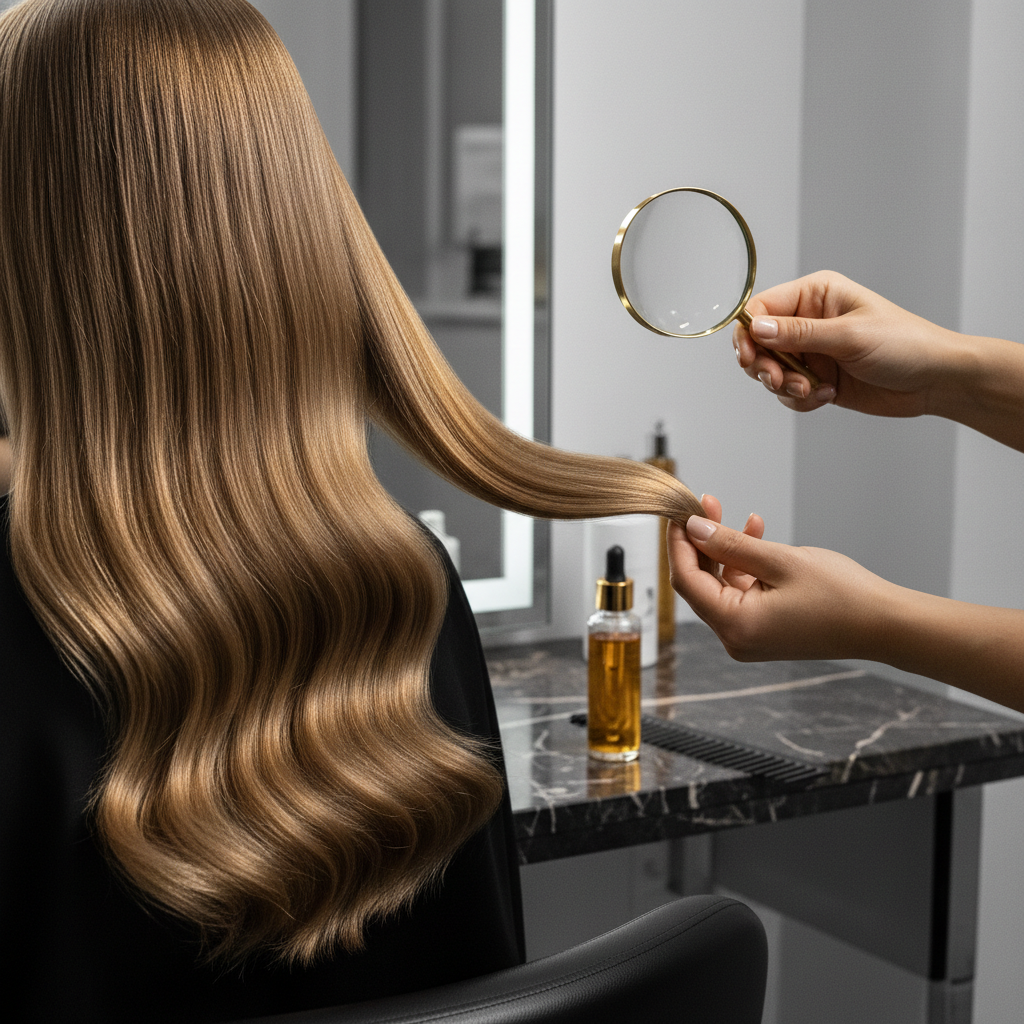
Quick answer: Learning how to prevent split ends requires protecting the outer cuticle layer before structural damage reaches the inner cortex. To protect your hair fibre, minimise heat styling above 185°C, reduce mechanical friction from rough detangling, and maintain lipid lubrication through conditioning agents. The key limitation is that once a hair fibre fractures or splits longitudinally (known clinically as trichoptilosis), no cosmetic product can permanently mend it; physical trimming remains the only definitive cure.
Understanding how to prevent split ends helps you preserve fibre integrity, maintain length, and avoid unnecessary breakage along the hair shaft.
Key takeaways
- Split ends occur when the protective outer cuticle wears away, exposing the fragile cortical fibres beneath to physical fraying.
- Heat tools operating above 185°C degrade hair keratin and strip structural lipids, drastically increasing the rate of splitting.
- Wet hair has lower tensile strength and stretches significantly more than dry hair, making rough wet brushing a leading cause of distal fractures.
- No serum, cream, or mask can permanently fuse a split end back together; styling products only temporarily glue fibres using polymers.
- Regular micro-trims every 8 to 12 weeks prevent small fractures from traveling further up the hair shaft.
How to Prevent Split Ends: what the evidence shows
Research into hair fibre biology demonstrates that learning how to prevent split ends is strictly an exercise in defensive cuticle management. The outermost layer of human hair consists of 6 to 10 overlapping cuticle scales. These scales are glued together by the cell membrane complex (CMC), a lipid-protein matrix rich in 18-methyleicosanoic acid (18-MEA). When 18-MEA and the cuticle scales are worn down by friction, ultraviolet radiation, bleaching, or heat, the inner cortex is exposed. Without its protective casing, the cortex unravels into individual macrofibrils, creating trichoptilosis (the technical term for split ends).
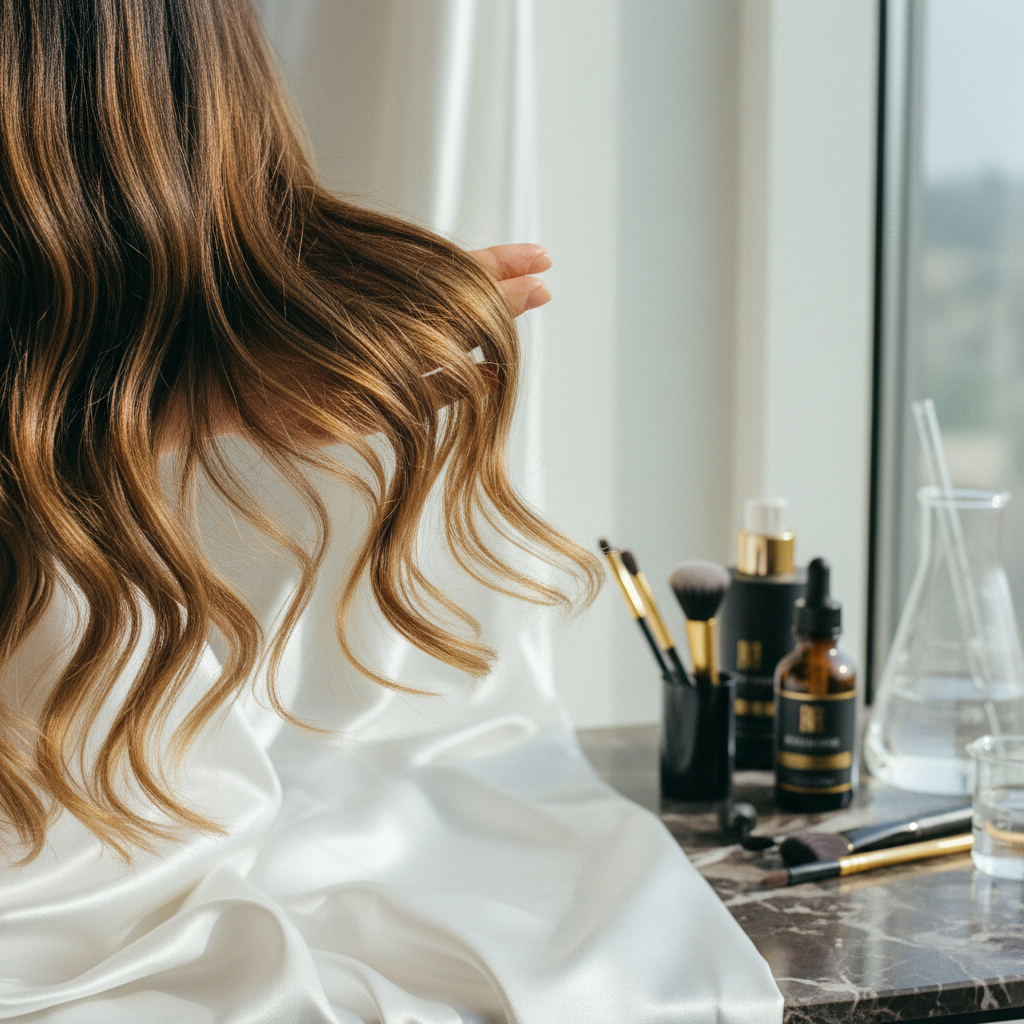
Studies published in cosmetic science literature confirm that prevention relies on lubricating the fibre to reduce the coefficient of friction. When you apply leave-in conditioners, natural oils, or conditioning fatty alcohols (like cetyl and stearyl alcohol), you replace lost surface lubricity. This reduction in friction prevents mechanical forces, such as combing and brushing, from shearing off the cuticle edges.
Mechanical damage vs chemical erosion
The table below outlines how different daily exposures compromise fibre integrity and lead to distal splitting.
| Damage source | Primary mechanism | Impact on hair fibre | Evidence-based preventative measure |
|---|---|---|---|
| High-heat styling (>185°C) | Keratin denaturation and rapid moisture vaporisation | Forms cortical bubbles and tears cuticle edges | Keep styling tools below 185°C; apply thermal shield polymers |
| Aggressive brushing | Shear stress and excessive elongation | Stretches wet fibre beyond elastic limit (30% strain) | Detangle gently from tips upward with a wide-tooth comb |
| Chemical bleaching / relaxers | Oxidation of disulphide bonds and removal of 18-MEA | Porosity spikes; strips outer hydrophobic lipid layer | Increase conditioning frequency; lengthen intervals between services |
| Friction (pillows, clothing) | Micro-abrasion of overlapping cuticle margins | Chipping of cuticle cell edges, exposing the cortex | Sleep on silk or satin pillowcases; wear protective styles |
What the evidence does not show: the myth of split end repair
Cosmetic marketing often claims that serums or bonding treatments can "heal" or "glue" split ends permanently back together. The physical evidence shows this is impossible. Hair is a biologically dead fibre once it emerges from the scalp follicle; it contains no living cells, blood supply, or metabolic processes capable of cellular regeneration.
Certain charged polymers, polyelectrolyte complexes, and hydrolysed proteins can bind split fibres together temporarily. They work like a weak cosmetic adhesive, holding the split shut until your next wash. However, rinsing hair with water and surfactants strips these temporary bonds immediately. The only way to remove a split end permanently is to physically cut the hair fibre above the fracture point using sharp hairdressing shears.
Practical steps to prevent split ends
Taking systematic steps to protect the hair fibre significantly lowers the rate of splitting and breakage:
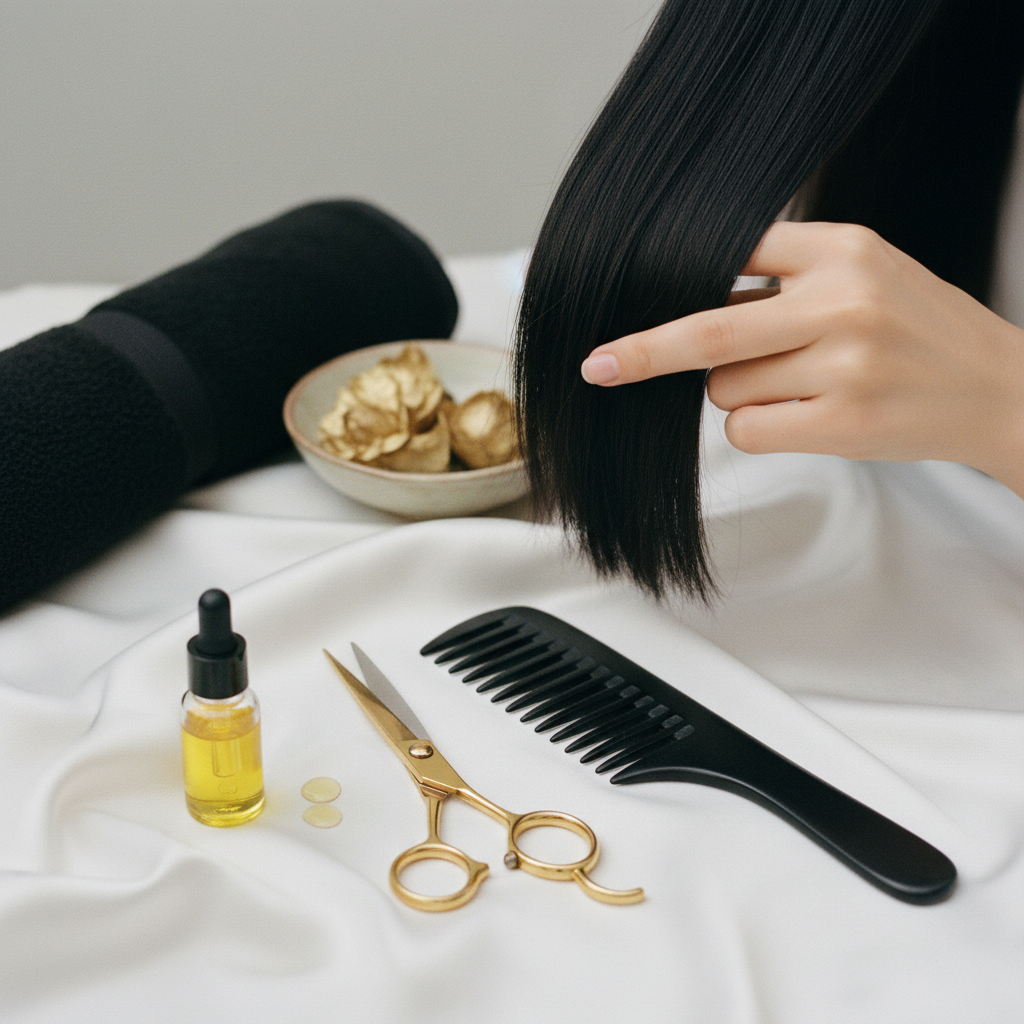
- Control your styling temperature: Keratin begins to denature thermally around 155°C, while severe degradation and moisture flash-boiling occur around 190°C to 200°C. Keep hot tools set to 150°C to 180°C, and always coat damp hair with a heat protectant containing polymers like polyquaternium-55 or dimethiconol.
- Handle wet hair with extreme care: Water disrupts weak hydrogen bonds within the cortex, making wet hair capable of stretching up to 30% to 50% before breaking, but with far lower overall tensile resistance. Never drag a fine-toothed brush through dripping-wet hair. Gently squeeze water out using a soft microfibre towel instead of rubbing with rough terrycloth.
- Detangle from ends to roots: Brushing downwards from the scalp forces knots downward into a single, compacted tangle. This dramatically amplifies mechanical stress on the ends, shearing the cuticle. Start detangling at the bottom 2 inches, clear the knots, and gradually work your way upward.
- Maintain regular dusting cuts: A split end left untrimmed will continue to split upwards along the cortex, much like a run in a pair of tights. Scheduling a light trim or "dusting" (cutting 3 to 6 mm) every 8 to 12 weeks eliminates early splits before they ruin several inches of hair length.
- Mitigate nocturnal friction: The continuous movement of hair against cotton pillowcases generates significant friction over 7 to 8 hours. Smooth silk or satin pillowcases drastically reduce this surface abrasion.
When the cause may be something else
If you notice excessive shedding or thinning at the roots, the issue is not split ends. A split end represents distal breakage along the shaft; it does not involve the follicle.
If your hair breaks off near the scalp or you find clumps of hair with intact white bulbs (the telogen root) in your brush, you are experiencing hair shedding or telogen effluvium, not simple fibre wear. Severe shaft fragility across the entire head, where short pieces snap off easily under mild tension, can also stem from genetic conditions like trichorrhexis nodosa or severe nutritional deficiencies (such as severe iron or zinc deficiency). If your hair snaps throughout its mid-lengths without clear chemical or heat causes, consult a trichologist or dermatologist for a scalp and fibre assessment.
Support your routine with Watermans
Maintaining resilient hair begins with a balanced scalp environment and nourished fibres. The Watermans range was formulated to support strong-looking hair from root to tip. Incorporating Watermans Grow Me Shampoo and Condition Me Conditioner into your wash day supplies hair with hydrolysed lupin protein, niacinamide, caffeine, and natural oils that smooth the cuticle surface and improve manageable slip. By reducing mechanical resistance during detangling, these nutrient-dense formulas help you protect your mid-lengths and ends against unnecessary friction and distal splitting.
Frequently asked questions about How to Prevent Split Ends
Can split ends travel up the hair shaft?
Yes. When the protective cuticle is absent, the exposed cortical fibres peel apart easily. Mechanical tension from combing or washing forces the split to travel vertically upward toward the mid-lengths, eventually causing the fibre to snap off completely and resulting in uneven, thinned-out ends.
How often should I cut my hair to prevent split ends?
Getting a micro-trim every 8 to 12 weeks is ideal for most hair types. Trimming just a few millimetres removes the oldest, most degraded portion of the fibre before structural splits can form and travel upwards, allowing you to retain overall length without sacrificing fibre health.
Do leave-in conditioners really help on how to prevent split ends?
Yes, leave-in conditioners are among the most effective preventative products. They coat the hair shaft with cationic surfactants, silicones, or plant oils that lower surface friction. This slip allows combs to glide through hair smoothly, preventing the physical tugging and micro-tears that cause split ends in the first place.
Is hair oil better than a trim for split ends?
No. Hair oil lubricates the outer cuticle and helps seal moisture, which helps prevent future damage, but it cannot repair existing splits. Once the hair fibre has physically split into separate strands, trimming the damaged segment away is the only permanent solution.
Does cold water prevent split ends?
There is no strong clinical evidence showing cold water prevents split ends. While cooler water does not strip natural surface lipids quite as aggressively as very hot water, it does not physically "close" the dead cuticle scales in the way popular myth suggests. Gentle handling and proper conditioning matter far more.
Summary on how to prevent split ends
Mastering how to prevent split ends is entirely about proactive preservation. Because hair fibre cannot biologically heal itself, your focus must stay on safeguarding the outer cuticle layer against excessive heat, chemical damage, and rough mechanical tension. By detangling gently, keeping hot tools well below 185°C, using conditioning slip to reduce friction, and getting regular trims, you keep your hair intact, vibrant, and resilient over time.
Sources and references
- Robbins, C. R. (2012). Chemical and Physical Behavior of Human Hair (5th ed.). Springer-Verlag.
- Swift, J. A. (1999). The mechanics of fracture of human hair. International Journal of Cosmetic Science, 21(4), 227-239.
- Sinclair, R. D. (2007). Healthy hair: what is it? Journal of Investigative Dermatology Symposium Proceedings, 12(2), 2-5.
- Dawber, R. (1996). Hair: Its structure and response to cosmetic preparations. Clinics in Dermatology, 14(1), 105-112.
- Evans, T. A., & Wickett, R. R. (2012). Practical Modern Hair Science. Allured Business Media.
Find these ingredients in Watermans products
- Zinc: you will find this ingredient in our Hair Vitamins.