How to Moisturise Afro Textured Hair: A Complete Science-Based Guide
9 min read ·
Learn how to moisturise afro textured hair using scientific hydration principles, the LOC method, and lipid sealing to prevent breakage and sustain curl elasticity.
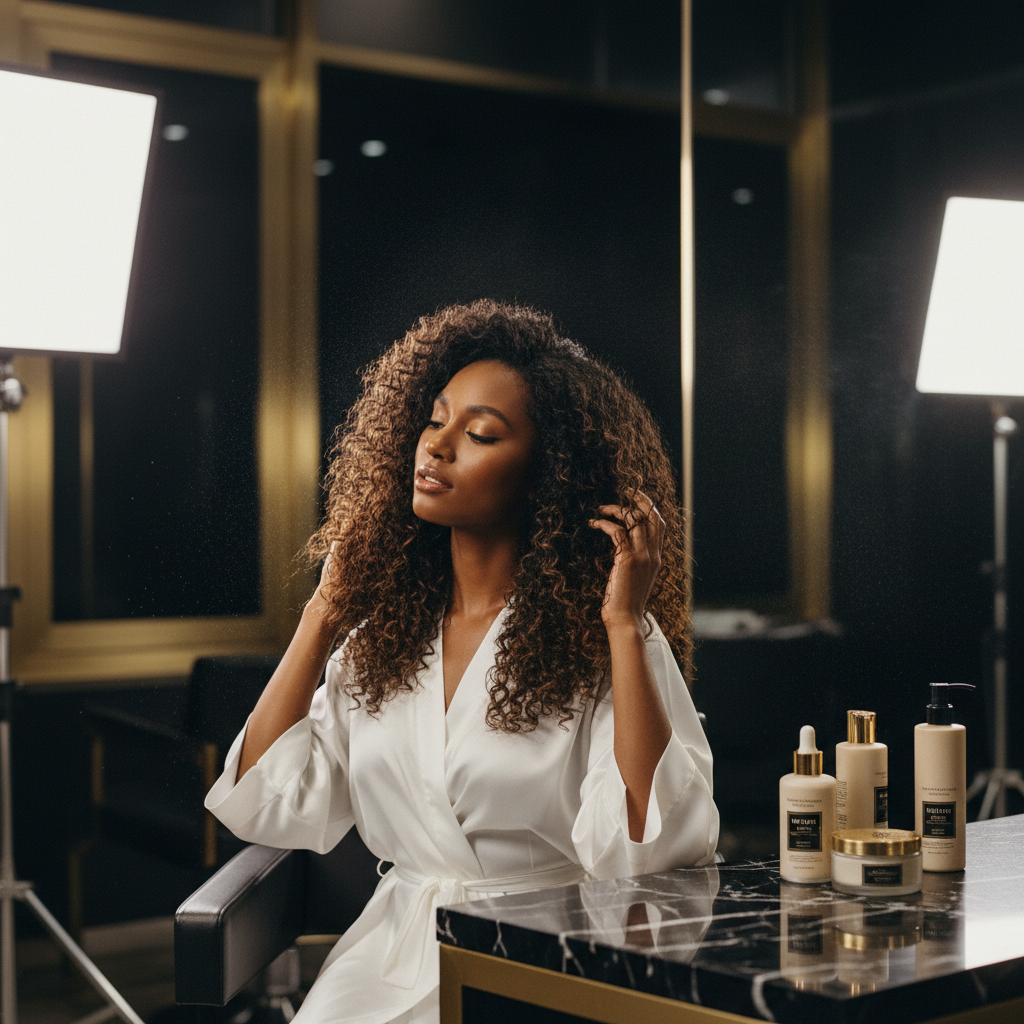
Quick answer: Learning how to moisturise afro textured hair requires introducing water or water-based hydrating liquids into the hair shaft, then locking that moisture in with emollients and occlusive lipids. Because of the elliptical cross-section and bends along the curl pattern, natural sebum struggles to coat the strand, leaving coils vulnerable to dryness. The primary limitation is that oils and butters do not moisturise hair on their own; without water, heavy sealants merely coat a parched fibre, accelerating brittle breakage.
Key takeaways
- True moisture comes exclusively from water and water-soluble humectants, not from pure plant oils, butters, or petroleum.
- The unique geometry of afro textured hair creates points of mechanical weakness along the fibre and limits natural sebum distribution from the scalp.
- The LOC (Liquid, Oil, Cream) or LCO method provides a structured lipid barrier that slows down trans-epidermal and trans-fibre water evaporation.
- Formulations balanced at an acidic pH (between 4.5 and 5.5) help compact the cuticle scale layer, keeping introduced moisture within the cortex.
- Chronic dryness results in mechanical breakage along the hair shaft, which is distinct from root-level hair shedding or follicular hair loss.
How to moisturise afro textured hair: what the evidence shows
Understanding how to moisturise afro textured hair starts with biophysics and cosmetic chemistry. Afro textured hair (often categorised as type 4 coils and zig-zag patterns) possesses an asymmetrical follicle that produces an elliptical, flattened fibre. Published cosmetic trichology shows that while afro hair contains a similar quantity of internal moisture to straight or wavy hair types, its geometry makes it significantly more prone to rapid desiccation.
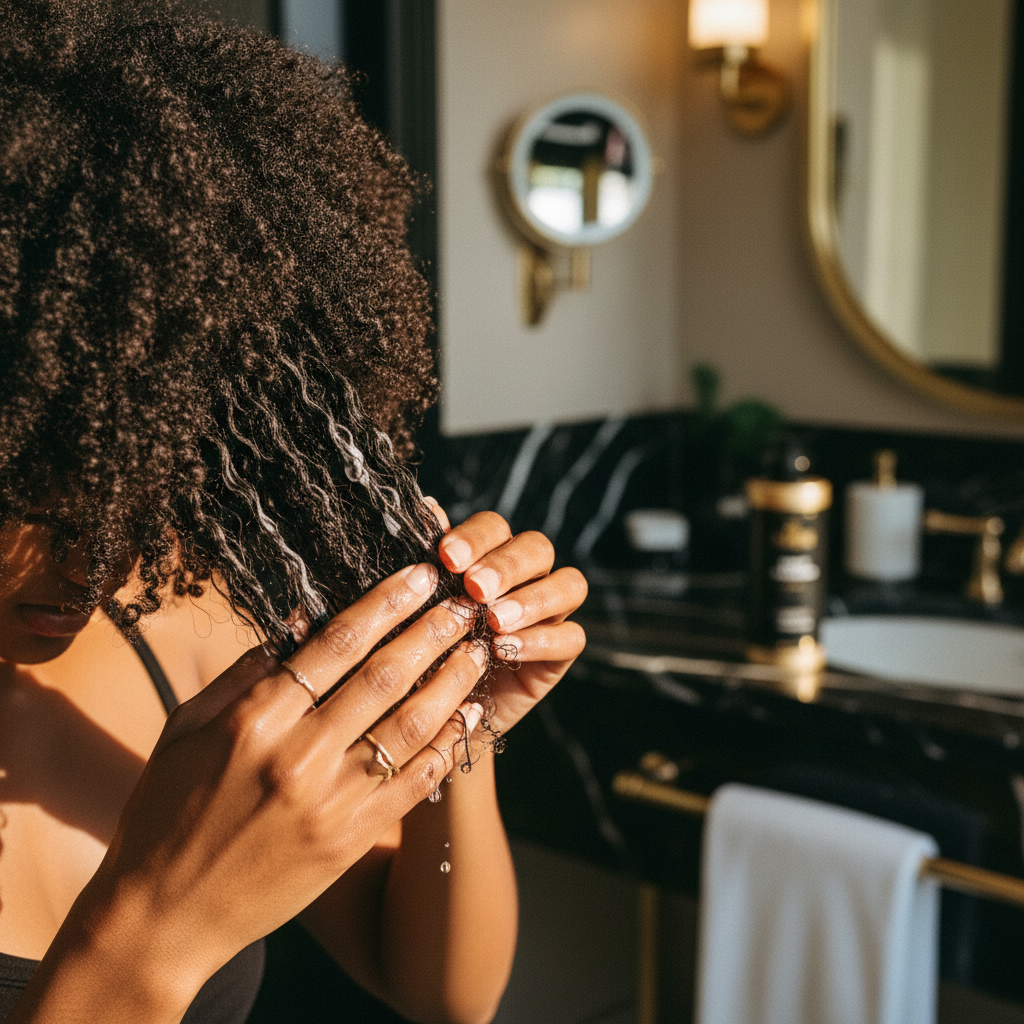
Every twist, turn, and crimp along an afro hair strand represents a structural point of variation where the cuticle scales slightly flare. This irregular cuticle alignment allows internal hydration to escape into ambient air through evaporation much faster than it does from a cylindrical, straight hair fibre. Furthermore, sebum produced by the sebaceous glands on the scalp cannot easily travel down tight coils. As a result, the mid-lengths and ends remain unprotected by physiological lipids, requiring deliberate, external hydration routines.
Clinical studies in cosmetic dermatological science confirm that water plasticises the keratin proteins inside the hair cortex. When hair contains adequate water, the fibre flexes under tension rather than snapping. Effective hydration regimens must therefore follow a two-step physiological mechanism: delivery of water (hydration) followed immediately by hydrophobic film formation (sealing) to retard evaporation.
What the evidence does not show
There is no scientific evidence that applying raw vegetable oils, mineral oils, or dense botanical butters directly onto dry afro hair hydrates the fibre. Lipids are hydrophobic; they actively repel water. Coating dehydrated hair in pure castor oil or shea butter forms an impermeable barrier that prevents environmental humidity or subsequent water treatments from entering the cortex.
Additionally, the evidence does not support the belief that wet hair should be left continuously saturated without drying. Leaving afro hair saturated for prolonged periods leads to hygral fatigue, a state where the hair cortex repeatedly swells and contracts, degrading the cell membrane complex. Controlled research has also not found that topical moisturisers stimulate follicular hair growth or prevent genetic hair loss. Moisturisers simply improve tensile elasticity and manageability, reducing structural breakage along the length of the strand.
The biological mechanism of moisture retention
Hair hydration is governed by the equilibrium between internal water content and relative ambient humidity. In afro textured hair, this balance relies on three structural zones:

- The Cuticle: The outermost protective layer consisting of 6 to 10 overlapping scale layers. In tightly coiled hair, cuticle cells lift at the curves. Products formulated at a physiological pH of 4.5 to 5.5 cause the cuticle scales to lay flat, reducing porosity and trapping internal moisture.
- The Cell Membrane Complex (CMC): The lipid-rich adhesive holding cuticle cells and cortical cells together. It contains 18-methyleicosanoic acid (18-MEA) and ceramides. Alkaline shampoos strip this natural lipid layer, creating microscopic voids that accelerate moisture loss.
- The Cortex: The interior bulk of the fibre, composed of keratin intermediate filaments packed with water-attracting amino acids. When water enters through a relaxed cuticle, it temporarily hydrogen-bonds with keratin, giving the coil softness and mechanical stretch.
Without an occlusive surface barrier, ambient air draws this water back out of the cortex within hours, leaving the fibre stiff and prone to shear fracture.
Signs of dehydrated afro hair
Recognising moisture deficiency early prevents progressive structural damage. Look for these clinical signs:
- Audible crunching: Dry coils make a distinct friction sound when gently squeezed.
- Loss of elastic recovery: A healthy coiled strand should stretch slightly when damp and return to its resting curl pattern; dehydrated strands snap under minimal tension.
- Tangled knotting (fairy knots): Single-strand knots (trichonodosis) multiply when dehydrated cuticles lift, catch on neighbouring strands, and tie themselves in loops.
- Dull, light-scattering appearance: Raised, dry cuticles scatter light randomly rather than reflecting it, giving hair an ashen or matte finish.
Step-by-step: how to moisturise afro textured hair effectively
To maintain sustained hydration, implement this systematic approach based on cosmetic surface chemistry:
1. Cleanse thoroughly to reset the fibre
Hydration cannot penetrate through product buildup, synthetic polymers, or oxidised oils. Wash the scalp and hair with a gentle, sulphate-free clarifying cleanser every 7 to 10 days. Ensure the water temperature is lukewarm (around 38 degrees Celsius) to soften sebum without parching the scalp.
2. Apply water and humectants first
Apply moisturisers while the hair is clean and damp. The first ingredient in your daily or weekly moisturiser must be water (aqua). Accompanying ingredients should include small-molecule humectants such as glycerin, aloe vera, panthenol (provitamin B5), or propylene glycol, which draw water molecules deep into the exposed cortex.
3. Layer with the LOC or LCO technique
The sequential layering of products minimises water loss over several days:
- Liquid (L): Pure water or a water-based leave-in conditioning spray.
- Oil (O): A thin film of lightweight plant oil (such as jojoba, avocado, or argan oil) to slip between cuticle gaps.
- Cream (C): A thicker emollient cream containing shea butter, mango butter, or cetyl alcohol to create a long-lasting hydrophobic shield against the atmosphere.
Tailor the order to your hair's porosity: low-porosity hair often responds better to the LCO method (applying lighter cream before sealing with oil) to prevent heavy product sitting on top of the strand.
4. Minimise environmental water loss
Night-time friction against absorbent cotton pillowcases strips surface lipids and leaches water from the fibre. Use a satin or silk bonnet, scarf, or pillowcase. The smooth, non-absorbent weave preserves moisture reserves throughout the sleep cycle.
| Layer Type | Functional Role | Primary Ingredients to Look For | Application Timing |
|---|---|---|---|
| Humectant / Liquid | Penetrates cortex; binds ambient and topical water | Water (Aqua), Glycerin, Panthenol, Aloe Barbadensis Leaf Juice | Immediately after washing or refreshing damp hair |
| Emollient / Oil | Fills microscopic gaps between lifted cuticle scales | Jojoba oil, Squalane, Argan oil, Sweet Almond oil | Mid-layer (LOC) or final sealant (LCO) |
| Occlusive / Cream | Creates a hydrophobic physical barrier against evaporation | Shea butter, Cocoa butter, Cetyl alcohol, Beeswax | Final sealant (LOC) or smoothing layer (LCO) |
Differentiating breakage from hair shedding and loss
It is essential to distinguish between cosmetic moisture deficits and biological hair loss disorders. Chronic dryness causes hair breakage, which is the mechanical fracture of the dead keratin shaft. Broken hairs are short, irregular pieces without a white bulb at the end.
In contrast, hair shedding (telogen effluvium) involves entire hairs releasing from the follicle with an intact white bulb at the root, usually triggered by systemic stressors, illness, nutritional deficiencies, or hormonal fluctuations. Alopecia (such as central centrifugal cicatricial alopecia or androgenetic alopecia) involves the miniaturisation, inflammation, or destruction of the follicular unit itself beneath the skin.
Moisturising treatments resolve breakage by restoring fibre flexibility, but they have no therapeutic mechanism against root-level hair loss or shedding.
Supporting afro hair health
Maintaining healthy afro textured hair requires external hydration routines supported by scalp care. Watermans produces nutrient-dense haircare formulations designed to cultivate a healthy, balanced scalp environment, which forms the foundation from which resilient, moisture-receptive hair emerges. For dedicated afro hair routines, incorporating specialist moisture-sealing systems like Frojus helps preserve deep cellular hydration throughout the styling cycle.
When to seek professional advice
If your hair snaps continuously despite consistent hydration routines, consult a qualified trichologist or dermatologist. Underlying conditions such as acquired trichorrhexis nodosa (node-like weak spots along the shaft from chemical or heat trauma) may require structural trims and clinical conditioning protocols. Furthermore, if you notice distinct bald patches, scalp burning, tenderness, or hair shedding exceeding 100 hairs daily, seek a medical evaluation to screen for inflammatory or follicular alopecias.
Frequently asked questions about how to moisturise afro textured hair
How often should you moisturise afro textured hair?
Most afro hair textures benefit from a water-based moisture refresh every two to three days. Fine coils may become weighed down if heavy products are applied daily, whereas high-porosity or coarse coils may require light hydration every 24 to 48 hours to retain flexibility and prevent snapping.
Does drinking water help moisturise afro hair?
Drinking water is vital for cellular metabolism and supporting the active follicle during the anagen (growth) phase. However, once hair emerges past the scalp surface, it is dead keratin tissue. Systemic hydration does not lubricate existing hair lengths; you must apply topical water and sealing lipids directly to the fibre.
What is the biggest mistake when learning how to moisturise afro textured hair?
The most widespread mistake is applying heavy oils or greases directly to dry hair. Because oils are hydrophobic, they block water from entering the shaft, sealing the dryness inside. Always apply a water-based liquid first before sealing the surface with an oil or butter.
Can deep conditioning replace daily moisturising?
Deep conditioning provides an intensive weekly dose of cationic surfactants and hydrolysed proteins that temporarily patch damaged cuticle scales. While it significantly boosts baseline elasticity, it does not permanently lock in water. A daily or mid-week leave-in routine remains necessary to counteract ambient evaporation.
Sustaining moisture in afro textured hair
Mastering how to moisturise afro textured hair is an ongoing discipline grounded in biophysics rather than complex product layering. By respecting the natural fragility of the coil, applying water-based formulas first, and locking that hydration in with targeted emollients, you preserve the structural integrity of every strand. Consistent moisture balance stops cosmetic breakage, preserves length, and ensures your coils remain soft, springy, and resilient.
Sources and references
- British Association of Dermatologists. Guidelines on Hair Breakage and Cosmetic Trichology, 2021.
- Journal of Cosmetic Science. Moisture sorption and desorption properties of human hair: influence of ethnic origin, 2018.
- International Journal of Dermatology. Structural differences in afro-ethnic hair and the biomechanics of grooming damage, 2020.
- NHS. Scalp and hair conditions reference guide, 2022.
Find these ingredients in Watermans products
- Argan Oil: you will find this ingredient in our Hair Growth Shampoo.
- Castor Oil: you will find this ingredient in our Camellia & Black Castor Hair & Body Oil.
- Panthenol (Provitamin B5): you will find this ingredient in our Heat Protection Spray.
- Aloe Vera: you will find this ingredient in our Curly Hair Conditioner.