How Thermal Protectants Work: The Evidence-Based Guide
9 min read ·
Learn how thermal protectants work to buffer high heat, preserve cuticle moisture, and prevent hair breakage from flat irons and hair dryers.
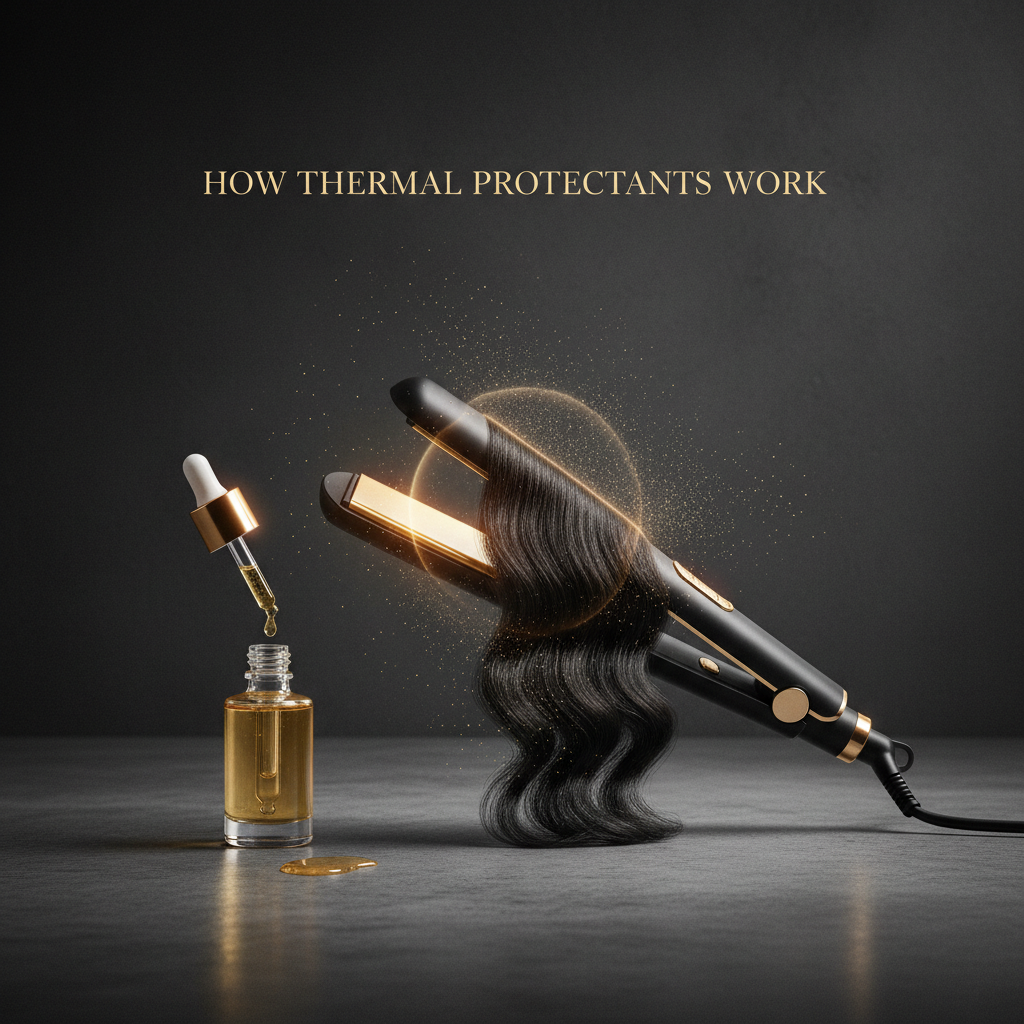
Quick answer: Understanding How Thermal Protectants Work begins with physics: they form a thin, protective barrier over the cuticle that slows heat conduction, distributes surface temperatures evenly, and seals in essential fibre moisture. Formulated with polymers, silicones, and hydrolysed proteins, they reduce the thermal degradation of keratin caused by flat irons and hair dryers. However, their primary limitation is that they do not block heat entirely. They typically reduce thermal damage by roughly 50% rather than offering absolute immunity against extreme temperatures.
Key takeaways
- Heat styling tools reach temperatures between 150°C and 230°C, which can degrade hair keratin and cause moisture inside the cortex to vaporise violently.
- Thermal protectants act as low-thermal-conductivity buffers, slowing the rate at which heat enters the hair shaft.
- Silicones, specialty polymers, and proteins smooth cuticle scales, reducing friction and preserving the hair's natural moisture balance.
- No cosmetic product offers 100% heat deflection; typical formulations mitigate between 30% and 60% of thermal damage.
- Applying heat to soaking wet hair risks creating "bubble hair", an irreversible structural deformity caused by trapped steam expanding inside the cortex.
How Thermal Protectants Work: what the evidence shows
Scientific research into How Thermal Protectants Work reveals that these formulations rely on a combination of low thermal conductivity and barrier film formation. Human hair is composed primarily of keratin proteins arranged in microfibrils within the cortex, wrapped in an outer protective layer of overlapping cuticle scales.
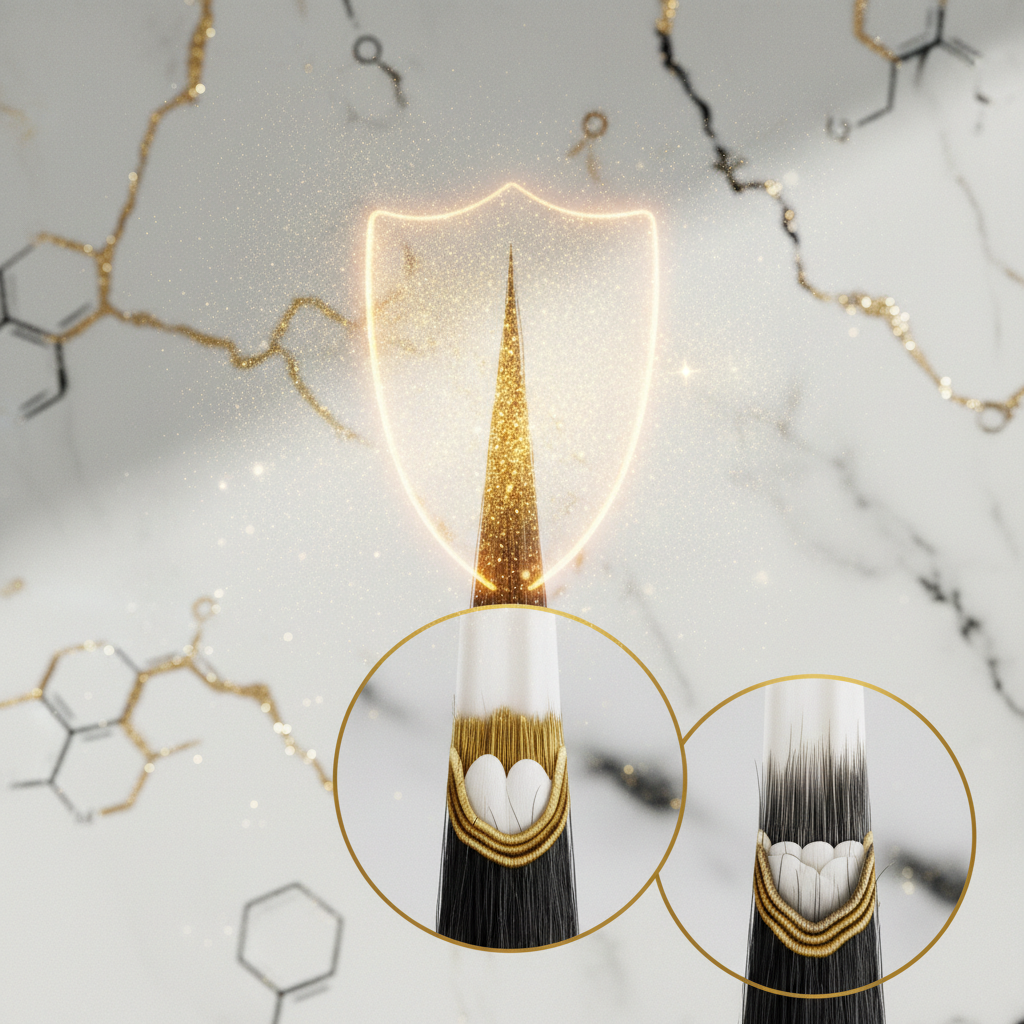
When you apply a heated tool such as a straightener or curling wand, the surface temperature can exceed 200°C. At around 160°C to 180°C, the alpha-keratin structure within the hair begins to denature, uncoiling and losing its natural elasticity. Above 200°C, the structural proteins suffer irreversible decomposition, and the lipid layer that keeps the hair water-repellent is stripped away.
Thermal protectant formulations deposit a micro-film across the cuticle. Ingredients like dimethicone, amodimethicone, and polyquaternium polymers possess a much lower thermal conductivity than bare hair. When a heated ceramic plate contacts a treated strand, this film slows heat transfer into the cortex. Instead of a sudden, concentrated thermal shock, the energy diffuses more gradually across the surface. This temperature dampening limits the denaturation of internal proteins and keeps the cuticle scales lying flat.
Cosmetic science studies evaluate protection by measuring tensile strength, tryptophan fluorescence (an indicator of protein degradation), and water loss. Controlled laboratory tests repeatedly show that while heat protectants significantly reduce surface cracking and protein loss compared to untreated fibres, they do not neutralise heat completely.
Heated Styling Tool (180°C to 230°C)
 │
 ▼
┌─────────────────────────────────┐
│ Thermal Protectant Barrier │ <-- Low-conductivity film slows heat
└─────────────────────────────────┘ diffusion and lubricates surface
 │
 ▼ (Gradual thermal transfer)
┌─────────────────────────────────┐
│ Cuticle Layer │ <-- Scales remain intact; lipid loss reduced
└─────────────────────────────────┘
 │
 ▼ (Dampened heat entry)
┌─────────────────────────────────┐
│ Cortex Layer │ <-- Keratin denaturation is minimised;
└─────────────────────────────────┘ internal moisture is preserved
Key mechanisms of thermal protection
Thermal protectant sprays, serums, and creams use several distinct physical and chemical mechanisms to protect hair fibres during styling:
1. Thermal dissipation and conduction slowing
Water has a high heat capacity, but when trapped liquid boils inside hair, it causes devastating structural damage. High-molecular-weight silicones, such as dimethicone and phenyl trimethicone, provide a high-heat-capacity, low-conduction alternative. They absorb and dissipate a portion of the heat energy, preventing concentrated hot spots from burning through the cuticle.
2. Moisture preservation and vaporisation buffering
Hair naturally contains between 10% and 15% water under ambient conditions. Contact with tools hotter than 100°C instantly vaporises this moisture. Barrier-forming polymers act as a physical shield that moderates the rate of water evaporation. By preventing flash-drying, the internal hydrogen bonds can reform more smoothly as the hair cools, maintaining flexibility.
3. Surface lubrication and friction reduction
Rough cuticles catch on hot tools, causing mechanical shearing alongside heat damage. Conditioning polymers reduce the coefficient of friction on the hair surface. When a straightener glides down the strand with minimal drag, the contact time decreases, shortening the duration of thermal exposure.
4. Protein conditioning and temporary cross-linking
Hydrolysed vegetable proteins and wheat proteins can penetrate slightly beneath lifted cuticles. Under heat, these proteins form light complexes with the hair's natural amino acids, temporarily supporting the weakened structural matrix and reducing tensile strength loss.
What the evidence does not show
There are persistent misconceptions regarding heat protection that are not supported by cosmetic testing:
- Complete thermal immunity: No spray allows you to safely use a 230°C iron on the same section of hair repeatedly. Protectants reduce damage; they do not eliminate it.
- Repair of split ends: Once thermal stress fractures the cortex and breaks the cuticle completely (forming trichoptilosis, or split ends), a protectant cannot glue it back together permanently. It can only temporarily seal the split with polymers until the next wash.
- Protection for wet hair under hot irons: If hair is wet, flat-ironing will cause steam bubbles to expand rapidly inside the hair shaft. Protectants cannot prevent "bubble hair" if an iron is applied to damp fibres.
- Follicular protection: Thermal protectants act strictly on the hair shaft. They do not alter hair growth at the scalp level or prevent shedding from the follicle.
Common thermal protectant ingredients compared
Different formulations suit different styling routines. The table below outlines how common active ingredients function on the hair fibre.
| Ingredient Class | Typical Examples | Primary Mechanism | Best Suited For |
|---|---|---|---|
| Volatile / Lightweight Silicones | Cyclopentasiloxane, Disiloxane | Evaporate under heat while leaving a micro-thin slip barrier | Fine hair, blow-drying, pre-iron prep without heavy buildup |
| Substantive Silicones | Dimethicone, Amodimethicone | Create a durable, heat-resistant film; targeted cuticle adhesion | Thick, coarse, or highly porous hair using high-heat flat irons |
| Quaternary Polymers | Polyquaternium-55, Polyquaternium-28 | Film-forming barrier that seals moisture and provides light hold | Blow-outs, curling wands, humid environments |
| Hydrolysed Proteins | Hydrolysed wheat, soy, or pea protein | Fill micro-fissures in damaged cuticles; reinforce tensile strength | Bleached, chemically treated, or chronically heat-stressed hair |
| Plant-Derived Lipids | Argan oil, Jojoba oil (fractionated) | Lubricate surface and restore fatty acid layer | Coarse, curly textures; finishing and low-heat styling |
Signs of thermal damage to look for
Thermal damage shows clear physical signs along the fibre. Unlike telogen effluvium or pattern hair loss, which originate at the root, heat damage is strictly structural:
- Loss of natural curl pattern: Overheated keratin cannot hold its coiled secondary structure, leading to loose, limp, or irregularly straight patches in textured hair.
- Frizz and rough texture: Denatured, lifted cuticles create high friction, making strands feel brittle and look dull.
- White flecks along the shaft: Known as trichorrhexis nodosa, these small white nodes represent areas where the cortex has fragmented and swollen under intense heat.
- Excessive mid-shaft breakage: Snapping during brushing or styling, usually characterised by short pieces of hair breaking off without a white root bulb.
What you can do: best practices for heat styling
To maximise how protectants perform, follow these evidence-based styling practices:
- Dry hair thoroughly before ironing: Ensure hair is 100% dry before touching it with hot plates. Hair should only be damp when using a blow-dryer on medium heat.
- Apply evenly from mid-lengths to ends: Spray or distribute the product section by section. An uneven spray leaves untreated patches completely vulnerable to thermal degradation.
- Calibrate your tool temperature: Fine or processed hair only needs 150°C to 175°C to reshape hydrogen bonds. Coarse or resistant hair rarely requires more than 185°C to 200°C. Never default to the maximum setting.
- Minimise pass count: Glide the tool down each section in one controlled, steady motion. Multiple quick passes over the same area accumulate more damaging heat than a single, fluid pass.
- Clarify regularly: Silicones and polymers accumulate over time. Use an effective clarifying shampoo periodically to remove product buildup and allow conditioning agents to reach the fibre.
When breakage is mistaken for shedding
It is critical to distinguish between heat-induced breakage and actual hair shedding. If you notice an abundance of hair in your brush or sink, examine the ends of the strands.
If the fallen hairs are short, irregular in length, and lack a white bulb at either end, you are experiencing hair breakage caused by mechanical or thermal stress along the shaft. If the hairs are full-length and feature a tiny white bulb, the strand was released naturally from the follicle during the telogen (shedding) phase. Thermal protectants will dramatically reduce breakage along the shaft, but they will have no influence over biological shedding or follicular hair loss.
Supporting heat-stressed hair
When heat styling forms a regular part of your regimen, keeping the hair fibre resilient requires ongoing conditioning and scalp support. Watermans provides targeted formulations designed to strengthen the feel of mechanically and thermally stressed hair. Using nourishing ingredients that support the hair shaft alongside a clean, balanced scalp environment ensures that fragile, heat-exposed strands maintain optimal strength and natural vitality between styling sessions.
Frequently asked questions about How Thermal Protectants Work
Can I use hair oil as a heat protectant?
Pure kitchen oils or non-cosmetic plant oils are poor heat protectants. Many raw oils have smoke points close to heat styling temperatures and can scorch the hair cuticle. Professionally formulated heat protectant serums use refined, high-stability silicones and specialised polymers tested to withstand tool temperatures up to 230°C without burning.
Do I need a heat protectant if I only blow-dry?
Yes. Blow-dryers reach temperatures of 80°C to 120°C close to the nozzle. While cooler than straighteners, the forced hot air rapidly strips surface moisture and can cause cuticle lifting and frizz. A lightweight thermal protectant spray buffers this rapid dehydration and leaves the cuticle smooth.
Does the exact phrase "How Thermal Protectants Work" apply to hot rollers?
Understanding How Thermal Protectants Work applies to any heated styling tool, including hot rollers, blow-dry brushes, and curling irons. Hot rollers transfer heat through prolonged direct contact rather than rapid high-heat gliding. Applying a thermal protectant creates a barrier that moderates this extended heat exposure and prevents the hair from drying out.
Can you apply too much heat protectant?
Yes. Applying too much product, particularly heavy silicone-based serums, can saturate the hair. When hit with high heat, excess product can cause sizzling, leave a sticky or greasy residue, and weigh down fine hair. A light, even mist applied section by section is sufficient for full surface coverage.
Protecting hair from heat over time
Mastering How Thermal Protectants Work allows you to make informed decisions about your daily routine and preserve the physical integrity of your hair. These formulations act as essential shock absorbers, diffusing surface heat, preserving critical cortex moisture, and smoothing cuticles to reduce friction. By combining a reliable protectant with sensible heat settings, thorough drying, and gentle handling, you can style your hair effectively while keeping breakage and structural degradation to an absolute minimum.
Sources and references
- Journal of Cosmetic Science, "Thermal analysis of human hair and the protection mechanism of styling products", 2011.
- International Journal of Cosmetic Science, "Heat-induced damage to hair and its mitigation using cosmetic formulations", 2018.
- Society of Cosmetic Scientists, "Hair damage from styling appliances: mechanisms and testing protocols", 2020.
- British Association of Dermatologists, "Acquired hair shaft disorders: Trichorrhexis nodosa and bubble hair", 2019.