How Silicones Affect Hair Cuticles: The Complete Science Guide
8 min read ·
Discover how silicones affect hair cuticles. Learn how these polymers coat the hair fibre, reduce friction, prevent breakage, and how to manage product build-up.
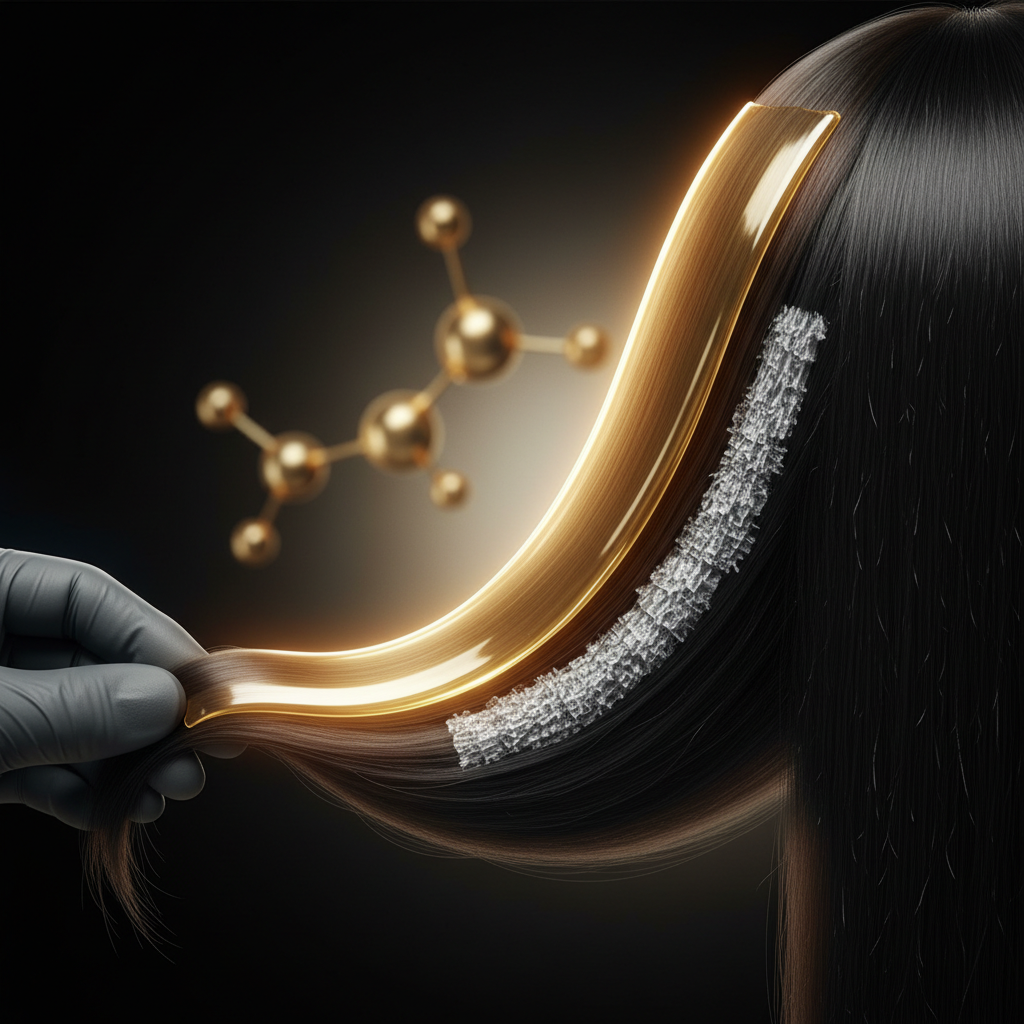
Quick answer: Understanding how silicones affect hair cuticles comes down to surface coating rather than structural bonding. Silicones form an external, hydrophobic film over the cuticle scales, smoothing microscopic edges, sealing out atmospheric humidity, and reducing combing friction by up to 50 percent. While they provide immediate cosmetic slip and thermal defence, they do not repair broken keratin bonds or permanently alter the cuticle architecture. Overuse without clarifying can lead to product build-up, causing strands to feel heavy or dull.
Key takeaways
- Protective barrier: Silicones deposit an invisible synthetic layer over overlapping cuticle cells, flattening rough edges and lowering wet and dry combing forces.
- Friction reduction: By decreasing mechanical friction, silicones help prevent cuticle chipping, split ends, and hair breakage during styling.
- Moisture control: Silicones are hydrophobic; they prevent external moisture from swelling the cortex in humid air, while helping to lock existing hydration inside the fibre.
- Types matter: Water-soluble silicones rinse away easily, whereas non-soluble silicones require gentle surfactants or clarifying shampoos to prevent accumulation.
- Cosmetic coating: Silicones act as temporary shields, not structural repair agents; they cannot mend broken disulfide bonds within the cortex.
How Silicones Affect Hair Cuticles: what the evidence shows
The science behind how silicones affect hair cuticles revolves around surface energy, lubrication, and polymer adhesion. Healthy hair cuticles consist of five to ten overlapping layers of flattened, dead keratinised cells pointing towards the hair tip. When cuticles are intact and sealed by the 18-methyleicosanoic acid (18-MEA) lipid layer, the hair fibre is hydrophobic and reflective. Chemical treatments like bleaching, permanent colouring, and heat styling strip this natural lipid layer away, exposing hydrophilic, negatively charged proteins and causing the cuticle scales to lift.
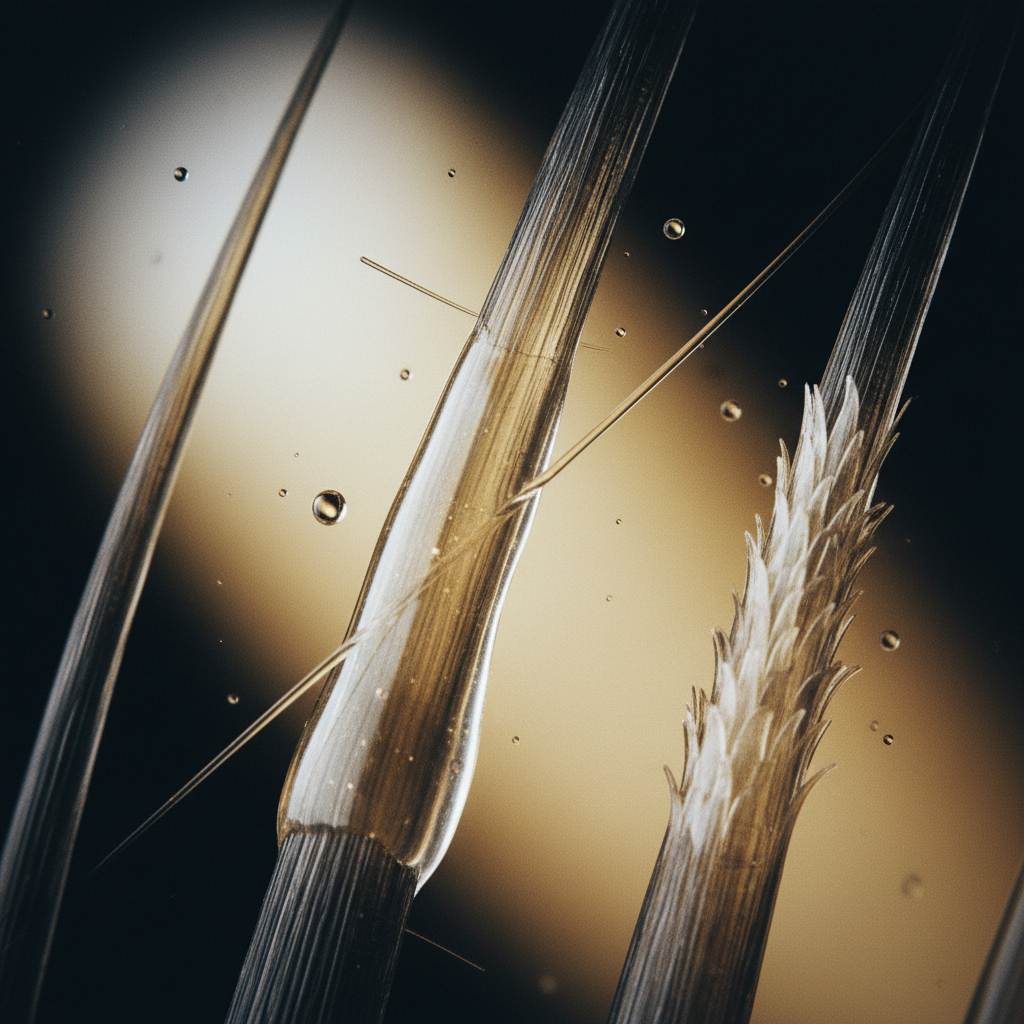
Cosmetic polymers, specifically dimethicone, amodimethicone, and cyclomethicone, restore hydrophobic character to these damaged cuticles. Because silicones have exceptionally low surface tension (typically 20 to 22 mN/m, compared to water at 72 mN/m), they wet the hair shaft easily, spreading into a thin, continuous film. This film fills microscopic fissures along the cuticle scale margins.
Peer-reviewed studies published in the Journal of Cosmetic Science demonstrate that dimethicone applications can decrease dry combing forces by 50 to 60 percent. This reduction directly limits physical breakage caused by brush friction. Furthermore, amodimethicone contains amine functional groups with positive charges that selectively target damaged, negatively charged regions of the cuticle, offering targeted protection without unnecessary accumulation on healthier virgin hair.
What the evidence does not show
There are several persistent myths regarding silicones and hair cuticles that scientific data does not support:
- Silicones do not "suffocate" the hair fibre. Hair shafts are metabolically inactive, dead biological structures. They do not consume oxygen, undergo respiration, or require "breathing" space.
- Silicones do not cause follicular hair loss. Silicones applied to the hair shaft do not enter the dermal papilla or interfere with the hair growth cycle. Any shedding observed after long periods of heavy silicone use is almost always natural telogen shedding that was temporarily trapped in coated strands, or breakage from improper detangling.
- Silicones do not permanently repair split ends. While specific silicone-based serums can temporarily glue separated cuticle fragments together via capillary adhesion, this effect washes away with water and surfactants.
The physical mechanism: film formation on cuticle tiles
Cuticle scales are roughly 0.5 to 1.0 micrometres thick and measure 45 to 60 micrometres in length. Under high-resolution scanning electron microscopy (SEM), exposed cuticles resemble roof shingles weathered by wind. The mechanics of silicone application operate across three distinct steps:

- Spreading: Low-viscosity volatile silicones (such as cyclopentasiloxane) act as carriers, lowering surface friction and allowing viscous, protective dimethicone polymers to spread evenly along the hair shaft.
- Coalescence and evaporation: As the volatile silicone evaporates, the high-molecular-weight polymers coalesce into a durable, flexible sheath measuring nanometres in thickness across the cuticle tiles.
- Sealing: The polymer film smooths the jagged step-heights of the cuticle scales, bridging gaps where fragments of the endocuticle or exocuticle have worn away from mechanical styling or chemical exposure.
This coating reduces light scattering, creating a specular reflection that the human eye perceives as high shine. It also acts as a thermal buffer during heat styling, distributing surface heat more evenly and reducing cuticle blistering.
| Silicone Type | Water Solubility | Cuticle Adhesion | Best Suited For | Removal Method |
|---|---|---|---|---|
| Dimethicone | Insoluble | High, long-lasting film | Thick, coarse, high-porosity hair | Surfactant shampoo (e.g., sodium cocoyl isethionate or laureth sulfates) |
| Amodimethicone | Condition-dependent | Targeted to damaged, anionic sites | Chemically lightened, coloured, or damaged hair | Standard gentle shampoo; resists self-layering |
| Cyclomethicone | Volatile (evaporates) | Temporary carrier | Fine, limp hair needing light slip | Evaporates naturally; standard rinse |
| Dimethicone Copolyol | High (water-soluble) | Light, breathable film | Fine, straight, or low-porosity hair | Warm water alone or mild low-poo cleansers |
Signs of silicone build-up on the cuticle
While silicone films protect the cuticle layer, repetitive application of non-soluble silicones without periodic clarifying cleansers can create cosmetic challenges:
- Water repellency to the extreme: Hair takes an unusually long time to saturate fully under the shower stream.
- Dullness and stiffness: A thick polymer layer can lose its refractive clarity over weeks, making the hair look cloudy rather than shiny.
- Reduced moisture uptake: Deep conditioning treatments containing humectants like glycerin or panthenol may fail to penetrate past heavy silicone coatings, leading to strands that feel brittle inside despite feeling smooth on the surface.
- Flaking: In rare cases of extreme accumulation, the polymer film can crack and flake off along the cuticle edges, mimicking dandruff.
What you can do to manage cuticles effectively
Balancing cuticle protection with clean hair requires a calculated washing and styling routine:
- Match silicone solubility to your hair porosity: If you have fine or low-porosity hair whose cuticles are naturally tight, stick to water-soluble silicones like PEG-modified dimethicones to avoid weighing down your strands. If you have thick, bleached, or highly porous hair with raised cuticles, non-soluble dimethicone or amodimethicone provides the heavy protective barrier you require.
- Clarify periodically: Use an effective clarifying shampoo once every 14 to 28 days to strip away residual polymers from the cuticle scales, resetting the surface without roughing up the underlying keratin.
- Apply to mid-lengths and ends: Keep heavy silicone serums focused on the older, weathered parts of the hair fibre where cuticle wear is greatest. The scalp produces natural sebum that already coats virgin root cuticles.
When cuticle damage has another root cause
If your hair feels persistently coarse, fragile, or unmanageable, silicone usage may not be the issue:
- Hard water mineral deposits: Calcium and magnesium ions bind strongly to the negatively charged cuticle proteins, creating a chalky, brittle layer that silicone cannot smooth. A chelating treatment is required here.
- Severe thermal degradation: Temperatures exceeding 220°C melt the hair's alpha-keratin into amorphous structures and blow blister holes through the cuticle. Silicones cannot disguise thermal bubble hair.
- Internal health and nutrition: Systemic nutritional deficiencies, thyroid irregularities, or severe stress lead to altered follicular development. If you are experiencing sudden diffuse shedding from the root rather than breakage along the shaft, consult a GP, dermatologist, or qualified trichologist.
Thoughtful daily care with Watermans
At Watermans, supporting healthy hair architecture relies on delivering functional nourishment directly where it counts. While silicones offer physical shielding, true strand resilience comes from maintaining a clean, balanced scalp environment and minimising mechanical stress.
Using balanced, nutrient-dense routines, such as those featuring botanical extracts, hydrolysed proteins, and gentle cleansing agents, ensures that your hair cuticles are supported from emergence. Incorporating targeted, revitalising formulas like Watermans Grow Me Shampoo cleanses without roughly tearing at cuticle edges, helping you maintain soft, resilient hair without suffocating product weight.
Frequently asked questions about How Silicones Affect Hair Cuticles
How Silicones Affect Hair Cuticles when hair is already damaged?
On chemically bleached or heat-damaged hair, the natural cuticle lipids are absent, leaving cuticles raised and porous. Silicones coat these jagged, lifted scales, temporarily acting as a synthetic replacement for the missing 18-MEA lipid layer. This immediately seals the surface, reduces combing friction, and shields the porous cortex from environmental humidity.
Do silicones block moisture from entering the hair cuticle?
Yes, silicones are naturally hydrophobic, which means they repel moisture. This is advantageous on humid days because it stops atmospheric water vapour from penetrating the cortex and causing frizz. However, if hair is already dehydrated, heavy silicone films can prevent conditioning humectants from entering until the build-up is cleansed away.
Will silicones permanently seal down my raised cuticles?
No. Silicones do not form covalent chemical bonds with the keratin inside the cuticle. They sit on the surface as an adhesive film. While this keeps the cuticle scales flattened during wear, the film is gradually removed through daily washing, towel drying, and styling, meaning regular application is necessary to maintain the effect.
Can water-soluble silicones damage hair cuticles?
Water-soluble silicones, such as dimethicone copolyol or PEG-dimethicone, do not damage cuticles. They are formulated with hydrophilic side chains that dissolve cleanly upon contact with plain water. They offer light cuticle slip and heat protection without forming stubborn layers that require harsh surfactants to lift.
Final perspectives on silicone science and cuticle health
Navigating how silicones affect hair cuticles requires separating cosmetic benefits from structural realities. Silicones remain unmatched in their ability to lubricate rough cuticle tiles, suppress humidity-induced swelling, and shield the fibre against physical combing fatigue. By matching the right silicone class to your hair type, applying it to vulnerable mid-lengths, and clarifying regularly, you can keep your cuticles smooth, reflective, and resilient against everyday wear.
Sources and references
- Journal of Cosmetic Science: Effects of silicone polymers on the mechanical and physical properties of human hair, 2008.
- International Journal of Trichology: Hair Cosmetics: An Overview, 2015.
- Robbins, C. R.: Chemical and Physical Behavior of Human Hair, 5th Edition, Springer, 2012.
- Society of Cosmetic Scientists (SCS): Cosmetic Science and Technology: Hair Care Formulations and Surfactants, 2019.