How to Repair Heat Damaged Hair: An Evidence-Based Guide
9 min read ·
Learn How to Repair Heat Damaged Hair with evidence-based guidance on protein treatments, lipid restoration, temperature limits, and mechanical care.
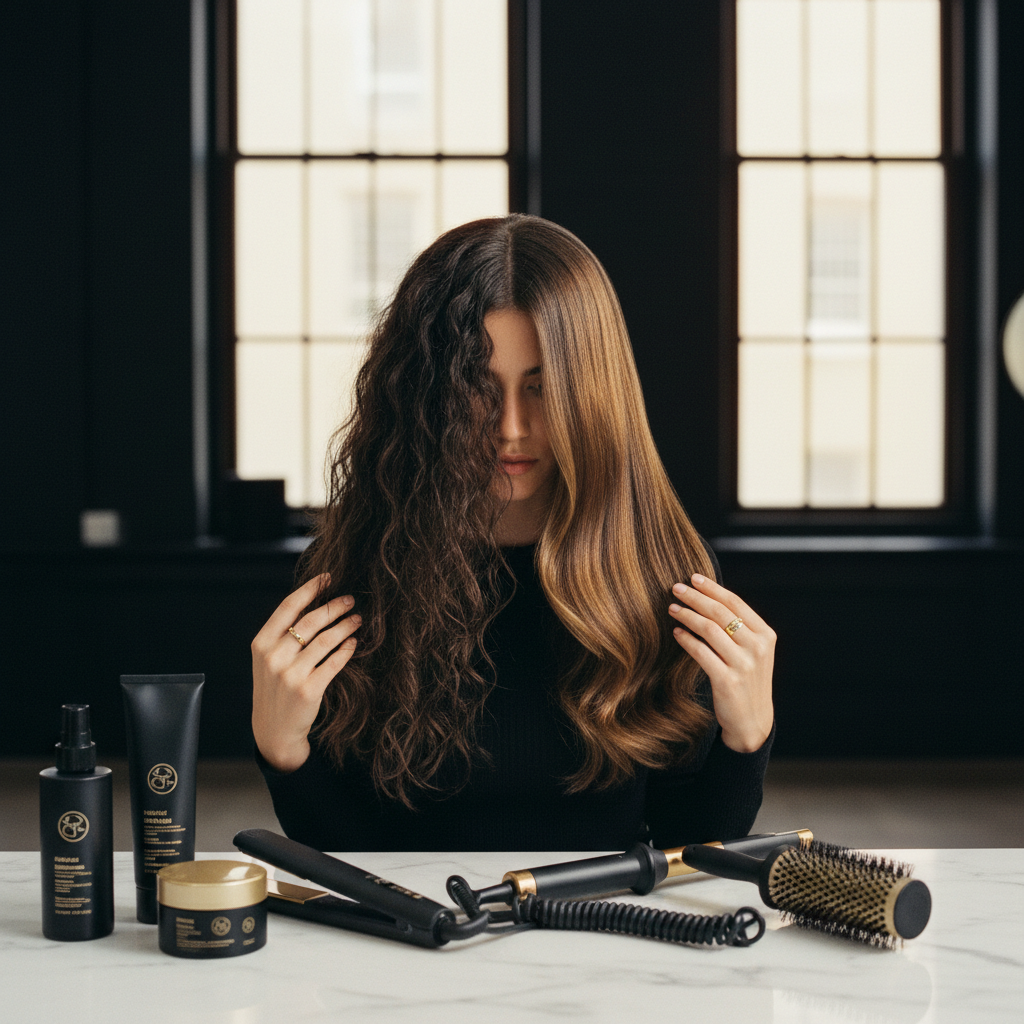
Quick answer: Knowing How to Repair Heat Damaged Hair starts with an uncomfortable biological fact: because hair is non-living keratinised tissue, thermally degraded protein cannot be genuinely regenerated or permanently cured. Instead, repairing thermal damage means cosmetically patching fractured cuticles, restoring moisture balance with conditioning lipids, and reinforcing the internal cortex with hydrolysed proteins to halt snapping. While advanced cosmetic treatments temporarily smooth and strengthen compromised fibres, severe structural burning and split ends ultimately require trimming to prevent breakage from travelling up the hair shaft.
Key takeaways
- Hair fibre consists of dead cells; true biological regeneration of melted keratin or cracked cuticles is physically impossible.
- Temperatures above 150°C degrade alpha-keratin into disordered beta-keratin, while heat past 200°C vaporises structural moisture and carbonises protein bonds.
- Cosmetic repair relies on hydrolysed proteins to patch cortical gaps and film-forming silicones or plant oils to mimic lost natural lipid layers.
- Thermal damage causes mechanical hair breakage along the shaft, which must never be confused with follicular hair loss or shedding at the root.
- Regular micro-trims remain the only permanent solution for frayed ends, split tips, and severe bubble hair deformity.
How to Repair Heat Damaged Hair: what the evidence shows
Learning How to Repair Heat Damaged Hair requires understanding what cosmetic formulations can realistically achieve. Peer-reviewed trichological research shows that applying heat alters the physical architecture of the hair shaft. When straighteners, curling wands, or high-heat blow dryers exceed safe thresholds, they strip the protective 18-methyleicosanoic acid (18-MEA) lipid layer, crack the overlapping cuticle scales, and denature the internal keratin cortex.
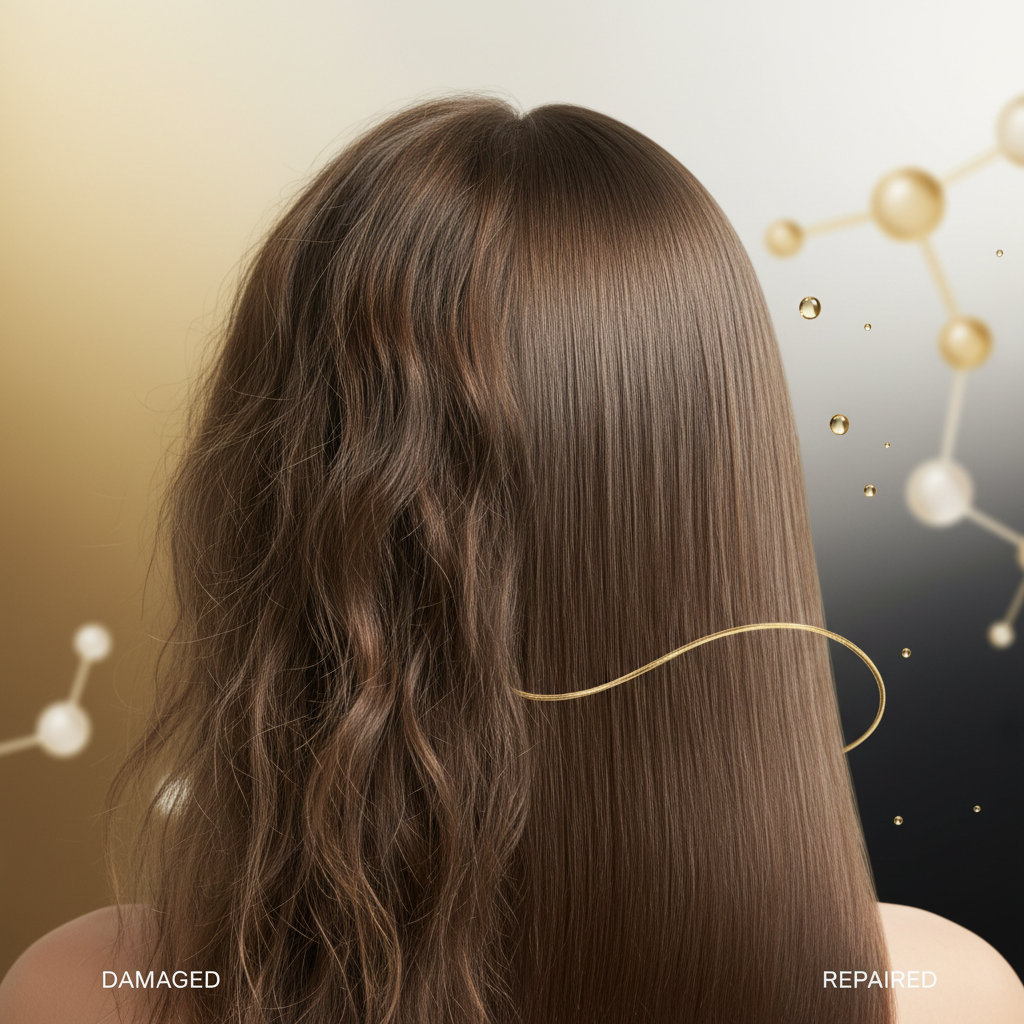
Cosmetic science approaches repair through temporary structural reinforcement. Research published in the Journal of Cosmetic Science confirms that low-molecular-weight hydrolysed proteins (such as wheat, silk, or keratin peptides) can penetrate slightly beneath lifted cuticles to temporarily bind to damaged sites. Meanwhile, cationic polymers and silicones coat the exterior surface, restoring negative electrical charge balance, sealing lifted cuticles, and dramatically reducing combing friction to prevent secondary mechanical breakage.
What the evidence does not show
Controlled cosmetic trials do not show that any topical mask, serum, or bonding fluid can permanently weld severed peptide bonds back into pristine, virgin tissue. Marketing claims that promise to undo years of thermal abuse in a single wash distort the science. Furthermore, evidence shows that no cosmetic product can reverse "bubble hair" (a physical condition where water trapped in the cortex boils and creates air cavities inside the fibre) or fuse split ends back together permanently. Any product advertising a permanent cure is misrepresenting temporary cosmetic adhesion.
The biological mechanism of thermal trauma
To treat thermal injury effectively, you must understand the temperatures at which hair breakdown occurs:
- Moisture vaporisation (100°C to 120°C): Water bound within the cortex converts to steam. If hair is clamped while wet or damp, this steam expands rapidly, creating microscopic fractures and void spaces known clinically as bubble hair.
- Denaturation of alpha-keratin (140°C to 160°C): The tightly coiled helical proteins of the cortex relax and convert into weaker, irregular beta-keratin sheets. The fibre permanently loses its elasticity and mechanical tensile strength.
- Lipid stripping and cuticle lifting (160°C to 180°C): The protective fatty acid layer (18-MEA) melts away. Cuticle margins lift, chip, and break, leaving the vulnerable cortex exposed to environmental oxidants and mechanical friction.
- Cysteine decomposition (above 200°C): Disulphide bonds break down irreversibly. Keratin begins to melt and oxidise, leading to immediate embrittlement and catastrophic breakage.
Signs your hair is heat damaged
Heat-damaged fibres present clear physical and tactile symptoms:
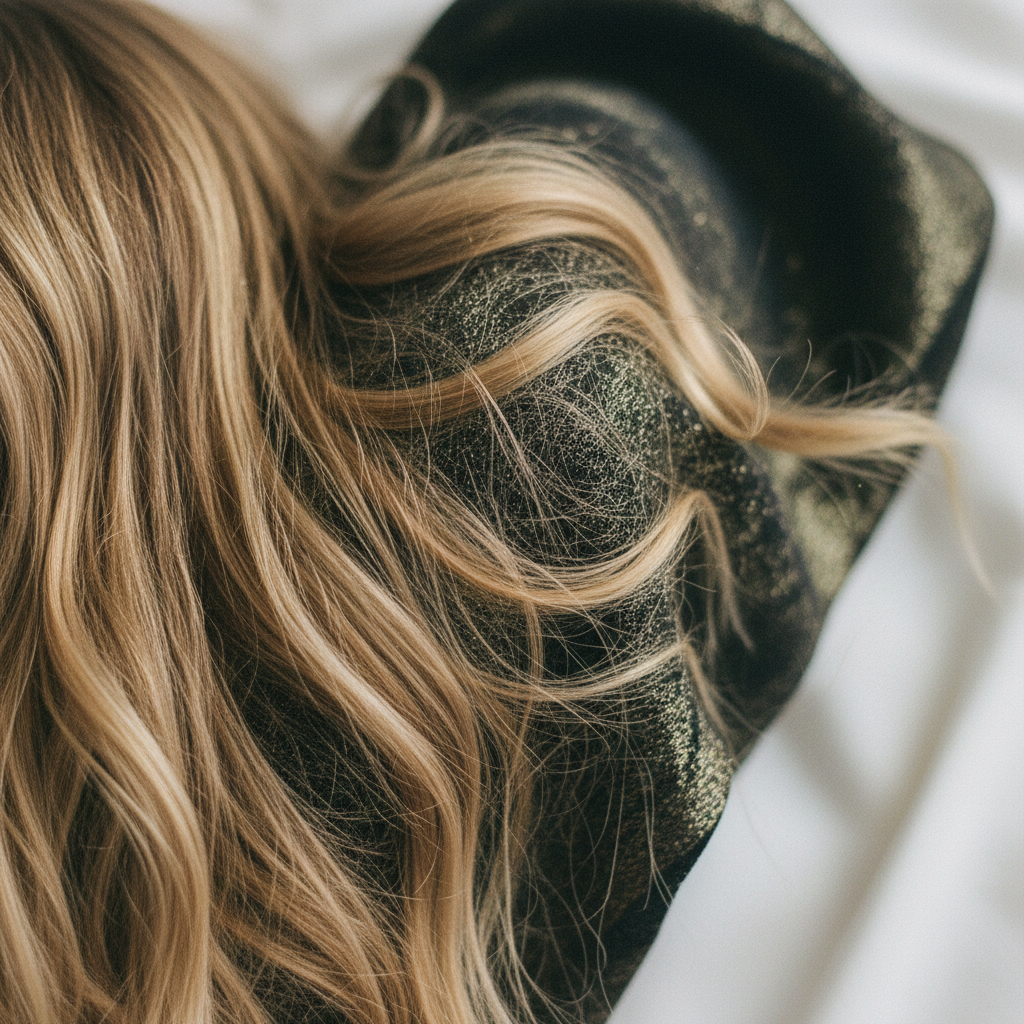
- Altered curl or wave pattern: Natural curls become loose, irregular, or straight in patches where the internal cortex has lost its elasticity.
- Loss of elasticity: Wet hair snaps instantly when pulled gently rather than stretching and returning to its original length.
- Extreme porosity: The hair absorbs water almost instantly when wet, yet dries out into a rough, straw-like texture within minutes.
- Chronic tangling and friction: Damaged, lifted cuticles snag against neighbouring strands, creating stubborn knots and surface roughness.
- White bulb-like fractures along the shaft: Trichorrhexis nodosa, where the cortex frays outward through ruptured cuticles, appears as tiny white dots along the hair strand.
| Level of Thermal Damage | Structural State of Fibre | Recommended Intervention | Expected Recovery Timeline |
|---|---|---|---|
| Mild (Occasional blow-drying below 150°C) | 18-MEA layer slightly depleted; cuticles intact but dull | Cationic conditioning, leave-in lipid creams, heat cap at 140°C | 1 to 2 weeks (surface smoothness restored) |
| Moderate (Frequent heat tools at 160°C to 190°C) | Chipped cuticles; cortical proteins partially denatured; reduced elasticity | Hydrolysed protein treatments, weekly deep conditioning, pre-wash oils | 4 to 8 weeks of consistent cosmetic maintenance |
| Severe (Daily straightening above 200°C, flat-ironing damp hair) | Ruptured cuticles, internal cavitation (bubble hair), severed disulphide bonds | Bond-building formulations, structural protein masks, mandatory scissor trims | Incurable; requires grow-out and gradual trimming over 6 to 12 months |
What you can do: an evidence-based recovery plan
Restoring manageability, shine, and structural integrity to heat-compromised strands requires a multi-step routine aimed at minimising ongoing trauma and replacing lost lipids.
1. Introduce targeted protein-lipid cycling
Severely heat-weakened hair lacks both tensile resilience and internal flexibility. Alternate between hydrolysed protein treatments and intensive lipid-rich emollient masks. Hydrolysed keratin, wheat protein, and amino acids fill microscopic fractures along the shaft, temporarily reinforcing structural integrity. Follow protein applications with rich fatty alcohols (such as cetyl or stearyl alcohol), ceramides, or plant-derived triglycerides (such as argan or coconut oil) to lock in moisture and lubricate the hair exterior.
2. Implement a strict thermal hiatus
Your hair cannot recover if it is continuously re-injured. Put away flat irons and curling tongs entirely for at least four to six weeks. If you must blow-dry your hair, keep the appliance moving continuously, use the lowest heat setting, attach a concentrator nozzle pointing downward along the cuticles, and maintain a minimum distance of 15 cm from the scalp and lengths.
3. Apply scientifically validated thermal protectors
When you eventually reintroduce styling tools, never apply direct heat without a protective barrier. Formulations containing silicones (like dimethicone or amodimethicone), polyquaternium polymers, and hydrolysed wheat protein copolymer create a slow-conducting film across the fibre. This buffers the rate of heat transfer, distributing thermal energy evenly and preserving the delicate cuticle layer up to roughly 200°C.
4. Minimise wet-handling friction
Heat-damaged hair has high porosity and low wet tensile strength. When wet, swollen keratin is exceptionally fragile. Detangle strictly with a wide-tooth comb or flexible wet brush, starting at the ends and working upward while saturated with a slippery conditioner. Swap abrasive cotton bath towels for smooth microfibre wraps or cotton t-shirts to prevent rough cuticle disruption.
5. Schedule conservative micro-trims
Because split ends inevitably unzip further up the hair shaft when subjected to daily brushing and washing, removing damaged tips is non-negotiable. Booking a dusting or micro-trim of 0.5 to 1 cm every six to eight weeks removes the most compromised ends while preserving overall length as healthier hair grows in from the scalp.
When the cause may be something else
It is vital to distinguish between cosmetic hair breakage along the shaft and biological hair loss at the follicle level:
- Hair breakage: Short, jagged fragments of hair snapping off without a white root bulb attached. This is purely mechanical or thermal structural failure along the fibre.
- Hair shedding: Full-length strands coming out with a distinct white bulb at the root (telogen effluvium). This is driven by internal triggers such as illness, hormonal fluctuations, nutritional deficiencies, or high physiological stress.
- Chemical overlapping: If you highlight, bleach, or chemically relax your hair alongside hot tool use, structural damage is heavily compounded. Bleach oxidises disulphide bonds, leaving hair exponentially more susceptible to rapid thermal melting at much lower tool temperatures.
If you notice widening partings, patchy bald spots, or excessive shedding directly from the scalp, hot tools are not the primary driver, and you should consult a dermatologist or registered trichologist for clinical evaluation.
Supporting compromised hair with Watermans
When rebuilding fragile, heat-ravaged hair, protecting emerging growth at the scalp while reinforcing damaged mid-lengths is critical. Watermans GrowMe Shampoo provides a sulphate-free, pH-balanced cleanse that respects already-lifted cuticles, delivering biotin, rosemary, niacinamide, and lupin protein to support a healthy scalp environment. Paired with Watermans ConditionMe Conditioner, which delivers targeted cholesterol, caffeine, and hydrolysed vegetable protein, brittle strands receive the surface slip, improved elasticity, and moisture retention needed to resist friction and snap-back breakage during the recovery process.
Frequently asked questions about How to Repair Heat Damaged Hair
Can heat damage be reversed naturally without cutting it?
No cosmetic treatment or natural oil can physically reverse severe heat damage or reconnect severed hair bonds permanently. Natural oils like argan, jojoba, and coconut can lubricate the surface, temporarily seal down raised cuticles, and prevent additional mechanical friction. However, structural voids and split ends cannot heal biologically. Trimming away split ends remains the only permanent fix.
How to Repair Heat Damaged Hair without losing my length?
To preserve your length while rehabilitating damaged strands, adopt a conservative micro-trimming schedule, cutting just a few millimetres every six weeks. Concurrently, stop all hot tool use, wash exclusively with gentle sulphate-free cleansers, and alternate weekly hydrolysed protein masks with deep moisture conditioners. Using silicone-based leave-in serums also shields compromised ends from friction-induced breakage.
How long does it take to repair heat-damaged curls?
Cosmetic improvements in slip, softness, and shine occur within two to three weeks of dedicated moisture and protein care. However, for natural curls that have completely lost their spring due to cortical protein denaturation, fully restoring the natural pattern requires growing out virgin hair from the roots, which typically takes between six and eighteen months.
Does olaplex or bonding technology fix heat damage?
Bond-building formulations work on a molecular level by forming cross-links between single sulphur atoms to rebuild broken disulphide bonds caused by thermal and chemical trauma. While these treatments significantly improve structural tensile strength and reduce breakage, they do not restore completely stripped cuticles or replenish lost 18-MEA surface lipids.
Can washing with cold water repair heat-damaged strands?
Cold water cannot physically repair damaged keratin or rebuild broken proteins. While cooler water does avoid opening cuticles excessively compared to boiling hot water, it does not permanently seal lifted, cracked cuticle scales that have suffered structural burning. Proper conditioning agents, balanced pH products, and leave-in sealants are far more effective at smoothing the cuticle layer.
Restoring strength after thermal trauma
Achieving healthy, resilient hair after severe thermal styling requires patience, realistic expectations, and consistent gentle handling. By understanding How to Repair Heat Damaged Hair through a combination of restorative protein-lipid treatments, thermal protection, friction reduction, and strategic maintenance trims, you can successfully stabilise fragile fibres, prevent catastrophic breakage, and allow strong, healthy hair to flourish from the scalp downwards.
Sources and references
- Journal of Cosmetic Science, "Thermal degradation of hair keratin", 2011.
- International Journal of Trichology, "Hair Shaft Damage from Heat and Styling", 2011.
- Journal of the Society of Cosmetic Chemists, "The effects of heat on hair properties", 1998.
- British Association of Dermatologists, "Hair Breakage and Acquired Trichorrhexis Nodosa", 2020.
- Cosmetic Science and Technology, "Structure and Chemistry of Hair Keratin", 2017.
Find these ingredients in Watermans products
- Wheat Amino Acids: you will find this ingredient in our Heat Protection Spray.