How to Determine Hair Porosity: A Practical, Scientific Guide
9 min read ·
Learn how to determine hair porosity accurately using science-backed tests rather than unreliable social media tricks to improve your daily hair routine.

Quick answer: Knowing how to determine hair porosity involves assessing how easily your hair strand absorbs and retains water, oils, and chemical treatments. Porosity is governed by the condition of the outer cuticle layer, ranging from low (tightly bound scales) to high (lifted, chipped scales). While viral float tests in water glasses are notoriously inaccurate due to surface tension and sebum, reliable methods rely on touch, drying time, and wetting behaviour under controlled conditions.
Key takeaways
- Hair porosity describes the cuticle's structural integrity and its ability to let moisture pass into and out of the cortex.
- The popular "float test" in a cup of water is largely unreliable because surface tension, natural oils, and product residue distort the results.
- Drying speed, wetting behaviour, and the tactile "slide test" provide much more accurate real-world indicators of your porosity level.
- High porosity can be genetic, but it is frequently caused by external damage from bleaching, heat styling, alkaline chemical processing, and UV exposure.
- Porosity is not a permanent sentence; while you cannot chemically heal dead keratin fibres, targeted conditioning, bond builders, and pH-balanced care help manage moisture regulation.
How to Determine Hair Porosity: what the evidence shows
Learning how to determine hair porosity requires understanding the physical architecture of the hair shaft. Hair consists of three concentric layers: the innermost medulla, the structural cortex, and the protective outer cuticle. The cuticle is made of overlapping shingles of hardened keratin scales, cemented together by a membrane rich in lipids such as 18-methyleicosanoic acid (18-MEA).
When scientists measure hair porosity in laboratory settings, they do not drop hair in a glass of tap water. Instead, trichologists and cosmetic chemists use gas sorption techniques, dynamic vapour sorption, or dye absorption tests under micro-spectrometry. In cosmetic dermatology, porosity indicates how damaged or intact the cuticle sheath remains.
Cosmetic science classifies porosity into three broad categories:
- Low porosity: The cuticle scales overlap tightly and lie flat against the shaft. The hydrophobic lipid layer is largely intact. Water and conditioning agents struggle to penetrate, often beading on the surface.
- Medium (normal) porosity: The cuticle layer is slightly relaxed. It allows a steady uptake of moisture and cosmetic actives while retaining hydration without excessive swelling.
- High porosity: The cuticle scales are lifted, cracked, or completely missing in patches. Water enters the cortex rapidly, causing the fibre to swell, but evaporates just as quickly, leaving hair dry, fragile, and prone to mechanical breakage.
Reliable methods for determining porosity at home
Because laboratory tools are unavailable at home, you must rely on physical characteristics that reflect cuticle behaviour. To get an accurate reading, always perform these tests on freshly washed hair that is completely free of leave-in conditioners, oils, silicones, and heavy styling products.
1. The Wetting and Absorption Test
Spray a fine mist of clean water onto a small, dry section of clean hair.
- Low porosity: Water beads up on the surface and remains sitting there as droplets for several minutes before slowly sinking in.
- Medium porosity: The droplets sit momentarily and absorb evenly within a minute or two.
- High porosity: Water vanishes almost instantly into the strand, absorbing like a sponge.
2. The Drying Time Observation
Monitor how long your hair takes to dry naturally at room temperature away from drafts.
- Low porosity: Takes an exceptionally long time to dry, often 4 to 8 hours or longer, because water that does make it inside is trapped beneath tight cuticles.
- High porosity: Dries remarkably fast, often within 30 to 60 minutes, because wide gaps in the cuticle allow rapid moisture evaporation.
3. The Tactile Slide Test
Take a single, clean strand of shed hair between your thumb and index finger. Start at the tip and slide your fingers slowly upwards toward the root end (against the grain of the cuticle).
- Low porosity: The strand feels completely smooth, glassy, and uniform.
- High porosity: The strand feels rough, bumpy, uneven, or catches against your skin, indicating lifted or broken cuticle edges.
| Characteristic | Low Porosity | Medium Porosity | High Porosity |
|---|---|---|---|
| Cuticle Condition | Compact, tightly closed, lipid-rich | Intact, slightly flexible | Lifted, fractured, or stripped |
| Water Absorption | Very slow; beads on surface | Steady and balanced | Instantaneous |
| Natural Drying Time | Long (4 to 8+ hours) | Moderate (2 to 3 hours) | Fast (under 1 hour) |
| Response to Heavy Oils | Sits on top; feels greasy easily | Absorbs well | Absorbs quickly; feels dry soon after |
| Tactile Slide Feel | Smooth and slick | Mostly smooth | Rough, gritty, or raspy |
| Primary Vulnerability | Product build-up, stiffness | Minimal | Frizz, tangling, fibre breakage |
Why the viral float test fails
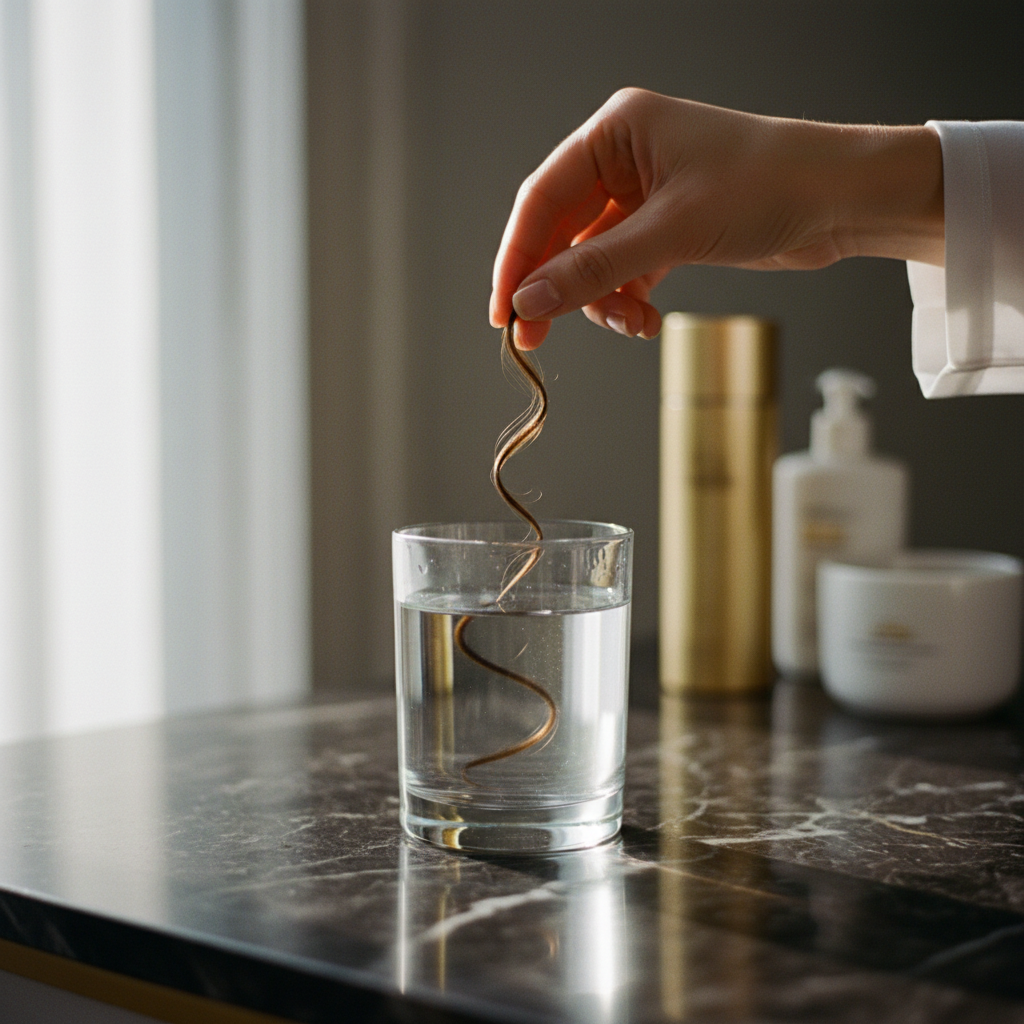
The most widespread method on social media claims that dropping a clean strand of hair into a glass of water tells you your porosity. If it sinks, it is high porosity; if it floats, it is low porosity.
From a physics standpoint, this test is fundamentally flawed. Liquid water has high surface tension. Even a heavily damaged, high-porosity hair fibre can float indefinitely on water simply because it is not heavy enough to break the surface tension of the liquid. Conversely, if you push the hair under, any residual sebum or styling silicone on the cuticle alters its buoyancy. The float test produces false results so often that professional trichologists completely disregard it.
The biological mechanism behind porosity changes
Porosity is intimately linked to the isoelectric point of hair, which sits around pH 3.67. At this mildly acidic level, the keratin structure carries a neutral net charge and the cuticle remains tight and flat.
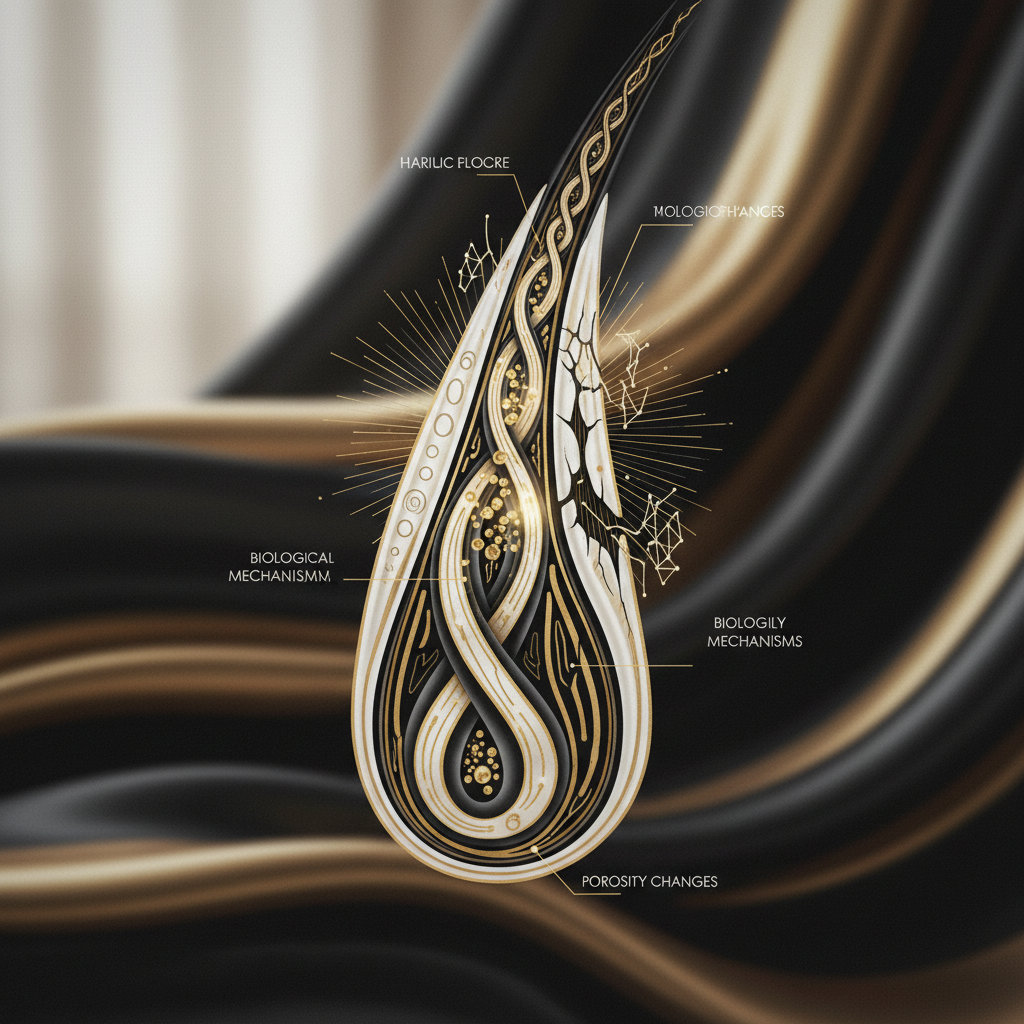
When hair is exposed to alkaline solutions, such as permanent bleaches, chemical straighteners, or even high-pH municipal tap water (often pH 8.0 to 9.5), the hair shaft swells. Alkaline solutions cause the cuticle scales to flare open. During permanent colouring or bleaching, alkaline agents (like ammonia or ethanolamine) force open the cuticle so oxidising agents can break down melanin in the cortex. This process strips away the protective 18-MEA fatty acid layer. Once that lipid barrier is lost, it does not regenerate biologically, resulting in permanent high porosity on that portion of the fibre until it is cut off.
Heat styling above 180°C similarly degrades the structural keratin proteins, creating micro-voids throughout the cuticle and cortex that dramatically raise porosity.
Signs your porosity has shifted
Hair does not always maintain the same porosity from root to tip. In fact, most people have mixed porosity: low or medium porosity at the roots (new growth) and high porosity at the ends (weathered, older fibre).
Watch for these signs of shifting porosity:
- Colour absorbs unevenly: When applying hair dye, high-porosity ends grab pigment rapidly and turn darker or muddier than the healthier roots.
- Product sensitivity: If rich conditioners suddenly make your hair feel weighed down, coated, and lifeless, your roots and mid-lengths may have lower porosity than you assumed.
- Chronic tangling and friction: When cuticles are permanently lifted, adjacent strands catch on one another like Velcro, leading to extensive knotting and mechanical breakage during brushing.
What you can do based on your porosity
Once you know your hair's porosity, you can tailor your routine to match its mechanical needs.
Caring for Low Porosity Hair
- Use indirect heat: Apply deep conditioners with a warm towel or heat cap. Gentle warmth temporarily opens the compact cuticle scales to allow conditioning agents inside.
- Choose lightweight humectants: Opt for glycerin, aloe vera, and hydrolysed light proteins rather than heavy, occlusive butters that cause surface build-up.
- Clarify periodically: Low porosity hair is susceptible to build-up because ingredients cannot easily penetrate. Use a clarifying wash every two to four weeks.
Caring for High Porosity Hair
- Incorporate protein and bond builders: High porosity hair needs structural reinforcement. Hydrolysed wheat, soy, or keratin proteins help temporarily plug gaps in the damaged cuticle.
- Layer with sealants: Use the Leave-in, Oil, Cream (LOC) method. Apply a water-based hydrator first, then seal it in with plant oils or rich conditioners to slow down evaporation.
- Maintain an acidic pH: Use acidic rinses or balanced haircare products (pH 4.5 to 5.5) after washing to encourage open cuticle scales to flatten down.
A supportive approach to hair maintenance
When managing high porosity hair that has suffered cuticle erosion, external support is vital to prevent fibre snapping. While cosmetic treatments cannot permanently alter dead hair tissue, balanced formulations help maintain fibre resilience.
Watermans focuses on supporting a healthy scalp environment while providing gentle, nutrient-rich care to hair lengths. Using formulations designed to cleanse without stripping natural lipid barriers allows fragile, high-porosity hair to retain essential conditioning agents, helping to minimise daily breakage and preserve fibre strength.
When the issue is not porosity
It is easy to mistake other hair problems for porosity imbalances:
- Hard water build-up: Minerals like calcium and magnesium bind to the hair shaft, mimicking high porosity by making the hair feel brittle, dry, and rough, even when the underlying cuticle is healthy.
- Protein overload: Using excessive reconstructive treatments can cause hair to feel stiff, straw-like, and snap easily, which looks similar to low-porosity moisture resistance.
- Follicular shedding: Porosity only affects the physical fibre shaft. If your hair is falling out in large quantities from the scalp with the root bulb intact (telogen effluvium), this is a follicle issue, not a shaft porosity issue. Never confuse breakage along the shaft with biological hair shedding.
If you experience sudden, unexplained hair thinning, bald patches, scalp irritation, or extreme shedding, consult a qualified trichologist or dermatologist for an accurate clinical diagnosis.
Frequently asked questions about How to Determine Hair Porosity
What is the most accurate at-home way to determine hair porosity?
The most accurate method is observing your hair's natural drying time combined with the water mist test. After washing your hair with a clarifying shampoo and skipping conditioner, mist a strand with water. If it absorbs instantly and dries within 45 minutes, it is high porosity. If water beads and hair takes several hours to dry, it is low porosity.
Can you change your hair's natural porosity?
You can increase porosity easily through chemical processing, heat styling, and environmental weathering, but you cannot permanently decrease high porosity back to low porosity. Because hair fibres are non-living tissue, cuticles cannot biologically heal. You can, however, temporarily mimic a low-porosity cuticle using pH-balanced products, bond builders, and sealants.
Why do experts say How to Determine Hair Porosity using the float test is inaccurate?
Experts avoid the float test because liquid surface tension supports light objects regardless of their porosity. In addition, traces of natural oils, hard water mineral deposits, or leftover silicone conditioners can cause a high-porosity strand to float, yielding completely incorrect results.
Does low porosity hair require more protein treatments?
No, low porosity hair typically requires less protein. Because its cuticle scales are already tightly packed and non-porous, large protein molecules cannot easily enter the cortex. They accumulate on the outer shaft, making the hair feel stiff, brittle, and prone to breakage. Low porosity hair thrives best on moisture-rich, lightweight humectants.
Navigating your hair care journey
Mastering how to determine hair porosity gives you a practical framework for selecting the right products, techniques, and styling routines. By moving away from unreliable social media tests and evaluating your hair through its real-world wetting behaviour, tactile feel, and drying speed, you can accurately diagnose what your cuticles require. Whether sealing lifted cuticles against rapid moisture loss or using gentle warmth to help low-porosity hair receive hydration, understanding porosity allows you to prevent unnecessary breakage and keep your hair looking its healthiest.
Sources and references
- Robbins, C. R. (2012). Chemical and Physical Behavior of Human Hair. 5th Edition, Springer-Verlag.
- Draelos, Z. D. (2010). Essentials of Hair Care often Neglected: Hair Cleansing and Conditioning. Dermatologic Clinics, 28(4), 655-659.
- Gavazzoni Dias, M. F. (2015). Hair Cosmetics: An Overview. International Journal of Trichology, 7(1), 2-15.
- British Association of Dermatologists. (2021). Hair Breakage and Shaft Disorders. BAD Guidelines.
Find these ingredients in Watermans products
- Aloe Vera: you will find this ingredient in our Curly Hair Conditioner.