How to Detangle Damaged Hair Without Causing Breakage
9 min read ·
Learn how to detangle damaged hair safely using evidence-based, low-tension methods that minimise friction, stop snapping, and protect compromised cuticles.
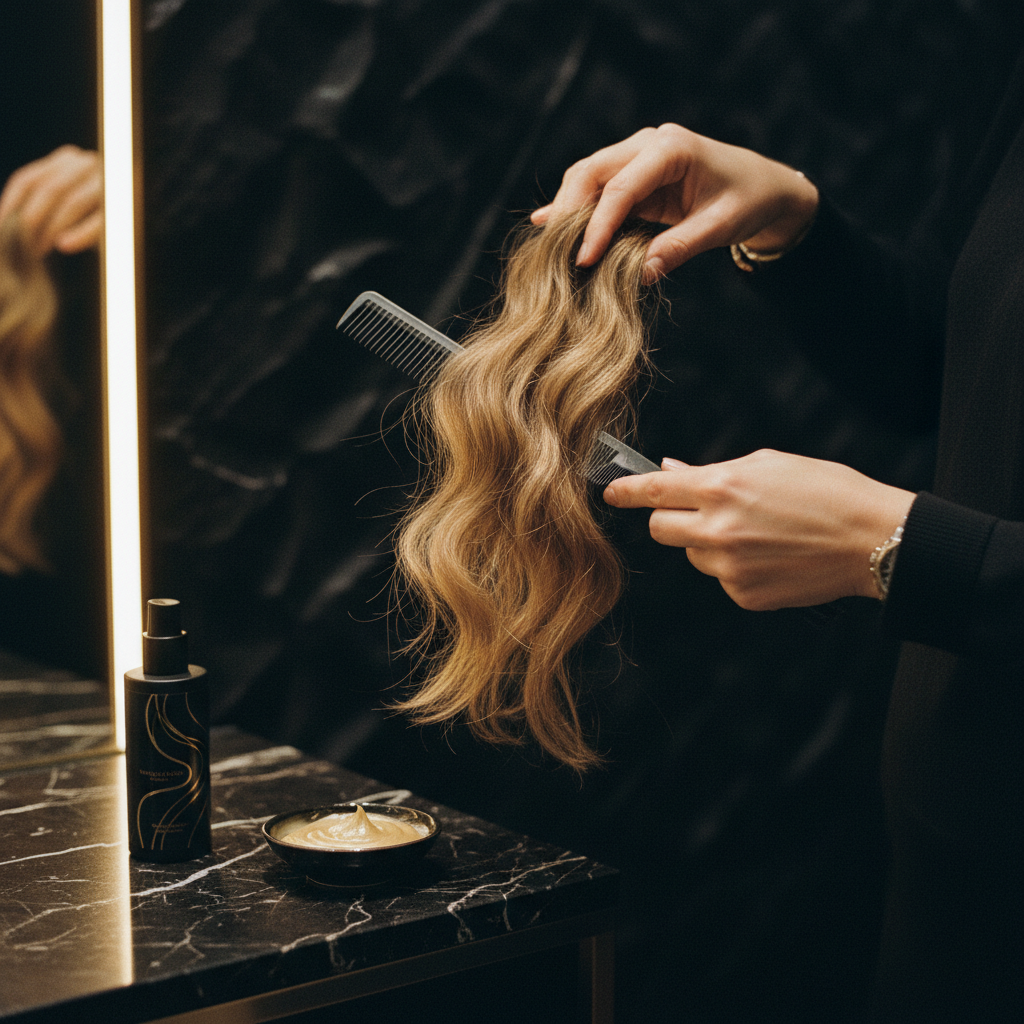
Quick answer: Learning How to Detangle Damaged Hair requires reducing mechanical friction before applying any tension. Damaged hair fibres have lifted, broken cuticle scales that hook onto adjacent strands, making dry brushing catastrophic. The safest method involves coating damp hair in a high-slip conditioner, separating strands gently with fingers, and working from the ends upward using a flexible, wide-tooth tool. The primary limitation is that detangling cannot rebuild split fibres; it solely prevents further structural snapping while managing existing knots.
Key takeaways
- Damaged hair exhibits raised cuticles and stripped surface lipids (18-MEA), which dramatically increases fibre-to-fibre friction.
- Wet hair is chemically weaker than dry hair due to broken temporary hydrogen bonds, so aggressive brushing when saturated causes severe elongation and breakage.
- Applying a dedicated conditioner or detangling product with lubricating slip is essential to lower the friction coefficient before manipulation.
- Always work in small sections, moving progressively from the tips up to the roots, rather than pulling downwards from the scalp.
- Detangling manages knots but cannot repair fractured keratin; prevention and routine trims remain mandatory.
How to Detangle Damaged Hair: what the evidence shows
Understanding How to Detangle Damaged Hair starts with evaluating the state of the hair cuticle. In healthy hair, overlapping cuticle cells lie flat and are coated with an essential lipid layer known as 18-methyleicosanoic acid (18-MEA). This fatty layer creates a hydrophobic, slippery surface that lets individual fibres slide past one another without catching.
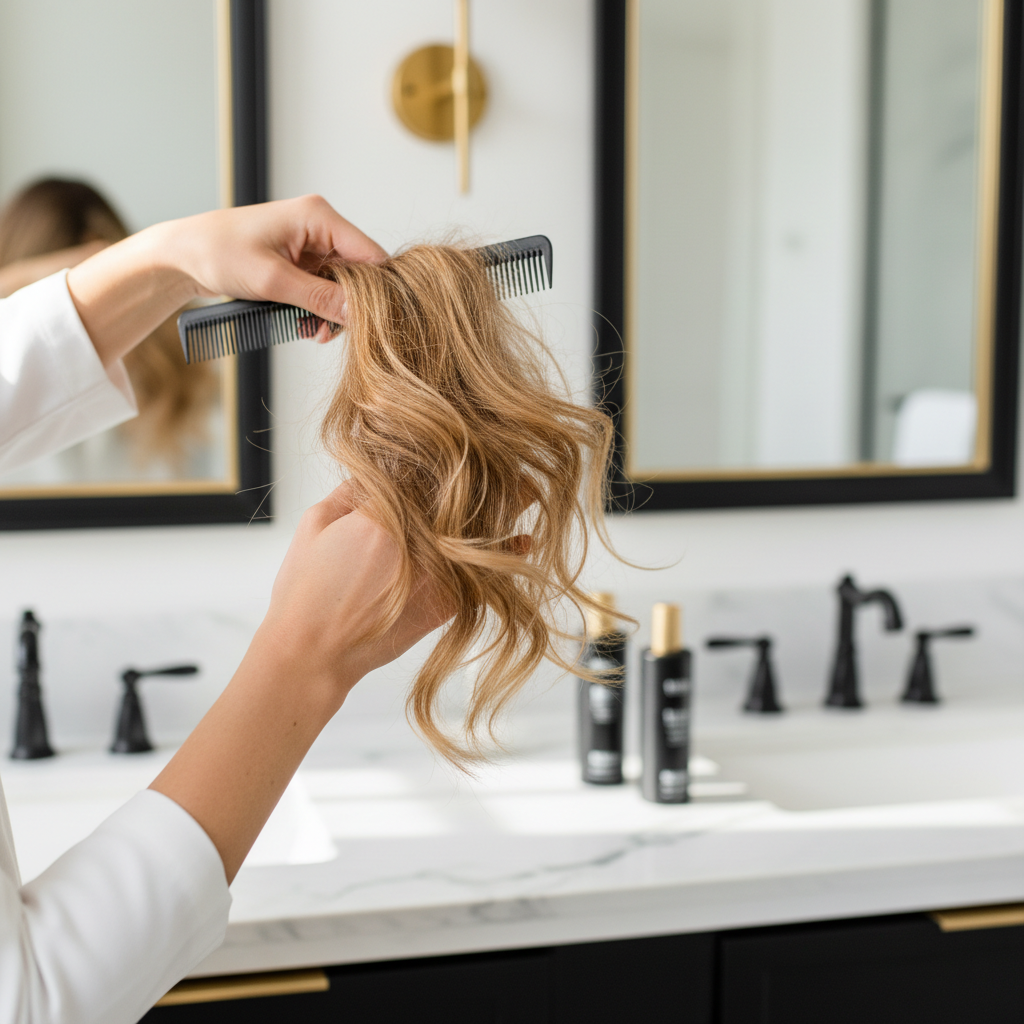
Chemical processing (such as bleaching or permanent waving), excessive heat styling, and environmental exposure strip 18-MEA and erode the cuticle edges. When cuticles become jagged and porous, strands snag easily. Friction testing demonstrates that damaged hair fibres generate significantly higher combing forces than healthy hair. If you apply high mechanical tension to these high-friction points, the hair reaches its yield point and snaps, resulting in mid-shaft breakage rather than a clean release of the knot.
The mechanics of the wet versus dry debate
Stylists and trichologists often debate whether to detangle wet or dry. The scientific reality depends on the type and degree of damage:
- Dry detangling: When dry, keratin has its maximum tensile strength. However, without lubrication, high surface friction causes rough cuticles to interlock, leading to brittle fracture when forced through a dense brush.
- Wet detangling: Water penetrates the hair cortex, temporarily breaking hydrogen bonds. This allows the fibre to stretch much further (up to 30 to 50 percent of its resting length before breaking, compared to roughly 15 to 20 percent when dry). However, damaged hair has a compromised protein matrix; when wet, its plastic deformation limit drops, meaning stretched hair may never return to its original shape and will snap under low loads.
The consensus evidence shows that damp hair loaded with conditioning agents offers the ideal balance. The water provides flexibility, while the fatty alcohols, cationic surfactants, or silicones in the conditioner substitute for lost 18-MEA, cutting mechanical friction by over 60 percent.
The step-by-step method: what you can do
To release stubborn tangles without causing mechanical fracture, follow this systematic, low-tension process.
1. Pre-treat with an emollient or oil
Before washing, apply a light coating of plant-derived oil (such as coconut or argan oil) to severely matted or compromised lengths. Coconut oil, for instance, has a low molecular weight and linear structure that penetrates the hair shaft, reducing protein loss and curbing water absorption (hygral fatigue) during the wash cycle.
2. Saturate with conditioner
After gentle cleansing, saturate the hair thoroughly with a rinse-out conditioner or intensive mask. Look for ingredients such as behentrimonium chloride, cetearyl alcohol, or amodimethicone. These ingredients carry a positive electrical charge that binds to the negatively charged, damaged sites on the hair shaft, creating an instant lubricating barrier.
3. Finger-detangle first
Never put a comb straight into severely knotted, damaged hair. Divide your hair into four to six manageable quadrants. Using your pads of your fingers, gently tease apart large knots, isolating strands that are wrapped around each other. Fingers can sense mechanical resistance instantly, preventing the sudden snaps caused by rigid brush teeth.
4. Work from tips to roots with flexible tools
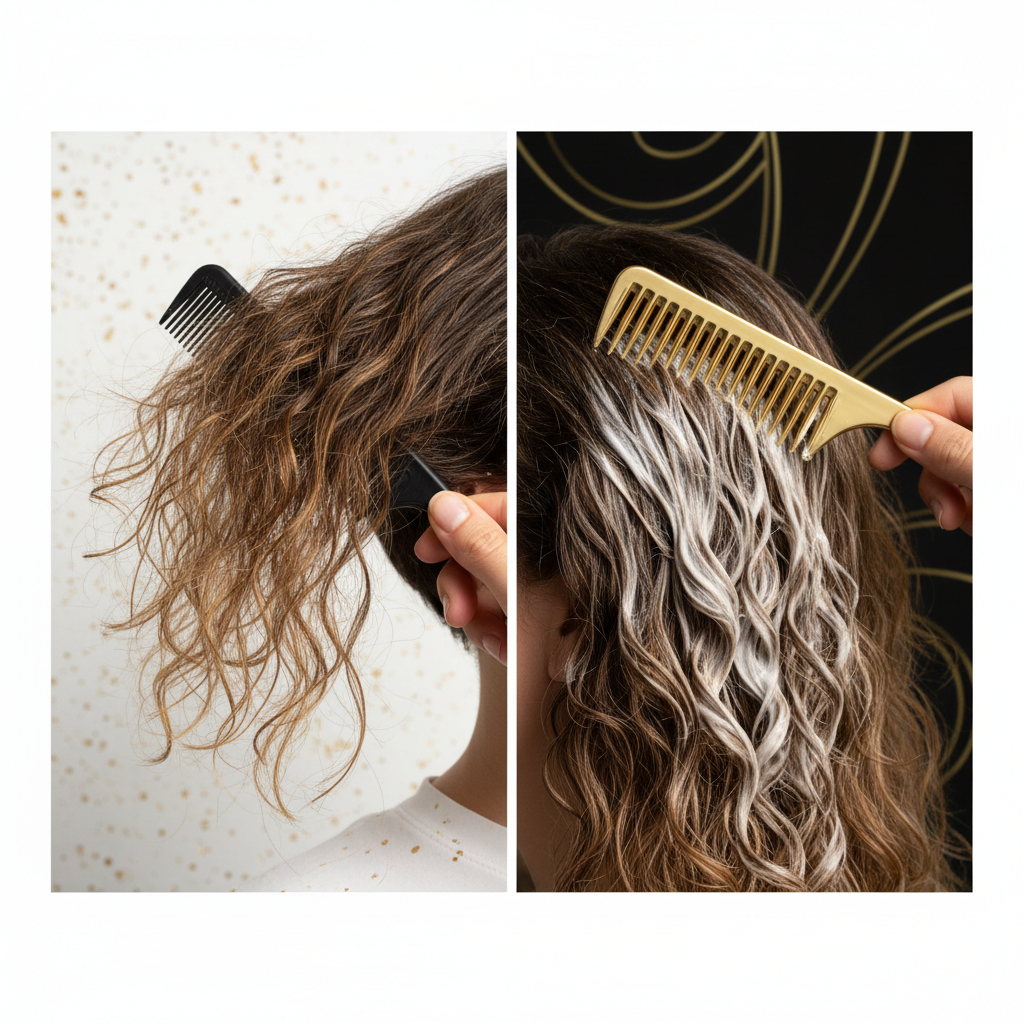
Choose a wide-tooth comb made of seamless material, or a brush specifically engineered with flexible, soft bristles. Hold the section of hair firmly above the tangle with one hand to buffer tension at the root. Place the comb roughly two inches from the ends and comb downwards. Once the ends are free, move two inches higher and repeat. Never drag a knot down the full length of the shaft, as this compacts the knot into a dense, unmovable mass.
5. Rinse with cool-to-tepid water
Rinse thoroughly using cool or tepid water to avoid swelling the hair shaft unnecessarily. If hair tends to re-tangle instantly upon rinsing, apply a lightweight leave-in conditioning spray containing hydrolysed proteins or slip agents before air drying or styling.
Combing dry vs. damp with conditioner: a comparison
| Parameter | Dry Detangling (No Product) | Wet Detangling (Water Only) | Damp Detangling (With High-Slip Conditioner) |
|---|---|---|---|
| Frictional Resistance | Very high; rough cuticles catch directly | Moderate to high; water provides minimal slip | Very low; cationic surfactants coat and lubricate cuticles |
| Fibre Tensile Strength | Highest (hydrogen bonds fully intact) | Lowest (hydrogen bonds disrupted by water) | Moderate (partially hydrated, cushioned by product) |
| Breakage Risk | High (brittle snap from catching) | High (over-stretching and tensile failure) | Minimal (knots glide apart under light tension) |
| Optimal Tool | Wide-tooth seamless wooden or resin comb | Not recommended without product | Flexible-bristle brush or wide-tooth comb |
| Best Suited For | Lightly knotted, coarse or straight hair | Not recommended for compromised hair | Chemically treated, bleached, porous, or curly hair |
What the evidence does not show
There is no scientific evidence that any detangling fluid or spray can permanently repair broken disulfide bonds or reattach split ends (trichoptilosis). While bond-building treatments can temporarily improve structural integrity, they do not weld severed cuticles back together.
Furthermore, detangling products cannot accelerate hair growth at the follicular level. While reducing breakage retains length, detangling remains an external, mechanical intervention.
When the cause may be something else
If hair tangles incessantly despite careful conditioning and gentle handling, the problem may extend beyond simple surface wear:
- Trichorrhexis nodosa: A condition where thickened nodes form along the hair shaft, creating weak spots that fray and tangle into neighbouring hairs at the slightest touch.
- Mineral buildup: Washing with hard water (calcium and magnesium carbonate levels above 120 mg/L) deposits minerals onto the hair cuticle. This leaves a stiff, sandpaper-like residue that resists standard conditioners and accelerates tangling.
- Severe split ends: Split ends act like microscopic anchors, tangling surrounding strands together. No detangling technique will resolve tangles caused by severe splits; the damaged ends must be trimmed away.
When to get professional advice
Consult a qualified trichologist or experienced hair stylist if you notice:
- Tangling accompanied by excessive diffuse shedding from the scalp (more than 100 to 150 hairs daily over several weeks).
- Extensive, felt-like matting (plica neuropathica or plica polonica), which often requires specialized chemical restructuring or cautious cutting rather than forceful brushing.
- Severe breakage within two centimetres of the scalp following professional chemical treatments such as bleaching, high-lift colour, or relaxing.
Supporting hair condition with Watermans
When managing hair that is prone to tangling and mechanical weakness, integrating high-performance products into your routine can protect your fragile strands. Watermans offers formulations designed to fortify hair condition and minimise everyday breakage.
Using Watermans Condition Me Conditioner supplies hydrolysed lupin protein, cholesterol, caffeine, and natural oils that coat compromised cuticles and restore essential slip. This provides the surface lubrication required to ease out tangles safely while leaving the hair feeling stronger, softer, and visibly replenished.
Frequently asked questions about How to Detangle Damaged Hair
Can I brush damaged hair while it is soaking wet?
You should not brush damaged hair while it is soaking wet without conditioner. Water breaks down the hydrogen bonds that give hair its rigidity, leaving the cortex fragile. Brushing unconditioned wet hair stretches the strands past their elastic limit, resulting in snapping. Always apply a slippery conditioner before attempting to detangle wet hair.
What is the single best tool for How to Detangle Damaged Hair?
The best tool for How to Detangle Damaged Hair is a wide-tooth comb crafted from seamless, polished material, or a brush featuring soft, flexible bristles of varying heights. Avoid cheap plastic combs with rough moulding seams, as well as rigid brushes with tiny ball-tips, which can catch, tear, and strip weak cuticles.
How often should I detangle damaged strands?
Detangle only as often as necessary to keep your hair neat and free of mats, typically during wash days or once every two to three days. Excessive manipulation on fragile fibres accelerates cuticle loss and leads to cumulative mechanical breakage.
Why does damaged hair knot faster than healthy hair?
Damaged hair lacks the natural protective 18-MEA lipid layer that makes healthy hair slippery. With the cuticle lifted and jagged from chemical or thermal damage, adjacent fibres generate heavy friction and catch onto one another, causing rapid, stubborn knot formation.
Does cold water really help to detangle hair?
Cold water does not actively detangle hair, but rinsing with cool water helps prevent the hair shaft from swelling excessively compared to hot water. However, the slip provided by a quality conditioner is far more influential in smoothing cuticles and easing tangles than water temperature alone.
Moving forward with fragile hair
Mastering How to Detangle Damaged Hair is fundamentally an exercise in patience and friction management. Damaged hair fibres are structurally compromised, meaning rough handling will instantly cause breakage along the shaft. By introducing lipid-rich conditioners, separating knots with your fingers first, and methodically working through small sections with flexible tools, you can preserve the integrity of your strands. Combine these protective habits with regular trims and targeted conditioning care to maintain stronger, healthier-looking hair.
Sources and references
- Robbins, C. R. (2012). Chemical and Physical Behavior of Human Hair (5th ed.). Springer-Verlag.
- Evans, T., & Wickett, R. R. (2012). Practical Modern Hair Science. Allured Business Media.
- Gavazzoni Dias, M. F. (2015). Hair cosmetics: An overview. International Journal of Trichology, 7(1), 2-15.
- Ruetsch, S. B., Kamath, Y. K., Rele, A. S., & Mohile, R. B. (2001). Secondary ion mass spectrometric investigation of penetration of coconut and mineral oils into human hair fibres. Journal of Cosmetic Science, 52(3), 169-184.
- Dawber, R. (1996). Hair: Its structure and response to cosmetic preparations. Clinics in Dermatology, 14(1), 105-112.
Find these ingredients in Watermans products
- Caffeine: you will find this ingredient in our Hair Growth Shampoo.