Hard Water Hair Damage and Chelating: The Evidence-Based Guide
9 min read ·
Understand hard water hair damage and chelating. Learn how calcium and magnesium impact the hair fibre, cause breakage, and how chelating agents lift buildup.
Quick answer: Understanding Hard Water Hair Damage and Chelating is essential if your hair feels dry, brittle, or coated despite regular washing. Hard water contains high concentrations of dissolved minerals, primarily calcium and magnesium, which bind to the hair shaft and form an insoluble film. Chelating agents are specialised ingredients that bind to these metal ions and lift them away. While chelating restores softness and shine, it cannot mend split ends or reverse internal structural degradation.
Key takeaways
- Hard water contains elevated levels of calcium carbonate and magnesium, generally exceeding 120 mg/L (parts per million).
- Mineral deposits coat the cuticle, preventing moisture absorption, reducing elasticity, and causing surface roughness that leads to mechanical hair breakage.
- Chelating agents use chemical claw-like structures to sequester metal ions and lift mineral buildup from the hair fibre.
- Hard water causes hair breakage along the shaft; it does not trigger follicular hair loss or medical alopecia.
- Clarifying shampoos remove surface sebum and product polymers, but only dedicated chelating formulas effectively dissolve calcified mineral complexes.
Hard Water Hair Damage and Chelating: what the evidence shows
Research into Hard Water Hair Damage and Chelating demonstrates that dissolved minerals fundamentally alter the physical behaviour of the hair fibre. When you wash your hair in hard water, calcium and magnesium ions react with fatty acids in shampoos to form an insoluble precipitate, commonly called soap scum. Even when using modern detergent shampoos, calcium ions bind directly to the negatively charged protein sites within the hair cuticle.
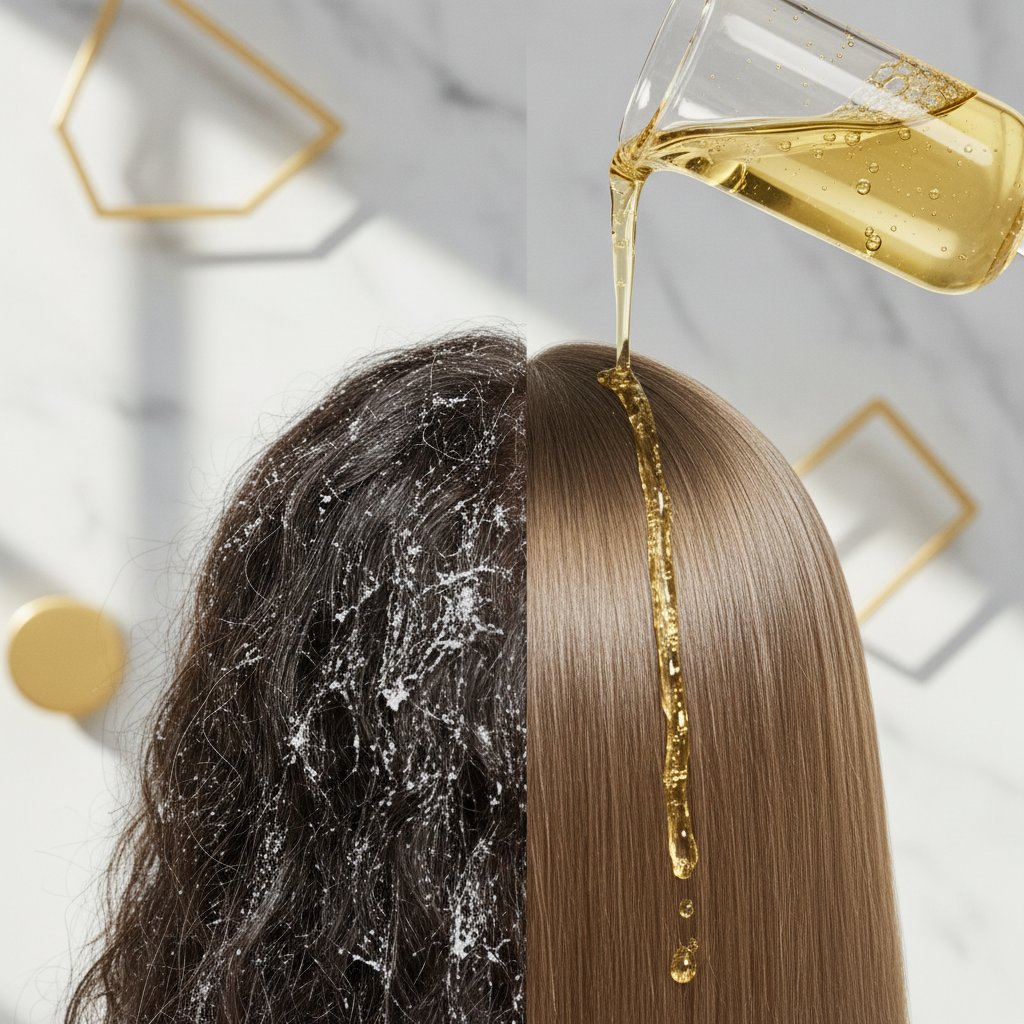
A landmark study published in the International Journal of Trichology examined the impact of hard water on hair tensile strength and elasticity. The researchers found that while hard water did not significantly decrease the tensile strength of virgin hair over short durations, it markedly increased surface friction, mineral deposition, and rigidity. Over time, this surface mineral coating prevents conditioning agents from adhering properly and blocks the hair fibre from maintaining its natural moisture balance. As a result, the hair feels rough, tangles easily, and experiences increased friction during brushing, which directly causes hair breakage.
Chelating agents (from the Greek chele, meaning claw) are molecules that form multiple coordination bonds with a single metal ion. In haircare, ingredients like tetrasodium EDTA, disodium EDTA, citric acid, and sodium phytate surround positively charged calcium, magnesium, copper, and iron ions. Once bound within this soluble ring complex, the minerals rinse cleanly away down the drain, restoring the cuticle's ability to lie flat.
The mechanism: how minerals degrade the hair fibre
Hair is primarily composed of keratin, a fibrous protein rich in the amino acid cystine. Keratin fibres have an isoelectric point around pH 3.7. At typical tap water pH levels (usually between 6.5 and 8.5), hair carries a net negative electrical charge.
Hard water contains multivalent cations, predominantly calcium ($Ca^{2+}$) and magnesium ($Mg^{2+}$), alongside trace amounts of copper ($Cu^{2+}$) and iron ($Fe^{2+}$). Because opposite charges attract, these divalent metal cations readily bind to the negatively charged carboxylate groups on the hair cuticle.
Once anchored to the hair shaft, these minerals cause three distinct issues:
- Cuticle disruption: Mineral crystals lodge under and around the overlapping cuticle scales, forcing them to remain propped open. This increases surface roughness and prevents the cuticle from reflecting light evenly.
- Moisture barrier formation: The mineral layer forms an impermeable crust that blocks water molecules and conditioning lipids from penetrating the cortex, leaving the inner fibre dehydrated.
- Oxidative stress: Trace metals like copper and iron act as catalysts for Fenton-type reactions. When exposed to ultraviolet light or chemical processing, these metals accelerate free-radical formation, which degrades the keratin cortex from within.
+-------------------------------------------------------------+
| HARD WATER EXPOSURE |
| Ca2+, Mg2+, Cu2+, Fe2+ ions in tap water bind to keratin |
+------------------------------+------------------------------+
 |
 v
+-------------------------------------------------------------+
| MINERAL BUILDUP |
| Cuticle scales forced open; insoluble salt crust forms |
+------------------------------+------------------------------+
 |
 v
+-------------------------------------------------------------+
| FIBRE RIGIDITY |
| High surface friction, poor moisture uptake, tangling |
+------------------------------+------------------------------+
 |
 v
+-------------------------------------------------------------+
| MECHANICAL BREAKAGE |
| Brushing snaps brittle fibres (Not follicular loss) |
+-------------------------------------------------------------+
Signs of hard water mineral buildup
Mineral deposition does not happen overnight. It accumulates gradually with repeated wash cycles. Common symptoms include:
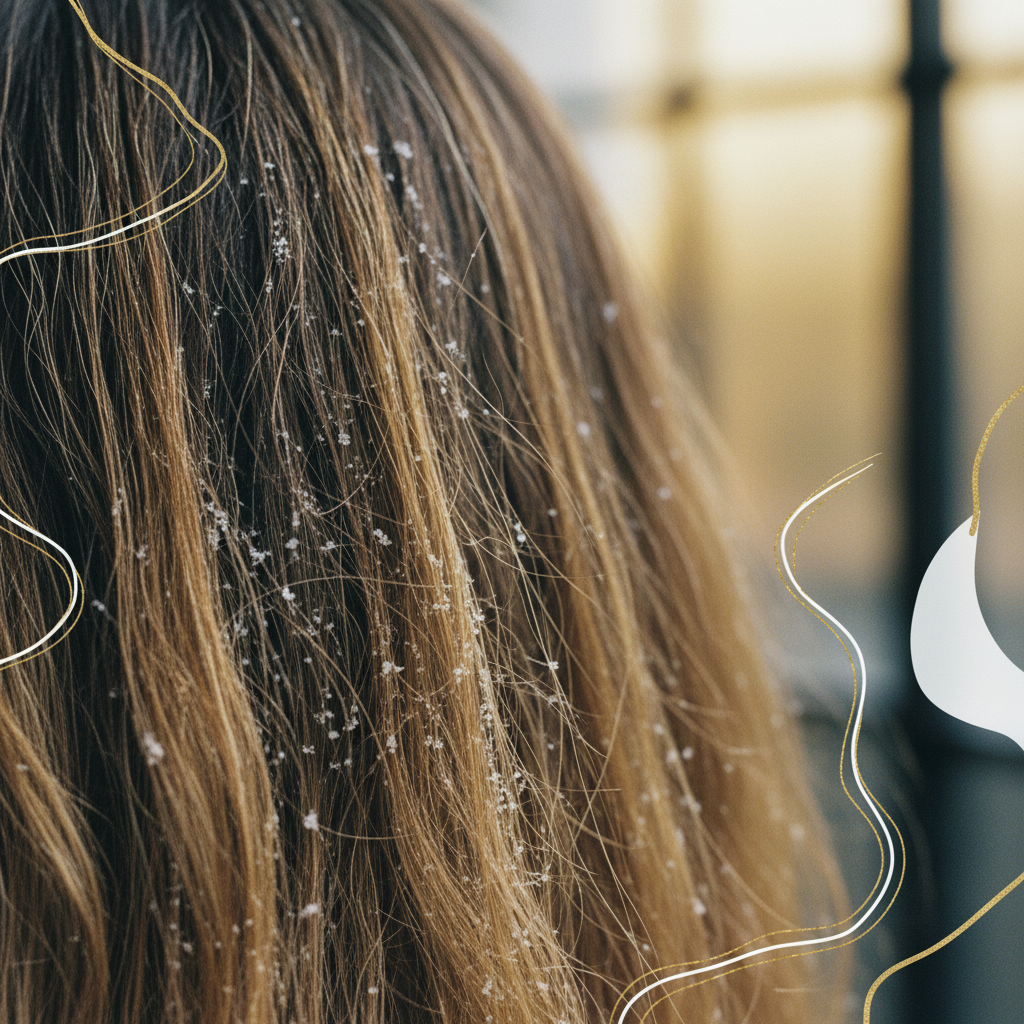
- A persistent, chalky or waxy coating that remains immediately after washing.
- Dullness and lack of light reflection, making vibrant colours look muddy.
- Significant tangling at the nape and ends, caused by propped-open cuticles catching on adjacent strands.
- Hair that feels dry and straw-like, refusing to absorb deep conditioners or oils.
- Unwanted colour shifts: blondes may turn brassy or greenish (from copper deposition), while darker hair can appear flat and ash-toned.
- Premature colour fading because hair dyes cannot penetrate or anchor beneath mineral crusts.
Clarifying vs chelating: understanding the difference
Many people confuse clarifying shampoos with chelating treatments. While both deep-clean the hair, their molecular targets are entirely different.
| Feature | Clarifying Shampoo | Chelating Shampoo / Treatment |
|---|---|---|
| Primary Target | Sebum, cosmetic silicones, styling polymers, dirt | Calcium, magnesium, copper, iron, chlorine |
| Key Active Ingredients | Strong surfactants (e.g., Sodium C14-16 Olefin Sulfonate) | Chelating agents (e.g., Disodium EDTA, Tetrasodium EDTA, Citric Acid) |
| Working Mechanism | Emulsifies hydrophobic oils and residues | Chemically bonds to and neutralises metal ions |
| Best Used For | Product buildup, greasy scalp, post-styling refresh | Hard water mineral crust, swimmer's green tint, pre-chemical service |
| Frequency | Once every 1 to 2 weeks | Once every 2 to 4 weeks (depending on water hardness) |
| Effect on Minerals | Minimal; surfactants cannot break ionic mineral bonds | High; actively dissolves and removes bound mineral ions |
What the evidence does not show
It is critical to separate established cosmetic science from common misconceptions. Hard water does not cause medical hair loss. It does not cause androgenetic alopecia, telogen effluvium, or alopecia areata.
When people observe increased hair in their shower drain after moving to a hard water area, they are almost always experiencing mechanical hair breakage, not increased shedding from the root. Because mineral-coated strands suffer from severe friction and rigidity, hair snaps during brushing, washing, and towel drying. The follicle itself remains healthy and anchored beneath the scalp.
Furthermore, chelating cannot repair structural damage that has already occurred. If hard water friction has caused the cuticle to peel or split ends to form, chelating will remove the minerals, but the split ends must be trimmed away.
Practical steps: how to chelate and protect your hair
If you live in an area with hard water, incorporating a targeted routine will maintain fibre flexibility and prevent mineral-induced snapping.
- Test your water hardness: Check your local water utility report or use an in-home test strip. Water hardness above 120 mg/L indicates a need for regular mineral maintenance.
- Use a chelating shampoo periodically: Wash with a dedicated chelating product once every two to three weeks. Massage it thoroughly from scalp to ends and allow it to sit for three to five minutes so the chelating agents can bind the minerals.
- Follow with deep conditioning: Chelating strips away mineral shields and surface oils, leaving the cuticle bare. Always follow with a rich, lipid-replenishing mask formulated with fatty alcohols and hydrolysed proteins to seal the cuticle.
- Consider an acidic rinse: Rinses containing diluted apple cider vinegar or buffered citric acid (pH 4.0 to 5.0) help lower the hair's surface charge, encouraging cuticle scales to lie flat.
- Install a water softener: Showerhead filters can remove chlorine and sediment, but true softening requires an ion-exchange system that replaces calcium and magnesium with sodium ions.
Scalp health and supporting products
While addressing mineral deposits on the hair fibre is a physical process, long-term hair quality also depends on maintaining an optimal environment at the scalp. When washing in hard water, mineral residues can combine with scalp sebum, creating flaky buildup that irritates sensitive skin.
Watermans approaches hair wellness by focusing on scalp vitality and fibre resilience. Watermans Grow Me Shampoo is formulated with biotin, rosemary extract, caffeine, and niacinamide to nourish the scalp and support the appearance of thicker, fuller hair. Pairing a scalp-invigorating formula with targeted mineral management helps ensure that new hair emerging from the follicle remains strong and resilient against environmental stressors.
When the cause may be something else
If your hair continues to snap or thin despite implementing chelating treatments, the issue may not be mineral buildup:
- Chemical over-processing: Bleaching, high-lift colour, and chemical relaxers break the internal disulphide bonds of the hair, leading to severe breakage that mimics hard water damage.
- Heat styling damage: Daily use of flat irons or curling wands above 185°C degrades keratin proteins, causing bubbles inside the hair cortex (bubble hair deformity).
- True follicular hair loss: If you see hairs falling out with the small white bulb attached at the root, or notice widening partings and patchy thinning, this is hair shedding or hair loss, not hard water breakage.
When to consult a professional
You should consult a registered trichologist or a dermatologist specialising in hair disorders if you notice excessive shedding from the root (more than 100 hairs daily over several weeks), sudden bald patches, or severe scalp itching, redness, and scaling. For chemical services like bleaching or perm treatments, always inform your salon stylist that you wash with hard water; they can perform an in-salon chelating treatment to prevent unpredictable, exothermic chemical reactions caused by mineral deposits.
Frequently asked questions about Hard Water Hair Damage and Chelating
How often should I use a chelating shampoo?
For most people living in hard water areas, using a chelating shampoo once every two to three weeks is ideal. If your water is exceptionally hard (over 180 mg/L) or you swim frequently in chlorinated pools, once weekly may be required. Avoid using chelating treatments daily, as they can strip natural protective lipids and leave hair feeling temporarily dry.
Can a showerhead filter prevent Hard Water Hair Damage and Chelating needs?
Most standard showerhead filters use carbon, KDF, or calcium sulphite, which effectively neutralise chlorine and catch sediment, but they do not soften water. True water softening requires an ion-exchange system to remove dissolved calcium and magnesium. Therefore, even with a basic shower filter, periodic chelating remains necessary.
Will chelating fade my dyed or bleached hair?
Chelating does not strip permanent hair colour molecules that are locked inside the cortex. In fact, removing mineral deposits often brightens colour by lifting the dingy, brassy, or greenish film caused by copper and iron. However, chelating immediately before a colour service is highly recommended, as it allows dye pigments to penetrate evenly.
What is the difference between apple cider vinegar and a chelating shampoo?
Apple cider vinegar has an acidic pH (around 2.5 to 3.0), which helps contract the hair cuticle and can dissolve weak surface mineral traces. However, it lacks the multidentate binding ligands found in dedicated chelating agents like EDTA. Vinegar provides light surface smoothing, but a formulated chelating shampoo is required to lift heavy, calcified buildup.
Maintaining healthy hair in hard water environments
Managing Hard Water Hair Damage and Chelating comes down to understanding the chemistry of your water and your hair fibre. Hard water minerals inevitably coat the hair shaft, disrupting the cuticle and leading to friction, dullness, and mechanical breakage. By incorporating targeted chelating washes, balancing your hair with acidic conditioning, and supporting the scalp with nutrient-rich formulations, you can keep your hair soft, resilient, and vibrant regardless of your local water supply.
Sources and references
- International Journal of Trichology: "Evaluating the Effect of Hard Water on Hair Tensile Strength", 2013.
- Journal of Cosmetic Science: "The Effects of Water Hardness on the Cleansing and Conditioning Performance of Hair Shampoos", 2011.
- World Health Organization: "Guidelines for Drinking-water Quality: Hardness in Drinking-water", 2011.
- British Association of Dermatologists: "Hair Breakage and Cuticle Weathering", Patient Information Hub.
- Society of Cosmetic Scientists: "Principles of Hair Cleansing and Chelating Agents", Educational Technical Papers.
Find these ingredients in Watermans products
- Copper: you will find this ingredient in our Hair Vitamins.