Hair Protein Treatments Guide: The Science of Fibre Repair
9 min read ·
A complete Hair Protein Treatments Guide covering hydrolysed proteins, molecular mechanics, signs of structural damage, and how to prevent protein overload.
Quick answer: This Hair Protein Treatments Guide explains how hydrolysed proteins temporarily patch structural defects in damaged hair fibres. Hair is roughly 85% to 90% keratin, but chemical bleaching, heat styling, and weathering strip protective lipids and erode internal polypeptide chains. Protein treatments deposit small, hydrolysed amino acid chains into the cortex and onto the cuticle to reduce breakage and improve elasticity. Their main limitation: they cannot permanently repair dead biological tissue or treat follicular hair loss, requiring regular reapplication alongside adequate moisture.
Key takeaways
- Hair is primarily composed of keratin protein, which degrades when exposed to alkaline chemicals, high heat, and ultraviolet radiation.
- Protein treatments utilise hydrolysed proteins (such as wheat, silk, or soy) small enough to penetrate the cuticle layer or coat the outer surface.
- Protein addresses hair breakage along the shaft; it does not treat hair loss or hair shedding originating at the follicle.
- Overusing protein without balancing conditioning agents can lead to brittle, stiff hair fibres prone to snapping.
- Treatments fall along a spectrum from mild daily rinse-off products to intensive, salon-grade reconstructing services.
Hair Protein Treatments Guide: what the evidence shows
This Hair Protein Treatments Guide builds on decades of cosmetic chemistry and textile science. Intact human hair consists of roughly 85% to 90% keratin, 3% to 5% water, lipids (such as 18-methyleicosanoic acid or 18-MEA), and trace minerals. Keratin chains are held together by covalent disulphide bonds, ionic salt bonds, and hydrogen bonds.
When hair undergoes bleaching, permanent colouring, chemical straightening, or heat styling above 185°C, these bonds fracture. Bleaching oxidises cystine into cysteic acid, lifting the cuticle scales and depleting the hair's natural protein density. The fibre becomes porous, absorbs water erratically, and loses its tensile strength.
Cosmetic researchers have demonstrated that hydrolysed proteins (proteins broken down via enzymatic or acid hydrolysis into fragments with molecular weights typically between 500 and 10,000 Daltons) can substantively bind to human hair. Studies published in the Journal of Cosmetic Science confirm that proteins with lower molecular weights (below 1,500 Daltons) can penetrate past the cuticle and enter the cortex of damaged hair. Larger molecular weight proteins remain on the cuticle surface, creating a protective conditioning film that smooths ragged scales and decreases friction during combing.
What protein treatments cannot do
Protein treatments are structural cosmetic interventions, not biological cures.
- They cannot revive living cells. The hair shaft is non-living biological tissue (filamentous biomaterial). Once protein leaves the fibre or bonds are permanently cleaved, a cosmetic treatment can only temporarily fill the gaps via electrostatic attraction and film formation. It cannot heal hair in the biological sense that skin heals.
- They do not treat follicular hair loss. Breakage along the shaft is completely distinct from hair shedding (telogen effluvium) or patterned hair loss (androgenetic alopecia). Protein treatments do not affect the hair follicle beneath the scalp, nor do they alter the hair growth cycle.
- They are not permanent. Because hydrolysed proteins adhere largely through ionic charges and physical deposition, surfactants in regular shampoos gradually wash them away over two to six weeks.
+---------------------------------------------------------------------------------------+
| HAIR DAMAGE SPECTRUM |
+---------------------------------------------------------------------------------------+
| Healthy Fibre: Smooth cuticle | Intact 18-MEA layer | Normal elasticity |
| Moderate Damage: Lifted scales | Porous cortex | Tangles, lacks bounce |
| Severe Breakdown: Missing cuticle| Cleaved disulphide | Gummy when wet, snapping |
+---------------------------------------------------------------------------------------+
How protein treatments work: the molecular mechanism
To understand how treatments function, you must examine molecular size and surface charge. Native proteins, like unrefined egg whites or whole milk, have molecular weights exceeding 300,000 Daltons. These molecules are far too large to enter the hair fibre; they merely sit on the surface, provide minimal conditioning, and rinse down the drain.
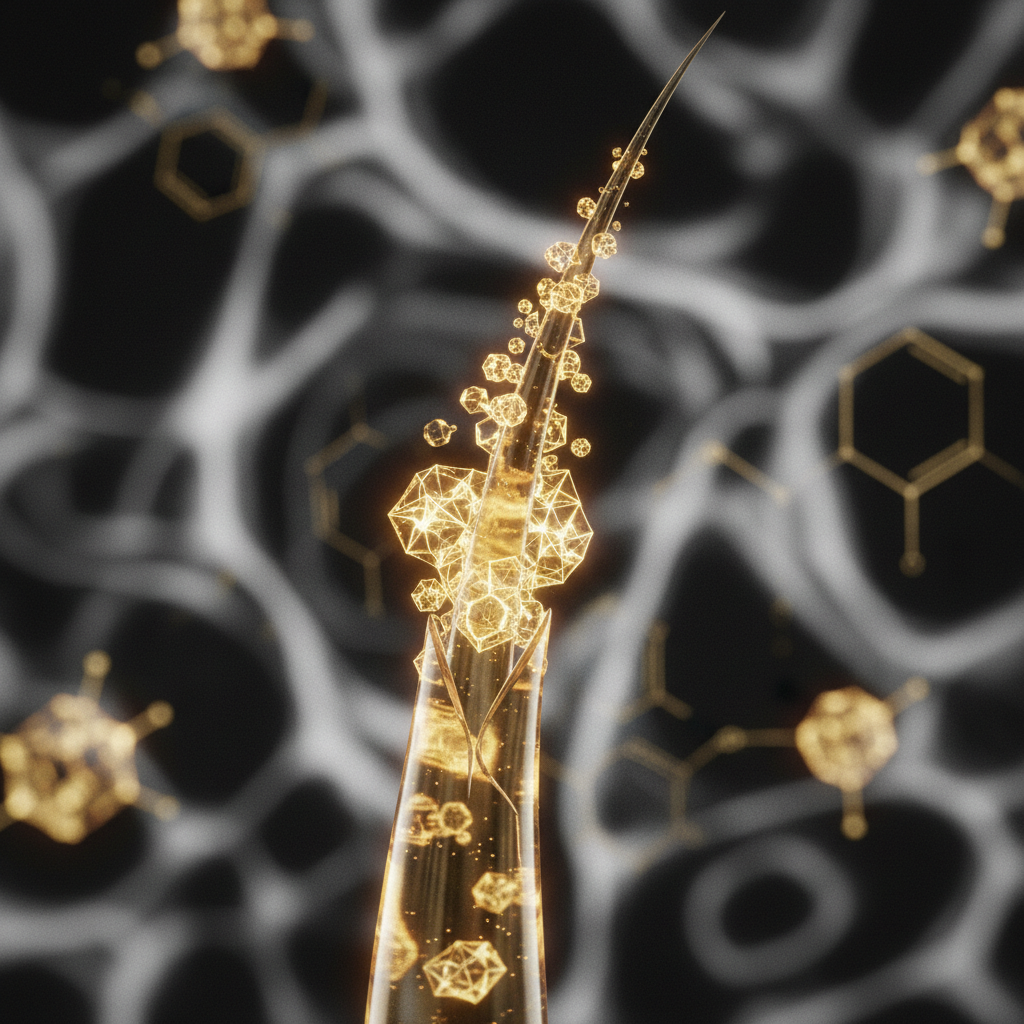
Hydrolysis cleaves protein polymers into peptides and amino acids. Hydrolysed wheat protein, hydrolysed keratin, and hydrolysed silk typically possess molecular weights tailored to specific jobs:
- Low molecular weight (under 1,500 Daltons): These micro-proteins diffuse into microscopic voids in the cortex, especially in porous, chemically compromised hair. Once inside, they form hydrogen bonds with the existing keratin network, temporarily restoring internal tensile strength.
- Medium to high molecular weight (2,000 to 10,000+ Daltons): These peptides deposit onto the outer cuticle layer. They fill the crevices where cuticle cells have chipped away, neutralising negative surface charges created by cysteic acid. This forms a smooth sacrificial film, reducing wet combing friction by up to 50%.
Types of hair protein treatments
Different formulations serve distinct damage levels. Selecting the incorrect intensity often causes frustration.
| Treatment Type | Typical Molecular Weight | Key Ingredients | Frequency of Use | Best For |
|---|---|---|---|---|
| Protein-enriched conditioners | 1,000 to 5,000 Daltons | Hydrolysed silk, wheat amino acids, quaternium conditioners | Every 1 to 2 washes | Normal to slightly dry hair, mild heat exposure |
| Deep conditioning protein masks | 500 to 3,000 Daltons | Hydrolysed keratin, collagen, fatty alcohols, plant oils | Every 1 to 2 weeks | Colour-treated hair, regular heat stylers, moderate porosity |
| Intensive bond and protein reconstructors | Under 1,000 Daltons | Concentrated amino acids, hydrolysed vegetable protein | Every 4 to 6 weeks | Bleached hair, chemical relaxers, hair snapping when wet |
| Leave-in protein sprays | 500 to 2,000 Daltons | Silk amino acids, hydrolysed keratin, panthenol | Daily or after every wash | Fine, limp hair needing light structural support without weight |
Signs your hair needs protein
Hair that lacks protein displays unmistakable mechanical symptoms. You can assess your hair's requirements through tactile and visual evaluation:
- High wet elasticity with poor recovery: When wet, take a single strand of hair and gently stretch it. If it stretches excessively, feels mushy, gummy, or limp, and fails to snap back to its original length, the internal protein architecture is depleted.
- Excessive snapping during detangling: If you observe short pieces of hair breaking off without a white follicular bulb at the end, your fibres have structural weak spots along the shaft.
- Excessive porosity: Damaged hair absorbs water almost instantaneously in the shower but dries out rapidly, becoming frizzy, dull, and unresponsive to standard moisture.
- Recent high-lift bleach or relaxer treatments: Chemical processing directly strips cystine bonds. Protein replenishment is virtually mandatory after high-alkaline services.
Protein overload: reality versus myth
The concept of "protein overload" is widely discussed in hair communities. Technically, hair fibres cannot metabolise protein, so "overload" is a cosmetic phenomenon rather than a medical state.
When you apply concentrated high-molecular-weight proteins repeatedly without adequate humectants and conditioning emollients, a stiff, inflexible shell accumulates on the outer cuticle. This coating makes the hair shaft rigid. Healthy hair requires a precise balance of strength and flexibility. If the fibre becomes too rigid, it loses its ability to bend under mechanical stress, causing it to snap easily when brushed.
If your hair feels straw-like, hard, or brittle following a treatment, you do not need more protein. Wash the hair with a clarifying shampoo to lift the excess surface coating, then apply a rich, protein-free [deep conditioner](https://watermanshair.com/products/masque-me-luxurious-hair-mask) containing fatty alcohols (such as cetyl or stearyl alcohol), shea butter, or argan oil to restore softness and pliability.
Professional salon treatments versus home care
Home treatments are formulated with safety margins, typically containing lower active concentrations (0.5% to 5% hydrolysed protein) to prevent brittleness. They focus on maintenance and progressive reinforcement.
Salon reconstructors frequently use two-step processes: a high-potency liquid protein solution applied with heat, followed by an acidic, moisture-rich sealing mask. The heat helps open the cuticle and dry down the protein network into the hair cortex. While highly effective for severely compromised hair, these treatments require precise application timing. Inexperienced use can lead to sudden fibre breakage.
Supporting hair health with Watermans
Cosmetic protein treatments work strictly on the hair fibre outside the scalp. For individuals seeking a comprehensive routine that addresses both the fibre and the appearance of fuller, denser hair, Watermans offers targeted solutions.
The Watermans Grow Me range delivers an invigorating wash designed to cleanse the scalp thoroughly while conditioning the hair shaft with nourishing ingredients, including hydrolysed lupin protein, biotin, and rosemary extract. While intensive reconstructors mend damaged mid-lengths and ends, maintaining an optimal scalp environment supports the emergence of strong, resilient-looking new hair from the root.
Frequently asked questions about Hair Protein Treatments Guide
How often should you use a protein treatment on damaged hair?
How often you apply a treatment depends on the severity of your damage. For mild damage from blow-drying, use a protein-infused mask every two weeks. For chemically bleached, gummy hair, an intensive treatment every one to two weeks is appropriate until tensile strength improves. Maintain the balance by alternating protein with pure moisturising treatments.
Can this Hair Protein Treatments Guide help prevent hair shedding?
No, and this Hair Protein Treatments Guide makes that distinction clear. Protein treatments act exclusively on the non-living hair shaft to prevent hair breakage. Hair shedding occurs within the hair follicle under the scalp due to genetics, hormones, nutritional deficiencies, or systemic stress. A topical protein treatment cannot stop biological hair shedding.
What is the difference between moisture and protein for hair?
Moisture gives hair elasticity, softness, and the ability to bend without snapping, primarily delivered via water, humectants, and fatty emollients. Protein provides structural rigidity, tensile strength, and internal density via amino acid chains. Hair requires both: too much moisture makes hair limp and mushy, while too much protein makes it stiff and brittle.
Do DIY egg or mayonnaise masks work as protein treatments?
No. The proteins found in raw eggs and mayonnaise are intact macro-proteins with high molecular weights that cannot penetrate the hair cuticle. They cannot bind internally to repair damaged keratin bonds. While the oils in mayonnaise provide temporary surface lubrication, true structural repair requires commercially hydrolysed proteins engineered to penetrate the cortex.
How do I know if my hair has too much protein?
Hair with excess protein feels rough, dry, and brittle, resembling straw. It tangles easily, lacks natural shine, and snaps when lightly pulled rather than stretching gently. If your hair shows these signs after using a reconstructor, discontinue protein treatments immediately, clarify the hair, and focus on deep moisturising masks for several weeks.
Practical steps for your hair care routine
Implementing the insights from this Hair Protein Treatments Guide will protect your hair from preventable structural damage. Begin by diagnosing your hair's primary need: assess whether your strands are snapping from structural weakness or feeling parched from lack of moisture. Introduce hydrolysed protein treatments gradually, starting with mild conditioners before moving to potent reconstructors. By respecting the balance between protein strength and emollient moisture, you can preserve the structural integrity, shine, and resilience of your hair across every styling cycle.
Sources and references
- Journal of Cosmetic Science, "Investigation of the penetration of hydrolysed proteins into human hair by fluorescence microscopy", 2004.
- International Journal of Trichology, "Hair cosmetics: An overview", 2015.
- Robbins, C. R., Chemical and Physical Behavior of Human Hair, 5th ed., Springer, 2012.
- Cosmetic and Toiletries Magazine, "Evaluating protein substantivity and penetration in damaged hair fibres", 2018.
Find these ingredients in Watermans products
- Panthenol (Provitamin B5): you will find this ingredient in our Heat Protection Spray.
- Shea Butter: you will find this ingredient in our Curly Hair Conditioner.