Hair Protein Moisture Balance: A Science-Based Guide
8 min read ·
Understand Hair Protein Moisture Balance: discover how keratin structure and internal water content work together to stop breakage and restore elastic, healthy hair.
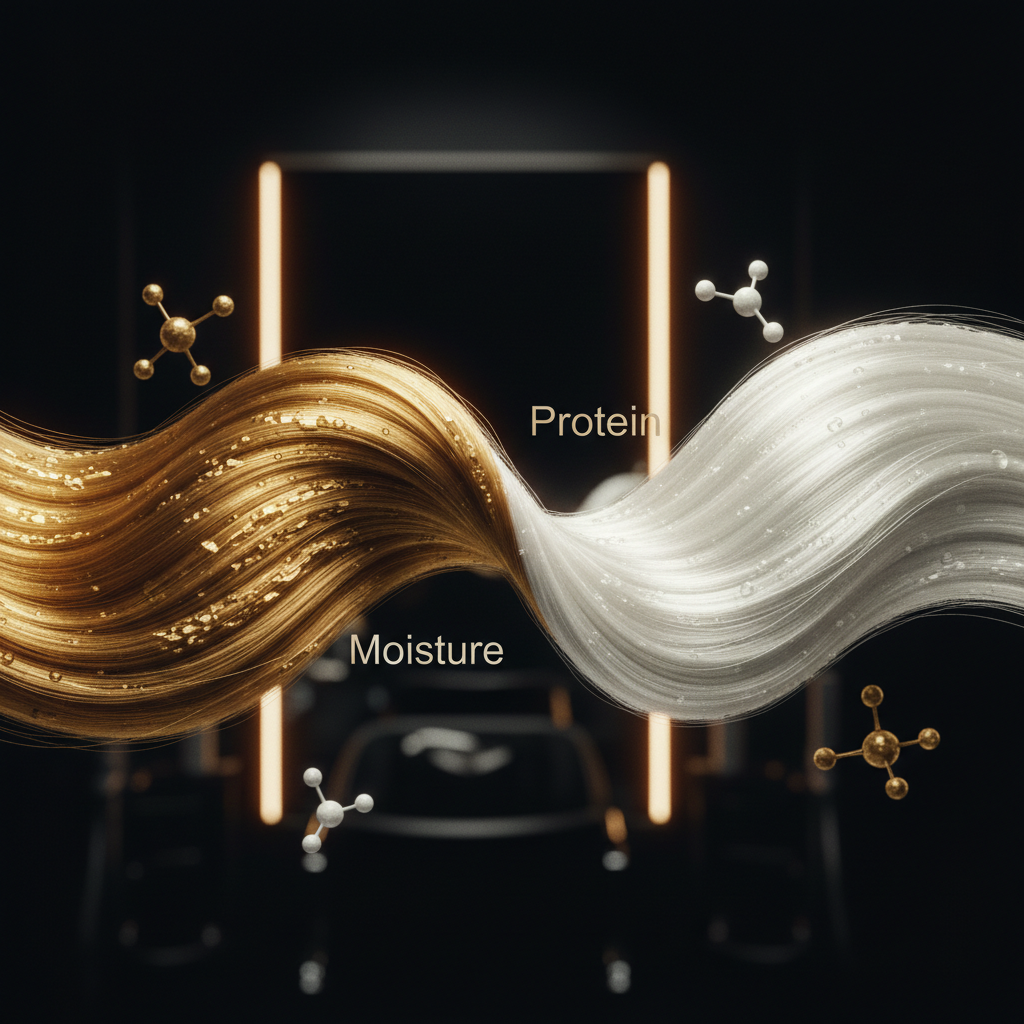
Quick answer: Achieving the right Hair Protein Moisture Balance means maintaining the correct proportion between structural keratin within the cortex and water held by internal lipids. Healthy hair requires structural proteins for tensile strength and water for elasticity. While popular salon culture often treats protein and moisture as opposing forces, scientifically they depend on each other. Protein bonds hold the fibre together, while water plasticises those bonds so the hair bends without snapping. The main limitation is that hair is non-living tissue: topical treatments can temporarily reinforce or hydrate fibres, but cannot permanently rebuild broken keratin.
Key takeaways
- Hair is composed of roughly 65 to 90 percent keratin proteins, 10 to 15 percent water, and small fractions of lipids, melanin, and trace elements.
- Tensile strength comes from internal disulfide and hydrogen bonds, whereas flexibility and elasticity come from internal water plasticising the keratin matrix.
- Protein overload causes hair to feel stiff, brittle, and straw-like, leading to mechanical snapping along the shaft.
- Moisture overload (often called hygral fatigue) leaves hair limp, mushy, excessively stretchy, and prone to breakage under low tension.
- Topical cosmetic ingredients do not permanently rebuild damaged cortex bonds; they adhere to the cuticle or diffuse into the outer cortex until washed away.
Hair Protein Moisture Balance: what the evidence shows
Hair Protein Moisture Balance is the functional equilibrium between internal fibrous proteins and the water content bound within the hair shaft.
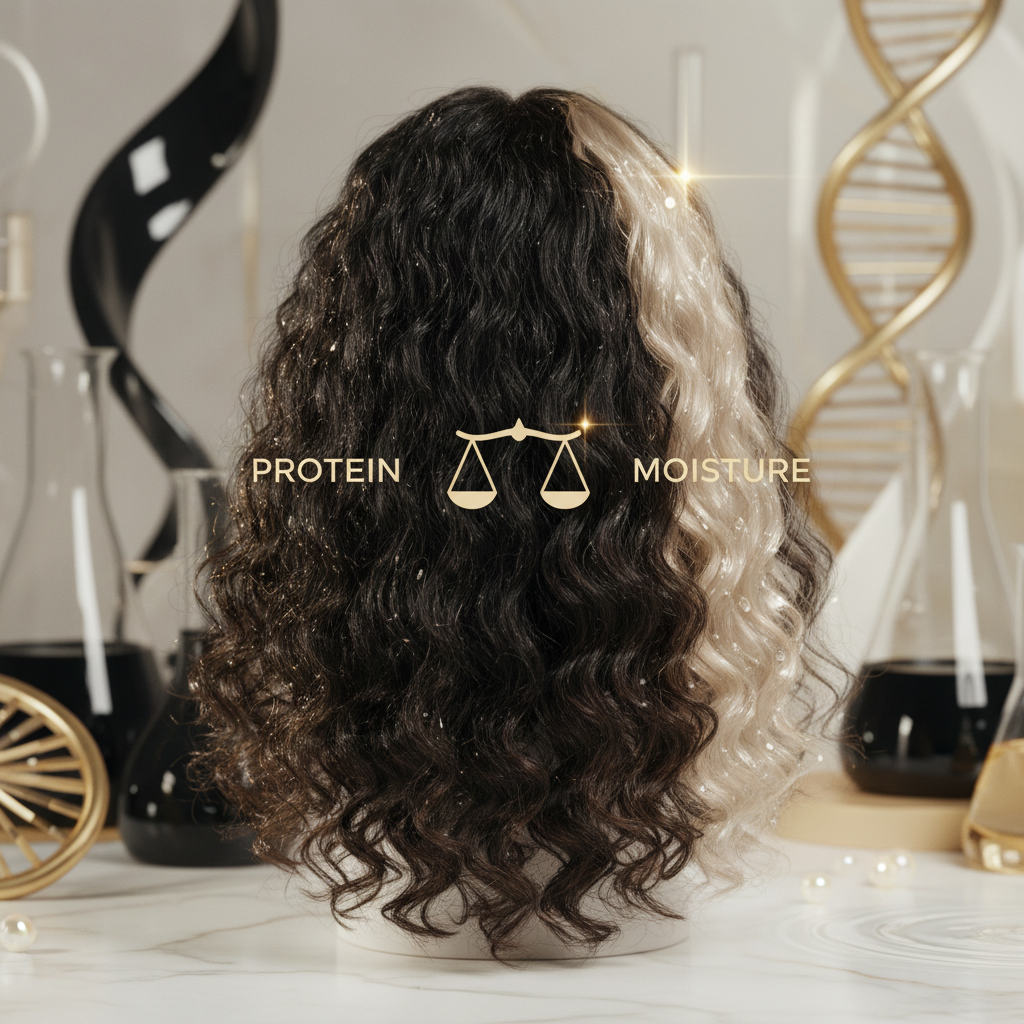
Human hair fibres consist of three main regions: the cuticle (protective outer shingles), the cortex (the structural bulk containing intermediate filament proteins and keratin-associated proteins), and sometimes a central medulla. Water within the hair acts as a natural plasticiser. According to cosmetic dermatology literature published in the International Journal of Cosmetic Science, hair at ambient humidity (around 50 to 60 percent relative humidity) typically holds 12 to 15 percent water by weight. When the cortex retains adequate water, hydrogen bonds continuously form, break, and reform, allowing the fibre to stretch up to 30 percent of its dry length before snapping.
Keratin proteins provide rigidity and elastic recovery. Without adequate protein integrity, hair loses its spring and architectural support. However, cosmetic research demonstrates that "protein" and "moisture" do not exist in isolation. You cannot simply layer moisture over structurally compromised hair and expect resilience, nor can you repeatedly apply hydrolysed proteins without restoring internal hydration.
What the evidence does not show
Cosmetic chemistry does not support several viral claims:
- Hair does not drink water to survive: Excessive water absorption is actually harmful. Hair fibres swell radially by up to 16 percent when saturated, pushing the cuticle shingles outward.
- Topical treatments do not permanently fuse cuticles or heal split ends: Hydrolysed wheat, soy, or silk proteins temporarily patch micro-fissures in the cuticle and outer cortex through ionic attraction. They rinse out over time.
- The "water glass test" is unscientific: Floating a strand of hair in a glass of water measures surface tension, sebum residue, and product buildup far more accurately than true cortex porosity or protein loss.
The mechanical signs: protein overload versus moisture overload
Identifying whether a strand lacks structural support or hydration requires assessing how it responds to gentle tension and touch.
| Feature | Protein Overload | Optimal Balance | Moisture Overload (Hygral Fatigue) |
|---|---|---|---|
| Tactile Feel | Stiff, dry, raspy, straw-like | Soft, pliable, smooth | Mushy, gummy when wet, limp |
| Elasticity | Snaps immediately with little to no stretch | Stretches gently (up to 30%) and bounces back | Stretches excessively without bouncing back; snaps weakly |
| Curl Definition | Frizzy, rigid, irregular curl pattern | Defined, bouncy, clumped curls | Drooping, undefined, cannot hold shape |
| Dry Appearance | Dull, tangled, wiry | Natural sheen, manageable | Flat, flyaway, cotton-candy texture |
| Fibre Behaviour | Clean break under light tension | High resistance to mechanical stress | Tears or shreds under low tension |
The mechanism of protein overload
Protein overload occurs when an excess of film-forming, hydrolysed proteins or synthetic polymers coat the cuticle and penetrate the outer cortex without sufficient plasticising water. As these proteins dry, they form rigid sheets. This alters the hair's flexural rigidity. Because the fibre cannot bend when brushed, styled, or moved against clothing, it snaps cleanly.
The mechanism of moisture overload (hygral fatigue)
Moisture overload occurs when the cuticle is sufficiently damaged or porous that water rushes rapidly into the cortex. The repeated swelling and contracting of the fibre as it gets wet and dries stretches the cell membrane complex (CMC) beyond its elastic threshold. Over time, the internal hydrogen bonds fail to re-anchor, leaving the hair feeling gummy, weak, and over-stretched.
What you can do to restore balance
Restoring the balance requires adjusting your washing and conditioning routine to target the specific mechanical deficiency of the fibre.
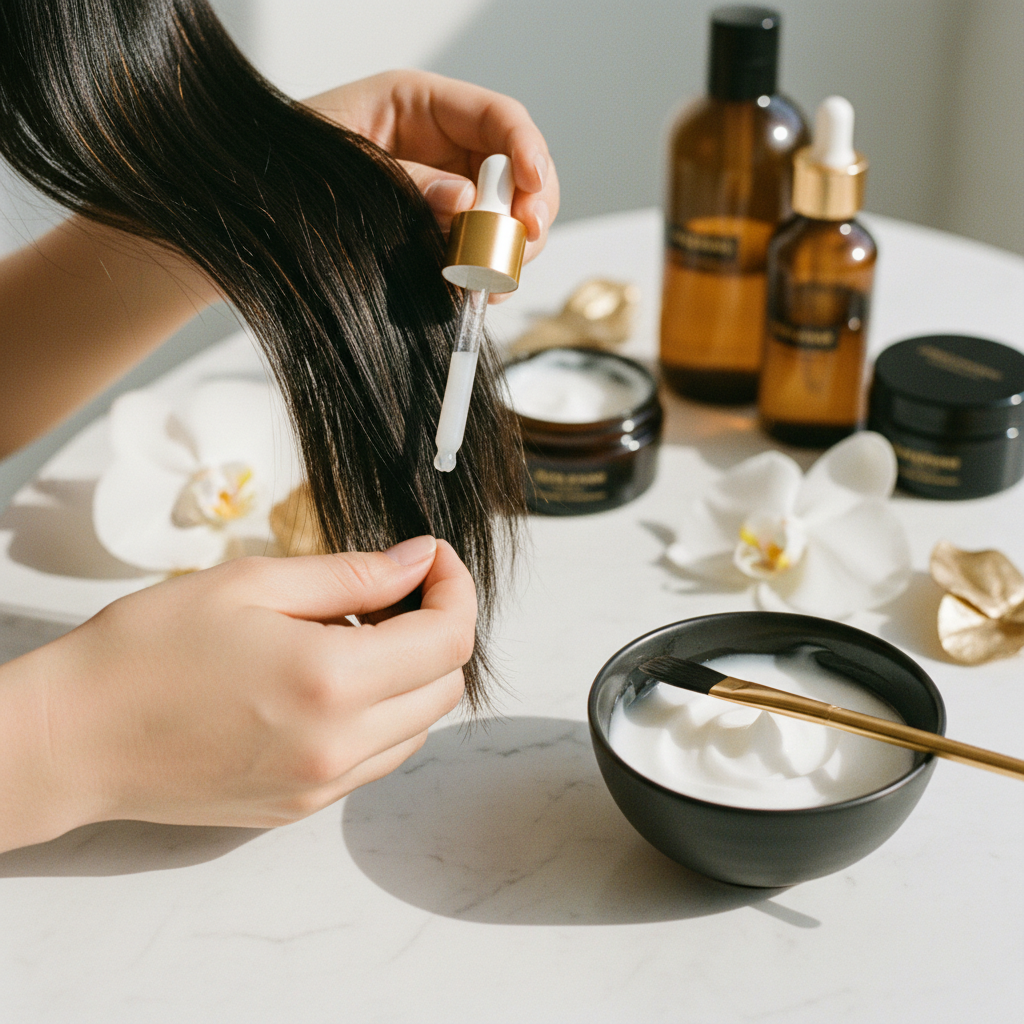
If your hair has protein overload:
- Clarify the fibre: Use a chelating or clarifying shampoo containing sodium laureth sulfate or an equivalent anionic surfactant to strip accumulated protein films from the cuticle.
- Pause protein-heavy products: Check your product labels for ingredients containing "hydrolysed keratin", "hydrolysed collagen", "amino acids", or "vegetable protein", and set them aside for 3 to 4 weeks.
- Use simple emollients and humectants: Apply conditioners rich in fatty alcohols (cetyl alcohol, stearyl alcohol), glycerin, panthenol, and natural plant oils (such as argan or jojoba oil) to lubricate the cuticle and soften the cortex.
- Apply gentle indirect heat: Using a warm towel or heat cap over a deep moisturising mask helps open the cuticle scales slightly, allowing humectants to bind water within the outer layers.
If your hair has moisture overload:
- Introduce hydrolysed proteins: Look for low-molecular-weight proteins (between 500 and 2,000 Daltons), such as hydrolysed silk, wheat, or keratin peptides. Smaller peptides penetrate into the damaged cortex to temporarily reinforce weak zones.
- Minimise water exposure: Avoid leaving hair wet for extended periods. Do not sleep in wet hair, and cut down on prolonged hair masking (leaving conditioners on for hours does not yield added benefits).
- Blow-dry on low heat: Gently blow-drying hair with warm, circulating air reduces the duration the fibre remains swollen by water, protecting the cell membrane complex.
- Use pH-balanced products: Maintain a wash routine with a pH between 4.5 and 5.5 to keep the cuticle shingles flat and prevent excessive swelling.
When the cause may be something else
Poor hair condition is frequently mistaken for an imbalance in protein or moisture when the root cause is external or environmental:
- Hard water buildup: High concentrations of calcium and magnesium ions (above 180 mg/L) bind to hair keratin, creating a brittle, waxy coating that mimics severe protein overload. A chelating wash is needed, not a change in conditioner.
- Silicones and polyquaterniums: Excessive film-formers can create build-up that blocks moisture uptake, resulting in dry-feeling, snapping strands.
- Bleach and high-lift colour: Chemical oxidation breaks down the covalent disulfide bonds (cystine) that give hair its permanent strength. This is severe chemical degradation, not simple dehydration; bond-multiplying treatments are needed alongside conditioning.
- Heat tool degradation: Straighteners applied above 185 degrees Celsius cause alpha-keratin to denature into weaker beta-keratin, permanently weakening the shaft.
When to seek professional advice
Consult a qualified trichologist or dermatologist if your hair is breaking near the scalp, shedding in clumps from the root, or if you notice patchy thinning. A salon stylist can evaluate mechanical breakage along the lengths, but systemic issues, telogen effluvium, or scalp inflammation require medical assessment.
Support from Watermans haircare
For daily maintenance that respects natural fibre integrity, Watermans formulas focus on scalp health and balanced conditioning without heavy polymer accumulation. Watermans conditioners incorporate hydrolysed lupin protein alongside balancing emollients to deposit lightweight, flexible reinforcement onto stressed cuticle layers, helping you maintain a consistent routine without tipping hair into protein stiffness or over-hydration.
Frequently asked questions about Hair Protein Moisture Balance
What is the most reliable way to test Hair Protein Moisture Balance?
The wet stretch test is the most practical method. Take a single, clean, shed strand of wet hair and hold it between your thumb and forefinger. Gently pull. If it stretches slightly (roughly 20 to 30 percent) and springs back, your balance is optimal. If it snaps instantly without stretching, you need moisture. If it stretches endlessly like a rubber band and snaps without returning, you need protein.
Can low-porosity hair experience protein overload?
Yes, low-porosity hair is especially prone to protein overload. Because its cuticle scales lie tightly flat, large protein molecules cannot enter the cortex. Instead, they deposit onto the outer cuticle, forming a rigid layer that blocks ambient moisture. This leaves low-porosity hair feeling rough, stiff, and prone to breakage very quickly.
How often should I use protein treatments on damaged hair?
Chemically treated or bleached hair typically benefits from a protein treatment once every 2 to 4 weeks. Virgin, healthy hair rarely requires intensive protein treatments and does well with balanced daily conditioners containing small amounts of amino acids. Overusing intensive treatments can trigger brittleness.
Does drinking more water improve moisture in hair lengths?
No. The visible hair shaft is non-living, biologically dead tissue. While chronic systemic dehydration can affect active cellular division at the hair follicle, drinking water will not hydrate dry hair ends. Hair shaft hydration is governed by external relative humidity, intact surface lipids (18-MEA), and topical conditioning agents that trap water inside the fibre.
What ingredients signal high protein in a conditioner?
Check the cosmetic ingredient list (INCI) for words like "Hydrolysed Keratin", "Hydrolysed Wheat Protein", "Hydrolysed Silk", "Hydrolysed Collagen", "Amino Acids", "Peptides", or "Hydrolysed Soy Protein". Ingredients listed in the top five to seven positions have the strongest concentration and structural effect on the fibre.
Finding equilibrium for resilient hair
Mastering your Hair Protein Moisture Balance comes down to understanding your hair's structure as a composite material. Keratin provides the framework, while water provides the give. By watching how your strands respond to tension, keeping water exposure moderate, and choosing products tailored to your porosity and chemical history, you can prevent mechanical snapping and keep your hair flexible, glossy, and strong.
Sources and references
- Robbins, C. R. Chemical and Physical Behavior of Human Hair. 5th ed., Springer-Verlag, 2012.
- International Journal of Cosmetic Science. "The physical and chemical properties of hair and their relationship to cosmetic processing." 2017.
- Journal of the Society of Cosmetic Chemists. "Water absorption and desorption of human hair." 1993.
- British Association of Dermatologists. "Hair shaft abnormalities and mechanical damage." guidelines and clinical reviews.
Find these ingredients in Watermans products
- Panthenol (Provitamin B5): you will find this ingredient in our Heat Protection Spray.