Hair Porosity Test and Care: The Definitive Science-Based Guide
10 min read ·
Master your Hair Porosity Test and Care routine. Learn the science of low and high porosity hair, why the float test fails, and how to balance moisture.
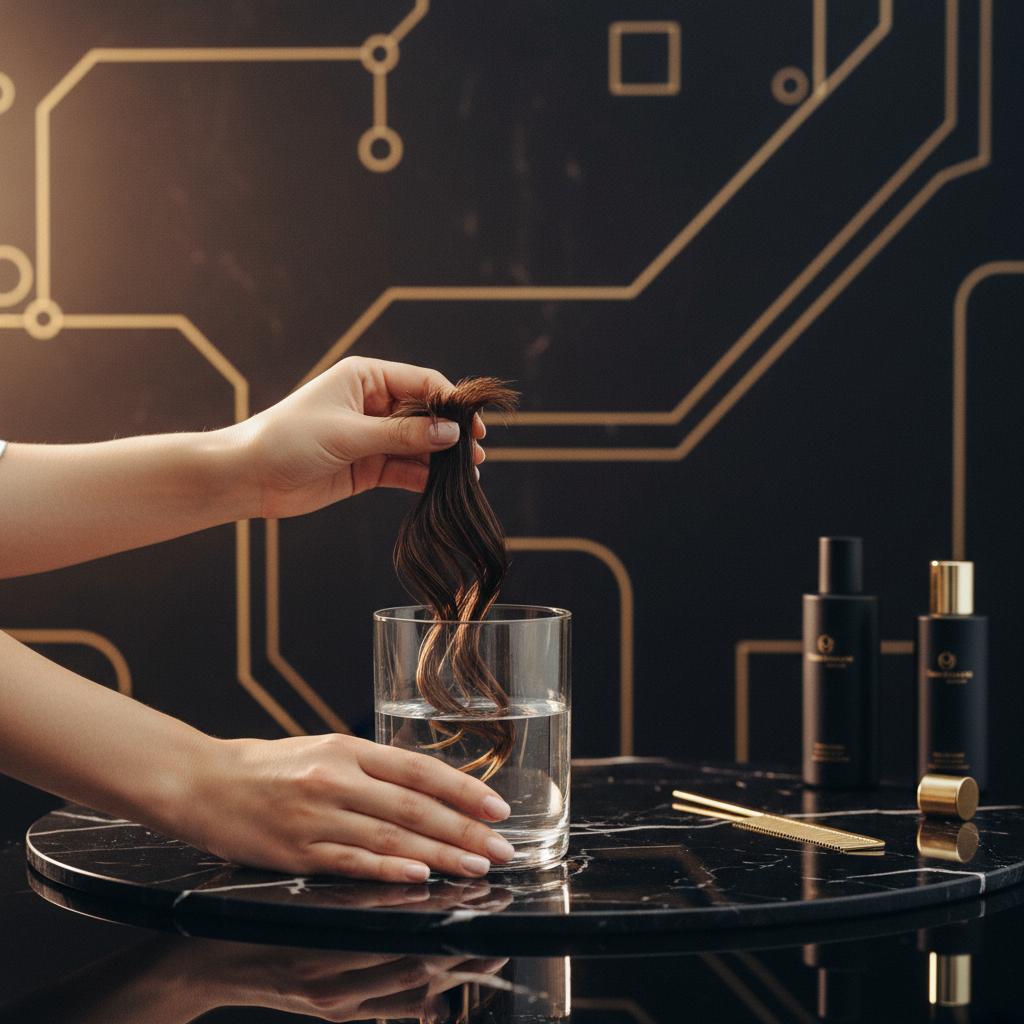
Quick answer: Getting your Hair Porosity Test and Care routine right means understanding how easily your hair cuticle absorbs and holds moisture. Porosity describes the gaps in your cuticular layer, ranging from tightly sealed low porosity to weathered high porosity. Popular home tests like the water float test give inconsistent results because surface oils alter buoyancy. Instead, assess how quickly your hair wets, dries, and reacts to rich products. Adjust your washing, conditioning, and thermal styling to match your cuticle structure.
Key takeaways
- Hair porosity measures the condition and alignment of the outer cuticle scales, dictating how water and lipids enter and exit the cortex.
- High porosity hair absorbs water rapidly but loses it just as quickly, often leading to dry, brittle strands and breakage.
- Low porosity hair features tightly bound cuticle layers that repel moisture and resist product penetration.
- Popular home float tests are largely unreliable because sebum, styling residue, and water surface tension skew the outcome.
- Effective care relies on adjusting water temperature, product weight, protein balance, and humectants to suit your specific cuticular state.
Hair Porosity Test and Care: what the evidence shows
Hair porosity refers to your hair shaft's capacity to absorb and retain fluids, conditioning agents, and chemical treatments. To understand Hair Porosity Test and Care, cosmetic scientists examine the cuticle, the outermost protective layer composed of flattened, overlapping keratin scales.
In virgin, healthy hair, the cuticle consists of roughly 6 to 10 overlapping cellular layers bound by the cell membrane complex (CMC). Under normal physiological conditions, these scales lie relatively flat, creating a hydrophobic barrier that shields the inner cortex. When chemical processing, ultraviolet radiation, mechanical brushing, or heat styling degrade this structure, the scales lift, crack, or strip away entirely.
The biological reality is that porosity exists along a spectrum rather than in rigid categories:
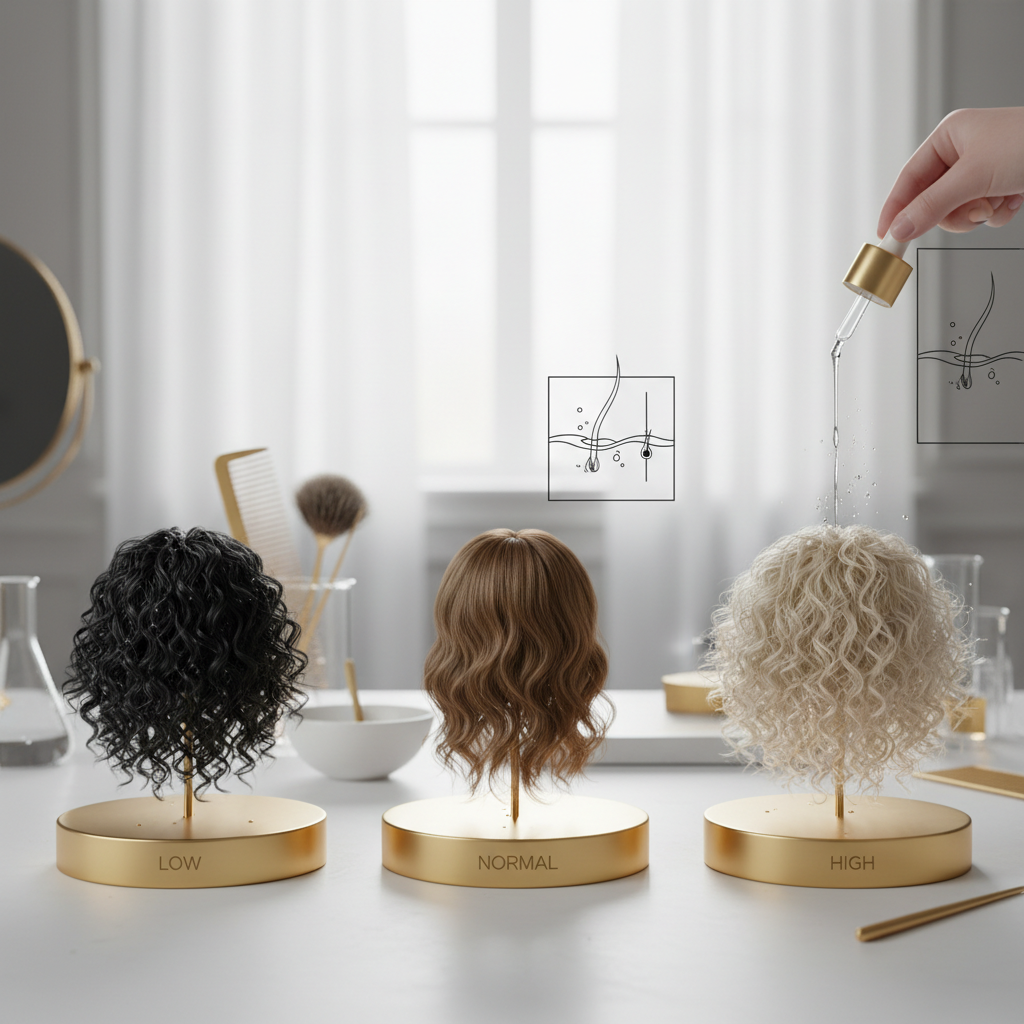
- Low porosity: The cuticular scales overlap tightly and lie flat. The lipid layer, specifically 18-methyleicosanoic acid (18-MEA), remains largely intact. This makes the fibre hydrophobic. Water and conditioning agents struggle to penetrate the cortex, leading to product sitting on the surface.
- Medium (normal) porosity: The cuticle layer is intact but pliable. Moisture enters the cortex at a steady rate and remains trapped inside for a balanced duration without causing rapid swelling.
- High porosity: The cuticle scales are raised, chipped, or missing. The cortex is directly exposed to the environment. Water enters instantly, causing excessive radial swelling (hygral fatigue), and evaporates just as fast once out of the shower.
Porosity characteristics compared
| Porosity level | Cuticle condition | Water absorption speed | Drying time | Product behaviour | Typical causes |
|---|---|---|---|---|---|
| Low | Tightly bound, flat scales | Very slow (water beads on surface) | Very long | Products sit on the surface, prone to buildup | Genetics, virgin hair, minimal processing |
| Medium | Intact, slightly flexible scales | Moderate | Moderate | Absorbs moisture well, retains style easily | Good maintenance, minimal damage |
| High | Raised, frayed, or absent scales | Instant | Very fast | Absorbs heavy oils rapidly, loses hydration fast | Bleaching, relaxers, heat damage, severe UV exposure |
The float test and what the evidence does not show
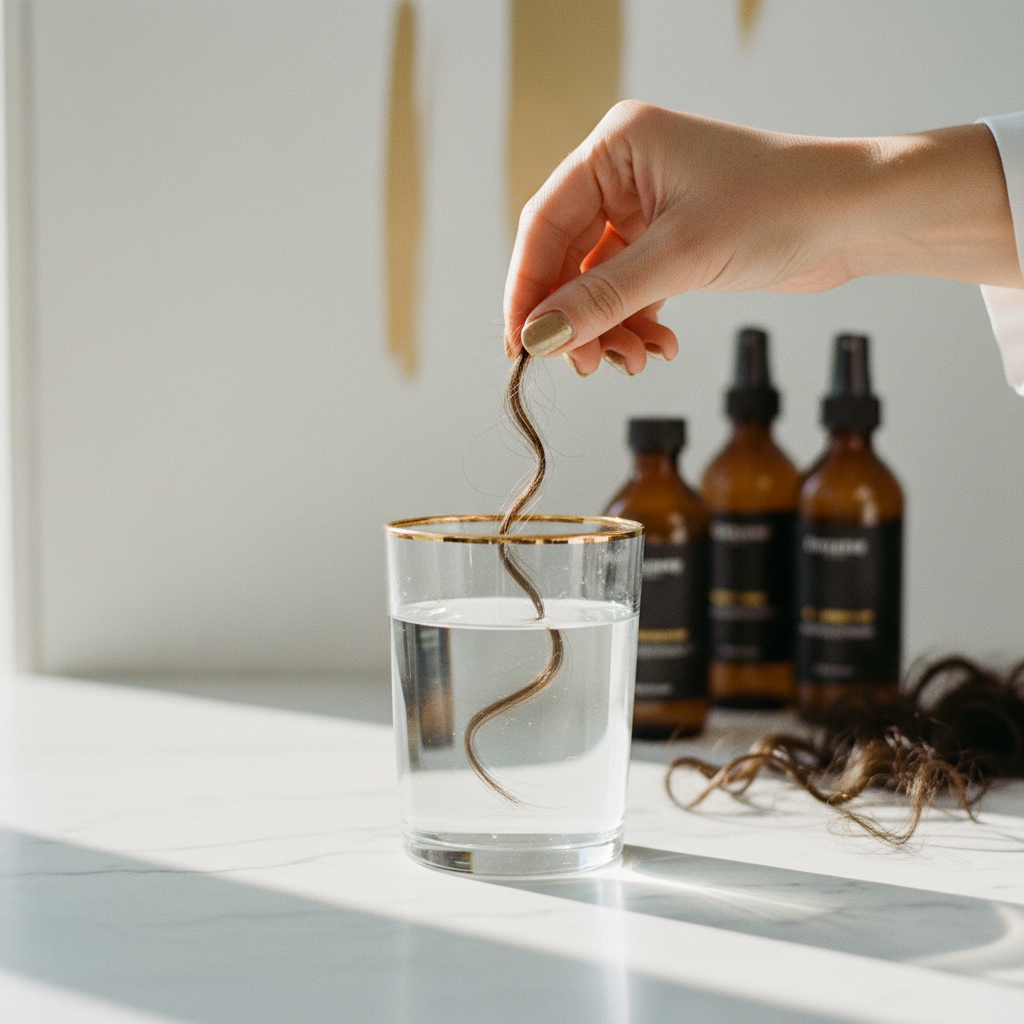
The most popular home test promoted online is the glass of water float test. In this method, you drop a clean shed hair into a glass of room-temperature water. Proponents claim that if the strand floats, you have low porosity; if it sinks slowly, you have medium porosity; and if it drops straight to the bottom, you have high porosity.
Cosmetic trichology does not support this method as an accurate diagnostic tool. Hair is naturally hydrophobic when the external lipid layer is present, meaning even damaged hair can float due to surface tension. Conversely, if a low-porosity strand is pushed beneath the surface meniscus, gravity and residual sebum removal can cause it to sink regardless of its internal cuticle integrity.
Other home methods, such as the slide test (running your fingers up the hair shaft from tip to root to feel for bumps) can indicate physical weathering or cuticular roughness, but they do not provide a calibrated measurement of water uptake. In professional laboratory settings, researchers use gas sorption, dynamic vapour sorption (DVS), or scanning electron microscopy (SEM) to measure porosity accurately.
For home assessments, observing behavioural markers over time yields far more dependable results than a cup of water.
Signs to look for: identifying your hair porosity
To build a proper care routine, monitor how your hair interacts with water and daily styling products under normal conditions.
Signs of low porosity hair
- Water beads up on the hair surface when you step into the shower, taking several minutes to become thoroughly saturated.
- Washing requires prolonged massaging just to get shampoo to lather properly.
- Rich conditioning creams or oils sit visibly on your strands, leaving a greasy film rather than absorbing.
- Drying your hair naturally takes hours, sometimes an entire day, because moisture is locked under a tight cuticle once it eventually enters.
- Your hair suffers from frequent product buildup, feeling stiff or coated.
Signs of high porosity hair
- Your hair becomes soaked the second it touches water.
- Conditioners and leave-in treatments disappear into the hair shaft immediately, yet the hair feels parched and brittle an hour later.
- Your hair dries remarkably quickly in ambient air.
- Hair tangles constantly, feels rough or velcro-like to the touch, and experiences frequent breakage along the mid-lengths and ends.
- Colour treatments absorb rapidly, often coming out darker than expected, but fade significantly within just a few washes.
Targeted care routines for each porosity type
Once you have identified your hair's behavioural signs, you can adapt your washing and styling methods to support the cuticle.
Caring for low porosity hair
The goal for low porosity hair is opening the cuticle slightly to allow hydration in, while preventing cosmetic products from building up on the surface.
- Use gentle warmth: Wash with warm water rather than cold. Warm water helps gently soften the cuticular boundary. When deep conditioning, apply a thermal heat cap or warm towel for 15 to 20 minutes to encourage product penetration.
- Select lightweight formulations: Avoid heavy, dense butters like unrefined shea butter or thick mineral oils. Opt for lightweight humectants and emollients like argan oil, jojoba oil, and glycerin.
- Clarify regularly: Because products struggle to penetrate, low porosity hair is prone to residue. Use a clarifying shampoo every two to three weeks to strip away built-up silicones and polymers.
- Limit heavy protein treatments: Low porosity hair already possesses a dense structural matrix. Excess hydrolysed proteins can leave the hair feeling brittle, straw-like, and prone to snapping.
Caring for high porosity hair
The goal for high porosity hair is repairing the protective barrier, preventing rapid moisture loss, and protecting the fragile cortex from physical stress.
- Incorporate hydrolysed proteins: Because high porosity hair features gaps in the cuticle, hydrolysed keratin, wheat protein, and silk amino acids can temporarily fill these microscopic voids. This strengthens the fibre and reduces breakage.
- Seal with heavier emollients: Use the Liquid-Oil-Cream (LOC) method. After applying water or a water-based leave-in conditioner, seal the moisture into the cortex with richer oils or plant butters that form a protective film over open cuticles.
- Acidify your rinse: Healthy hair sits at an acidic pH of roughly 4.5 to 5.5. Highly alkaline environments force the cuticle to swell and lift. Use slightly acidic conditioners or an apple cider vinegar rinse (diluted to a safe cosmetic pH) to help flatten raised cuticles.
- Reduce mechanical and thermal friction: Use satin or silk pillowcases, detangle exclusively with wide-tooth combs on conditioned hair, and keep heat tools below 180 degrees Celsius with a quality thermal protectant.
When the cause may be something else
It is common to confuse high porosity with systemic hair shedding, or low porosity with simple scalp oiliness. Porosity relates strictly to the condition of the hair fibre along the shaft.
If you notice excessive shedding where the bulb is attached to the root of the hair, this is not a porosity problem. Conditions such as telogen effluvium, androgenetic alopecia, or nutritional deficiencies affect the hair follicle beneath the scalp, not the structural porosity of the shaft.
Similarly, chronic dryness might not simply be high porosity; it could be the result of swimming in chlorinated water, high concentrations of hard water minerals (like calcium and magnesium) binding to the hair shaft, or severe weather exposure.
Professional options and when to seek advice
If your hair snaps under minimal tension, feels gummy when wet, or breaks off in short pieces, the cuticle may be fundamentally degraded from bleaching or chemical relaxers. At this stage, cosmetic conditioners offer temporary symptomatic relief, but they cannot fuse broken disulphide bonds permanently.
Consult a qualified trichologist or experienced colourist if:
- You cannot balance moisture despite following tailored high or low porosity routines for six weeks.
- Hair shows structural elasticity loss (stretching without bouncing back, or snapping instantly).
- You experience unexplained scalp irritation, scaling, or hair shedding alongside texture changes.
A professional can perform microscopic hair shaft analysis to examine your cuticle condition directly, helping design a targeted conditioning protocol.
Supporting hair health from the root with Watermans
While addressing your hair porosity protects the existing fibre from mechanical and environmental wear, resilient hair starts with a nourished, healthy scalp environment. Watermans provides targeted care designed to support healthy hair growth and fortify the hair shaft from root to tip.
Watermans Grow Me Shampoo and Condition Me Conditioner deliver vital nutrients, including biotin, rosemary extract, caffeine, and hydrolysed lupin protein. These ingredients help support scalp circulation, revitalise the appearance of thinning strands, and reinforce the structural feel of hair that has suffered cuticular weathering. Used alongside porosity-conscious styling techniques, they help keep your hair looking full, strong, and manageable.
Frequently asked questions about Hair Porosity Test and Care
Can my hair porosity change over time?
Yes. Your hair can change porosity along the exact same strand. Hair near the root is newer and typically lower in porosity, while the ends have endured months or years of washing, UV light, and heat styling, making them higher in porosity. Chemical services like bleaching, permanent dyeing, and perming permanently raise cuticle porosity until the hair is cut off.
Is the glass of water float test reliable?
No, the float test is not reliable. Natural oils, leave-in product residues, and the surface tension of water cause hair to float or sink regardless of cuticle health. Paying attention to how fast your hair gets wet and dries during your Hair Porosity Test and Care routine is much more accurate.
Does low porosity hair need protein treatments?
Low porosity hair generally requires far less protein than high porosity hair. Because the cuticle is tightly packed, frequent protein treatments can overload the hair fibre, causing it to feel stiff, rigid, and brittle. Use protein-rich products sparingly, such as once every six to eight weeks, focusing primarily on hydration.
Can you permanently fix high porosity hair?
You cannot permanently close or rebuild missing cuticle scales because the hair shaft is non-living tissue. However, you can manage high porosity hair effectively by using hydrolysed proteins, pH-balanced acidic conditioners, and protective sealants that coat the fibre, reinforce strength, and minimise moisture loss until new hair grows in.
A balanced approach to porosity care
Understanding your hair's physical structure removes the guesswork from choosing styling products and wash routines. An effective approach to Hair Porosity Test and Care focuses on how your cuticle responds to water, products, and environmental heat. By observing real-world moisture retention instead of relying on flawed float tests, you can tailor your cleansing, conditioning, and protein balance to protect your hair fibres against daily breakage and keep your lengths looking their best.
Sources and references
- Robbins, C. R. (2012). Chemical and Physical Behavior of Human Hair. 5th ed. Springer-Verlag.
- Dawber, R. (1996). "Hair: Its structure and response to cosmetic preparations." Clinics in Dermatology, 14(1), 105-112.
- Cruz, C. F., et al. (2016). "Human hair characteristics: A review of the impact of environmental and cosmetic factors." International Journal of Cosmetic Science, 38(5), 443-454.
- Evans, A., & Wickett, R. R. (2012). Practical Modern Hair Science. Allured Business Media.
- Gavazzoni Dias, M. F. (2015). "Hair cosmetics: An overview." International Journal of Trichology, 7(1), 2-15.
Find these ingredients in Watermans products
- Shea Butter: you will find this ingredient in our Curly Hair Conditioner.