Hair Porosity and How to Test It: An Evidence-Based Guide
10 min read ·
Understand hair porosity and how to test it accurately. Learn the biology of your hair cuticle, debunk the float test, and discover evidence-based care for your hair.

Quick answer: Hair porosity refers to your hair shaft's ability to absorb and retain moisture, driven largely by the condition of the protective cuticle layer. Understanding hair porosity and how to test it helps you select compatible products, manage hydration, and minimise structural breakage. While popular at-home methods like the float test offer quick clues, their accuracy is heavily limited by surface tension, natural sebum, and product residue, making physical handling and professional wet-stretch assessments far more reliable diagnostic tools.
Key takeaways
- Hair porosity is governed by the cuticle scales: tightly overlapping scales create low porosity, while lifted, chipped, or missing scales produce high porosity.
- Low-porosity hair repels water and suffers from product build-up, whereas high-porosity hair absorbs moisture instantly but loses it just as rapidly.
- The popular "glass of water" float test is notoriously inaccurate because natural oils and surface tension cause even high-porosity hair to float.
- Structural porosity can be altered by chemical processing (bleaching, relaxing), thermal tools, UV exposure, and mechanical grooming friction.
- Porosity directly influences cosmetic product performance, but it does not cause medical hair loss or follicular shedding.
Hair Porosity and How to Test It: what the evidence shows
When discussing hair porosity and how to test it, cosmetic science looks at the outermost protective layer of the hair fibre: the cuticle. The cuticle consists of flat, overlapping cells, arranged like shingles on a roof, anchored by a lipid-rich cell membrane complex. The intactness and alignment of these scales dictate how freely water molecules, conditioning agents, and chemical treatments enter and exit the hair cortex.
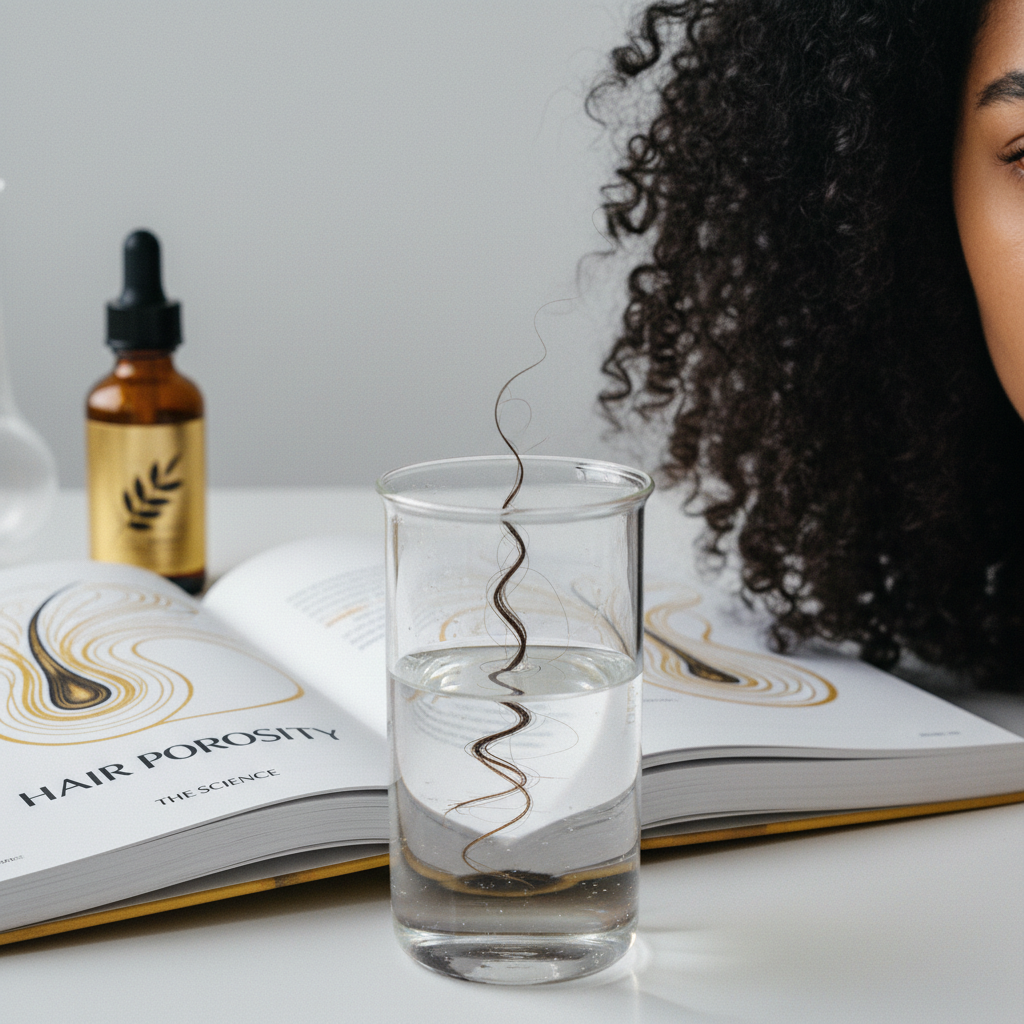
In scientific laboratories, researchers measure porosity using dynamic vapour sorption, gas adsorption, or dye penetration assays under controlled humidity. In a home or salon setting, testing methods are simpler, though their reliability varies significantly.
1. The float test (and why it often fails)
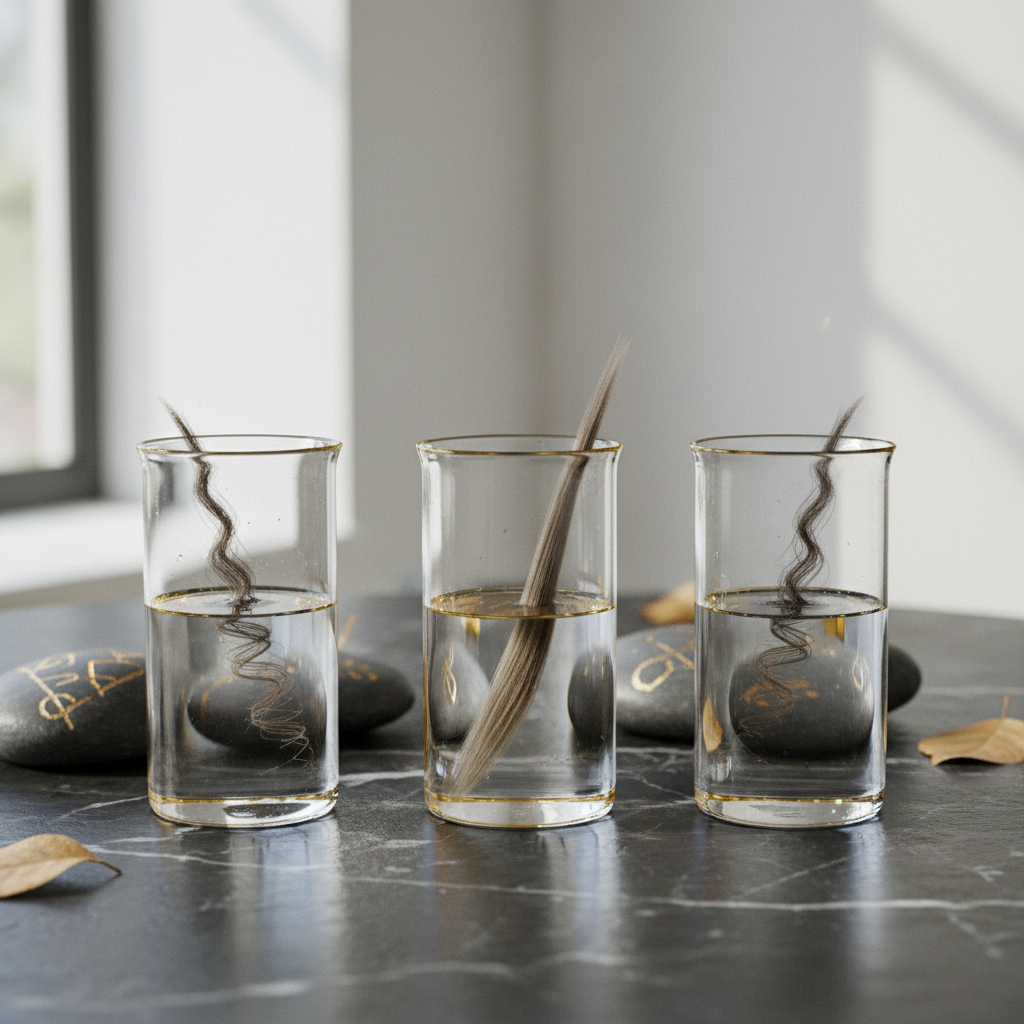
The most common online method involves dropping a clean, shed strand of hair into a glass of room-temperature water and waiting two to four minutes. In theory, low-porosity hair floats, medium-porosity hair stays suspended in the middle, and high-porosity hair sinks.
In practice, this test has a major limitation: fluid mechanics. The surface tension of water frequently supports lightweight hair strands regardless of their internal cortex condition. Furthermore, trace amounts of natural sebum, silicones, or oils act as hydrophobic barriers, keeping even severely damaged, porous hair floating indefinitely.
2. The tactile slip-and-slide test
A more dependable manual method involves feeling the physical topography of the hair strand. Take a single shed strand and hold it securely near the tip with one hand. With the thumb and index finger of your other hand, slide your fingers firmly down the shaft from tip to root (against the natural direction of the cuticles).
- Low porosity: The strand feels completely smooth, glassy, and uniform.
- Medium porosity: The strand feels mostly smooth with slight, occasional resistance.
- High porosity: The strand feels rough, bumpy, or catches against your skin, indicating that the cuticle scales are lifted, chipped, or eroded.
3. The spray mist absorption test
To perform this test, clean a section of hair thoroughly with a clarifying wash to remove leave-on polymers and oils, then let it dry naturally. Spritz a fine mist of water onto a small dry section.
- Low porosity: Water beads up on the surface like droplets on a freshly waxed car, sitting for several minutes without soaking in.
- Medium porosity: Droplets sit momentarily before gradually absorbing into the fibre within one to two minutes.
- High porosity: The mist disappears immediately into the fibre, darkening the strand on contact.
Understanding the biological mechanism of porosity
The primary barrier controlling porosity is the 18-methyleicosanoic acid (18-MEA) lipid layer, which is covalently bound to the outermost epicuticle. This fatty layer makes healthy hair naturally hydrophobic (water-repelling).
Beneath the 18-MEA layer sit 5 to 10 layers of overlapping cuticle cells. Each cuticle cell contains an exocuticle rich in cross-linked cystine and an endocuticle that swells easily in water. When hair is exposed to an alkaline pH (above 5.5 to 6.0), the cuticle scales swell and lift away from the shaft.
Repeated lifting from high pH treatments, thermal styling exceeding 180 degrees Celsius, or UV radiation strips away the protective 18-MEA layer. Once this lipid barrier is depleted, water moves freely into the hydrophilic cortex. While high-porosity hair takes on water rapidly, it loses moisture just as quickly through evaporation, leading to chronic dryness, friction, and fibre snapping.
| Characteristic | Low Porosity | Medium (Balanced) Porosity | High Porosity |
|---|---|---|---|
| Cuticle Structure | Compact, tightly overlapping, flat | Normal alignment, intact lipid layer | Lifted, weathered, or absent scales |
| Water Absorption | Very slow; beads on surface | Steady, balanced intake | Instantaneous absorption |
| Drying Time | Extended; holds water once saturated | Moderate, predictable drying | Air-dries very quickly |
| Chemical Processing | Resists colour and perm processing | Predictable uptake of chemical dyes | Rapid processing; prone to over-processing |
| Common Issues | Product build-up, stiffness | Minimal structural issues | Frizz, tangles, mechanical breakage |
Signs to look for: identifying your hair type
Recognising your hair's baseline behaviour helps confirm your porosity without relying solely on manual tests.
Characteristics of low-porosity hair
Low-porosity hair resists moisture penetration. If you find that saturating your hair in the shower takes several minutes under running water, you likely have low porosity. Conditioners often seem to sit on the surface of your hair rather than absorbing, leaving a greasy, heavy film. You may also notice that hair products build up quickly, causing strands to feel stiff or dull.
Characteristics of high-porosity hair
High-porosity hair absorbs water instantly the moment it touches the shower stream. However, it dries just as quickly, often feeling parched within minutes of stepping out of the shower. It is prone to persistent frizz in humid environments because the exposed cortex absorbs ambient moisture from the air, causing the shaft to swell irregularly. High-porosity hair tangles easily because rough cuticle edges snag against neighbouring strands.
What the evidence does not show
Porosity is widely misunderstood in general haircare discussions, leading to several persistent myths:
- Porosity does not cause alopecia: Porosity is strictly a cosmetic, structural property of the non-living hair shaft. It has no bearing on follicle health, the hair growth cycle, or medical conditions such as androgenetic alopecia or alopecia areata.
- Porosity cannot be "permanently cured": Once cuticle cells are stripped away by chemical or mechanical trauma, the body cannot regenerate them. You cannot permanently change high-porosity damaged hair into natural low-porosity hair. You can only manage it cosmetically using surface-coating conditioners, hydrolysed proteins, and film-forming lipids until new, untreated hair grows in.
- Low porosity is not "unhealthy": Low porosity simply reflects tightly closed cuticles and an intact lipid barrier. It is often a sign of virgin, uncompromised hair, even though it can be frustrating to moisturise.
Practical care: what you can do
Tailoring your regimen to your hair shaft's specific structural state protects the fibre from unnecessary mechanical strain.
Managing low-porosity hair
The goal for low-porosity hair is opening the cuticle slightly to allow lightweight hydration without leaving surface residue:
- Use mild heat (such as a warm towel or a hooded dryer) during conditioning treatments to temporarily relax the compact cuticle scales.
- Prioritise lightweight humectants (glycerin, panthenol, aloe vera) over heavy plant butters and thick waxes.
- Clarify your hair every two to three weeks to remove surface accumulation that blocks water absorption.
- Apply styling products to soaking-wet hair to assist moisture distribution.
Managing high-porosity hair
The goal for high-porosity hair is filling gaps in the damaged cuticle and sealing the cortex to retain hydration:
- Introduce hydrolysed proteins (wheat, soy, keratin, silk) into your routine. These small peptides temporarily lodge within cuticle fractures, improving tensile strength and reducing breakage.
- Use slightly acidic conditioners (pH 3.5 to 4.5) to help smooth down raised cuticle scales.
- Seal hydration using heavier emollients and oils (such as jojoba, argan, or shea butter) that recreate the missing hydrophobic 18-MEA barrier.
- Reduce your reliance on high-heat styling tools, and always apply a heat protectant.
The role of Watermans haircare in your routine
When working to support overall hair vitality and fibre resilience, balanced formulation matters. Watermans offers carefully balanced, nutrient-dense scalp and hair products designed to improve cosmetic manageability and the appearance of thickness. Incorporating targeted, restorative washes helps strengthen the tactile feel of porous lengths while supporting a healthy, refreshed scalp environment for ongoing hair wellness.
When the cause may be something else
If your hair is breaking close to the scalp, shedding in large clumps, or thinning across your parting, porosity is not the primary issue.
- Telogen effluvium: Marked by widespread, sudden shedding across the scalp, usually triggered two to three months after a physiological stressor, illness, or nutritional deficiency.
- Pattern hair loss: Characterised by progressive miniaturisation of individual hair follicles, typically along the temples, crown, or central parting line.
- Hair breakage: Snapping along the mid-lengths or ends of the hair shaft. While high porosity increases your vulnerability to breakage, the breakage itself stems from physical strain, severe chemical degradation, or over-manipulation.
When to get professional advice
Consult a qualified trichologist or dermatologist if you observe:
- Noticeable widening of your parting or diffuse thinning across the scalp.
- Sudden, excessive hair fall on your pillow, in the shower, or when brushing.
- Scalp symptoms including persistent redness, itching, flaking, or burning pain.
- Complete hair breakage resulting in irregular bald patches.
For structural porosity concerns, a professional hairstylist can assess your hair using salon-grade stretch tests and porosity equalisers to ensure safe chemical colouring or lightening.
Frequently asked questions about Hair Porosity and How to Test It
Does the glass of water test actually work?
The water test is notoriously unreliable. Water has high surface tension, and hair naturally carries hydrophobic oils or conditioning residues. These surface factors often keep high-porosity, damaged hair floating on top of the water, producing a false low-porosity reading. The tactile slide test and spray mist test provide far more accurate assessments of cuticle condition.
Can your hair have multiple porosities at the same time?
Yes, it is very common to have mixed porosity across your head. The hair closest to your roots is younger and less exposed to UV rays, heat, and friction, meaning it typically exhibits lower porosity. The ends of your hair have experienced months or years of weathering, washing, and styling, naturally making them more porous.
How does hair porosity and how to test it affect hair colouring?
Understanding hair porosity and how to test it is critical before applying chemical colour. High-porosity hair absorbs colour molecules rapidly, which can result in darker, patchier results than intended, but it also fades faster during washing. Low-porosity hair resists dye penetration and may require longer processing times or heat to open the cuticles.
Can you change your hair's porosity permanently?
You can permanently increase porosity through chemical treatments like bleaching, perm lotions, relaxers, and extreme heat, as these strip the cuticles. However, you cannot permanently decrease porosity once the cuticle is compromised. You can only mimic an intact cuticle cosmetically using acidic products, hydrolysed proteins, and sealing oils.
Does porosity affect how often I should wash my hair?
Porosity influences product retention more than scalp sebum production. Low-porosity hair tends to collect product build-up quickly, requiring regular clarifying washes. High-porosity hair loses moisture rapidly and benefits from gentler, sulphate-free cleansers that avoid stripping the fragile cuticle layer further.
Conclusion
Understanding hair porosity and how to test it allows you to make informed, evidence-based choices for your haircare routine. By identifying whether your cuticle layer is tightly closed or weathered and porous, you can tailor your product weights, conditioning strategies, and styling techniques to protect the integrity of the hair shaft. Focus on dependable diagnostic methods like tactile checks and water absorption rather than unreliable float tests, and treat your hair fibre with the specific balance of hydration and sealing it requires.
Sources and references
- Robbins, C. R. (2012). Chemical and Physical Behavior of Human Hair (5th ed.). Springer-Verlag Berlin Heidelberg.
- Cruz, C. F., Costa, C., Gomes, A. C., & Cavaco-Paulo, A. (2016). Human Hair Characteristics: Structure, Morphology, and Properties. Journal of Applied Cosmetology, 34(3), 67-78.
- Dawber, R. (1996). Hair: Its structure and response to cosmetic preparations. Clinics in Dermatology, 14(1), 105-112.
- Evans, T. A., & Wickett, R. R. (2012). Practical Modern Hair Science. Allured Business Media.
- Ruetsch, S. B., Yang, B. Q., & Kamath, Y. K. (2003). Cuticle damage and its effect on the absorption of water by human hair. Journal of Cosmetic Science, 54(5), 455-468.
Find these ingredients in Watermans products
- Aloe Vera: you will find this ingredient in our Curly Hair Conditioner.